

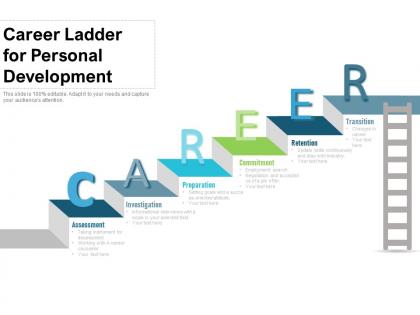
Career ladder for personal development




Try Before you Buy Download Free Sample Product
 Impress Your
 Audience
 100%
100% Editable
 Save Hours
 of Time


Our Career Ladder For Personal Development are topically designed to provide an attractive backdrop to any subject. Use them to look like a presentation pro.
People who downloaded this PowerPoint presentation also viewed the following :
Career ladder for personal development with all 2 slides:
Use our Career Ladder For Personal Development to effectively help you save your valuable time. They are readymade to fit into any presentation structure.
FAQs for Career ladder
Honestly, you gotta get comfortable with tech stuff - like, really comfortable. Communication skills are still king though. Being able to roll with changes? That'll save your career more than once, trust me. Numbers matter too - even if you're not crunching data all day, knowing how to read charts and stats makes you look way smarter in meetings. Remote work made emotional intelligence weirdly more important since we're all just faces on screens now. But here's the thing - learning how to learn fast is probably the biggest game changer. Pick whatever you suck at most and spend like 30 minutes a week on it.
Honestly, most good jobs never even get posted online. Networking gets you in front of those hidden opportunities. Build real relationships and people will remember you when something opens up. You'll also get the inside scoop on what companies are actually like to work for - saves you from horrible surprises later. I used to hate networking events (felt so fake) but three of my best job offers came from people I met at those things. The trick is being genuine, not just collecting business cards. Start small - text one former coworker or connect with someone on LinkedIn this week.
Honestly, mentors are a game-changer for your career. They'll share insider info, help you dodge office politics, and introduce you to opportunities you never would've found solo. Think of them as your professional GPS when you're completely lost (trust me, we've all been there). Don't just randomly DM someone asking to be your mentor though - super awkward. Instead, find people whose careers you actually admire and ask for specific advice on something you're working on. Maybe grab coffee or connect at industry stuff. The best mentoring relationships just kind of happen naturally when you build real connections. Oh, and honestly? Sometimes the best mentors aren't even the most obvious choices.
Look up what skills your target job actually needs first. Then hit up Coursera, Udemy, or LinkedIn Learning for courses that fill those gaps. Honestly, learning at your own pace beats sitting through some random workshop any day. Go for ones with certificates or projects you can show off later. But here's the thing - don't just hoard certificates like they're Pokemon cards. Actually use what you learn! Side projects, volunteer stuff, whatever. Pick maybe 2-3 skills that'll really move the needle and dive deep instead of jumping around everywhere. Way more effective than trying to learn everything at once.
Okay so the SMART goal thing actually works - make them specific, measurable, achievable, relevant, time-bound. Like "get promoted" is trash but "reach senior analyst in 18 months" gives you something real to work toward. Break big stuff into smaller chunks you can track. Write it down somewhere! I swear this makes a difference even though it feels dumb at first. Check in monthly, maybe find someone who's done what you want and pick their brain about how they got there. Oh and don't be weird about changing direction - your goals should shift as you figure out what you actually want. Set quarterly reminders to see how you're doing.
Honestly, personal branding is kinda everything now for getting ahead at work. People judge your expertise before they've even met you - through your LinkedIn, portfolio, whatever's floating around online about you. Weird but true. Having a solid brand means opportunities actually come to you instead of constantly hunting for them. Hiring managers are definitely stalking your social media anyway (I learned this the hard way). My advice? Be way more intentional about what you're posting. How you present your work matters more than most people think.
Honestly, remote work isn't going anywhere - it's basically permanent now. AI's changing everything too, so you'll want to pick up some data skills no matter what field you're in. Green jobs are blowing up way faster than I expected. Companies care more about soft skills now, like being adaptable and emotionally intelligent. The whole gig economy thing keeps growing, which is kinda wild when you think about it. Even "normal" jobs are getting more project-based. LinkedIn does this annual emerging jobs report that's actually pretty useful for seeing what's hot in your industry.
Okay first - don't freak out or do anything stupid right now. Just breathe and figure out what actually went wrong, you know? Setbacks suck but they're weirdly good at showing you what you actually want next. Take some time to think about your goals again. Maybe brush up on skills if you need to. And honestly? Start reaching out to people - old coworkers, random LinkedIn connections, whatever. I swear networking feels gross but it works. The worst thing you can do is just sit around waiting. Pick one tiny thing today. Update your profile or text someone for coffee. Just... something.
Honestly, there's so much stuff out there it's kinda overwhelming. LinkedIn Learning and Coursera are solid for building skills - I've used both. Professional associations in your field usually have good networking events too. Oh, and informational interviews are amazing but everyone skips them for some reason. Your library actually has career resources that aren't terrible (who knew?). Industry conferences help you stay current, even the virtual ones. I'd pick 2-3 skills you want to work on first, then just dive into one resource this week. Don't overthink it.
Dude, emotional intelligence is honestly way more crucial than people think. You could be the biggest brain in the office, but if you can't read a room or build real connections? You're gonna plateau hard. I've watched so many genius-level coworkers get skipped for promotions because they had zero people skills. The whole "feedback makes me defensive" thing trips up tons of people too. Higher up you go, the more it's about influencing others and dealing with messy team drama. Watch how you handle stress and criticism - that's usually where everything falls apart.
Research what others in your role make first and gather examples of your wins with actual numbers. Timing's everything - hit them up during performance reviews or right after you crushed a big project. Don't ask when they just announced layoffs lol. Talk about what you bring to the table, not why you need more money. Have backup options ready too - salary bump, remote days, training budget, extra vacation days. Practice your pitch so you don't sound desperate. Honestly? Be prepared to walk if they won't budge on reasonable stuff. Sometimes that's your only real leverage.
Honestly, certs can really help your career - they make you stand out and usually mean better pay. Companies love seeing you're keeping up with industry trends. Some places won't even consider you for certain roles without the right certification, which is kinda annoying but whatever. I've watched people get stuck because they didn't have that piece of paper, even with tons of experience. The networking side is solid too - you meet people going through the same programs. Just figure out which ones actually matter in your field first, then focus on those that match where you want to go.
Honestly, company culture makes or breaks your career growth there. Good cultures have mentorship programs and clear paths up - managers actually care about developing you. Toxic places? You'll get stuck even if you're killing it at your job. I've watched incredible people stagnate in awful environments while mediocre performers flourish somewhere else. The environment really is everything. When you're interviewing, ask employees about how people get promoted and if leadership invests in growth. Trust me, their faces will tell you what you need to know before they even answer.
Skip the boring job duty lists and focus on what you actually accomplished - like "boosted sales 30%" instead of "handled sales tasks." Most resumes are painfully generic anyway. For cover letters, do your homework on the company and mention something specific that caught your attention. Don't start with "I'm writing to apply" - that's so obvious. Jump right into why you're their person. Oh, and definitely steal keywords from their job posting when you tailor everything. Get someone to proofread though - fresh eyes catch mistakes you'll miss.
Dude, work-life balance is seriously everything for career happiness long-term. Without it, you'll burn out and start hating even jobs you used to love. I've watched so many people chase promotions just to end up miserable because they never have time for anything else. You need that downtime to recharge - otherwise you lose all perspective. Set boundaries from day one. And honestly? Pick companies that actually walk the walk, not just the ones with ping pong tables who still expect you to work weekends. Those job postings that brag about "work-life balance" are usually red flags anyway.
No Reviews