


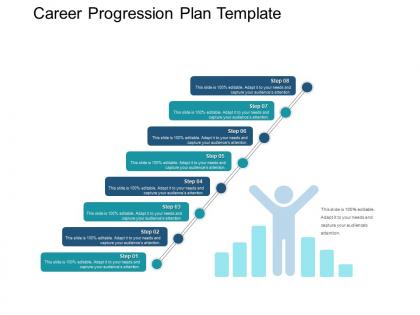
Career progression plan template presentation slides




Try Before you Buy Download Free Sample Product
 Impress Your
 Audience
 100%
100% Editable
 Save Hours
 of Time


If you wish to teach your audience about the thoughtful subject of progress in this competitive world, then you have certainly come to the right place. We have drafted a comprehensive and well-researched presentation title career progression plan template presentation slides that can readily be used by you. If you belong to the profession of a counselor or are associated with academics, then this is a must-have tool for you. With the help of this progressive steps PPT presentation visual you can easily educate young and dynamic individuals. Make effective use of this slide to educate the respective audience. Human resource professionals can make use of this slide to create awareness in the firm or use it during the talent acquisition process. There are different kinds of vector-based graphics that are included in this slide and will make it easier for your audience to comprehend the topic. Because of its distinctive design, the eight steps to success PPT presentation will help in providing a stepwise path. Overall, this presentation will help you to keep your students motivated. Hitch your wagon to our Career Progression Plan Template Presentation Slides. They and your thoughts will make a great caravan.
People who downloaded this PowerPoint presentation also viewed the following :
Career progression plan template presentation slides with all 5 slides:
Our Career Progression Plan Template Presentation Slides will cleanse the air. They will enhance the purity of your thoughts.
FAQs for Career progression plan
So for your career plan template, start with where you are now - current role, skills, all that baseline stuff. Then figure out your short and long-term goals. What skills are you missing to get there? Map out different paths too because honestly, there are probably options you haven't thought of yet. Set actual timelines for each step. Find resources for learning new skills. Schedule regular check-ins with yourself (or better yet, rope in your manager or a mentor to keep you honest). The whole point is making it real instead of just daydreaming about promotions. Maybe just tackle one section this week?
Honestly, visuals are a game-changer for career presentations. People zone out with wall-to-wall text - I've been there! Charts work great for showing promotion timelines. Skill development flowcharts help too. Before/after role comparisons really click with audiences because they can actually see the progression. Interactive stuff like clickable assessments keeps everyone awake (hopefully). Breaking complex career paths into colorful, bite-sized steps makes everything feel less overwhelming. Canva's pretty solid for this, or even basic PowerPoint templates if you're lazy like me. The key is making it tell a story instead of just listing facts.
Ugh, the worst thing you can do is be super vague about everything. Like writing "maybe become a manager someday" - that's basically useless without deadlines or knowing what skills you actually need. Don't try to figure it all out alone either - your boss probably has way better insights than you think. Most people get obsessed with just climbing the ladder instead of actually getting better at stuff. Honestly, careers are messy and all over the place anyway, so don't expect some perfect straight line. Make your goals specific enough that you can actually measure them, and check in every few months.
Look, every industry is totally different when it comes to career paths. Tech companies are all about skills and moving around laterally - honestly it's kind of refreshing compared to other places. Finance and law firms? They're still stuck in that old-school hierarchical climb. Healthcare throws licensing requirements at you left and right, which changes everything. Manufacturing focuses heavily on safety certs and technical know-how. My advice? Start scrolling through job postings in whatever industry you're targeting. You'll quickly see what actually matters for moving up - whether it's specific credentials, years of experience, or certain skills. That's way better than guessing.
Look, I learned this the hard way - you can't just wing your career and hope stuff works out. Goals are what separate people who actually move up from those still complaining about being stuck in five years. Write down 2-3 specific things you want to hit in the next 6 months. Make them measurable so you'll know if you're BS-ing yourself or not. Then build backward from there - what do you need to do this month? This week? I know it sounds obvious but most people skip this step entirely. Short-term wins should connect to bigger picture stuff, creating actual stepping stones instead of random achievements.
Honestly, I think having multiple mentors beats trying to find one perfect person who knows everything. Map out your career goals first, then figure out who can help with each piece - like your boss for leadership stuff, or that guy from IT for technical skills. Regular coffee chats work way better than formal meetings, at least in my experience. Be upfront about what you want to learn from them. Oh, and definitely track how their advice is actually moving the needle on your goals. People love knowing their guidance matters, plus it keeps you honest about making progress.
Okay so track the obvious stuff first - promotion rates, how fast people pick up skills, retention numbers. But honestly? The real gold is in those 1:1s and engagement surveys where people actually tell you what's up. Internal mobility rates matter too - are folks moving around or just stuck? I'd also watch if people hit their development goals on time. The tricky part is you need both sides - company wins AND whether employees feel good about their growth. Oh and definitely do quarterly reviews of all this data so you can pivot when things aren't working.
Honestly, just pick whatever you'll actually stick with - that's the hardest part. I'm obsessed with Notion right now but a basic Google Sheet works great too. Set up columns for your current skills, what you're aiming for, deadlines, all that stuff. Keeps everything organized in one spot. LinkedIn Learning integrates pretty smoothly if you're doing online courses. Same with Coursera. Short sentences work. But don't overthink the tool itself - I've seen people spend weeks building the "perfect" system then never touch it again. Pick something simple and start tracking your progress.
Look, you gotta make it feel like *their* thing, not some corporate checklist. Start with real one-on-ones where you actually listen to what they want - I've watched so many managers just phone this part in. Let them figure out their own skill gaps and pick stuff that actually interests them. Quick wins matter way more than these pie-in-the-sky five-year plans. And be straight up about what's realistic! Don't promise promotions that aren't gonna happen. Nothing pisses people off more than getting their hopes up for nothing.
Honestly, I'd check in on your career plan every 3-6 months. Maybe do a deeper dive once a year too. I used to be terrible at this and would just make plans then forget about them completely. Things move so fast now - your priorities shift, random opportunities come up, or you realize you actually hate something you thought you'd love. Short bursts work best. Like 30 minutes every quarter beats spending hours on some massive annual review. Just throw a reminder in your calendar right now or you'll definitely forget.
Make it visual - stakeholders love seeing timelines and concrete milestones they can actually understand. Don't get caught up in vague concepts (I've watched people bomb this way). Show realistic progression paths with specific skills needed at each level. Connect everything back to business goals because that's what they care about. Success stories help too if you've got them. Your bosses want proof this'll give them ROI and keep people from quitting. Oh, and be super clear about what you're asking for - budget, training for managers, whatever timeline you need.
Yeah, culture totally changes how you build career paths. Hierarchical places need formal levels and approval chains. Flatter orgs want flexibility and self-direction. Some cultures focus on team wins over individual moves - I learned that the hard way managing international teams. Time expectations are wild too. Americans want fast promotions, while other cultures think long-term development. Honestly? Just ask your people directly what they expect instead of guessing. Way easier than trying to make one plan work everywhere.
Mix formal stuff like courses and certifications with the informal gold mines - mentoring, cross-functional projects, job shadowing. Conferences are great but honestly, stretch assignments teach you way more sometimes. Online platforms work too, plus industry reading and networking events. Pick 2-3 skills you actually need for your next role first. Then find activities that hit those gaps directly. Don't ignore real-world application - that's where it clicks. I learned more from one messy project than three fancy workshops combined.
Your supervisor's feedback is seriously crucial for career planning - they spot performance gaps you're blind to. They know what skills matter most and can give you the real scoop on upcoming opportunities. Honestly, they understand company direction way better than we do from our level. Planning without their input? You're just guessing. I'd set up quarterly meetings focused purely on your development path, separate from those regular review meetings. Ask them straight up what to work on next and if your timeline makes sense.
Look, the main thing you gotta watch out for is discrimination laws - your promotion criteria need to be objective and applied the same way for everyone, regardless of race, gender, age, whatever. Document everything clearly and make it measurable rather than subjective (that's where bias claims come from). Also heads up about putting too much detail in writing since employees might see specific timelines as binding contracts. Most companies stay pretty vague for exactly this reason, honestly. Short sentences work better. You should definitely run your template past HR or legal first, especially if you're including any guarantees or specific deadlines.
-
Professional and unique presentations.
-
Best Representation of topics, really appreciable.