

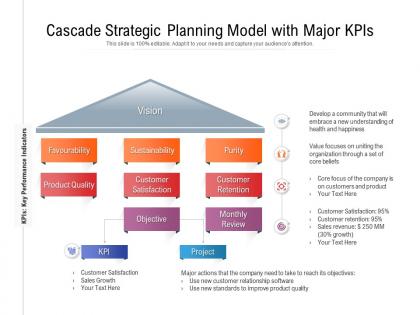
Cascade strategic planning model with major kpis




Try Before you Buy Download Free Sample Product
 Impress Your
Audience
 100%
Editable
 Save Hours
of Time


Our Cascade Strategic Planning Model With Major KPIs are topically designed to provide an attractive backdrop to any subject. Use them to look like a presentation pro.
People who downloaded this PowerPoint presentation also viewed the following :
Cascade strategic planning model with major kpis with all 2 slides:
Use our Cascade Strategic Planning Model With Major KPIs to effectively help you save your valuable time. They are readymade to fit into any presentation structure.


FAQs for Cascade strategic planning model
Start with good communication channels and make sure everyone knows their role. Most teams totally bomb this part - they think people will just "figure it out" somehow. Break your big strategy into smaller pieces for each management level. Set up regular check-ins so you catch problems early. Simple templates help when managers need to explain stuff to their teams. You'll know it's working when someone on the front lines can tell you the strategy using their own words, not corporate speak.
So the cascade thing works like this - executives brief their direct reports, then those people brief their teams, and it keeps going down each level. Way better than some random company-wide email that nobody reads anyway. Each manager gets to explain it in a way that makes sense for their people, but the main message stays the same. I mean, it's basically the telephone game but actually functional lol. Everyone hears it from their actual boss instead of HR. Oh and definitely build in some feedback loops so you can fix things if the message gets twisted somewhere along the way.
Honestly, cascade pricing is perfect for tech, pharma, and luxury stuff - anywhere customers have totally different budgets. Launch premium first (think iPhone fanatics who'll drop $1200 day one), then work your way down to regular pricing. Super smart for industries with crazy R&D costs since you milk the high-end buyers first to cover development, then chase volume later. Just make sure your segments don't steal from each other - that's where people mess up. I'd map out who's willing to pay what before diving in. Works like a charm when done right.
Honestly, the two big killers are communication getting all garbled and trying to do way too much at once. Like that telephone game we played as kids - your message gets totally twisted by the time it reaches the bottom. Don't pile on 5 different things in one meeting either (I've watched teams do this and it's painful). Stick to maybe 1-2 key points. Actually check that people get it before moving down the chain. Oh, and build in ways for feedback to come back up - you'll need to fix stuff when it inevitably goes wrong.
So tech is basically your backbone for getting messages down through all the org levels. Map out how info flows now, then figure out where you're losing people. Digital dashboards are clutch - you can actually see if your key points are sticking at each level instead of just hoping they made it through. Mobile apps hit your frontline folks right away rather than waiting around for the next team huddle. Honestly, dedicated cascade tools or even a solid Slack setup beats the old "blast an email and cross your fingers" method every time. The visibility alone makes it worth it.
Track attendance at your cascade sessions first - that's the obvious stuff. But honestly, the behavior change piece is what actually matters. Are people doing what you told them to do? Also check how fast info moves between levels and if your key messages stay intact (they usually don't lol). Pulse surveys work great for catching where things get twisted. Feedback quality from each tier tells you a lot too. Oh and completion rates if you're doing follow-ups. Start measuring this stuff within two weeks or you'll lose momentum.
Okay so cascade strategy is way more interactive than the usual top-down stuff. Instead of just blasting messages down the chain, you're actually creating real dialogue at each level. Each manager discusses it, adapts it, then passes it along. It's like a relay where runners add their own spin instead of just handing off the same baton. Regular top-down feels like that telephone game we played as kids - you know how that goes! With cascading though, your managers become translators who can tackle specific team concerns and make everything relevant to what people actually do daily. I'd map out your main points first, then coach each management layer on customizing them for their teams.
Oh man, training is literally everything here. Without it, you're watching your message turn into complete garbage by the third person down - I swear it's like that telephone game we played as kids. You can't just hand people slides and cross your fingers. Train your top leaders first on both the actual content AND how to run these conversations. They need to nail the "why" behind everything and handle pushback smoothly. Then work down level by level. The facilitating part is huge too. People think presenting strategy is easy but it's really not.
Yeah, it totally works! Sometimes better than in-person honestly. Remote teams have an advantage because you're already writing everything down anyway - way clearer than those random hallway chats that miss half the team. Map out your communication flow first. Use your regular meetings and one-on-ones to make sure each level actually gets it before passing info down. The trick is building in feedback loops so you catch problems early. I've seen teams absolutely crush this once they get intentional about their touchpoints. Just don't assume people understood - follow up through your async updates too.
Honestly, it's a game changer once you get it right. Better alignment happens because everyone finally gets how their daily work fits into the big picture. No more "wait, what are we prioritizing again?" confusion during meetings. People actually give a damn more when they see their role matters. Communication gets way cleaner too. You'll build this accountability thing where teams just naturally start tracking their progress - which sounds boring but it's actually huge for hitting goals. I'd say start by figuring out where your communication breaks down right now. That'll show you the biggest wins from cascading.
Build monthly check-ins right into your timeline - that's where you actually see if people are getting it. Most leaders just blast out their message and assume it worked (spoiler: it doesn't). Set up feedback loops so info flows back up to you, not just down the chain. Maybe get your chief of staff to watch for outside stuff that could mess with your plan. The whole thing should feel alive, you know? You'll probably need to adjust course anyway, so don't treat it like some rigid announcement you send once and forget about.
Ok so there's some psychology stuff that'll actually help with your cascade thing. Social proof is massive - people follow what their peers do, not what bosses tell them. Get people involved in crafting the message too, because then they feel like it's theirs and will push it forward. Stories beat data every single time (honestly, people zone out on spreadsheets anyway). Also use that consistency thing where once someone commits publicly, they hate looking like a flip-flopper. My move? Have each leader kick off with their personal story about why this change matters to them, then give them discussion guides instead of just slide decks to present.
Oh man, cultural stuff will totally derail your cascade if you're not careful. Japan's gonna want way more detail than your US team, and Germans hate vague messaging - learned that one the hard way lol. Face-to-face matters huge in some places while others just want everything in writing. Power dynamics are wild too - feedback flows completely differently depending on where you are. Honestly, the hierarchy thing alone can mess up your whole plan. Get your local leaders to help adapt the message for their regions from the start. Don't just copy-paste the same approach everywhere.
Xbox is the perfect example - they launched in North America first, fixed whatever broke, then hit Europe and Asia with better messaging. Toyota's smart about this too, testing cars in Japan before going worldwide. Netflix did something similar when they expanded internationally, which was honestly way smarter than trying to figure out every country at once (that would've been a nightmare). The key thing? Look at how these companies actually changed their approach for each new market instead of just copy-pasting the same strategy everywhere.
Here's what works: build in regular check-ins at every level so teams can actually tell you what's broken. Monthly reviews are solid - let frontline feedback bubble up while strategic stuff flows down. Make it go both ways though, not just leadership barking orders. Honestly, I've watched too many companies turn this into a one-way announcement system and wonder why nobody cares. Quick pulse surveys help. So do team retrospectives or even Slack channels for random input. But here's the thing - you better actually do something with that feedback or people will tune out fast.
-
Excellent design and quick turnaround.
-
Attractive design and informative presentation.
-
Designs have enough space to add content.
-
Visually stunning presentation, love the content.
-
The content is very helpful from business point of view.
-
Excellent products for quick understanding.