


Challenge Artificial Intelligence Powerpoint Ppt Template Bundles




Try Before you Buy Download Free Sample Product
 Impress Your
 Audience
 100%
100% Editable
 Save Hours
 of Time


Our Challenge Artificial Intelligence Powerpoint Ppt Template Bundles are topically designed to provide an attractive backdrop to any subject. Use them to look like a presentation pro.
People who downloaded this PowerPoint presentation also viewed the following :
Challenge Artificial Intelligence Powerpoint Ppt Template Bundles with all 19 slides:
Use our Challenge Artificial Intelligence Powerpoint Ppt Template Bundles to effectively help you save your valuable time. They are readymade to fit into any presentation structure.






FAQs for Challenge Artificial Intelligence Powerpoint
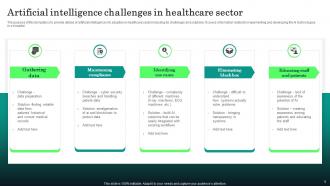
So the big ones are bias, privacy, and who takes the blame when things go wrong. Training data that's not diverse enough means some groups get crappy care - super problematic. Patient data consent is messy too. Who's liable when AI misses a cancer diagnosis? That keeps me up at night honestly. Transparency helps - tell patients when you're using AI tools. Human doctors still need to be calling the shots though. Can't just let algorithms run wild in healthcare.
So basically AI watches how each kid learns and adjusts on the fly - no more one-size-fits-all approach. It picks up on their strengths and weak spots, then tweaks the difficulty and how stuff gets presented. Honestly, it's pretty neat having what feels like individual tutors for everyone. The system can spot knowledge gaps early and recommend different resources. Quiz too hard? It'll dial it back. I'd probably start with something simple - maybe try those adaptive platforms that track progress and suggest next steps based on how each student's actually doing.
So AI basically takes all your business data - sales numbers, customer stuff, market trends - and finds patterns you'd never catch yourself. It's crazy good at predicting things like when customers might leave or how much inventory you'll need. Way more accurate than the old spreadsheet methods, honestly. Once you have those predictions, you can actually get ahead of problems instead of scrambling to fix them later. I'd say pick one area where better forecasting would save you serious headaches (maybe inventory or staffing?) and test out some AI tools there first.
So NLP lets computers actually understand what customers are saying in normal language - pretty game-changing for support. Your customers can just type out their problem instead of dealing with those awful phone menus (seriously, who designed those things?). Chatbots handle about 80% of the boring stuff - password resets, tracking orders, basic fixes. That frees up your actual human agents for the tricky problems that need real problem-solving. The trick is training it on your company's specific data so it doesn't sound like a robot wrote the responses.
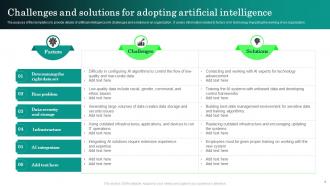
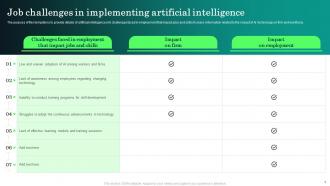
Honestly, the biggest headache will be your data - it's probably a mess spread across different systems. Getting AI to actually talk to your current ERP setup? That's where things get really fun (and by fun I mean expensive). Your team won't love learning new processes either, so expect some pushback there. I'd definitely start with something small like demand forecasting first. Don't try to revolutionize everything at once or you'll just create chaos. Test it out in one area, work out the kinks, then expand from there.
Honestly, AI's been a game changer for climate stuff. Machine learning can spot energy waste in buildings, track deforestation from satellite pics, and predict weather patterns so renewable energy planning actually works. The data processing is insane - it'll crunch numbers all night while you're binge-watching Netflix. Supply chains get optimized, energy grids run smoother. My buddy's company started by just finding their biggest energy drains first. That's where you'll see results fast. Weather prediction alone has gotten so much better it's wild.
Yeah, AI's definitely taking over jobs - manufacturing, data entry, customer service, all that repetitive stuff. Healthcare and finance are getting automated too. But honestly? It's not as scary as everyone makes it sound. New jobs are popping up that didn't exist before, like people who train AI systems. My advice would be to focus on things robots can't do well yet - being creative, solving weird problems, reading people's emotions. That's where humans still win. Start learning skills that work WITH AI instead of against it, you know?
So AI is basically what makes smart cities tick - it takes all that data from sensors, traffic cams, and IoT stuff and optimizes everything instantly. Traffic management gets way better, it can predict when roads need fixing before they fall apart, plus energy usage across buildings becomes super efficient. Honestly, the amount of data these systems handle is insane. Public safety improves too since the AI spots patterns and automatically sends emergency crews where they're needed. Oh, and if you're doing any urban tech work, definitely check out how it automates decisions that humans usually have to make.
Dude, you can't mess around with data privacy when building AI stuff. Your model will only be as good as the data going in, so if you're grabbing people's personal info without asking properly, you're gonna get destroyed by regulations and angry users. Biased data = biased AI, which is terrible when it impacts actual people's lives. GDPR made this way more serious too - learned that the hard way at my last job. Build those privacy protections right into your data pipeline from the start. Trust me, trying to fix it later is a total nightmare.
So AI can crunch way more data than we ever could - like thousands of variables at once, which is honestly pretty wild. It picks up on patterns in market trends and economic stuff that you'd totally miss doing it by hand. The cool part? Machine learning gets smarter over time as it sees how its predictions pan out. Real-time data is where it really shines though - news sentiment, social media buzz, global events, all factored in instantly. I'd say start with something specific first, maybe quarterly revenue forecasts, then expand from there once you get the hang of it.
Look, AI is pretty decent at mixing up existing styles and spitting out something that looks creative. But genuine originality? Not really happening. It completely misses cultural context and can't pull off anything truly groundbreaking. Character development is a mess too - like, it'll forget basic personality traits halfway through a story. The whole thing reminds me of working with someone super talented but who's never actually lived in the world, you know? It just doesn't have those real human experiences that make art actually mean something. Best way to think about it - solid brainstorming buddy, terrible replacement.
So basically, regular programming is you telling the computer exactly what to do - like writing out every single step. Machine learning? You just dump a bunch of data on it and let it figure out the patterns itself. It's kinda like the difference between giving someone detailed directions vs. showing them a thousand examples and saying "figure it out." Honestly, ML is way cooler but also way more unpredictable. Use regular programming when you know the rules. Go with ML when the problem's too messy or complex to code by hand.
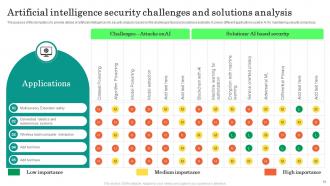
Yeah, AI in cybersecurity is honestly pretty nerve-wracking. Hackers can use it to create way more convincing phishing emails and those deepfake videos for social engineering - that stuff is getting scary good. They're also automating attacks at insane speeds, like probing your systems faster than any human could. Your own AI security tools? They become targets too. Bad actors try poisoning the training data or finding weaknesses in the models themselves. Oh, and don't get me started on false positives - your security team will drown in alerts. Bottom line: never go full AI-only for security. You still need actual humans watching over everything.
Oh yeah, AI's making a huge difference here! Voice recognition is getting really good - way better than those old systems that never understood anyone. People who can't type traditionally can just talk to their devices now. There's also real-time transcription for deaf users, which honestly should've existed decades ago. Screen readers are way smarter too since they actually get context instead of just reading everything robotically. Your phone probably already has most of these features built in, plus there's image recognition that describes photos to blind users. Eye-tracking navigation is pretty wild too. Best part? You don't need crazy expensive specialized gear anymore.
So governments are using AI to crunch through tons of data for policy stuff - budget decisions, traffic flow, finding communities that need help. It's crazy how fast these systems work. They use it for screening benefit applications and even criminal justice assessments (though that one's pretty sketchy if you ask me). Most of the time it just helps human decision-makers instead of replacing them completely. Worth knowing about since you work in government - this tech is literally shaping policies that affect all of us daily.
-
World-class PowerPoint designs that are fully customizable!
-
“I've always gotten excellent slides from them and the customer service is up to the mark.”