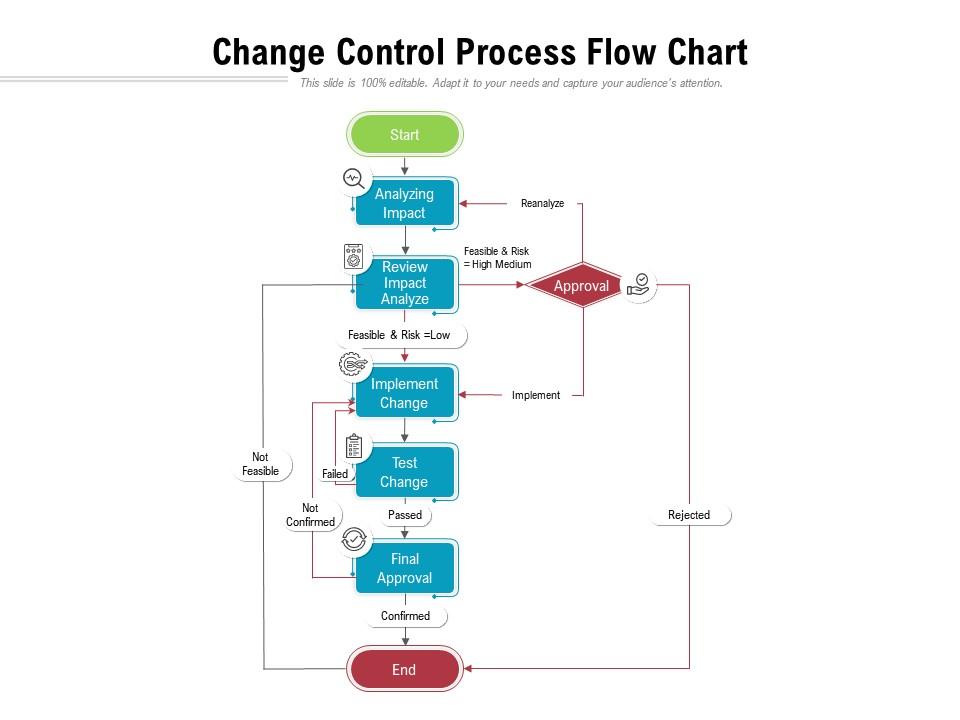
Change control process flow chart
Try Before you Buy Download Free Sample Product
Audience
Editable
of Time
Our Change Control Process Flow Chart are topically designed to provide an attractive backdrop to any subject. Use them to look like a presentation pro.
People who downloaded this PowerPoint presentation also viewed the following :
Change control process flow chart with all 2 slides:
Use our Change Control Process Flow Chart to effectively help you save your valuable time. They are readymade to fit into any presentation structure.
FAQs for Change control
You need four main things: a formal request process, impact assessment, approval workflow, and implementation tracking. Clear documentation at each step is huge - I've watched too many "quick fixes" become total nightmares. Get the right people involved in approvals (seriously, not everyone needs a vote), and always check both technical and business impacts first. Oh, and that tracking piece? Super important for rollbacks when stuff inevitably breaks. I'd start by figuring out who should approve different types of changes in your setup. Makes the whole thing way smoother.
So change control is basically your safety net - makes you actually think through what happens when you tweak stuff. You can't just go "oh yeah, let's throw in that feature" without looking at how it screws with your timeline, budget, all that. Honestly feels like a pain when you're moving fast, but trust me, it beats those "wait we totally forgot about this massive thing" panic moments later. Way cheaper to catch problems early too. Just make a basic change request form and actually use it, even for tiny stuff (those add up quick).
Honestly, the hardest part is dealing with people who think change control is just more bureaucracy slowing them down. Teams will straight-up bypass your process when deadlines hit - I've seen it happen so many times. Finding that sweet spot between moving fast and not breaking everything? Yeah, that's tough. Your approval workflows will be a mess at first, and documentation becomes this weird thing where it's either way too detailed or completely useless. Oh, and stakeholder buy-in is huge - without it you're basically pushing a boulder uphill. Keep things simple when you start out.
Honestly, tech is a game-changer for this stuff. Set up automated workflows so approvals actually happen instead of sitting in someone's inbox forever. Real-time tracking shows you exactly where things get stuck - usually it's the same person every time, lol. Digital dashboards give you the full picture instantly, and everything gets stored in one place instead of scattered across random email chains. When something gets approved, integration tools can update your other systems automatically. My advice? Figure out what's driving you most crazy right now and fix that first.
Dude, communication is literally everything here - I've seen so many projects crash just because people didn't know what was happening. You gotta tell everyone what's changing and why it matters to their day-to-day work. Nobody likes getting blindsided at their job, trust me on that one. Be upfront about everything from the start. Regular updates are your best friend, plus hold meetings when big stuff is happening. Oh, and make sure people can actually ask questions or complain if they need to. When folks feel like they're in the loop, they'll actually help instead of fighting you. Map out your communication game plan first thing.
Track the obvious stuff first - incident rates, how often changes fail, rollback frequency. Stakeholders eat up those numbers. But here's the thing: survey your team too. Are they stressed during deployments? Actually using the process or sneaking around it? That tells you way more than spreadsheets sometimes. Oh, and measure time-to-implement because everyone loves seeing that drop. Before you change anything though, get baselines for maybe 3 metrics. Then check quarterly - you'll start seeing patterns pretty quick.
Grab the "what, why, when, and who" for every single change request. Trust me, I've been burned too many times by vague requests that turn into disasters later. Document what needs changing, why they want it, timeline, and who's involved. Risk assessment and rollback plans are clutch too. Oh, and make sure someone else could read your notes and actually understand what's happening - not just you at 2am three weeks from now. A standard template helps keep things organized. Honestly, the extra five minutes upfront will save you hours of confused meetings later.
Agile makes change control way less painful - you just build it into your regular ceremonies instead of drowning in paperwork. Daily standups and sprint reviews become your change discussion forums. Your product owner handles most approval decisions quickly rather than waiting weeks for some committee. Track everything through user story updates and retrospectives instead of formal logs. Honestly, backlog refinement sessions are where the magic happens - that's where you hash out scope changes without the waterfall bureaucracy. Way more responsive than traditional methods, plus you're not creating extra meetings just to talk about changes.
Yeah, change control is gonna slow you down and cost more - no way around it. Each request needs approval and paperwork, which can push things back days or weeks. Plus you're paying for the actual changes AND all that admin overhead. But honestly? Skipping it usually bites you way harder when scope creep kicks in. I learned that one the hard way on a project last year. My take - just bake some extra time and budget into your plan upfront for handling changes. Way better than scrambling later when everything's off track.
Look at three things for each request: business impact, how urgent it actually is, and what resources you'll need. Critical stuff that breaks workflows comes first - that's a no-brainer. Then figure out which changes give you the biggest bang for your buck. I swear by making a simple scoring matrix because juggling it all mentally is impossible. Dependencies matter too since some changes might unlock others down the line. Weekly review meetings with your key people work well - you don't want to make these calls alone. Trust me on that one.
Most people go with ServiceNow or Jira, but honestly? ServiceNow's pretty intense if you're just getting started. Look for something that does approval workflows and tracks changes across environments. Remedy and Cherwell work well for bigger companies. Smaller teams can totally make Jira work with custom workflows - I've seen it done really well. The tool doesn't matter as much as actually following your process though. I'd probably just pick whatever plays nice with your current dev tools rather than overthinking it.
So basically, get everything documented first - like who approves what and when. Make sure your team actually knows these processes exist (shocking how often this gets skipped). Set up proper approval chains so random changes don't just go live. Honestly, regular internal audits are a lifesaver because finding your own mistakes beats having regulators find them. Train people properly and yeah, document the small stuff too. The whole thing only works if you're consistent though. Once it becomes routine, you won't be panicking every audit season trying to piece together what actually happened.
Honestly, skip the boring presentations and just throw them into real scenarios. Have them role-play being both the person asking for changes AND the one approving them - helps them get why approvers can be so picky sometimes. Get your newbies to shadow the veterans during actual change requests too. Quick reference cards beat lengthy manuals every time, trust me. Oh, and here's what works best: grab some low-risk change that's coming up anyway and turn it into a team learning experience. Way better than theoretical stuff.
So it really depends on what field you're in. IT moves super fast - they're all about automated testing and being able to roll back changes quickly since downtime costs money. Manufacturing? Totally different story. Way more bureaucratic (which honestly makes sense when you think about it) because physical changes are expensive and potentially dangerous. Like, you can't just ctrl+z a production line, you know? They've got formal review boards, tons of paperwork, the whole nine yards. But the basic idea is still the same across industries - figure out the risks, get the right people to sign off, document what you did. Just match your process to what you're actually changing.
So change management is basically the people stuff - getting everyone on board, training, communication, all that. Change control? That's your technical side with approval processes, documentation, rollback plans. Honestly, most places mess this up because they focus on one but ignore the other. You can have the most buttoned-up technical process ever, but if people hate the change, it'll still bomb. Short sentences work better here: Figure out what you actually need first. Are people resisting, or do you need better processes? They're completely different problems that need different solutions.
No Reviews