

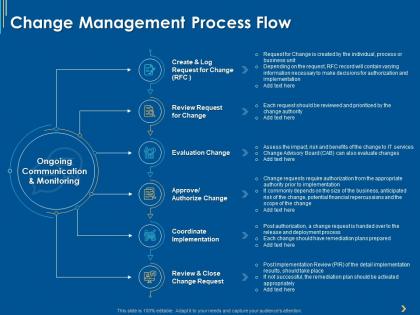
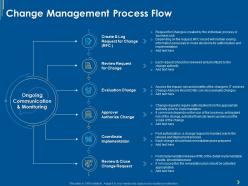
Change management process flow ppt powerpoint presentation infographics examples




Try Before you Buy Download Free Sample Product
 Impress Your
 Audience
 100%
100% Editable
 Save Hours
 of Time


Introduce better facilities with our Change Management Process Flow Ppt Powerpoint Presentation Infographics Examples. Highlight the important benefits available.
People who downloaded this PowerPoint presentation also viewed the following :
Change management process flow ppt powerpoint presentation infographics examples with all 2 slides:
Highlight important benefits available with our Change Management Process Flow Ppt Powerpoint Presentation Infographics Examples. Introduce better facilities.
FAQs for Change management process flow ppt powerpoint
So basically you've got five main steps: figure out where you are now, decide where you want to be, plan how to get there, actually do the changes, then keep tweaking as needed. Pretty much every framework uses some version of this. Here's the thing though - most people totally rush the planning part and then act shocked when everything falls apart during implementation. You really want to map out your communication plan, training, all that support stuff first. Seriously, spend way more time figuring out who's gonna be affected and what pushback you'll get. Trust me on this one.
Honestly, start talking about it way earlier than feels necessary. I've watched companies tank because they waited too long and everyone lost their minds. Hit people from all angles - emails, meetings, casual conversations, whatever works. Your managers need to stay on the same page though, because contradictory messages will destroy any trust you've built. Oh, and don't just dump info on people. Actually listen to their concerns and questions. They want to feel heard, not lectured at. The whole "surprise, everything's changing tomorrow" approach never works out well.
Honestly, leadership can totally make or break your whole thing. You need people at the top who actually care - not just the ones who say "sounds great!" in meetings then disappear. Good leaders explain why the change matters and show everyone what it looks like in action. I've watched so many projects die because executives weren't really backing them up. Plus someone has to deal with all the pushback you'll get (and trust me, there will be pushback). Make sure your sponsors are genuinely invested, not just checking a box. Oh, and they need to give teams actual resources to pull this off.
Honestly, map out who's gonna get hit hardest by this change - their job security, status, the processes they're comfortable with. Nobody likes getting blindsided, so start talking about it early and actually listen when they push back (trust me on this one). I used to just plow ahead and it backfired every time. Get your biggest skeptics involved in the planning if you can swing it. Address their fears with real info, not corporate speak. Quick wins help too - people need to see it's not just another disaster waiting to happen. The whole thing comes down to making them feel heard instead of ignored.
Honestly, I used to roll my eyes at frameworks, but Kotter's 8-Step Process really helps when you're trying to create urgency. ADKAR is solid too - it breaks down individual adoption into Awareness, Desire, Knowledge, Ability, Reinforcement. Way less overwhelming that way. Start by mapping your stakeholders first though, that's huge. Figure out who's gonna push back and who's got your back. Then do change impact assessments to see who gets hit hardest. Oh, and pulse surveys are clutch for tracking if people are actually buying in or just pretending to. The stakeholder mapping thing makes everything else so much more targeted.
Honestly, the trick is making it feel normal instead of some annoying extra step. Build change stuff right into what you're already doing - like adding impact checks to new projects or feedback time in regular meetings. Your managers have to actually walk the walk, not just give speeches about it. I've watched so many companies fail at this because it feels totally separate from real work. Train people to coach through transitions, celebrate when teams adapt well (and do it loudly), and - this is huge - actually reward flexibility in reviews. Oh, and keep it simple. Nobody wants more bureaucracy.
Track both the numbers and the people stuff. Hard metrics: adoption rates, how fast you hit milestones, budget tracking, productivity. But honestly? The soft metrics matter just as much - employee satisfaction, pushback levels, feedback quality. Those engagement surveys feel cheesy but they're actually super valuable. Also check if new processes stick after launch, not just during. Oh, and grab baseline data before you start anything or you'll be kicking yourself later. Keep it to 4-6 metrics total - more than that and you'll drown.
Honestly, training makes or breaks change management. People resist what they don't understand, so when you actually teach them the new processes, they're way more likely to get on board. I've watched so many initiatives crash and burn because leadership just expected everyone to magically figure it out - super frustrating to witness. Confidence goes up when people know what they're doing. Plus you'll catch problems early instead of dealing with chaos later. Skip the boring PowerPoint sessions though. Make it interactive and don't treat it like a one-and-done thing.
Dude, get people involved from day one - seriously makes or breaks everything. Figure out who's actually impacted and what they care about personally. I've watched so many projects crash because everyone felt left out of the loop! Regular check-ins are huge. Actually listen to complaints and show how you're using their input. Also, explain WHY you're changing things, not just what's changing. Nobody likes feeling clueless about decisions that affect them. Oh, and find those people who get excited about new stuff - they'll basically do half your convincing for you with other teams.
Honestly, tech makes change management way less painful. Project management tools like Asana let you track who's actually adopting stuff and send updates automatically. The data visualization is clutch for spotting where people are struggling - I'm a total sucker for a good dashboard. Slack or Teams keeps communication flowing so nobody feels left in the dark. You can also use survey tools to check how everyone's feeling throughout the process. But don't go crazy with like 10 different platforms. Pick two that play nice together, otherwise you'll just frustrate people more.
Honestly? Most people rush it and skip getting the important people on board first. Communication is where everything falls apart - you can't just drop changes on people without explaining why. Resistance will be way stronger than you expect (learned that the hard way). Also, always have a backup plan because stuff goes wrong. Start small with a test group, keep everyone in the loop constantly, and give people actual time to adjust. I know it sounds obvious but change seriously takes forever. Way longer than anyone wants to admit.
Ugh, remote change management is such a pain compared to in-person stuff. You can't just walk over and see if someone's confused or annoyed about new processes. Miss those random desk chats! Now I have to send like 3 different messages through Slack, email, whatever. Video calls become your best friend for check-ins. Everything takes forever because coordinating is harder – build in way more time than you think. Also, write everything down since people can't just ask you questions in the hallway. Honestly, start with figuring out how you'll communicate first, then plan the actual changes.
Good change management is honestly a game-changer for performance. You get way less pushback from your team when they understand what's happening. I've watched companies completely mess this up - people resist everything and productivity just tanks. But when you do it right? Transitions actually go smoothly and you don't lose momentum. Teams buy in faster, make fewer mistakes, and you're not constantly fighting fires. Oh, and it makes future changes easier too since people trust the process. Don't treat it like some HR checkbox thing. Track how your current changes are actually affecting output - that's where you'll see the real impact.
Honestly, feedback loops are total lifesavers. You'll spot problems way before they blow up and can pivot quickly. Real people tell you what's actually happening instead of you just... hoping things are fine? Way better than flying blind. I always think of it like having GPS - it warns you about traffic jams ahead. Set up a few different ways to hear from people: quick surveys, random check-ins, even just casual hallway conversations. Don't overthink it though. Pick one method first and actually do something with what people tell you.
Honestly, EQ is what makes or breaks change management. Most leaders just bulldoze ahead with logic and wonder why everyone's dragging their feet. But here's the thing - people aren't being difficult when they resist change, they're scared. You've gotta actually listen to their concerns instead of dismissing them. Read the room, acknowledge their fears, show some real empathy. I mean, wouldn't you be nervous if someone was shaking up your whole routine? Once you connect with people emotionally and help them work through the uncertainty, that's when real change happens.
No Reviews