

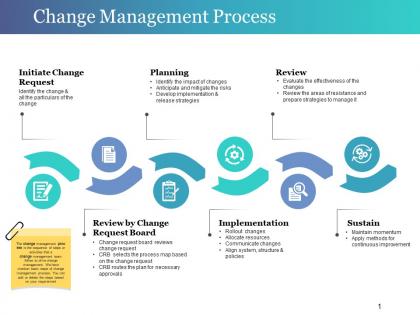
Change management process powerpoint slide themes




Try Before you Buy Download Free Sample Product
 Impress Your
 Audience
 100%
100% Editable
 Save Hours
 of Time


Glory beckons with our Change Management Process Powerpoint Slide Themes. Find yourself catapulted to fame.
People who downloaded this PowerPoint presentation also viewed the following :
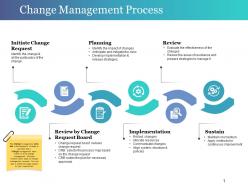
Change management process powerpoint slide themes with all 5 slides:
Bring about feelings of closeness with our Change Management Process Powerpoint Slide Themes. They convert contacts into friends.


FAQs for Change management process
Honestly, it's all about talking to people and getting buy-in from the top. Be super transparent about why stuff's changing and what it means for everyone. Leadership has to actually show they're on board - not just say it, you know? Don't just drop changes on people either. Get them involved in figuring out how to make it work. Resistance is gonna happen no matter what, but that's actually helpful feedback. I'd start with small pilots if you can. Quick wins help a ton. The timeline's always longer than you think it'll be, so just keep communicating throughout the whole mess.
Survey your employees first - how do they feel about change and how swamped are they right now? Past changes are a good indicator too. Did they go smoothly or was it a disaster? Leadership alignment is huge (and honestly, they're usually way less aligned than they pretend to be). Make sure you actually have the resources and skills needed. Some company cultures roll with change easily, others need way more support. Oh, and communication channels matter more than people think. A basic readiness survey will give you solid baseline data to work with.
Leadership makes or breaks everything here. Seriously, I've watched so many initiatives crash because the bosses just announced something and then disappeared. You need leaders who'll actually stick around and explain why this matters. They've got to model what they're asking for too - people pick up on fake enthusiasm from a mile away. The best changes I've seen had leaders who stayed visible, didn't dodge the tough questions, and made a big deal about small victories. Honestly? If your leadership team isn't genuinely on board from day one, just save yourself the headache.
Honestly, communication can totally make or break your whole change thing. People need to understand the why behind everything - otherwise you'll just get pushback and rumors flying around (been there, seen that disaster). Clear, frequent updates actually build trust instead of freaking everyone out. You can't use the same message for your CEO and your warehouse team though - they care about different stuff. Oh, and don't just talk at people. Listen to what they're saying back, even if it's complaints. Map out who needs what info first, then stay consistent across everything.
Honestly, the biggest pain points are usually people pushing back, crappy communication, and leaders who aren't really committed. Change freaks people out - which makes total sense, right? Get everyone involved from day one and be upfront about what's happening and why. Your leadership team needs to actually show they care, not just say they do. Nobody follows if the boss seems checked out. Keep talking to people regularly and celebrate small wins so they see it's working. Oh, and don't overthink it - you're basically just bringing everyone along instead of forcing them.
Honestly, start talking about it way before you actually make the change - people hate surprises. Be upfront about why it's happening and how it'll hit them personally. Some of their complaints might actually make sense, so don't just ignore the pushback. Get your key people bought in first because they'll do half the convincing for you. Oh, and involve folks in planning when you can - makes them feel like they're part of it instead of just getting steamrolled. I've watched so many changes crash and burn because leadership thought they could just force it through. Communication is everything here.
Honestly, start simple with adoption rates and employee sentiment - those two metrics will tell you everything. Dashboards are great for the big picture KPI stuff, but don't sleep on pulse surveys. The feedback you get can be pretty surprising (and not always in a good way lol). Focus groups or quick check-ins with key people work well too. I use Monday for tracking deliverables, but whatever project tool you're comfortable with. The main thing? Pick like 3-4 metrics max. Otherwise you'll drown in spreadsheets and still have no clue what's actually happening.
Honestly, culture is everything when it comes to change. Some teams are totally cool with experimenting and will roll with whatever you throw at them. Others? Good luck getting them to switch from Slack to Teams without a revolt. I learned this the hard way at my last job - we had this super hierarchical culture and even tiny process tweaks took forever. You gotta read the room first. Data-driven people? Show them the numbers. Relationship-heavy teams need way more face time and buy-in conversations before they'll budge.
Pick 3-5 metrics that actually matter for your specific situation. Track adoption rates and how fast people get up to speed, plus whether you're hitting those original business goals. But honestly? Don't sleep on the people side - engagement scores and feedback will tell you if there's resistance brewing. I've watched too many rollouts succeed "on paper" while everyone hated the process. Budget and timeline stuff matters too since leadership cares about that. Oh, and actually share results with your team - sounds obvious but people forget.
First thing - figure out who actually has a stake in this and what keeps them up at night. People always skip this part, but it's huge. Talk to them early, like way before you think you need to. Be honest about what's changing and why it matters. Actually listen when they complain instead of just waiting for your turn to talk. Give people different ways to give feedback too - some hate meetings, others won't write emails. Let them help shape the solution if you can. Oh, and whatever you promise them? Actually do it. Nothing kills trust faster than broken commitments.
So it really depends on what you're dealing with. Kotter's 8-Step thing is solid for big transformations - creates urgency and all that - but man, it can be super rigid. ADKAR's better when you need people to actually change how they work day-to-day. Then there's Lean Change Management if things keep shifting around (which, let's be honest, they usually do). Don't just pick the most popular one though. Look at whether you need something structured or if you've got room to be flexible. Oh, and consider your company culture too - some places hate rigid processes.
Honestly, you can't skip the training part - it's what makes or breaks everything. People need to actually know what they're doing before you expect them to embrace change. Otherwise you're just setting everyone up to fail, which I've seen happen so many times it's not even funny. Good training cuts down on pushback because employees feel prepared instead of panicked. It also speeds things up since they get both the "what" and the "how." Oh, and don't wait until the last minute to plan it. Start early or you'll regret it later.
Honestly, tech makes change management way less painful. Slack or Teams keeps everyone on the same page without endless email chains. Project management tools let you spot who's struggling early - super helpful. Those digital training platforms are clutch because nobody wants another mandatory meeting where half the room zones out. You'll get real data from analytics dashboards instead of just guessing how things are going. Don't go crazy though. Pick one or two tools that fix your worst problems first. Otherwise you're just adding more chaos to an already messy situation.
Honestly, you've gotta way over-communicate when everyone's remote - like almost annoyingly so. People miss SO much context without those random office chats or being able to see everyone's faces properly in meetings. I'd schedule way more check-ins than feels normal and hit multiple channels - video calls, Slack, emails, whatever. Most pushback happens because people feel confused or left out, which is like 10x easier when you're all working from different places. Oh and definitely create spaces where people can ask questions without feeling dumb, then actually answer them fast. Your usual feedback loops won't work here.
Ugh, most change projects blow up because leadership doesn't actually buy in or they try changing everything at once. Communication usually sucks too. Here's the thing - when you force change on people without involving them, they'll fight back every time. But that resistance? It's not your enemy, it's telling you what's broken. Start way smaller next time. Get people excited about the "why" before you do anything else. I learned this the hard way, but you should expect things to go sideways instead of pretending it'll be smooth sailing.
-
Wonderful templates design to use in business meetings.
-
Great quality slides in rapid time.