


Change Management Models Powerpoint Presentation Slides





Try Before you Buy Download Free Sample Product
 Impress Your
 Audience
 100%
100% Editable
 Save Hours
 of Time


Demonstrating a change management model through a presentation to the management is not a simple task. You require a lot of time and efforts to design a PPT that can win the heart of the management. To aid you out, SlideTeam has come up with predesigned change management model PowerPoint presentation slides. This change control model PPT presentation has been outlined utilizing a slide on various related subjects such as change curve model, the Johari window, Kotter’s eight phase of change, the ADKAR change model, the McKinsey 7S framework, the Burke Litwin change model, Leavitt’s diamond, three-stage change model, and Bridges transition model. With the help of these business change framework presentation slides, you can describe the tasks needed to prepare, plan, and develop business changes successfully. Use these organization change model PowerPoint slides to showcase the idea of change management, business change, business transformation, organization change, change control, and business process. Impress your audience with this editable change management models PPT slides. Folks find it easy to absorb the concept due to our Change Management Models Powerpoint Presentation Slides. It ensures your ideas don't jar.
People who downloaded this PowerPoint presentation also viewed the following :
Content of this Powerpoint Presentation
Slide 1: This slide introduces Change Management Models. State the name of your company and begin.
Slide 2: This slide shows Change Management Models in a circular form. Various models used in change management process have been listed here. You can choose one or more models based on your requirement.
Slide 3: This slide shows Mckinsey 7S Framework which include- Strategy, Style, Skills, Staff, Structure, Systems, Shared Values.
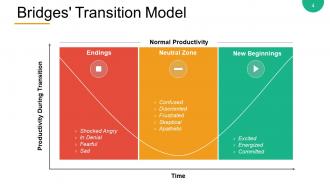
Slide 4: This slide shows Bridges' Transition Model which further shows - Productivity During Transition, Time, Normal Productivity.
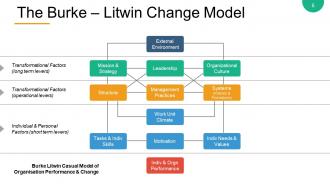
Slide 5: This slide shows The Burke – Litwin Change Model with points and further subpoints- External Environment: Mission & Strategy, Leadership, Organizational Culture, Structure, Management Practices, Systems (Policies & Procedures), Work Unit Climate, Motivation, Tasks & Indiv Skills, Indiv Needs & Values, Indiv & Orgn Performance, Transformational Factors (long term levers), Transformational Factors (operational levers), Individual & Personal Factors (short term levers), Burke Litwin Casual Model of Organisation Performance & Change.
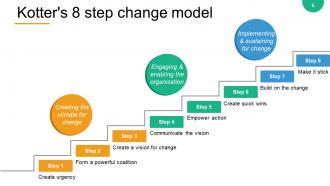
Slide 6: This slide shows Kotter's 8 step change model- Step 1- Create urgency, Step 2- Form a powerful coalition, Step 3- Create a vision for change, Step 4- Communicate the vision, Step 5- Empower action, Step 6- Create quick wins, Step 7- Build on the change, Step 8- Make it stick.
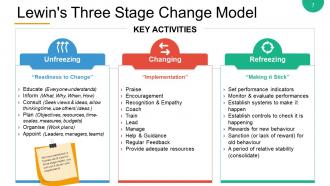
Slide 7: This slide shows Lewin's Three Stage Change Model: Unfreezing, Changing and Refreezing. We have mentioned Lewin’s three stage model, you can use it as per your requirements.
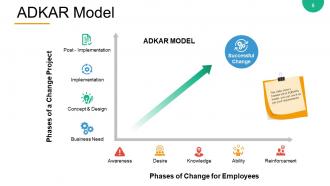
Slide 8: This slide shows framework of ADKAR’s model, you can use it as per your requirements.
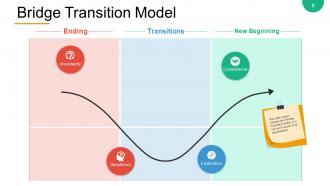
Slide 9: This slide shows framework of Bridge Transition Model, you can use it as per your requirements.
Slide 10: This slide shows Szpekman's Communication Framework with- Knowledge / Skill Emphasis, Measures, Rewards, Structure / Process, Leadership. You can use it as per your requirements.
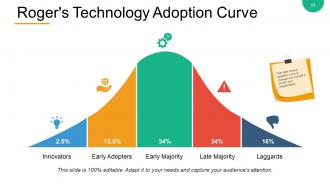
Slide 11: This slide shows Roger's Technology Adoption Curve. You can edit it as per your requirements.
Slide 12: This slide shows a Coffee Break image. You can alter the content as per need.
Slide 13: This is a way forward to Chart & Bar Graph slides. Alter the content as per your need.
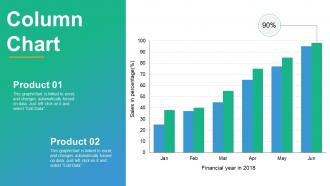
Slide 14: This slide showcases Column Chart with which you can compare the products.
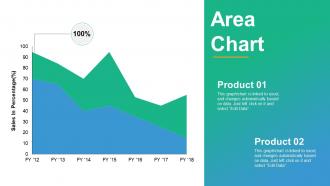
Slide 15: This is an Area Chart slide to show product/ entity growth, comparison, specifications etc.
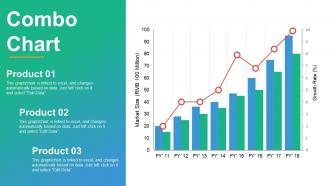
Slide 16: This is a Combo Chart slide to show information, comparison specifications etc.
Slide 17: This slide is titled Additional Slides to move forward. You can change the slide content as per need.
Slide 18: This slide showcases Our Mission.
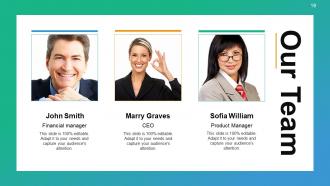
Slide 19: This is Our team slide with names and designation.
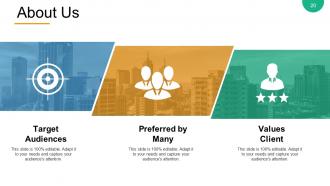
Slide 20: This is an About us slide to state company specifications etc.
Slide 21: This is Our Goal slide. State your important goals here.
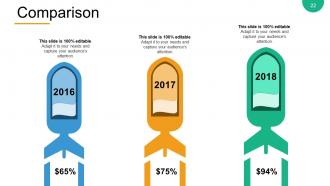
Slide 22: This is a Comparison slide to compare product/ entities etc.
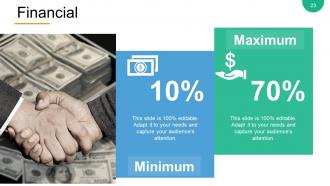
Slide 23: This is a Financial score slide. State financial aspects etc. here.
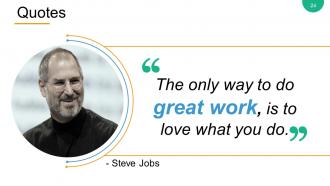
Slide 24: This is a Quotes slide. State business message, beliefs etc. here.
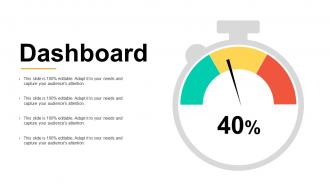
Slide 25: This is a Dashboard slide to state metrics, kpis etc.
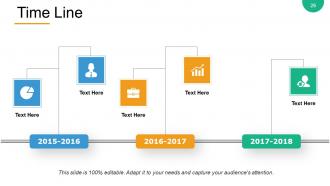
Slide 26: This is a Timeline slide to show evolution, growth, milestones etc.
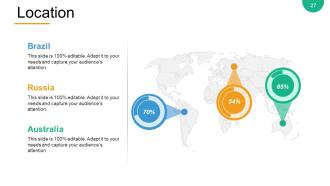
Slide 27: This is a Location slide on a world map image to show global presence, growth etc.
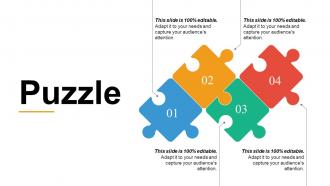
Slide 28: This is a Puzzle image slide to show information, specifications etc.
Slide 29: This is a Target image slide. State targets, etc. here.
Slide 30: This is a Circular image slide to show information, specifications etc.
Slide 31: This is a Venn diagram image slide to show information, specifications etc.
Slide 32: This is a Mind Map image slide with text boxes to fill information.
Slide 33: This is a Bulb or Idea slide to state a new idea or highlight specifications/ information etc.
Slide 34: This is a Silhouettes slide to show people related information, specifications etc.
Slide 35: This slide shows a Magnifying glass image with text boxes. State information etc. here.
Slide 36: This is a Thank You slide with Address# street number, city, state, Contact Numbers, Email Address.
Change Management Models Powerpoint Presentation Slides with all 36 slides:
Display the goodness of your heart with our Change Management Models Powerpoint Presentation Slides. Be charitable in your comments.






FAQs for Change Management Models
So Lewin's got 3 basic stages - unfreeze, change, refreeze. Pretty straightforward but kinda vague, you know? Kotter breaks it down into 8 concrete steps like "create urgency" and "build your team." Way more actionable. Lewin's better for understanding why people freak out about change. Kotter actually tells you what to do about it. I'd probably start with Kotter's framework since you need that roadmap, but honestly the psychology stuff from Lewin helps too. Oh, and Kotter's steps aren't as rigid as they sound - you can bounce around between them.
Oh, ADKAR's actually pretty solid for this! Start with **Awareness** - skip the boring presentations and do storytelling sessions where people can voice their real concerns. For **Desire**, figure out what your team actually cares about and tie the change to that. **Knowledge** works way better through peer learning than those awful training modules (honestly, who has time?). Then **Ability** - give them hands-on practice but with safety nets so they don't freak out. **Reinforcement** is just celebrating wins publicly. The trick is making it interactive, not just talking at people. Ask your team what they're missing first - motivation, skills, support - then build from there.
So communication isn't technically one of the 7 S's, but honestly it's like the thread that weaves everything together. Your strategy means nothing if people don't get it. Staff can't build the right skills without clear direction. Systems fall apart when there's mixed messaging about shared values - you know how that goes. Short version: communication is what stops those seven elements from being random puzzle pieces scattered everywhere. My advice? Figure out your communication plan for each S before you touch anything else. Otherwise you're just creating expensive chaos.
Track your adoption rates and timeline stuff first - that's your baseline data. Employee engagement scores matter too, but honestly? The survey feedback about how people actually *feel* during the change tells you way more than spreadsheets do. I'd focus on confidence levels and resistance patterns especially. Oh, and don't ignore the sustainability piece after everything's "done" - changes that fall apart in six months weren't really successful. Pick maybe 3-4 metrics that actually match what you're trying to achieve and stick with tracking those consistently.
Honestly, the hardest part is people just won't let go of how they've always done things - even when they know it's broken. Teams get stuck mourning the old way while you're trying to push them ahead. That middle phase is rough too because everyone's confused and productivity tanks. Managers totally panic about the performance dip! Also transitions drag on way longer than anyone expects, which is annoying but normal. My take? Keep talking people through where they are in the mess, and celebrate any tiny progress during that weird limbo period.
Oh, the Kübler-Ross thing! It's those five emotional stages - denial, anger, bargaining, depression, acceptance. Originally for grief but works perfectly for workplace changes too. Here's the thing: you can actually predict where people will be emotionally and adjust how you talk to them. Someone in denial? Don't push them toward acceptance yet. Angry team member? Let them vent first, then problem-solve. I learned this the hard way - resistance isn't about you, it's just part of the process. Try mapping out where each person might be and meet them there instead of fighting it.
Your culture will make or break any change you're trying to push through - I've watched amazing ideas crash and burn because nobody thought about this part. If your team loves taking risks and trying new things, you're golden. But if you're dealing with people who think "that's not how we do things here," good luck getting anyone to actually follow through. You can have the perfect strategy on paper, but culture is what decides whether people genuinely buy in or just nod along in meetings. First figure out what parts of your culture will help vs. fight against the change, then work with those realities instead of pretending they don't exist.
ADKAR breaks digital transformation into chunks your team can actually handle. First, build Awareness - why does this change matter? Then create Desire so people want to participate. Next comes Knowledge of how to change, followed by giving them the Ability to use new skills. Reinforcement makes it all stick long-term. Honestly, it beats drowning everyone in tech specs right away. The model keeps you thinking about people first, which - let's be real - most companies totally forget about. Start by figuring out where each person lands on the ADKAR scale. That way you'll know exactly where to focus your energy instead of just throwing training at everyone.
So basically, each model handles pushback differently but they're all pretty clever about it. Kotter's thing is all about talking to people early and getting buy-in before resistance even starts. ADKAR gets really specific - like, is someone stuck on not understanding why we're changing, or do they just not want to? Then you fix that exact problem. Lewin's approach is more about getting people mentally ready first before you try changing anything. Oh, and they all expect resistance - it's not like some surprise thing they forgot about. Just pick whichever one actually fits how your company operates.
Honestly, Kotter's 8-step thing is solid for big changes - gives you that roadmap so you don't mess up the basics like building your coalition or celebrating too early. Leadership loves having those checkpoints to measure against. But here's the thing: it's super rigid and linear when real change is basically chaos. Takes forever too, which can kill your momentum if you need to move quickly. I mean, who has time for all eight steps in order? Use it as your framework but definitely adapt it - run some steps together or skip around when it makes sense for whatever you're dealing with.
So the Change Path Model is basically tracking people's emotional rollercoaster during transitions. Think denial, anger, bargaining - you know the drill. Don't bombard someone with training materials when they're still in the "this is stupid" phase. Start with explaining why it matters instead. Once they hit exploration mode, that's your green light to pile on resources and support. Honestly, people don't move through these stages in order though - they'll ping-pong between acceptance and resistance sometimes. You've got to read the room and adjust your approach based on where someone's head is at.
Honestly, three things will save you here. Get people involved early - like actually part of the planning, not just told about it after. Nobody wants stuff happening TO them, you know? Bring your key players into design sessions so they can shape it. Also figure out what each group gets out of this change personally. People are selfish (in a good way) - they need to see the benefit. Oh and map out who your influencers are this week. Those relationships matter way more than perfect PowerPoints.
So the Cynefin Framework is basically about not treating every change like it needs the same game plan. Simple stuff? Just follow the playbook everyone uses. Complicated changes need some analysis first, then bring in experts to figure out the best approach. But here's the thing - most organizational changes are actually complex, which means you can't plan your way out of it. You've got to try small experiments, see what happens, then adjust. Think "safe-to-fail" tests instead of massive detailed plans. And if things are totally chaotic? Act fast to stop the bleeding first. Bottom line: figure out what type of situation you're dealing with, then pick your strategy accordingly.
So basically you treat change like a product - constant tweaks and improvements. Run tiny experiments first, see what happens, then adjust. Way better than those massive rollouts that usually crash and burn, honestly. The cool part? You're improving your change process as you go, not just waiting for some perfect end result. Quick feedback loops save your sanity too. Oh and start super small - pick one tiny thing to test with a few people before you even think about going bigger. Makes the whole thing feel less overwhelming.
For fast-paced stuff, I'd go with Agile change management or ADKAR. Both handle pivots really well. Kotter's 8-step thing? Way too slow when everything's shifting constantly. Agile lets you adapt as you figure things out, which honestly makes way more sense. ADKAR's cool because it tracks if people are actually buying into changes instead of just checking boxes on some plan. Oh, and sequential phases are basically dead in most environments now. Start with Agile principles, then use ADKAR to see if your team's really on board. That combo works pretty well.
-
Commendable slides with attractive designs. Extremely pleased with the fact that they are easy to modify. Great work!
-
Great designs, Easily Editable.