


Change Management Case Studies Adobe Transformation Of HR Functions For Supporting Strategic CM SS




Try Before you Buy Download Free Sample Product
 Impress Your
 Audience
 100%
100% Editable
 Save Hours
 of Time


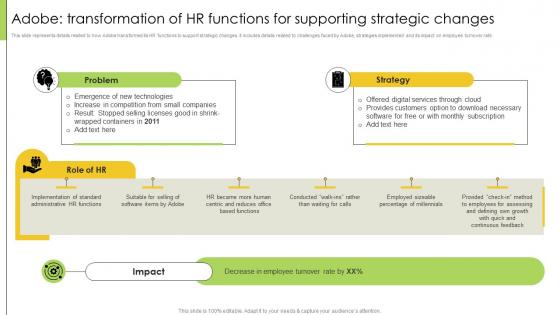
This slide represents details related to how Adobe transformed its HR functions to support strategic changes. It includes details related to challenges faced by Adobe, strategies implemented and its impact on employee turnover rate.
People who downloaded this PowerPoint presentation also viewed the following :
Change Management Case Studies Adobe Transformation Of HR Functions For Supporting Strategic CM SS with all 9 slides:
Use our Change Management Case Studies Adobe Transformation Of HR Functions For Supporting Strategic CM SS to effectively help you save your valuable time. They are readymade to fit into any presentation structure.








FAQs for Change Management Case Studies Adobe Transformation Of HR Functions For Supporting
So there's basically three parts to this whole thing. You gotta prep first - figure out who's ready for change and get the right people backing you. That's honestly the part most people totally botch because they're too eager to jump ahead. Then comes the messy middle where you're actually doing the change - explaining what's happening, training everyone, dealing with people who hate it (spoiler: there will be drama). Last bit is making sure it actually sticks. Celebrate the wins, track how it's going, and don't let people slip back into old habits. Oh and definitely don't skip that prep phase - I can't stress this enough.
Here's the thing - always explain WHY you're making the change first. People shut down if they don't get the reasoning. Don't sugarcoat the downsides either, because everyone can spot fake positivity instantly and it kills your credibility. Mix up how you communicate too. Some folks want emails, others need those face-to-face chats or big meetings. Actually listen to feedback instead of just talking at people. Oh, and keep sending updates even when nothing's happening - radio silence makes people nervous. Find a few influential people in each group who can help spread the word. They'll explain things way better than you can to their own teams.
Dude, leadership makes or breaks these things - seriously. Without someone at the top who actually cares and shows it, you're screwed from day one. They've gotta explain WHY this change matters, not just bark orders. Plus they need to walk the walk themselves, which honestly most don't do well. I've watched so many initiatives crash because executives kept changing their minds or seemed half-hearted about it. Fight the pushback directly, celebrate small wins early. And if you're the one leading? Be everywhere, talk constantly - like, way more than feels normal. People get weird during change and need that reassurance.
Dude, employee attitudes can totally make or break your change project. I've watched amazing initiatives crash because people just weren't having it - they'll find ways around new processes or literally just wait it out hoping things go back to how they were. Super frustrating. But flip side? When your team's actually excited about changes, they become these unofficial advocates who help solve problems and get others on board. You can't just drop a big announcement though and expect everyone to be thrilled. People need to understand why you're doing this, and honestly, letting them have some input on the how makes a huge difference.
Honestly, people just hate change - they get scared and dig their heels in. Leadership usually does a terrible job explaining why it's happening too. Then you've got the whole "let's change everything at once" disaster, which I've seen tank so many good initiatives. Plus if your executives aren't actually walking the walk, forget about it. Oh, and never having enough training budget doesn't help either. Start with communication way earlier than you think you need to. Get your C-suite genuinely on board first, not just nodding along in meetings.
Honestly, you need both the numbers and the feelings. Set up your baseline metrics first - adoption rates, productivity, goal progress, all that stuff. But here's the thing: employee surveys matter just as much because they'll tell you if people actually care or they're just faking it. Engagement scores, retention, support tickets - track it all. I'd probably focus more on the pulse checks though, since unhappy employees will tank your change faster than bad metrics will. Oh and do this before you start implementing so you can actually see what's working and pivot when stuff goes sideways.
Honestly, getting people on board early is huge - explain the "why" behind everything. Listen to their worries instead of brushing them off. Give them proper training so they don't feel lost (I've watched so many changes crash because leadership assumed people would just... figure it out?). Find your natural influencers who can spread good vibes about the change. Quick wins help build momentum, then make a big deal about celebrating those publicly. The whole thing works better when people feel like they're part of the solution rather than just having change dumped on them.
Honestly, your company culture is going to make or break any change you're trying to push through. Risk-taking, innovative places? People jump on board pretty quick. But those old-school, top-down places where everything goes through five approval layers - oof, that's an uphill battle. You really need to figure out what kind of culture you're dealing with first. Find the people who actually have influence (hint: it's not always who you think from the org chart) and get them excited about the change. Oh, and pay attention to those informal groups - like who people actually go to for advice. They're usually more powerful than the official channels anyway.
So Kotter's 8-Step Process is probably your best bet to start - it's basically the gold standard and walks you through everything from building urgency to making changes stick. ADKAR's solid too because it zeroes in on individuals (Awareness, Desire, Knowledge, Ability, Reinforcement). Honestly? I've watched teams waste weeks debating which framework is "right" when they should've just picked one and rolled with it. If you want something more agile, Lean Change Management works well. My take is start with Kotter for the structure, then throw in some ADKAR tactics for the people stuff. Way less overwhelming than trying to reinvent the wheel.
Honestly, feedback loops are what save change initiatives from crashing and burning. When people are going through big changes, you need to know what's actually happening on the ground - not just what you think is happening. Set up different ways to hear from them: quick surveys, group chats, even just grabbing coffee with folks. The trick is spotting problems before they become disasters. But here's the thing that drives me crazy - so many managers collect all this feedback then do nothing with it! You've got to close the loop and tell people "hey, we heard you and here's what we're changing." Otherwise they'll stop being honest with you.
Okay so this is huge - stakeholders can literally torpedo your whole project if you mess this up. I found out the hard way when we totally ignored finance at first (oof). Map out who's got influence or who'll be affected, then actually sit down with them one-on-one. Listen to what they're worried about before you lock in your strategy. People resist change when they feel left out, but they'll fight for it when they see what's in it for them. Get them involved early and they become your biggest cheerleaders instead of working against you. Trust me on this one.
Honestly, the data will tell you everything you need to know about who's on board and who isn't. Track stuff like engagement scores, productivity, and feedback - you'll probably find some teams are totally nailing it while others are barely hanging on. Marketing might be crushing the new system while finance is still figuring it out (classic, right?). That shows you where to focus your energy instead of spreading yourself too thin. You can even use predictive stuff to catch problems before they blow up your timeline. I'd pick maybe 3 or 4 metrics that actually matter for whatever change you're dealing with.
Honestly, most change efforts die because leaders get distracted by the next big thing before the first one actually sticks. You've got to keep measuring the important stuff and celebrating when people hit their targets - otherwise they forget why they're doing it differently. Your managers need to actively coach these new behaviors, not just hope for the best. Communication is huge too; keep people updated on how it's going and pivot when something isn't working. I'd say plan for regular check-ins for at least six months after you roll everything out. People need that consistency or they'll just drift back to old habits.
Oh totally, each industry has its own weird quirks about change. Healthcare moves at a snail's pace because, you know, people could literally die if something goes wrong - so much training and double-checking everything. Tech is the opposite though, they're all "move fast and break stuff" with their agile whatever. Manufacturing has to deal with unions and safety concerns, which honestly makes sense since machines can be dangerous. Finance sits somewhere in between but stays pretty cautious because of all the regulations. You just gotta read the room based on how much risk your industry can handle and adjust your timeline from there.
Honestly? Bad communication kills more projects than anything else. I've watched so many initiatives completely crash and burn because leadership just announces stuff instead of getting people involved early. It's painful to see. Don't skip explaining the "why" either - people hate changes they don't get. Also, give yourself way more time than you think for adoption (learned that one the hard way). Before your next project, map out who matters and actually plan how you'll communicate. Not just some lame kickoff email.
-
Their templates are super easy to edit and use even for the one like me who is not familiar with PowerPoint. Great customer support.
-
Excellent Designs.