


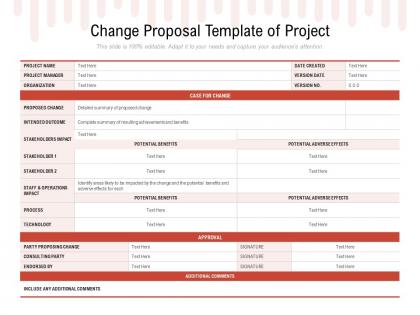
Change proposal template of project




Try Before you Buy Download Free Sample Product
 Impress Your
 Audience
 100%
100% Editable
 Save Hours
 of Time


Give folks cause to aim high with our Change Proposal Template Of Project. It helps fan their aspirations.
People who downloaded this PowerPoint presentation also viewed the following :
Change proposal template of project with all 2 slides:
Disclose the actual facts with our Change Proposal Template Of Project. Get folks fully aware of existing circumstances.

FAQs for Change proposal
So basically you need a problem statement and your solution broken down into actual steps. Timeline with milestones, budget/people/tools you'll need, plus how you'll measure success. Risk stuff is crucial - trust me, executives hate getting blindsided later. Stakeholder impact and dependencies too. Oh, and throw an executive summary at the top since most people just skim anyway. Make it detailed enough that someone could run with it without bugging you every five minutes for details, but keep each section tight.
Dude, visuals are a game-changer for proposals. Nobody wants to read through pages of dense text anymore - your stakeholders will tune out instantly. Charts and graphs make complex data actually understandable, plus before/after comparisons really drive the point home. I'd focus on your three biggest selling points and build visuals around those. Flowcharts work great for showing your implementation steps, and infographics are perfect for ROI stuff. The whole thing becomes way more memorable when people can actually picture what you're talking about. Just don't go overboard with fancy graphics - clean and simple wins every time.
Hook them with the problem first - why should anyone care? Lay out your solution with actual steps and dates. Business impact goes up front because that's literally all executives think about (costs, savings, what could go wrong). Address the obvious pushback before someone brings it up. Don't say fluffy stuff like "improve efficiency" - give them "cut processing time by 30%." Most of these people just skim anyway, so make it scannable. Oh, and always end with who's doing what next. Otherwise you'll walk out of there with zero follow-through.
So basically, you map out who's affected by your change and what they actually care about. Then you tailor everything to that. Finance people? Hit them with ROI numbers right off the bat - they don't want to hear about employee happiness first. HR might be the opposite though. Figure out your biggest resistance points and address those head-on. Honestly, this step makes or breaks most proposals. You'll know which benefits to push, what concerns to tackle early, and even how to talk to each group. Map your stakeholders first, then build your whole pitch around what you discovered.
Honestly, the worst mistake is overcomplicating things. People won't use a 20-page template for minor changes - I've seen it happen so many times. Focus on what actually impacts decisions and skip the mandatory fields unless you really need them. Cut the corporate jargon too. Different projects need different approaches, so don't force everything into one template. Small fixes shouldn't require the same paperwork as major overhauls. Build in your approval process from day one with actual deadlines. Start simple first - you can always add more once people are actually using it consistently.
Honestly, the biggest thing is tailoring your risk and compliance stuff to whatever industry you're in. Healthcare? You're dealing with HIPAA and patient safety. Tech? More about system crashes and data breaches. Approval processes are totally different too - healthcare has these long chains with clinical review boards, while tech teams move way faster with agile workflows. Success metrics flip completely. Patient outcomes vs user engagement, you know? Oh, and definitely look up your specific regulatory requirements first. Build those checkpoints right into your template from the start. Saves headaches later.
Honestly, you gotta track both the hard numbers and the softer stuff. Processing time, error rates, cost savings - that's your bread and butter data. But don't sleep on user adoption rates because what's the point if nobody actually uses it? Customer satisfaction scores matter too. For the mushier changes, employee surveys and training completion rates work well. Here's the thing though - measure your baseline first or you'll have no clue if anything actually improved. I'd stick to maybe 3-5 metrics that your stakeholders actually care about. More than that and you're just drowning in data.
Okay so exec summaries are honestly make-or-break. Most leadership won't read past that first page - they're swamped with other stuff. Hit them with the problem upfront, then your solution and what it'll cost. Benefits too, obviously. I learned this the hard way when a great proposal died because I buried the good stuff on page three. Use bullet points so they can scan quickly. Business impact first, then details. Honestly feels backwards but that's how their brains work when they've got five minutes between meetings.
Honestly, it depends on your company size. Startups need super lean templates - like one-page proposals that show clear ROI without tons of red tape. Big corporations? Totally different story. They want comprehensive docs with risk assessments, stakeholder analysis, all that formal stuff. Speed matters most for startups since you can change direction quickly. Corporate templates take way longer because you're dealing with compliance, multiple departments, the whole nine yards. I learned this the hard way at my last job - we kept using startup-style proposals at a Fortune 500 and got nowhere. Match your template to how decisions actually get made at your place.
Definitely add sections for risk stuff and mitigation plans. Get people thinking about what could blow up - tech issues, budget problems, angry stakeholders, delays, whatever. For each risk, they need actual strategies with someone owning it and deadlines. Honestly, I've watched so many projects crash because nobody bothered with the "what if" scenarios early on. Your template should ask for backup plans too - not in a bureaucratic way that people ignore, but make it feel normal. Short sentences work. Keep the risk part from feeling like annoying extra work they'll just skip over.
Honestly, I'd go with PowerPoint for change proposals. Most execs have the attention span of goldfish, so those visual slides with bullet points actually get looked at. Word docs? Sure, they're great when you need all the nitty-gritty details, but people just skim those massive documents anyway. Here's what works: create a short PowerPoint deck for your main presentation, then attach a detailed Word doc as backup if anyone wants to dive deeper into the data. Start with slides and see what questions come up - you can always add more detail later if they're actually interested.
Build in regular check-ins from the start - monthly or quarterly works well. Someone needs to own collecting feedback or it'll just get forgotten (learned this the hard way). Mix formal stuff like performance data with casual feedback from surveys and team meetings. The whole point is actually doing something with what you hear, not just gathering it to check a box. Oh, and make sure stakeholders know when these reviews are happening so they can prepare. Otherwise you're just measuring progress in a vacuum.
Look, the budget section is where you actually figure out what this whole thing will cost - staff hours, training, new tools, whatever. Leadership won't even consider your proposal without knowing the price tag first. It's honestly pretty crucial. Break everything down clearly and don't try to lowball the numbers just to make it look cheaper. Better to overestimate than get halfway through and realize you're broke, you know? Plus it helps you see if your idea is realistic or if you're just dreaming big. Sometimes the math brings you back to reality real quick.
Honestly, think of your proposal like telling a story. Find the "villain" first - whatever's driving everyone crazy right now. Then your change becomes the hero swooping in to fix everything. I'd start with real examples people can actually picture, you know? Like show them the messy "before" vs. the amazing "after." Stories stick way better than boring bullet points (trust me on this one). Don't pretend it'll be smooth sailing though - call out the bumps ahead. Maybe try writing your exec summary like a mini story first? Then just wrap your data around that framework.
Look, you're gonna need solid numbers showing what this problem actually costs - lost revenue, angry customers, whatever. Get some industry data so people know you're not just making stuff up. Honestly, case studies are your best friend here, especially ones with real results you can point to. Internal pilot testing is clutch if you've got it. Don't sleep on the soft stuff either - customer stories and employee feedback can really drive the point home. Mix the hard data with stories that make people actually *feel* why this sucks. Oh, and start collecting this early because scrambling last minute is the worst.
No Reviews