


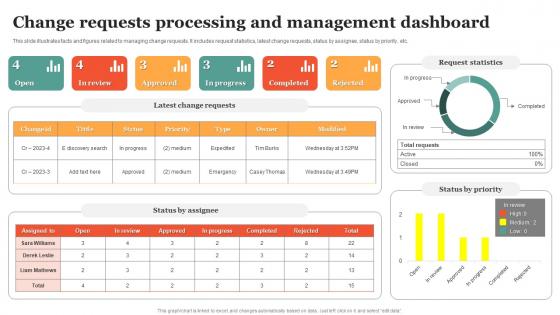
Change Requests Processing And Management Dashboard




Try Before you Buy Download Free Sample Product
 Impress Your
 Audience
 100%
100% Editable
 Save Hours
 of Time


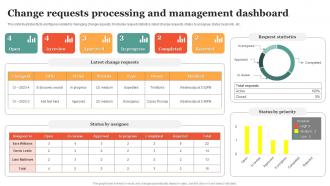
This slide illustrates facts and figures related to managing change requests. It includes request statistics, latest change requests, status by assignee, status by priority, etc.
People who downloaded this PowerPoint presentation also viewed the following :
Change Requests Processing And Management Dashboard with all 7 slides:
Use our Change Requests Processing And Management Dashboard to effectively help you save your valuable time. They are readymade to fit into any presentation structure.





FAQs for Change Requests Processing
Honestly, start by mapping out what you're already doing - that'll show you where stuff gets stuck. You'll need a solid request form, approval workflow, and some way to track impact. Documentation is super important too (trust me on this one). Make sure someone owns each step because nothing's worse than requests just sitting there forever. A priority system helps, plus you gotta keep people in the loop about status updates. The whole audit trail thing becomes huge later when people start asking questions. Oh, and define who reviews what upfront - saves so much headache down the road!
Honestly, you'll want to build a scoring system that measures each request against your main strategic goals. Pick your top 3-5 priorities first. Then score everything on how well it aligns with those objectives. I always throw in impact and effort scores too - because who wants to waste months on tiny wins, right? Dependencies matter, plus any regulatory stuff and customer impact. The highest-scoring requests across alignment, impact, and feasibility win. Oh, and make the scoring visible to everyone so they get why their "super urgent" thing is still waiting in the backlog. Saves you from those awkward conversations later.
Dude, you HAVE to get stakeholders involved from day one. They're the ones dealing with whatever changes you make, so their buy-in matters. During your initial assessment, talk to them directly - don't just rely on what's in the paperwork. They'll help you figure out what actually needs priority and catch stuff you'd totally miss otherwise. Plus (and this is key) it saves you from those brutal "um, this isn't what we wanted at all" meetings later. Document what they tell you and keep them updated as things move through approval. Trust me, it makes everything go way smoother when you're actually implementing.
Honestly, the tech handles most of the annoying stuff now. You'll get workflows that automatically send approvals to the right people, plus notifications when something actually needs you. Everything shows up on one dashboard so you're not digging through a million emails wondering if Jim ever responds (spoiler: he doesn't). The good PM tools let you track how changes affect other tasks and create audit trails without thinking about it. I'd start with setting up those automated approvals first - seriously cuts down the weekly headache time. Real-time updates are a game changer too.
Track these four things to see if your change process actually works: how long approvals take, what percentage get approved, whether changes actually succeed after implementation, and how happy people are with the whole thing. Honestly, approval time is probably the biggest pain point - nobody wants requests sitting around forever. Oh, and definitely measure if approved changes actually do what they're supposed to do. Otherwise you're just rubber-stamping useless stuff. I'd baseline everything for a month first, then figure out realistic targets from there.
Oh man, this happens all the time! First thing - get both departments in a room together. Half the time they're not even really conflicting once everyone actually talks it through. But if they genuinely can't both happen, you gotta rank them by impact and urgency. Which one moves the business forward more? Document your reasoning so people can't come back later acting confused about why you chose one over the other. And honestly, if it's a big conflict, just kick it upstairs to your sponsor - that's what they're there for. The main thing is being super transparent about how you make these calls from day one.
Honestly, just pick one place where everyone can check for updates - saves so much headache. Regular milestone updates work way better than only messaging when stuff hits the fan (though we've all done that). Skip the tech jargon when talking to non-technical people, they'll thank you. Write down your decisions as you make them because six months from now you'll be like "why did I do this again?" Oh, and figure out early who just needs a heads up versus who actually has to sign off. That distinction alone will save you tons of back-and-forth nonsense.
So change management is basically your safety net against project chaos. When changes come up (and trust me, they always do), having a formal review process stops you from automatically saying yes to everything. Scope creep kills projects faster than anything else. Make stakeholders fill out a simple form that shows how their "tiny tweak" actually impacts budget and timeline - you'd be shocked how often they back down once they see the real cost. Documentation saves your butt later when people conveniently forget what they agreed to. Honestly, it's the difference between controlled changes and total mayhem.
Don't skip the impact assessment - I learned this the hard way when a "quick fix" turned into a three-week nightmare. Document everything, even stuff that seems obvious now. Scope creep kills projects, so get approval for ANY changes. Keep stakeholders updated or you'll end up in those painful status meetings where everyone's confused. Oh, and track dependencies because nothing happens in a vacuum. Honestly, just create a basic approval process and actually follow it. Even tiny requests need the workflow - trust me on this one.
Hands-on workshops are your best bet - get people walking through actual change scenarios with your real tools. Role-playing is kinda cheesy but honestly it works better than death-by-PowerPoint. Have someone play the requester, someone else the reviewer. Quick reference guides they can bookmark are clutch too. Oh, and buddy system! Pair up newbies with experienced folks so they don't feel dumb asking questions. Most important thing though? Set up a practice environment where they can mess around with fake requests first. Nobody learns this stuff from just listening to presentations - they need to actually do it.
Honestly, your company's culture makes or breaks change requests. Risk-averse places? They'll nitpick everything to death and approvals take forever. Agile cultures move fast but sometimes skip documentation - learned that the hard way at my last job. You need to figure out your company's appetite for change first. Some reward innovation, others hate anything that disrupts their routine. Map out the real influencers beyond whoever's officially supposed to approve stuff. Then match your requests to how they actually communicate and what level of risk they're cool with.
Look, regulatory stuff is such a headache but you gotta deal with it. Healthcare, finance, aerospace - they all make you document everything and get approvals before changing anything. Every tiny modification needs impact assessments and compliance reviews. Some even want regulatory pre-approval first, which is ridiculous but whatever. You can't just wing it or they'll fine you into bankruptcy. Build longer timelines into your process and create solid audit trails. Figure out which regulations actually apply to your changes - don't assume you know - then add those checkpoints to your workflow.
For change request tracking, definitely check out Jira, Azure DevOps, or ServiceNow - they're solid for workflows and approvals. Smaller team or tight budget? Trello with custom fields works better than you'd think (seen it work great). Pick something that plays nice with what you already use. Nobody wants to fight with clunky systems just to submit a request. Good notifications are crucial so things don't fall through the cracks, plus you need decent reporting to spot bottlenecks. Honestly, trial a few options first and get your team's feedback early - they'll tell you what actually works.
Honestly, feedback loops are just your safety net so you don't build something nobody wants. Set up regular check-ins throughout your project - not just at the end when it's too late to fix anything. It's like having GPS instead of wandering around lost for hours (been there, not fun). Make it systematic though. Pick specific moments where people can actually review what you're doing and tell you if you're heading in the right direction. Figure out who needs to weigh in at each stage first - that'll save you tons of headaches later.
Honestly, start with automation tools that can predict change impacts - total game changer for cutting down manual work. Cloud platforms make tracking changes across teams so much easier now. Instead of batching everything, try continuous change integration (way better for agile stuff anyway). DevOps-style pipelines are clutch for auto-validating low-risk changes. Oh, and look at your most repetitive approval workflows first - that's where you'll see the biggest wins. My old team was drowning in approvals until we automated the obvious stuff.
-
Happy to found you SlideTeam. You guys are value for money. Amazing slides.
-
Wow! The design and quality of templates on SlideTeam are simply the best.