


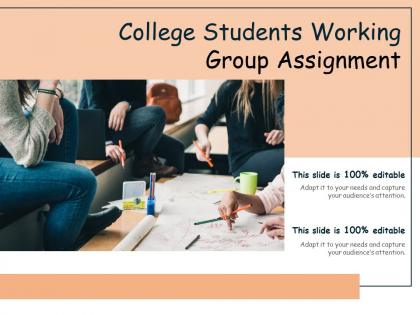
College students working group assignment




Try Before you Buy Download Free Sample Product
 Impress Your
 Audience
 100%
100% Editable
 Save Hours
 of Time


You will find our College Students Working Group Assignment to be genuinely inspiring. You will get jolly good ideas.
People who downloaded this PowerPoint presentation also viewed the following :
College students working group assignment with all 2 slides:
Generate jolly good ideas with our College Students Working Group Assignment. Insist on folks being innovative.

FAQs for College students
Honestly, good teamwork is a game changer. You'll solve problems way faster when everyone's throwing ideas around - like, different people catch stuff you'd totally miss on your own. Complex projects become so much easier when you can split things up based on what people are actually good at. Less stress for you too, which is huge. The whole vibe at work gets better when you're tight with your team. Oh, and relationships improve naturally when you're not just working in silos all the time. Next project, maybe kick it off with everyone brainstorming together first? Works really well.
Honestly, templates are a game changer. Your team gets a shared starting point so nobody's scrambling around wondering what to cover first. We used to waste like 10 minutes every meeting just figuring out the agenda - now we dive right into the good stuff. Sprint reviews, project updates, all that recurring stuff becomes automatic once people know the format. The best part? Someone can easily jump in and help with slides since everything follows the same structure. I'd make maybe 2-3 templates for your main meeting types. Trust me, you'll notice the difference immediately.
Honestly, start with getting people to actually talk to each other first. Set up some regular cross-team meetings and get everyone on Slack or Teams - whatever works. Then create a project where departments have to work together to succeed. I've seen this work really well because suddenly everyone needs each other. Oh, and when stuff goes well, celebrate the whole team instead of just one person. Don't try to force it though - that always backfires. Pick one small cross-functional thing first. Once people see it actually helps them get their work done easier, they'll buy in naturally.
Oh definitely, diverse teams crush it compared to everyone thinking the same way. You get way more creative ideas when people come from different backgrounds - plus they catch problems that homogenous groups totally miss. Yeah, meetings can get a bit chaotic at first with more back-and-forth, but honestly that's where the magic happens. The tricky part is actually making people feel safe to speak up. I've seen teams that look diverse on paper but everyone just goes along with whatever the loudest person says. That defeats the whole point, you know?
Honestly, remote work lives or dies by your tech setup. Video calls keep that face-to-face vibe going, while shared docs let everyone edit stuff in real-time without the constant email back-and-forth (thank god). Project management tools track deadlines so nothing falls through the cracks. Slack fills in for those random hallway conversations - though it's not quite the same, you know? Cloud storage means you're not stuck working from just one computer, and screen sharing is clutch for fixing problems together. Don't go crazy with apps though. Pick what actually works for your team and stick with it.
Honestly, I'd start with the obvious stuff - are projects wrapping up faster? More people jumping between teams? But the real gold is in those weird little moments. Like, do people actually grab coffee together now without being forced? Employee surveys help, but I swear the hallway vibe tells you more. Retention rates don't lie either - when collaboration clicks, people stay put. Track your shared goals obviously, but also send out quick pulse checks asking how supported everyone feels. Oh, and definitely make noise when teams crush something together. That stuff matters more than you'd think.
Honestly, it's usually just crappy communication and people not knowing who's doing what. Everyone assumes someone else has it covered - super annoying but happens everywhere. I'd start with actually defining who owns each piece upfront. Regular check-ins help too, plus some shared doc where people can track what's happening. Oh and listen to what others are saying instead of just planning your response, you know? That sounds obvious but most people suck at it. Don't wait around hoping things will magically align - you've gotta be intentional about it from the start.
Honestly, presentation templates are game-changers for meetings. They give everyone something concrete to focus on instead of just talking in circles. I've noticed quieter people speak up more when there's visual stuff to react to - maybe they just need those cues? The structure helps you spot how ideas connect too. Short sentences keep things moving. Plus you can jot down decisions right on the template so nothing slips through the cracks later. Meetings get way less chaotic when everyone's literally looking at the same thing. Next brainstorm, try a basic template and see what happens.
Honestly, communication is everything - you gotta be crystal clear about what you need AND actually listen to people. Different departments have their own weird quirks and priorities, so being adaptable saves your sanity. I've watched projects completely crash because someone was too rigid in their approach. Really understanding where each person is coming from helps too - like, what pressures are they dealing with? Oh, and get good at running meetings that don't suck. People will love you for it. Next time you're in a cross-team meeting, just focus on asking good follow-up questions. You'll be surprised how much that helps.
Honestly, collaboration is like having superpowers for problem-solving. Different people see things you'd totally miss on your own. Ideas get way better when your team bounces them around - someone builds on what you said, another person catches a weird gap you didn't notice. It's actually fun too, which beats staring at a wall by yourself trying to figure stuff out. The solutions end up being way more creative because everyone's throwing their expertise into the mix. Oh and definitely do those brainstorming sessions where people just say whatever pops into their heads. You'll get some wild ideas that actually work.
OK so first thing - ban criticism during the idea phase. People clam up otherwise. Try round-robin or silent brainstorming first because honestly, Dave from marketing will just steamroll everyone again. Build on each other's ideas, even the weird ones. Keep it visual - whiteboards, sticky notes, whatever. I'd cap it at 45 minutes max or people zone out. Write everything down! This part's crucial - nobody wants to feel like they wasted an hour throwing ideas into the void. Send a follow-up with next steps afterward.
Dude, feedback loops are game-changers for catching stuff before it gets messy. Regular check-ins help you spot problems early instead of wasting weeks on the wrong track - I've totally been there! Fresh eyes always make work better than what you'd create solo. The trick? Make it feel casual, not some heavy formal thing. Quick "how's this looking?" conversations after milestones work great. Honestly, teams that skip this step usually end up backtracking later. It keeps everyone on the same page without being annoying about it.
Honestly, collaboration is a game changer for keeping people happy at work. When teams actually work together on stuff, everyone feels way more connected and invested. People want to feel heard, you know? Plus it beats sitting alone at your desk all day - makes time fly by. The trick is avoiding pointless meetings that drag on forever (we've all been there). Start small with maybe a quick cross-team project or something. Once people see their ideas actually matter and get used, job satisfaction goes through the roof. It's pretty wild how much difference it makes when employees feel like they're part of something bigger.
Just match your template to what people are actually doing in the meeting. Brainstorming? Add tons of whitespace and sticky note areas. Client presentations need clean layouts with clear next steps. Internal updates can be way more casual - bullet points and quick wins work great. Honestly, I tweak the same template like five times before it feels right, so don't stress about getting it perfect immediately. Short sentences work. Longer ones should flow naturally when you're explaining something more complex. Start with one solid base template, then modify it. Way easier than building from scratch every time.
Yeah those are solid examples! Microsoft's move with AI startups was brilliant - they partnered instead of trying to crush them, which boosted their cloud business by 40%. Spotify and Uber nailed it too with that in-car music thing. Classic Starbucks-Barnes & Noble combo increased foot traffic for both. Honestly, the pattern I see is they weren't just doing basic cross-promotion stuff. They found partners solving different but related problems. That's where you actually move the needle instead of just... I dunno, slapping logos together and hoping something sticks.
No Reviews