


Distribution Strategy Powerpoint Presentation Slides





Try Before you Buy Download Free Sample Product
 Impress Your
 Audience
 100%
100% Editable
 Save Hours
 of Time


Our Distribution Strategy Powerpoint Presentation Slides contain an element of foresight. You will display good anticipation.
People who downloaded this PowerPoint presentation also viewed the following :
Content of this Powerpoint Presentation
Slide 1: This slide introduces Distribution Strategy. StateYour Company Name and begin.
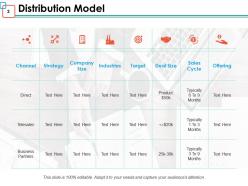
Slide 2: This slide showcase Distribution Model. Use it to analyse the business requirement.
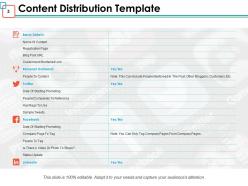
Slide 3: This slide shows Content Distribution Template.
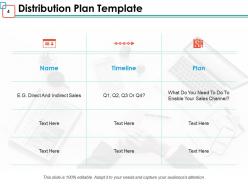
Slide 4: This slide showcases Distribution Plan Template.
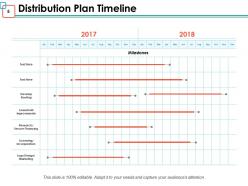
Slide 5: This slide presents Distribution Plan Timeline.
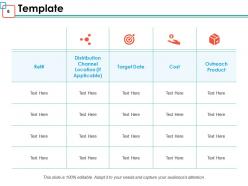
Slide 6: This slide shows Template.
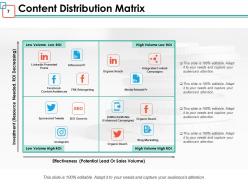
Slide 7: This slide showcases Content Distribution Matrix.
Slide 8: This slide showcases Distribution Strategy Icons Slide.
Slide 9: This slide is titled Additional Slides to move forward.
Slide 10: This is a Vision, Mission and Goals slide. State them here
Slide 11: This is an Our Team slide with name, image &text boxes to put the required information
Slide 12: This is an About Us slide showing Our Company, Value Client, and Premium services as examples.
Slide 13: This is an Our Goal slide. State them here.
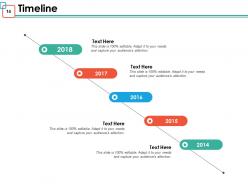
Slide 14: This is a Timeline slide to show milestones, growth or highlighting factors.
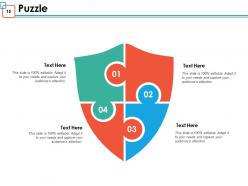
Slide 15: This is a Puzzle image slide to show information, specification etc.
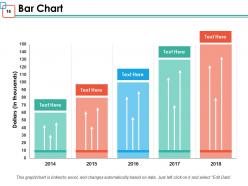
Slide 16: This slide presents Bar Chart.
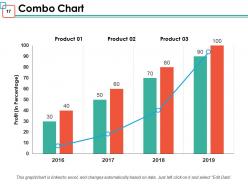
Slide 17: This slide forwards to Charts & Graphs.
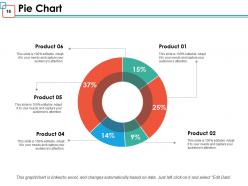
Slide 18: This slide displays a detailed Project Health card in pie charts, column graph with text boxes.
Slide 19: This is a Thank You slide with Address# street number, city, state, Contact Number, Email Address.
Distribution Strategy Powerpoint Presentation Slides with all 19 slides:
Get an exceptional group with our Distribution Strategy Powerpoint Presentation Slides. They will all combine excellently.



FAQs for Distribution Strategy
Honestly, you've gotta figure out where your people actually hang out first - not just assume based on age or whatever. Then pick maybe 1-2 channels that make sense for those behaviors. Could be direct sales, retail stores, online platforms, whatever fits. Pricing gets tricky because it needs to work across all your channels without killing your margins. And logistics... ugh, boring but you'll be screwed if you can't actually deliver stuff reliably. I'd say prove it works small before going crazy with expansion. Way too many people try to be everywhere at once and just burn through cash.
Honestly, figure out where your customers actually hang out first. Check what your competitors are doing - are they killing it on Amazon, in stores, or selling direct? I've watched so many businesses just throw money at every channel and fail miserably. Test a couple channels small before you commit big. Different channels will eat your margins differently too, which sucks but you gotta factor that in. Survey your current customers about how they like to buy stuff. Then pick maybe 1-2 channels that match both what they want and what you can actually handle budget-wise.
So digital distribution is pretty much everything now - that's how you reach people where they actually are online. Social media, email, apps, streaming stuff... it all needs to work together. I swear the landscape changes every six months though, which is honestly exhausting to keep up with. But here's the thing - don't spread yourself too thin trying to be on every platform. Figure out where your people actually spend time first. Then focus there and make sure your channels connect well. Way better than being mediocre everywhere at once.
Honestly, going direct means you control everything - customer experience, pricing, the whole deal. Plus way better margins without middlemen taking their cut. But man, you're looking at building your entire infrastructure from scratch. Sales team, warehouses, shipping logistics... it's expensive upfront. Going through retailers or distributors? They do all the grunt work and get you into markets super fast. Downside is they squeeze your margins and you lose that direct connection with customers. Also good luck controlling how they price your stuff. I'd probably just pick whatever matches your budget right now and grow from there.
So basically you want to track which channels are actually making you money - ROI and customer lifetime value will totally change how you spend your budget. Geographic data shows you where you're missing opportunities or wasting resources. The logistics stuff is honestly where you'll see quick wins though. Set up dashboards that show real-time channel performance first. Then you can get fancy with predictive stuff for demand planning and route optimization later. Oh, and inventory analytics will save you from stockouts while cutting carrying costs - that's huge.
So the big thing right now is omnichannel - basically ditching those single-channel setups for smooth experiences across online, retail, mobile, whatever. D2C is blowing up too. Brands are cutting out middlemen to own their customer relationships (and those sweet margins). Amazon honestly ruined everything because now micro-fulfillment centers are everywhere just so companies can deliver fast enough. You're also seeing way more partnerships between old-school retailers and digital brands. Oh, and AI demand forecasting to figure out where to put inventory. I'd start by just looking at where your customers actually hang out and want to buy from you.
Honestly? This might be the biggest decision you'll make for your business. Your distribution has to match what you're trying to accomplish, otherwise you're just shooting yourself in the foot. Picture this - you want to be seen as high-end but you're only in dollar stores. Makes no sense, right? Distribution channels should back up your brand, actually reach people where they shop, and help hit your revenue targets. If they don't, you're spinning your wheels and confusing everyone. Quick exercise: write down your top 3 goals, then see if your current setup actually supports them. Most people skip this step but it's huge.
Dude, picking distribution partners is tricky. Check if they actually reach your customers first - sounds obvious but you'd be surprised. Their financial health matters too, plus their rep with similar stuff. Can they handle warehousing and logistics without screwing up? Sales team better know their shit if your product's complicated. Honestly, I've watched companies get totally burned by partners who talked a big game but were basically useless. Oh, and make sure they're actually gonna push your product, not just throw it on some dusty shelf with everything else.
Dude, your distribution strategy literally controls how customers feel about your brand. Pick the wrong channels and people get pissed off - slow shipping, crappy service, or they can't even find your stuff where they're looking. You want your product sitting exactly where your customers already shop, with the speed they expect. Look at Amazon - they're obsessed with delivery for a reason. People trust them because they deliver fast and don't screw up. Map out where your customers actually go shopping first, then build around that. Don't just go with whatever's cheapest for you (learned that one the hard way).
Honestly, the three big ones are regulations, cultural stuff, and logistics nightmares. Every country's got different import rules and business practices that'll bite you if you're not ready. What kills people is thinking their home market strategy will work everywhere - it won't. Consumer habits are totally different across regions. Managing distribution and partnerships across time zones? That's where things get messy fast. Oh, and don't even get me started on supply chain coordination. Start small though - pick one or two similar markets, nail those first, then expand. Going everywhere at once is just asking for trouble.
Don't put everything into one channel - that's how companies die when markets shift. Build out multiple options from day one: direct sales, retail, online, distributors, whatever fits your product. Monitor which ones actually perform (not just which ones feel comfortable) and keep backup relationships warm even when you're not using them. Smart contracts help too - make sure you can adjust volumes when things change. I watched a startup almost go under because they got too cozy with one big retailer. Flexibility beats efficiency every time in distribution.
Okay so omnichannel is just connecting all your sales channels so customers can bounce between them smoothly. Like someone browses on Instagram, buys on your website, then picks up in-store - no weird gaps or hassles. Most people shop this way now anyway, so if you're not set up for it, you're missing sales. The whole point is meeting customers wherever they happen to be shopping. Start by looking at your touchpoints and figuring out where things get awkward when people switch between them. Honestly, even basic stuff like letting people return online purchases in-store makes a huge difference.
Honestly, you don't need to be huge to win. Pick smaller markets where you can pivot fast - big companies are basically cruise ships while you're zipping around like a jet ski. Find local distributors who really know their stuff, sell direct online to skip the middlemen markup, and get some decent inventory software so you're not guessing what to stock. Your biggest advantages? You can actually talk to customers, make decisions in like 5 minutes instead of 5 months, and change course without asking 12 committees. I'd start by figuring out exactly where your best customers hang out, then work backwards from there.
Honestly, start with demand forecasting using your past sales data and market trends. ABC analysis helps tons - put your effort into those high-value A items since they're your money makers. Get automated reorder points set up so you're not panicking when stuff runs out. But don't go overboard and blow all your cash on inventory sitting around. Safety stock should depend on how critical each product is and whether your suppliers are actually reliable (some aren't, let's be real). Good inventory software with real-time data is worth every penny. Without it, you'll either have way too much stock or pissed off customers.
Look, you've got to bake sustainability into your partner contracts from day one. Audit your current distributors' green practices and set hard standards they have to hit. I've watched too many companies bolt this on later - total mess. Get them involved in shared programs too: carbon-neutral shipping, better packaging, waste reduction stuff. Make them report back regularly so nobody slacks off. Oh, and don't let them treat it like some optional feel-good thing. It needs to be a dealbreaker requirement, not just box-checking exercise.
No Reviews