


Commercial real estate powerpoint presentation slides





Try Before you Buy Download Free Sample Product
 Impress Your
 Audience
 100%
100% Editable
 Save Hours
 of Time


Our Commercial Real Estate Powerpoint Presentation Slides are topically designed to provide an attractive backdrop to any subject. Use them to look like a presentation pro.
People who downloaded this PowerPoint presentation also viewed the following :
Content of this Powerpoint Presentation
Slide 1: This slide displays title i.e. 'Commercial Real Estate' and your Company Name.
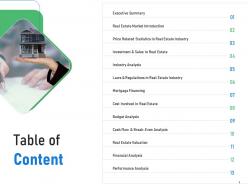
Slide 2: This slide presents table of contents.
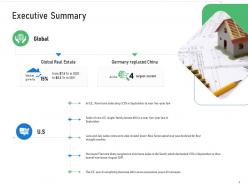
Slide 3: This slide exhibits executive summary.
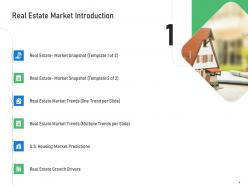
Slide 4: This slide shows title for five topics to be covered in the template.
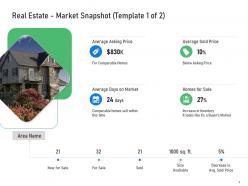
Slide 5: This slide depicts Real Estate - Market Snapshot.
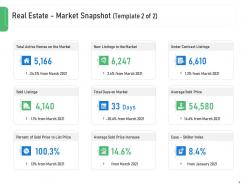
Slide 6: This slide highlights Real Estate - Market Snapshot.
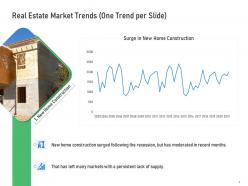
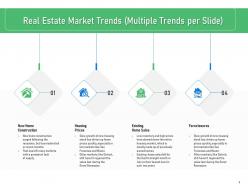
Slide 7: This slide illustrates Real Estate Market Trends.
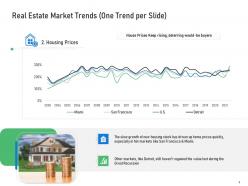
Slide 8: This slide displays Real Estate Market Trends.
Slide 9: This slide presents Real Estate Market Trends.
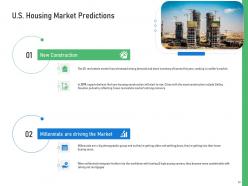
Slide 10: This slide shows U.S. Housing Market Predictions.
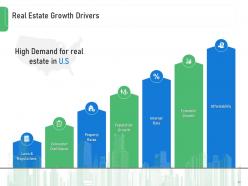
Slide 11: This slide depicts Real Estate Growth Drivers.
Slide 12: This slide highlights title for next five topics to be covered in the template.
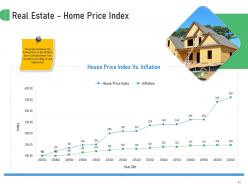
Slide 13: This slide shows how to measure the home prices vs the inflation over a period of time.
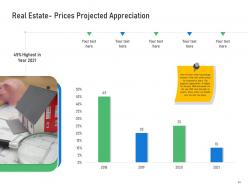
Slide 14: This slide shows percentage increase in the real estate prices for consecutive years.
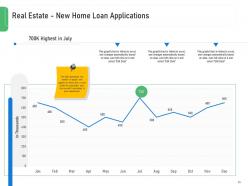
Slide 15: The slide represents the number of people who applied for home loan in each month of a particular year.
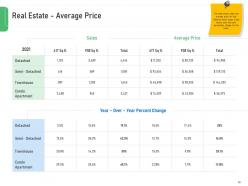
Slide 16: This slide shows sales and average price for four different home types.
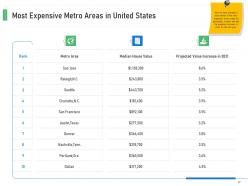
Slide 17: This slide provides data related to the most expensive metro areas for purchasing a house.
Slide 18: This slide displays title for next seven topics to be covered in the template.
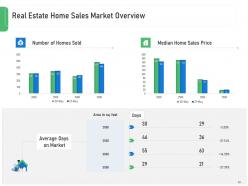
Slide 19: This slide presents Real Estate Home Sales Market Overview.
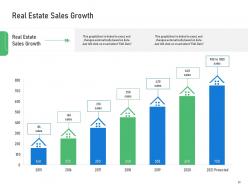
Slide 20: This slide exhibits Real Estate Sales Growth.
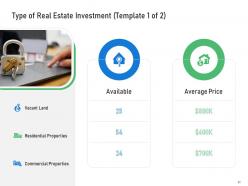
Slide 21: This slide shows Type of Real Estate Investment.
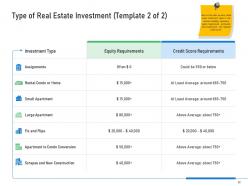
Slide 22: This slide shows major investment types in real estates including necessary equity requirement, estimated time requirement, etc.
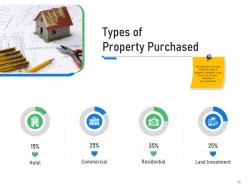
Slide 23: This slide shows the share of different types of properties purchased in real estate.
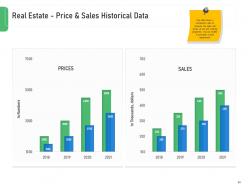
Slide 24: This slide shows a comparison data to measure the sales and prices of new and existing properties.
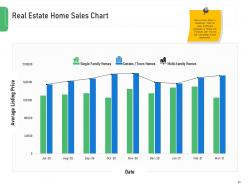
Slide 25: This slide shows comparison chart for sales of different categories of homes over a financial year.
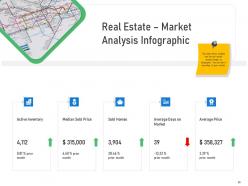
Slide 26: This slide shows insights into the real estate market though an infographic.
Slide 27: This slide displays title for 'Industry Analysis'.
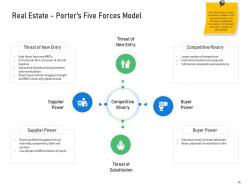
Slide 28: This slide presents porter’s five forces in relation to the real estate industry.
Slide 29: This slide exhibits title for next two topics to be covered in the template.
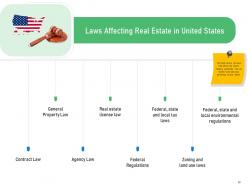
Slide 30: This slide covers the laws that affect real estate industry worldwide.
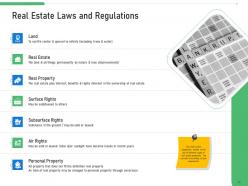
Slide 31: This slide covers regulations related to the use of different types of real estate properties.
Slide 32: This slide presents title for next six topics to be covered in the template.
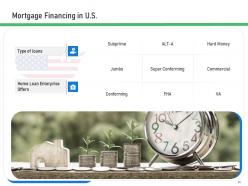
Slide 33: This slide shows Mortgage Financing in U.S.
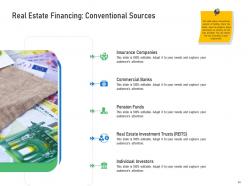
Slide 34: This slide shows conventional sources of funding where the lender uses the property being purchased as security for the loan provided.
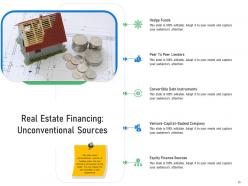
Slide 35: This slide shows unconventional sources of funding where the loan offered is not secured by the lender.
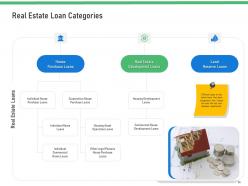
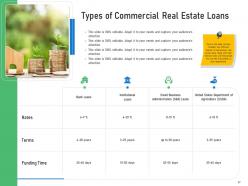
Slide 36: This slide depicts different types of real estate loans.
Slide 37: This slide shows four different sources of commercial real estate loans along with their interest rates and time period.
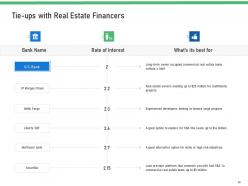
Slide 38: This slide displays Tie-ups with Real Estate Financers.
Slide 39: This slide presents title for next three topics to be covered in the template.
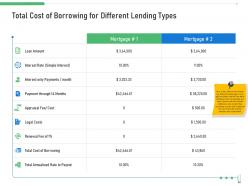
Slide 40: This slide shows two different lending types.
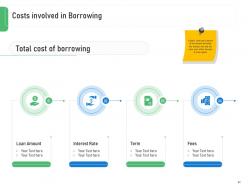
Slide 41: This slide exhibits Costs involved in Borrowing.
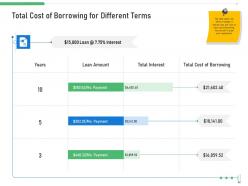
Slide 42: This slide shows the effect of change in interest rate and term on total cost of borrowing.
Slide 43: This slide depicts title for next five topics to be covered in the template.
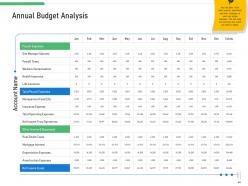
Slide 44: This slide displays Annual Budget Analysis.
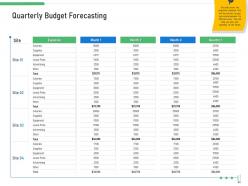
Slide 45: This slide shows the projected expenses that will be incurred by your real estate business for different sites.
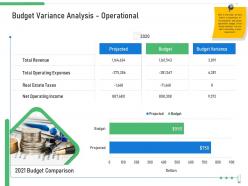
Slide 46: This slide shows comparison of the projected and actual operational budget of real estate business.
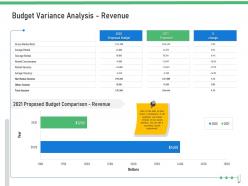
Slide 47: This slide shows comparison of the projected and actual revenue of real estate business.
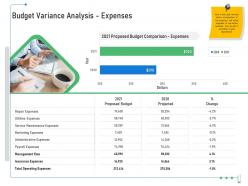
Slide 48: This slide shows comparison of the projected and actual expenses of real estate business.
Slide 49: This slide displays title for next two topics to be covered in the template.
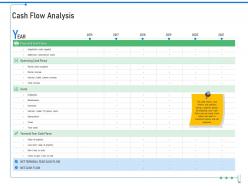
Slide 50: This slide shows cash inflows and outflows during a specific period.
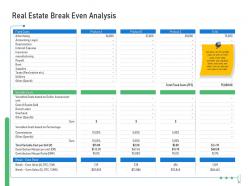
Slide 51: This slide list down all the variable costs as well as fixed costs in the table provided and calculate break even units and sales.
Slide 52: This slide presents title for next five topics to be covered in the template.
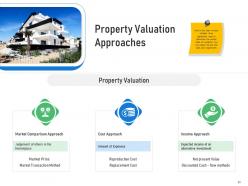
Slide 53: This slide includes three approaches used to determine the market value of a property.
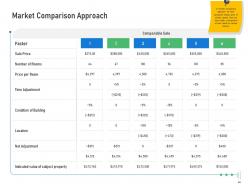
Slide 54: This slide shows comparison of selling price of similar assets based on factors.
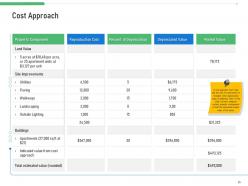
Slide 55: This slide analyzes various property components to find the estimated market value of the asset.
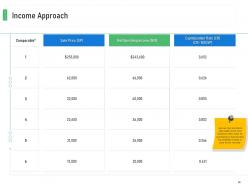
Slide 56: This slide provides data related to the most expensive metro areas for purchasing a house.
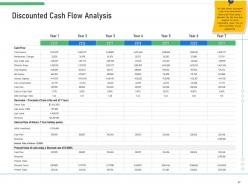
Slide 57: This slide shows the present value of an investment’s future cash flows using a discount rate.
Slide 58: This slide exhibits title for next three topics to be covered in the template.
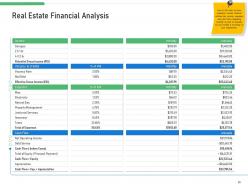
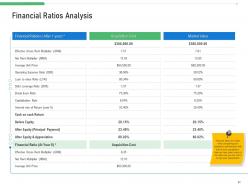
Slide 59: This slide evaluates various financial entities like income, expenses and cash flows happening monthly as well as annually.
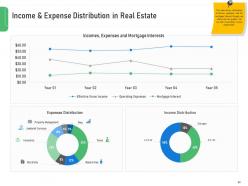
Slide 60: This slide shows distribution of income, expenses, and the mortgage interest through pie charts and bar graphs.
Slide 61: This slide lists some of the ratios.
Slide 62: This slide depicts title for next two topics to be covered in the template.
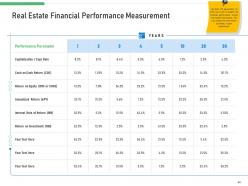
Slide 63: This slide provides some of the ways through which you can analyse your growth in real estate business.
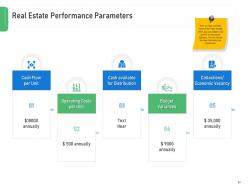
Slide 64: This slide list down the parameters on which you want to analyse the financial performance of your real estate investments.
Slide 65: This is the icons slide.
Slide 66: This slide presents title for additional slides.
Slide 67: This slide shows about your company, target audience and its client's values.
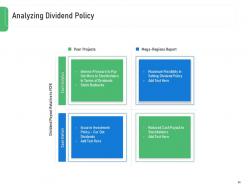
Slide 68: This slide displays Analyzing Dividend Policy.
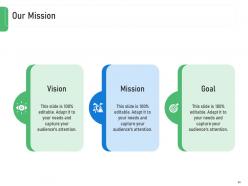
Slide 69: This slide presents your company's vision, mission and goals.
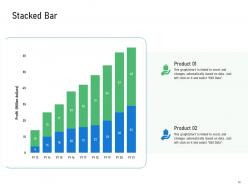
Slide 70: This slide exhibits yearly profits stacked bar charts for different products. The charts are linked to Excel.
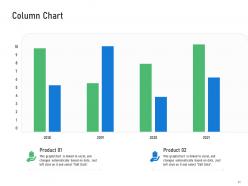
Slide 71: This slide displays yearly column charts for different products. The charts are linked to Excel.
Slide 72: This slide shows details of team members like name, designation, etc.
Slide 73: This slide exhibits yearly timeline.
Slide 74: This slide depicts 30-60-90 days plan for projects.
Slide 75: This slide shows roadmap.
Slide 76: This slide exhibits ideas generated.
Slide 77: This slide depicts posts for past experiences of clients.
Slide 78: This is thank you slide & contains contact details of company like office address, phone no., etc.
Commercial real estate powerpoint presentation slides with all 78 slides:
Use our Commercial Real Estate Powerpoint Presentation Slides to effectively help you save your valuable time. They are readymade to fit into any presentation structure.




FAQs for Commercial real estate
Warehouses are absolutely crushing it right now with all the e-commerce stuff. Office buildings? Still pretty rough with everyone working from home, though some people are doing cool conversion projects. Multifamily's holding steady - affordable housing especially. Oh, and everyone's obsessed with ESG now, so green buildings are getting premium prices. The rates situation is making financing a pain, but honestly that's creating some decent opportunities if you've got cash sitting around. I'd probably look at secondary markets where cap rates don't make you want to cry.
So basically, the economy controls commercial real estate prices big time. Strong economy = more companies need office space and warehouses, prices go up. Interest rates are probably the biggest factor though - when they're low, everyone's buying because borrowing is cheap. Recessions flip everything upside down obviously. I've noticed this sector gets hit harder than residential honestly, like there's nowhere to hide when things go south. If you're thinking about making a move, just watch what the Fed does and job reports. Timing is pretty much everything in this game.
Dude, location is everything - seriously the make-or-break factor for commercial properties. Think foot traffic, how easy it is to get to, can people actually see it from the street? Plus you want businesses nearby that make sense together. Demographics are huge too, gotta match your property with the right crowd and income bracket. Honestly, I'd walk around that area at different times - morning, lunch, evening - because some places look dead at 2pm but are buzzing by 6. The "location location location" thing isn't just real estate agent BS, it's like ten times more true for commercial stuff.
Honestly, it comes down to three main things - fair rent, actually responding when stuff breaks, and being flexible with lease stuff. Most landlords mess this up because they think it's all about keeping rent low, but tenants will pay more if you're not a pain to deal with. Quick story - my friend stayed in this expensive place for years just because the landlord fixed things same-day. Meanwhile, cheap apartments where the AC stays broken for weeks? People bounce fast. Location's obviously key but you can't change that. What you can change is being the type of landlord who texts back within hours, not days.
Dude, property management software is a total game changer for rent collection and maintenance requests. I can control my building's HVAC and security from my couch now - sounds lazy but it's actually super efficient. Those IoT sensors? They'll tell you when your boiler's about to die before it actually does. Real-time financial tracking keeps everything organized too. Honestly, just pick one problem that's driving you crazy and find tech to fix that first. My cousin started with just automated rent collection and now she's got the whole smart building setup. Don't try to do everything at once though.
Look, commercial real estate beats residential hands down for cash flow - you're looking at 6-12% returns vs 4-8% residential. Leases run 3-10 years so way more predictable income, plus tenants handle their own maintenance with triple-net deals. No more dealing with broken toilets at midnight, thank god. The catch is you need way more upfront cash and the due diligence gets pretty intense. But honestly? If you've got the capital, start looking at cap rates in areas you like and get tight with some commercial brokers. Oh and residential tenant turnover will drive you insane after a while.
Honestly, vacancy rates are probably your biggest headache - tenants leave and suddenly you're bleeding cash while hunting for new ones. Market swings will mess with your property value too, especially when the economy gets weird. You can't just dump commercial real estate like stocks either; finding buyers takes forever, sometimes months. Interest rates are another pain since they hit both your financing costs and what your property's actually worth. Random maintenance issues pop up and destroy your returns when you least expect it. Oh, and definitely study your local market first. Keep cash saved up because something always goes wrong.
Dude, check the zoning first before you fall in love with any property - trust me on this one. Different zones have totally different rules about height, density, parking, what businesses you can run, all that stuff. I've seen people get burned finding the "perfect" spot only to realize it's residential when they need retail. Sure, you can try for a variance but that's months of bureaucratic hell with no guarantee. Honestly the zoning designation matters way more than most people think. Save yourself the headache and look that up early in your search process.
Focus on three main things: demographics, infrastructure, and what's driving the local economy. Population growth and income data show if there's real demand building up. New transit projects or highways? Those create value even before they're done. Industries moving in matter too - you want stable employers, not just flashy startups that might tank. Infrastructure stuff can honestly feel like detective work sometimes, but it's worth digging into. Best approach is visiting these markets yourself and chatting with local brokers. They'll tell you the real story behind all those spreadsheets and reports you've been staring at.
Dude, remote work completely destroyed the old office model. Companies don't need nearly as much space anymore - everyone's either hybrid or fully remote now. Downtown towers? Forget it. Businesses are either shrinking their leases or moving to cheaper suburbs instead. What's crazy is even the companies forcing people back realized they were basically throwing money away on empty desks. I mean, who knew we didn't actually need all that space, right? If you're thinking investments, look for flexible buildings with good tech. Those seem to be the only ones adapting well to this mess.
Dude, ESG is absolutely taking over commercial real estate right now. Property values and investment returns are getting tied directly to how well buildings perform on environmental, social, and governance stuff. Tenants want energy-efficient spaces with wellness features. Honestly, the social responsibility angle matters way more to renters than I expected it would. Buildings that nail these metrics? They're pulling higher rents and staying full. Meanwhile, tons of big institutional investors won't even look at properties that bomb their ESG requirements. You should probably start checking your portfolio against these standards sooner rather than later - it's becoming make-or-break for attracting decent tenants and buyers.
So retail leases are honestly the most annoying - you'll pay base rent plus a percentage of your sales when you're doing well. Office spaces usually do triple net or modified gross, meaning you're covering utilities, maintenance, maybe taxes too. Industrial is way more chill though. Longer terms, basic structures, since tenants usually end up modifying the space anyway. Retail = unpredictable costs, office = shared expenses in weird ways, industrial = pretty straightforward. Just make sure you know exactly what operating costs you're on the hook for before signing - learned that one the hard way!
Hey! So the big stuff I'm seeing right now - IoT sensors are everywhere for tracking energy use in real time. Cross-laminated timber and recycled steel are getting popular too. Buildings are actually going energy-positive now with integrated solar systems, which is pretty cool. Carbon capture is still kind of experimental but worth watching. Honestly, the math works better these days since tenants care way more about sustainability when they're signing leases. Oh, and definitely check LEED or BREEAM certifications - most institutional investors won't even look at properties without them anymore.
Okay so first thing - don't just grab the cheapest space you find. Location matters way more than saving a few bucks, trust me on this one. Your customers need to actually find you. When you're looking at leases, push for flexible terms that won't screw you over if you need to grow or shrink. I'd map out where you think you'll be in 3-5 years before you even start touring places. Oh and see if you can negotiate some tenant improvement money for buildouts - landlords are usually open to that. You might even sublease part of your space to help with rent if it makes sense.
Do your homework first - check what similar spaces are going for in the area. Rent's just one piece though. Push for tenant improvement money, better lease terms, renewal options. Who pays utilities matters too. Having backup options helps a ton when negotiating (landlords can smell desperation from a mile away). If you're a small business, definitely fight for personal guarantee limits. Try to get subleasing rights built in just in case. Oh, and get a lawyer to look over everything before you sign. Those standard forms are totally written to screw tenants.
-
Unique and attractive product design.
-
Really like the color and design of the presentation.
-
Very well designed and informative templates.
-
Design layout is very impressive.
-
Easily Editable.
-
Topic best represented with attractive design.
-
Best Representation of topics, really appreciable.
-
I discovered this website through a google search, the services matched my needs perfectly and the pricing was very reasonable. I was thrilled with the product and the customer service. I will definitely use their slides again for my presentations and recommend them to other colleagues.