


Investment in land and building powerpoint presentation slides





Try Before you Buy Download Free Sample Product
 Impress Your
 Audience
 100%
100% Editable
 Save Hours
 of Time


Employ our Investment In Land And Building PowerPoint Presentation Slides to provide an executive summary of the global real estate. Highlight the surges in home construction, housing prices, and growth drivers in the real estate industry by taking the aid of our property investment PowerPoint presentation. Showcase the price-related statistics and budget variations to the entrepreneurs and investors in an organized and engaging manner with help of our land stakes PPT templates. Explain the laws and regulations, financing related to the real estate industry clearly and concisely to allow your audience to understand and make an informed decision through our estate development PPT slideshow. It is important to understand the total cost of borrowing involved in different terms and prepare a thorough and apt budgeting plan accordingly. Thus, download this content-specific and professionally readymade realty shares PPT deck to present a detailed and comprehensive presentation on the benefits and challenges with solutions for investing in real estate. It also allows you to just add or edit any text, image, or icon by taking advantage of these completely customizable investments in landholdings PPT slides.
People who downloaded this PowerPoint presentation also viewed the following :
Content of this Powerpoint Presentation
Slide 1: This slide introduces Investment in Land & Building. State Your Company Name and begin.
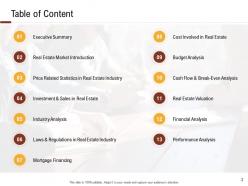
Slide 2: This slide shows Table of Content for the presentation describing- Executive Summary, Real Estate Market Introduction, Real Estate - Market Snapshot, etc.
Slide 3: This slide shows Executive Summary describing market growth of global real estate.
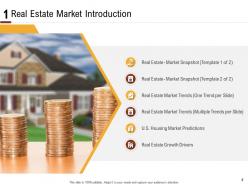
Slide 4: This slide presents Real Estate Market Introduction with related imagery.
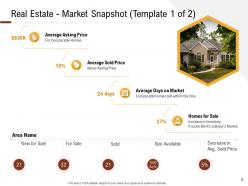
Slide 5: This slide displays Real Estate - Market Snapshot describing - Average Asking Price, Average Days on Market, Homes for Sale, etc.
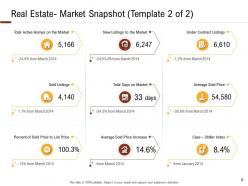
Slide 6: This is another slide showcasing Real Estate - Market Snapshot with - Total Active Homes on the Market, New Listings to the Market, Under Contract Listings, etc.
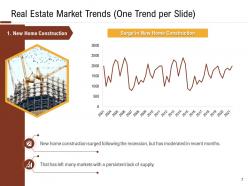
Slide 7: This slide represents Real Estate Market Trends describing new home construction in graphical form.
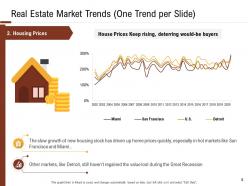
Slide 8: This slide shows Real Estate Market Trends describing housing prices in graphical form.
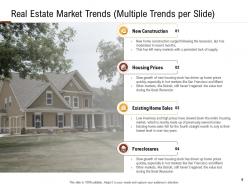
Slide 9: This slide presents Real Estate Market Trends describing- New Home Construction, Housing Prices, Foreclosures, and Existing Home Sales.
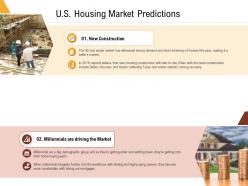
Slide 10: This slide displays U.S. Housing Market Predictions with related icons.
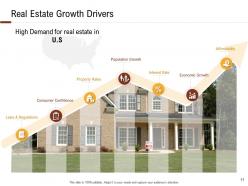
Slide 11: This slide represents Real Estate Growth Drivers describing- Property Rates, Consumer Confidence, Laws & Regulations, Population Growth, etc.
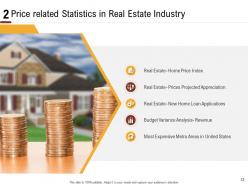
Slide 12: This slide showcases Price related Statistics in Real Estate Industry with related imagery.
Slide 13: This slide shows Real Estate - Home Price Index in graphical form.
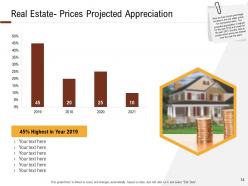
Slide 14: This slide presents Real Estate- Prices Projected Appreciation with the help of bar graph.
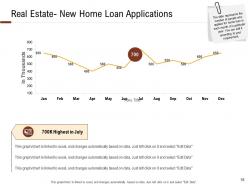
Slide 15: This slide displays Real Estate - New Home Loan Applications with the help of line graph.
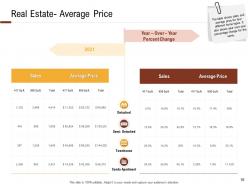
Slide 16: This slide showcases Real Estate - Average Price describing sales and average price for four different home types.
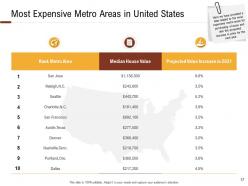
Slide 17: This slide shows Most Expensive Metro Areas in United States providing a data related to the most expensive metro areas for purchasing a house and also the projected increase in price for the next year.
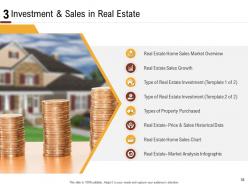
Slide 18: This slide displays Investment & Sales in Real Estate with related imagery.
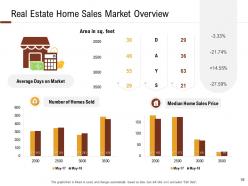
Slide 19: This slide presents Real Estate Home Sales Market Overview.
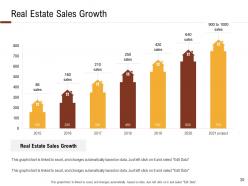
Slide 20: This slide represents Real Estate Sales Growth with the help of bar graph.
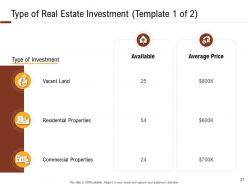
Slide 21: This slide showcases Type of Real Estate Investment describing Vacant Land, Residential Properties, Commercial Properties.
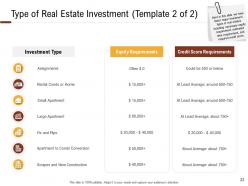
Slide 22: This is another slide showing Type of Real Estate Investment like- Apartment to Condo Conversion, Scrapes and New Construction, Rental Condo or Home, etc.
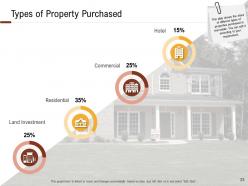
Slide 23: This slide presents Types of Property Purchased like- Hotel, Residential, Commercial, etc.
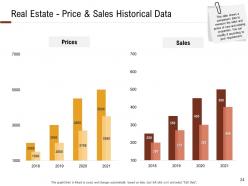
Slide 24: This slide displays Real Estate - Price & Sales Historical Data with the help of bar graphs.
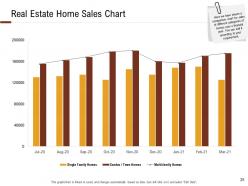
Slide 25: This slide represents Real Estate Home Sales Chart comparing sales of different categories of homes over a financial year.
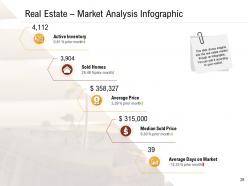
Slide 26: This slide showcases Real Estate – Market Analysis Infographic.
Slide 27: This slide displays industry analysis with related imagery.
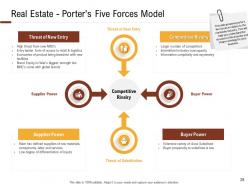
Slide 28: This slide shows Real Estate - Porter's Five Forces Model describing Competitive Rivalry, Buyer Power, Supplier Power, Threat of Substitution, and Threat of New Entry.
Slide 29: This slide presents Laws & Regulations in Real Estate Industry.
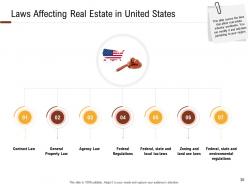
Slide 30: This slide displays Laws Affecting Real Estate in United States describing- Contract Law, General Property Law, Agency Law, Federal Regulations, etc.
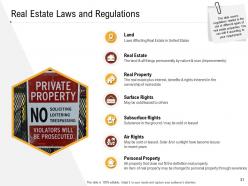
Slide 31: This slide represents Real Estate Laws and Regulations covering regulations related to the use of different types of real estate properties.
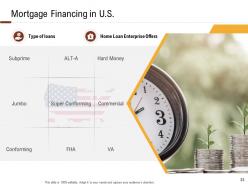
Slide 32: This slide showcases Mortgage Financing in U.S. describing- Hard Money, Jumbo, Super Conforming, Subprime, etc.
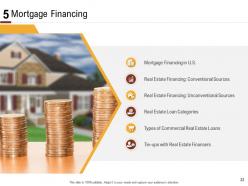
Slide 33: This slide shows Mortgage Financing describing- Real Estate Financing: Conventional Sources, Mortgage Financing in U.S., Real Estate Loan Categories, etc.
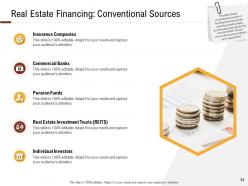
Slide 34: This slide presents Real Estate Financing: Conventional Sources describing- Insurance Companies, Commercial Banks, Individual Investors, Pension Funds, etc.
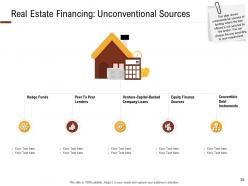
Slide 35: This slide displays Real Estate Financing: Unconventional Sources describing- Equity Finance Sources, Venture-Capital-Backed Company Loans, Hedge Funds, etc.
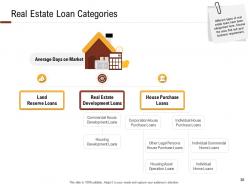
Slide 36: This slide represents Real Estate Loan Categories i.e.- House Purchase Loans, Real Estate Development Loans, and Land Reserve Loans.
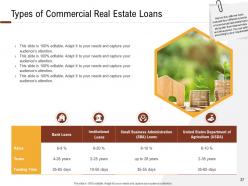
Slide 37: This slide showcases Types of Commercial Real Estate Loans including- Bank Loans, Institutional Loans, Small Business Administration (SBA) Loans, etc.
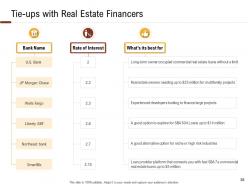
Slide 38: This slide shows Tie-ups with Real Estate Financers including- JP Morgan Chase, Wells Fargo, Liberty SBF, etc.
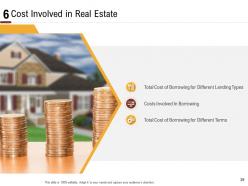
Slide 39: This slide presents Cost Involved in Real Estate describing- Costs Involved In Borrowing, Total Cost of Borrowing for Different Terms, etc.
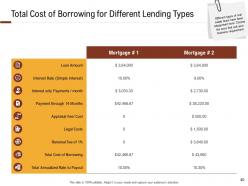
Slide 40: This slide displays Total Cost of Borrowing for Different Lending Types showing data in tabular form.
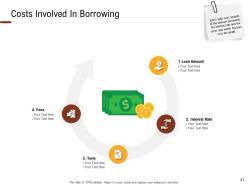
Slide 41: This slide represents Costs involved in Borrowing describing- Fees, Loan Amount, Interest Rate, etc.
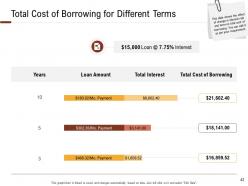
Slide 42: This slide showcases Total Cost of Borrowing for Different Terms describing the effect of change in interest rate and term on total cost of borrowing.
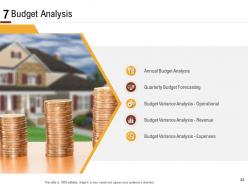
Slide 43: This slide shows Budget Analysis describing- Annual Budget Analysis, Budget Variance Analysis - Operational, Quarterly Budget Forecasting.
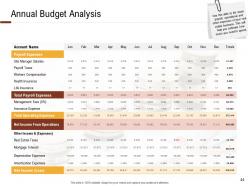
Slide 44: This slide presents Annual Budget Analysis describing payroll, operational and other expenses of your real estate business.
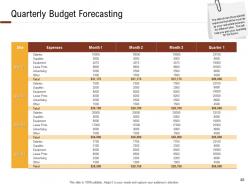
Slide 45: This slide displays Quarterly Budget Forecasting describing expenses that will be incurred by your real estate business for different sites.
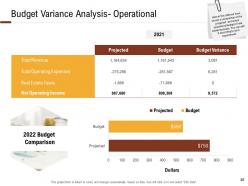
Slide 46: This slide represents Budget Variance Analysis - Operational showing a comparison of the projected and actual operational budget of real estate business.
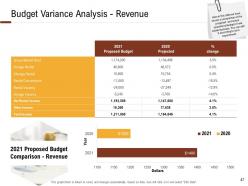
Slide 47: This slide showcases Budget Variance Analysis - Revenue showing a comparison of the projected and actual revenue of real estate business.
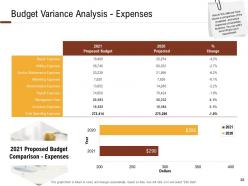
Slide 48: This slide presents Budget Variance Analysis - Expenses showing a comparison of the projected and actual expenses of real estate business.
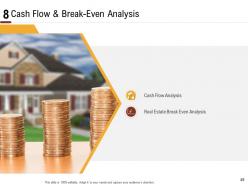
Slide 49: This slide displays Cash Flow & Break-Even Analysis with related imagery.
Slide 50: This slide shows Cash Flow Analysis describing cash inflows and outflows during a specific period.
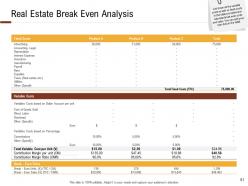
Slide 51: This slide presents Real Estate Break Even Analysis Listing down all the variable costs as well as fixed costs.
Slide 52: This slide represents Real Estate Valuation describing- Property Valuation Approaches, Cost Approach, Income Approach, etc.
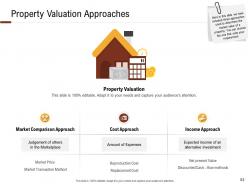
Slide 53: This slide displays Property Valuation Approaches describing- Market Comparison Approach, Income Approach, Cost Approach, etc.
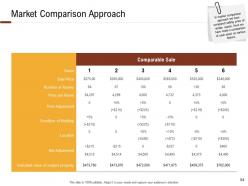
Slide 54: This slide showcases Market Comparison Approach in tabular form.
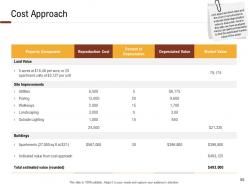
Slide 55: This slide shows Cost Approach analyzing various property components to find the estimated market value of the asset.
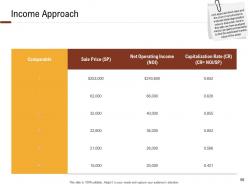
Slide 56: This slide presents Income Approach dividing net operating income of the property by it’s sale price.
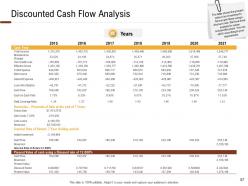
Slide 57: This slide displays Discounted Cash Flow Analysis in tabular form.
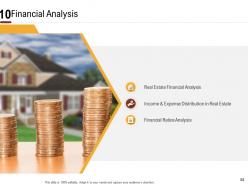
Slide 58: This slide represents Financial Analysis describing- Financial Ratios Analysis, Real Estate Financial Analysis, and Income & Expense Distribution in Real Estate.
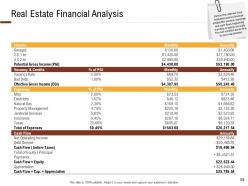
Slide 59: This slide showcases Real Estate Financial Analysis evaluating various financial entities like income, expenses and cash flows happening monthly as well as annually.
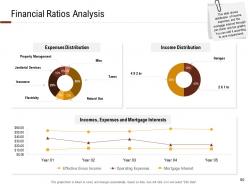
Slide 60: This slide presents Income & Expense Distribution in Real Estate showing data with the help of different graphs.
Slide 61: This slide shows Financial Ratios Analysis comparing your company’s performance with that of your competitor.
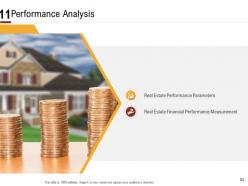
Slide 62: This slide displays Performance Analysis describing- Real Estate Performance Parameters and Real Estate Financial Performance Measurement.
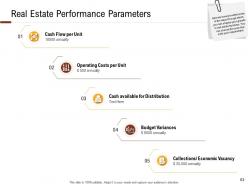
Slide 63: This slide represents Real Estate Performance Parameters providing some of the ways through which you can analyse your growth in real estate business.
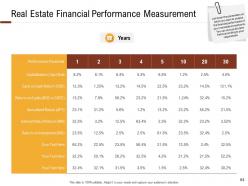
Slide 64: This slide showcases Real Estate Financial Performance Measurement.
Slide 65: This slide displays Icons Slide for Investment in Land & Building.
Slide 66: This slide is titled as Additional Slides for moving forward.
Slide 67: This is About Us slide to show company specifications etc.
Slide 68: This is Our Mission slide. Show your firm's mission here.
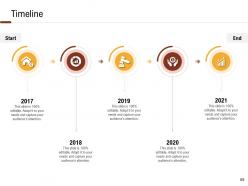
Slide 69: This is a timeline slide with additional textboxes.
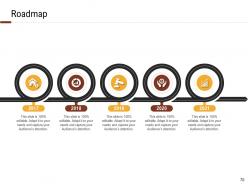
Slide 70: This slide displays Roadmap with icons and text.
Slide 71: This slide shows 30 60 90 Days Plan with text boxes.
Slide 72: This is a Financial slide. Show your finance related stuff here.
Slide 73: This is Our Team with names and designations.
Slide 74: This slide shows Post It Notes. Post your important notes here.
Slide 75: This is Our Target slide. State your targets here.
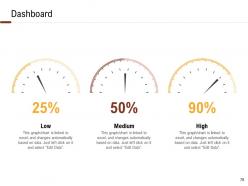
Slide 76: This slide shows Dashboard with data in percentage.
Slide 77: This is Our Goal slide. Show your firm's goals here.
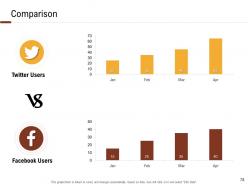
Slide 78: This is a Comparison slide to state comparison between commodities, entities etc.
Slide 79: This is a Bulb or Idea slide to state a new idea.
Slide 80: This is a thank you slide with address, contact number and email address.
Investment in land and building powerpoint presentation slides with all 80 slides:
Use our Investment In Land And Building Powerpoint Presentation Slides to effectively help you save your valuable time. They are readymade to fit into any presentation structure.











FAQs for Investment in land and building
Focus on cap rate and cash flow first - those tell you if you're actually making money from day one. Cap rate shows your annual return, cash flow is what's left after expenses each month. Then check your cash-on-cash return (what you're earning on the money you actually put in). There's this 1% rule where rent should equal 1% of purchase price, but honestly good luck finding that anywhere decent these days. Also factor in if the area's trending up - sometimes a slightly lower return now pays off later. Run those first two numbers though, that's where you'll know if it's worth it.
Dude, zoning laws control what you can actually do with property, so they're huge for investment returns. Like if you buy residential and it gets rezoned commercial later? Your value could explode. But it works against you too - maybe you want to split a house into a duplex for more rent, then find out zoning won't allow it. You're screwed at that point. I'd definitely check current zoning before buying anything. Also look into proposed changes - city planning websites usually have this stuff, or just call them. Trust me, it's worth the 10 minutes.
Honestly, location trumps everything else in real estate. Job growth, decent schools, transit - that's what you're hunting for. Plus any development projects coming down the pipeline. I've seen crappy houses in solid neighborhoods crush gorgeous places in sketchy areas every single time. The whole "location, location, location" cliche is annoying but true. Walk around different times of day to get a real feel for it. Research local trends and bug some agents about growth spots - they usually know what's up before everyone else catches on.
Honestly, I'd go residential first. Way easier to wrap your head around - we all know how houses work, right? You can grab a duplex without needing tons of cash upfront like commercial requires. Sure, you'll get those lovely 2am calls about clogged drains, but the learning curve isn't brutal. Commercial does pay better and tenants stick around longer, plus they fix their own stuff usually. But man, you need serious capital and expertise going in. I made the mistake of jumping too fast once - not fun. Build up some experience with residential properties first, then maybe look at small commercial down the road.
Honestly, emerging markets can completely change your real estate game. Higher yields than developed countries, which is sweet. But the downside? Way more volatility and political drama that'll keep you up at night. Currency swings are brutal - they'll either make you rich or wipe you out. Plus regulations change faster than I change my mind about dinner plans. That said, the infrastructure boom happening in these places creates insane opportunities. Commercial and residential both. Don't jump in with your life savings though. Test the waters first and actually learn how these markets work before you go all in.
Dude, you've got tons of options honestly. Start with regular mortgages for your first few deals - they're cheapest and help build your credit history. Most banks cap you around 4-10 properties though, which is annoying. Hard money's great for flips but expect to pay like 10-15% interest, ouch. Portfolio lenders are way more chill since they keep everything in-house. Private money from people you know can be clutch once you prove you're not gonna screw them over. Seller financing is underrated too - sometimes the owner's happy to play bank. I'd honestly just go conventional first, then get creative as you grow.
So economic indicators are like crystal balls for real estate - they show trends before prices actually move. Interest rates are huge. When they drop, everyone rushes to buy since loans get cheaper. Employment numbers matter too because unemployed people aren't house shopping, obviously. GDP tells you if people have cash to spend. Inflation's tricky though - it drives up construction costs but also pushes people toward buying instead of renting. I'd watch Fed announcements, job reports, and your local economic data. Honestly, it's better than guessing based on what your neighbor's cousin said about the market.
Honestly, vacancy periods are probably your biggest headache - no rent but bills keep coming. Property damage happens too, way beyond normal stuff tenants do. Maintenance costs sneak up on you fast. Market crashes can tank your property value and suddenly nobody wants to rent. Dealing with nightmare tenants is exhausting, trust me on that one. Late payments, evictions... ugh. Property taxes and insurance keep going up too which sucks. Oh, and definitely keep like 3-6 months of expenses saved as backup. Screen tenants super carefully upfront - saves you so much drama later.
Honestly, property managers are worth it if you find a good one. They're way better at screening tenants than most of us - saves you from nightmare renters who trash the place. Quick maintenance fixes prevent those $5k surprises later. My buddy's manager raised his rent $200 because he was charging way under market rate (who knew?). Yeah, the fees sting a bit upfront. But fewer vacancies and keeping good tenants longer usually covers the cost. I'd rather deal with finding my next property than unclogging someone's toilet at midnight, you know?
Dude, real estate has some killer tax benefits. Mortgage interest, property taxes, repairs - all deductible. Depreciation is the best part though, you're basically getting a fake loss on paper while your place probably goes up in value. When you sell, capital gains will bite you unless you do a 1031 exchange to another property. Oh and if you claimed depreciation? There's this recapture tax thing when you sell - honestly forgot about that one for way too long myself. Talk to a tax person first because this stuff gets messy quick.
Dude, don't skip due diligence - I've watched too many people get burned on "amazing deals." Yeah, it's tempting when the market's crazy competitive, but you can't buy blind. Get a solid inspection done, dig into at least two years of financials, and do your own research on comparable sales. Check everything: property condition, neighborhood trends, zoning issues. Trust me, sellers love hiding red flags. Even if you're rushing to beat other offers, missing this stuff will cost you way more later. It's basically your only protection against expensive screwups.
Okay so diversifying basically means don't put everything in one type of property or location. Mix it up - residential, commercial, maybe different cities too. When one market crashes (and they do), your other stuff keeps you going. I made this mistake early on, went all-in on condos in one neighborhood... terrible idea lol. Different properties give you different benefits too - some are steady monthly income, others shoot up in value faster. You'll want to pick maybe 2-3 areas that actually fit your budget. Trust me, spreading things out saves your butt when the market gets weird.
Dude, get yourself some property management software - it'll handle rent collection and maintenance requests automatically. I'm not gonna lie, I'm obsessed with checking those real-time ROI dashboards on my phone. Smart home tech is huge right now too. Tenants love that stuff and you can charge more for it. Analytics tools help spot good neighborhoods before everyone catches on. Oh, and digital tenant screening saves so much time vs doing it manually. Just start basic and add more tools as you grow your portfolio.
Honestly, track record is everything - dig into their actual returns over several years, not just the shiny marketing stuff. Make sure the lead partners have their own cash in these deals too. You'll want full transparency on fees and how they plan to exit. Communication matters way more than people think - do they actually respond when you reach out? Also, stick with groups that know their specific markets inside and out rather than jumping on whatever's hot right now. Oh, and definitely ask to chat with some current investors about their experience before you write any checks.
Dude, you can't ignore the green building stuff anymore. Properties with good energy efficiency are pulling higher rents and way lower vacancy rates. Operating costs are cheaper, so tenants actually stick around longer. The whole ESG thing is getting crazy strict too - like, institutional investors won't even look at your property if it doesn't meet their standards when you try to sell. I've watched so many people get blindsided by this trend, it's not even funny. Look for energy-efficient features and maybe LEED potential when you're shopping. Oh, and check climate risk exposure too. Trust me, it'll save you major headaches later.
-
Perfect template with attractive color combination.
-
Understandable and informative presentation.
-
Excellent design and quick turnaround.
-
Topic best represented with attractive design.
-
Awesome use of colors and designs in product templates.
-
Out of the box and creative design.
-
Top Quality presentations that are easily editable.
-
Very unique, user-friendly presentation interface.
-
Easy to edit slides with easy to understand instructions.