

Common Pharmaceutical Hazards With Safety Methods




Try Before you Buy Download Free Sample Product
 Impress Your
 Audience
 100%
100% Editable
 Save Hours
 of Time


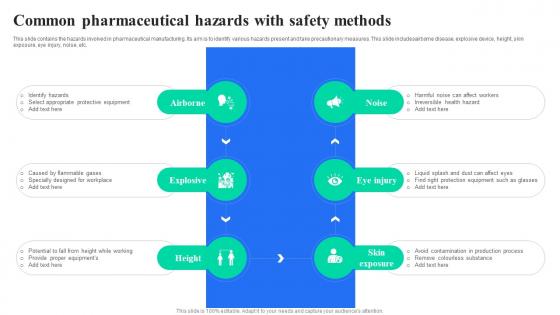
This slide contains the hazards involved in pharmaceutical manufacturing. Its aim is to identify various hazards present and take precautionary measures. This slide includesairborne disease, explosive device, height, skin exposure, eye injury, noise, etc.
People who downloaded this PowerPoint presentation also viewed the following :
Common Pharmaceutical Hazards With Safety Methods with all 9 slides:
Use our Common Pharmaceutical Hazards With Safety Methods to effectively help you save your valuable time. They are readymade to fit into any presentation structure.








FAQs for Common Pharmaceutical Hazards
The most common pharmaceutical hazards in clinical settings include medication errors, adverse drug reactions, contamination risks, allergic responses, and drug interactions. These hazards present both challenges and opportunities for healthcare institutions, with many hospitals and clinics finding that implementing robust safety protocols, automated dispensing systems, and comprehensive staff training significantly reduces incidents while enhancing patient outcomes and operational efficiency.
Healthcare professionals can effectively mitigate hazardous drug exposure risks through proper personal protective equipment, engineering controls like biological safety cabinets, comprehensive staff training, and standardized handling protocols. These integrated safety measures streamline risk management by minimizing contamination, enhancing workplace safety, and ensuring regulatory compliance, with many hospitals and pharmacies finding that systematic approaches ultimately deliver safer environments and reduced liability.
Pharmaceutical companies ensure drug safety through rigorous quality control systems, comprehensive tracking protocols, supplier verification processes, temperature monitoring, and regulatory compliance measures. These companies implement serialization technologies, conduct regular audits, and maintain chain-of-custody documentation, with many organizations finding that integrated safety frameworks significantly reduce contamination risks while enhancing patient protection and regulatory adherence.
Improper pharmaceutical disposal contributes to environmental hazards by contaminating water systems through sewage treatment plants, affecting aquatic ecosystems with hormone disruptors and antibiotics, and creating antibiotic-resistant bacteria in soil and waterways. These contaminants ultimately impact drinking water quality, marine life reproduction, and agricultural systems, with many communities finding that pharmaceutical residues persist for years, requiring costly remediation efforts.
Protective measures include engineering controls like fume hoods and containment systems, personal protective equipment such as specialized gloves and respiratory protection, administrative protocols for safe handling procedures, and regular exposure monitoring. These comprehensive safety frameworks streamline risk management by minimizing direct contact, ensuring proper ventilation, and maintaining strict contamination protocols, with many pharmaceutical laboratories finding that layered protection strategies ultimately deliver safer work environments and regulatory compliance.
Regulatory agencies classify hazardous drugs through comprehensive criteria including carcinogenicity, reproductive toxicity, organ toxicity, and genotoxicity potential, with organizations like NIOSH and FDA establishing detailed guidelines. These agencies monitor through mandatory reporting systems, facility inspections, and ongoing safety assessments, enabling hospitals and pharmacies to implement proper handling protocols, ultimately delivering enhanced worker protection and regulatory compliance.
Technology enhances pharmaceutical hazard identification through AI-powered drug interaction screening, machine learning algorithms for adverse event detection, real-time monitoring systems, predictive analytics for risk assessment, and automated surveillance networks. These technologies streamline safety protocols by analyzing vast datasets, identifying patterns faster than traditional methods, and enabling proactive risk management, with many pharmaceutical companies finding that automated systems significantly reduce detection timeframes while improving patient safety outcomes.
Adverse drug reactions significantly compromise patient safety through increased hospitalizations, treatment complications, and potential fatalities, while simultaneously driving up healthcare costs via extended hospital stays, additional treatments, and liability issues. These reactions burden healthcare systems with billions in preventable expenses annually, with many hospitals finding that robust ADR monitoring and reporting systems ultimately deliver safer patient outcomes and substantial cost reductions.
Pharmacists help educate patients about medication risks through comprehensive counseling sessions, clear explanations of side effects and contraindications, proper dosage instructions, and drug interaction warnings. They provide written materials, demonstrate proper handling techniques for hazardous drugs, and conduct follow-up consultations, ultimately enhancing patient safety and medication adherence while reducing adverse events.
Long-term pharmaceutical hazard exposure can cause reproductive health issues, respiratory problems, skin sensitization, neurological effects, and increased cancer risk among healthcare workers. These cumulative health impacts present both occupational safety challenges and workforce sustainability concerns, with many hospitals finding that comprehensive protective protocols, regular health monitoring, and advanced containment systems ultimately enhance employee wellbeing while reducing liability costs.
Healthcare facilities can implement best practices by establishing comprehensive medication management protocols, conducting regular staff training on proper handling procedures, implementing automated dispensing systems, and maintaining strict inventory controls. Through these strategic approaches, hospitals and clinics streamline medication safety workflows, reduce human error risks, and enhance patient protection protocols, while ensuring regulatory compliance and ultimately delivering safer therapeutic outcomes across all pharmaceutical operations.
Risk assessment enables pharmaceutical companies to identify, evaluate, and mitigate potential safety concerns throughout drug development, from preclinical testing through clinical trials and post-market surveillance. This systematic approach streamlines regulatory approval processes, reduces development costs, and ensures patient safety, with many pharmaceutical companies finding that comprehensive risk frameworks ultimately accelerate time-to-market while maintaining rigorous safety standards.
International guidelines vary significantly in their definitions and management of pharmaceutical hazards, with WHO emphasizing global health impacts, FDA focusing on regulatory compliance and market safety, and EMA prioritizing European risk-benefit assessments. These varying approaches create challenges for multinational pharmaceutical companies, who must navigate different classification systems, reporting requirements, and safety protocols, ultimately requiring strategic harmonization efforts to ensure consistent quality standards and streamlined regulatory processes across markets.
Essential training protocols include hazard identification and classification, proper PPE usage, safe handling and storage procedures, spill response and emergency protocols, and waste disposal compliance. These comprehensive programs enhance workplace safety by reducing exposure risks, ensuring regulatory adherence, and building confident competency, with many pharmacy organizations finding that regular refresher training significantly minimizes incidents while protecting both staff and patients.
Patient reporting systems improve pharmaceutical hazard understanding by collecting real-world adverse event data, identifying previously unknown side effects, and tracking medication interactions across diverse populations. These systems enable regulatory agencies and manufacturers to detect safety signals faster, update prescribing guidelines more accurately, and enhance post-market surveillance, with many healthcare organizations finding that patient-reported outcomes deliver more comprehensive safety profiles than clinical trials alone.
-
Illustrative design with editable content. Exceptional value for money. Highly pleased with the product.
-
Out of the box and creative design.