

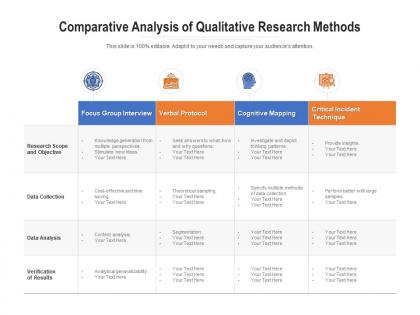
Comparative analysis of qualitative research methods




Try Before you Buy Download Free Sample Product
 Impress Your
 Audience
 100%
100% Editable
 Save Hours
 of Time


Our Comparative Analysis Of Qualitative Research Methods are an irresistible draw. Compel folks to give you a hearing.
People who downloaded this PowerPoint presentation also viewed the following :
Comparative analysis of qualitative research methods with all 2 slides:
Compel folks to give you a hearing with our Comparative Analysis Of Qualitative Research Methods. It is an irresistible draw.

FAQs for Comparative analysis of
So basically, qualitative research digs into the *why* behind stuff - like doing interviews or watching how people actually behave. It's all about getting those juicy details, but you're working with smaller groups. Quantitative is more about the numbers game - measuring "how much" and "what" across tons of people. Super useful for proving things statistically, though it won't tell you the story behind the data. I'd go qualitative when you need to understand what's really driving people (focus groups are great for this). Use quantitative when you want hard proof of relationships between things.
Okay so here's what works for me - open-ended questions first, let them just talk. "Tell me about a time when..." or "walk me through..." are gold. I prep way more questions than I need (honestly probably too many) but having a loose structure helps. Don't script it though! Follow whatever interesting stuff comes up naturally. The demographic questions? Save those boring bits for the end - they totally kill the vibe if you start there. Oh and get comfortable with silence. Sounds weird but people drop their best stories after those awkward pauses when they're actually thinking. Active listening is huge too.
So participant observation is like being a fly on the wall, except you're actually part of the action. You join whatever group you're studying - office, neighborhood, whatever - and just live their routine while taking mental notes. Honestly, it's way more revealing than surveys because people act totally different than what they'll tell you in interviews. The tricky part? You're trying to be both an insider and researcher at once, which gets weird sometimes. I'd say start with short visits first - maybe a few hours here and there - before jumping into the deep end with full ethnographic stuff. It's time-consuming but worth it.
Okay so there's four things you really need to nail down. First, triangulation - basically use multiple data sources to double-check everything. Like pair interviews with observations, you know? Member checking is huge too (seriously, this one saves your butt) - go back to participants and make sure you got their perspective right. Then do thick descriptions so readers can actually picture what you're talking about and decide if it applies to their situation. Oh, and keep an audit trail of every decision you make during analysis. I know it sounds boring but you'll thank me later when you can show exactly how you reached your conclusions. Document literally everything from the start.
Okay so first thing - read through everything like three times minimum to get familiar with your data. Then just code the hell out of it, don't stress about being too specific early on. I always end up with a ridiculous number of codes at first but whatever! After that, start grouping similar codes into themes. Visual maps are honestly a lifesaver here - you'll spot connections you totally missed before. Check your themes against the original data though, sometimes they don't actually make sense when you look closer. Oh and you'll definitely be tweaking things multiple times. That's just how it goes with thematic analysis.
Focus groups are all about that group energy - people riff off each other and you'll catch insights that never come up in solo chats. But here's the thing: some folks just freeze up around others, or one loud person steamrolls everyone else. I've totally been there! One-on-ones are where you get the real dirt though. No peer pressure means people actually open up and share honest stuff. Groups work great when you want to see how opinions clash or mesh together. Go with interviews when you need those deep personal stories that people won't share in front of strangers.
Honestly, just nail the big three: informed consent, confidentiality, and don't mess people up. Qualitative stuff gets weirdly personal fast - participants might think they're just chatting but end up spilling their whole life story. Protecting identities is crucial since detailed stories can out someone even without names. Watch for power dynamics too - are people feeling pressured to join? Oh, and definitely check if there's an ethics board you should run this by first. When in doubt, flip it around - would YOU be cool participating in your own study?
Honestly, visual ethnography is a game changer - people act so differently than what they tell you in interviews. Photos and videos catch all the stuff you'd miss otherwise, like body language and how spaces actually get used. Participants seem way more relaxed too when they can just show you things instead of explaining everything verbally. I always find patterns jump out more when I'm looking at images rather than sifting through transcripts (maybe I'm just more visual). Start with having people take photos of their daily routines or film short clips. It'll add so much depth to whatever method you're already using.
Honestly, narrative inquiry is perfect for getting those deep, messy stories that show how people actually make sense of stuff. Instead of forcing predetermined questions, you just let them talk - and wow, so much more comes out that way. The time element is huge too since you can trace how experiences connect across someone's whole life. I mean, if you're researching something really personal or life-changing, this beats structured interviews hands down. You get all that context and meaning-making that people do naturally when they tell their story.
Case studies are perfect for getting at the "why" behind complicated stuff - you're looking at real situations instead of just numbers. The data you get is so much richer than what surveys give you. Honestly, they're way more fun to read too. You can follow interesting leads as they come up during research, which is huge. They work best for messy, real-world problems with lots of moving pieces. I'd go with case studies when you need to understand relationships or processes that statistics won't explain. Perfect for when context really matters.
Honestly, qualitative research is where you get the real story behind all those stats policymakers love. Numbers tell you *what* happened, but interviews and observations show you *why*. People will tell you exactly what barriers they're hitting and why programs aren't clicking. Way more useful than another survey, if you ask me. These stories help decision-makers spot stuff they totally missed - like unintended consequences or how their assumptions were completely off. You can literally reshape programs by showing what participants actually want versus what bureaucrats think they need. Just make sure you loop in stakeholders early and tailor your questions to their specific policy headaches.
NVivo and ATLAS.ti are probably your best bet if you want something robust - though fair warning, they're kind of a pain to learn at first. MaxQDA's easier to pick up. Dedoose is decent for cloud stuff and won't break the bank. Honestly? For simple projects, I've seen people get by with just Excel or even Word with highlighting (my professor would probably hate me for saying that lol). But you'll definitely outgrow basic tools fast once your data gets messy. I'd grab some free trials first and see what doesn't make you want to throw your laptop.
Oh this is actually pretty tricky stuff! So first thing - just own up to whatever assumptions you're bringing in. We're all biased somehow. Get data from different angles too, like multiple sources or methods to double-check yourself. Member checking works great - basically go back to people and be like "does this sound right to you?" I always forget this part but keep notes about how your own background might be messing with what you see. You can't get rid of bias completely (honestly who can?) but at least be upfront about it.
Honestly, just match their vibe - if they're chill and quiet, don't come in all peppy. I always start with super easy questions so they feel comfortable. Share something small about yourself too (but obviously don't hijack the convo). Use whatever words they use when you ask follow-ups - shows you're actually listening. And don't panic during awkward silences! That's usually when people say the really good stuff. Oh, and put your damn phone away. Eye contact makes such a difference. People can tell when you're genuinely curious vs just going through the motions.
Mixed-methods is honestly a game-changer because you get to triangulate everything. Your qual insights get backed up with actual numbers, making your whole argument so much stronger. Start with whatever method feels right for your question - maybe surveys to validate interview themes, or interviews to explain weird patterns in your data. The numbers tell you "what" and "how much," while interviews dig into the "why." I swear it's criminally underused. Oh, and don't stress about doing both perfectly - use one method to fill gaps from the other. Works every time.
No Reviews