

Conflict Management Resolution Flow Chart Training Ppt




Try Before you Buy Download Free Sample Product
 Impress Your
 Audience
 100%
100% Editable
 Save Hours
 of Time


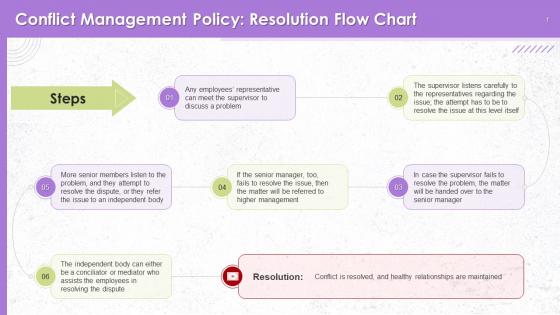
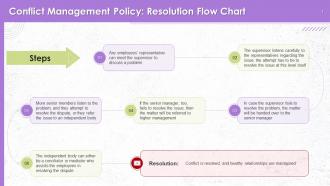
This slide lists the flow chart for conflict resolution. It explains that the employees representative can meet with the supervisor to discuss the issue and resolve it. For all intents and purposes, everybody hopes that no conflict ever has to be go the level above it.
People who downloaded this PowerPoint presentation also viewed the following :
Conflict Management Resolution Flow Chart Training Ppt with all 16 slides:
Use our Conflict Management Resolution Flow Chart Training Ppt to effectively help you save your valuable time. They are readymade to fit into any presentation structure.






FAQs for Conflict Management Resolution Flow
So first thing - figure out what's actually wrong, not just what people are complaining about. Then make sure everyone actually listens to each other (harder than it sounds, trust me). Brainstorming solutions together is next, and honestly? It can be pretty satisfying when people get into it. Pick something that works for everyone, put it into action. But here's the thing - you've gotta circle back later and check if it's still working. Conflicts are sneaky little things that'll pop back up if you don't stay on top of them.
Look, most conflicts happen because people aren't actually listening to each other - they're just waiting for their turn to talk. Try active listening first. Ask open questions to figure out what's really bothering them (not just surface stuff). When they explain something, repeat it back in your own words. Honestly, this feels weird at first but it works. Don't start sentences with "you always..." or whatever - stick to "I feel like..." instead. The whole point is making sure everyone feels heard. Next time things get tense, just say "help me understand where you're coming from."
Honestly, empathy is huge for fixing team drama. When someone's upset, ask "help me understand why this matters to you" instead of jumping straight to solutions - works way better. I've watched conflicts that seemed totally hopeless suddenly click once people felt actually heard. The trick is validating their feelings first, then tackling the real problem together. Don't focus on who's right or wrong. Just listen and acknowledge what they're going through. It sounds cheesy but it genuinely defuses all that defensiveness. You'll be shocked how much faster things get resolved.
Oh man, this is so real. People from different cultures handle conflict totally differently - like what you think is being direct might seem super rude to them. Some folks prefer beating around the bush to save face, others just want you to spit it out already. I swear half the drama at my old job was just people completely misreading each other's communication styles. Plus there's all the hierarchy stuff, timing, even how they interpret silence. Honestly? Just ask them straight up how they like handling disagreements. Way easier than guessing.
Honestly, it usually comes down to people just not talking to each other properly. Egos get in the way big time. Trust issues too - once that's gone, good luck fixing anything. Some folks completely dodge conflict which just makes everything worse later. Oh, and when there's no actual system for handling problems? Total mess. Power dynamics are probably the worst though - like when your boss holds all the leverage, you're pretty much stuck. Time crunch situations always end up with band-aid solutions instead of actually solving the root issue. Best thing is making people feel safe to speak up early before stuff explodes.
Honestly, mediation works for most workplace drama - personality clashes, fights over who does what on projects, arguments about how things should get done. HR can do it internally or they'll bring in someone from outside. Way better than formal complaints which just make everyone more paranoid, tbh. The mediator doesn't pick sides, just makes sure you both actually listen to each other for once. It's confidential too. Plus they focus on fixing things going forward instead of rehashing who screwed up. Definitely try it before things get really ugly - once people start cc'ing managers on everything, it's already too late.
So conflict resolution training is basically teaching people how to fight without imploding the whole team. Your people learn to actually listen instead of just waiting for their turn to talk. Plus they get better at keeping work stuff separate from personal drama - which honestly saves so much headache. The cool part is everyone starts speaking up about small problems before they turn into massive disasters. Different perspectives become way easier to understand too. I'd say try a workshop first, maybe half a day? Even that short time makes a noticeable difference.
Here's the thing - when you work together to solve stuff, nobody feels like they "lost." Everyone buys into the solution because they helped build it, so people actually do what they agreed to (instead of being bitter about it). It builds trust too, which honestly you'll need for the next argument. You end up finding way more creative solutions when people aren't being defensive and actually share info openly. Next time try asking "how can we both get what we need?" Works way better than just digging in.
Look, you gotta walk the walk here - talking about conflict resolution means nothing if you're not actually doing it. Jump in when stuff goes sideways and help facilitate, don't just bark orders. Ask questions that get people talking, acknowledge everyone's side, then hunt for that middle ground. Way too many managers just hide from conflict completely (which is honestly worse than doing nothing). Show them how to attack the problem, not each other. Oh and be real about your own conflicts with your boss or whoever - obviously within reason, but transparency goes a long way.
So basically, negotiation is just you two hashing it out directly - no outside help. Mediation brings in someone neutral to keep things on track. I've seen negotiations get pretty ugly when emotions run high. With mediation, that third person helps you actually hear each other instead of just arguing past one another. Way less combative usually. If you're already not communicating well or things are tense, honestly I'd go straight to mediation. You'll probably end up on better terms afterward too.
Honestly, active listening is a game-changer for handling conflict. When you actually listen instead of just waiting to jump in, people feel heard and get way less defensive. You'll catch the real problems underneath what they're complaining about on the surface. It shows respect too, which - I can't stress this enough - matters so much when things get heated. Try this: reflect back what you heard before you respond. Like "so you're saying..." It creates actual dialogue instead of two people just talking over each other. You'd be surprised how many emotions you pick up that you'd miss otherwise.
Honestly, emotional intelligence is such a game-changer for dealing with conflict. You know how some people just stay super calm when things get heated? They're usually good at reading both their own emotions and picking up on what others are really feeling underneath all the drama. The thing is, most workplace fights aren't even about what people are arguing over - there's always some deeper frustration nobody's talking about. I swear, half these situations would disappear if we just acknowledged how the other person feels before trying to fix everything. Works way better than jumping straight into problem-solving mode.
Oh man, tech actually helps a ton with this stuff! Mediation platforms are clutch - they walk you through structured convos without getting all heated. Video calls work great too when meeting in person feels awkward. Those documentation apps save your butt later because nobody can pull the "that's not what we agreed on" card. Anonymous surveys before meetings? Game changer for figuring out what's really bothering people. I swear some people won't be honest unless it's anonymous first. Just don't pick anything too complicated or you'll make things worse.
Ugh, remote drama is the worst. Jump on a video call ASAP - don't let it fester over Slack where everything sounds passive-aggressive. Let each person talk without interrupting (easier said than done, I know). Text just kills tone completely. Write down what you all agree on and send a quick recap email after. I've learned you can't just wing communication when everyone's scattered - you've got to be way more deliberate about it. Maybe set up weekly one-on-ones if things stay tense?
Oh man, you really gotta figure out what works for each person on your team. Some people want you to just tell them straight up what's wrong. Others get super uncomfortable with direct confrontation - I totally bombed this once and made things way worse! Ask everyone privately how they like handling conflicts. Cultural stuff matters too - like whether someone's from a background where saving face is huge. Introverts usually need time to think before jumping into these conversations. Once you know their styles, tailor your approach instead of treating everyone the same way.
-
Informative and engaging! I really like the design and quality of the slides.
-
Use of icon with content is very relateable, informative and appealing.