

Construction project risk landscape powerpoint presentation slides




Try Before you Buy Download Free Sample Product
 Impress Your
 Audience
 100%
100% Editable
 Save Hours
 of Time


Effective risk management policies are vital for keeping site visitors, employees, and contractors safe from harm. Risk assessment creates accident or risk awareness and forms an integral part of the safety management plan and occupational health. Check out a professionally designed Construction Project Risk Landscape template for determining your risk response strategy. Businesses can keep an eye on the job and its efficiency through Gantt charts and timelines for each task. It aims to prevent the unexpected rise in material cost, ensure minimum disruption, and maintain quality standards at work. The template displays details associated with projecting risks, deliverables, budget, and milestones. One can acknowledge facts related to key people working on the project. The proposal presents information for risk impact and probability assessment for construction projects. Organizations can showcase the impact of identified critical risks using charts and graphs on overall project performance. The template highlights quality assurance guidelines for building specifications, work design, and construction material. Firms can set responsibilities and define work for each worker or team member based on the testing plan. Plan a quality inspection for the worksite with the Construction Project Risk template and learn strategies to overcome labor shortages. Get access to this well researched template on Construction Project Risk Landscape now. Talk to our experts and book a free demo for yourself.
People who downloaded this PowerPoint presentation also viewed the following :
Content of this Powerpoint Presentation
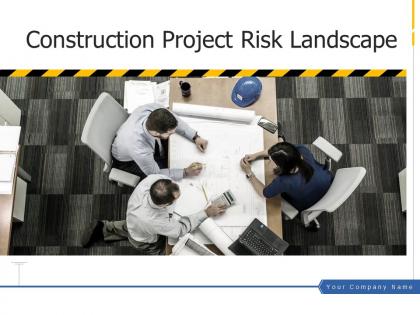
Slide 1: This slide displays the title i.e. 'Construction Project Risk Landscape' and your Company Name.
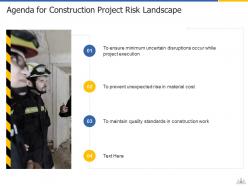
Slide 2: This slide presents the agenda for the project.
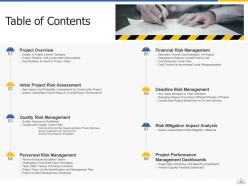
Slide 3: This slide exhibits the table of contents for the project.
Slide 4: This slide showcases the title for project overview.
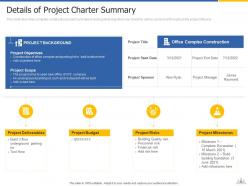
Slide 5: This slide describes complete construction project summary including what objectives are, how they will be carried out throughout the project lifecycle.
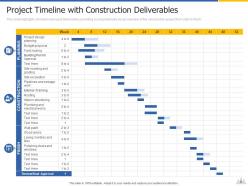
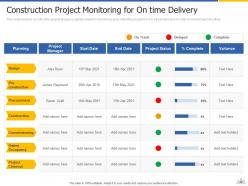
Slide 6: This slide highlights a timeline of project deliverables providing a comprehensive visual overview of the construction project from start to finish.
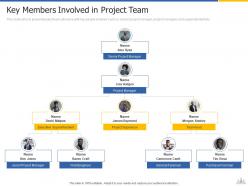
Slide 7: This slide aims to present project team structure with key people involved such as senior project manager, project managers and superintendent etc.
Slide 8: This slide displays the title for Initial project risk assessment.
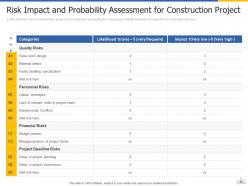
Slide 9: This slide explains key risk of construction project for assessing its occurring probability and level of impact it has on project success.
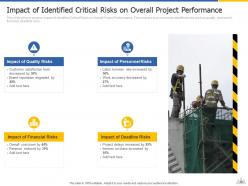
Slide 10: This slide aims to analyze Impact of identified Critical Risks on Overall Project Performance.
Slide 11: This slide presents the title for quality risk management.
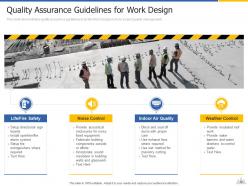
Slide 12: This slide demonstrates quality assurance guidelines to tackle Work Design risks for project quality management.
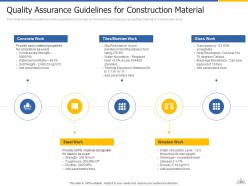
Slide 13: This slide illustrates quality assurance guidelines to be kept in mind while purchasing or accepting material for construction work.
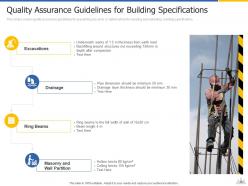
Slide 14: This slides covers quality assurance guidelines for preventing any error or defect while formulating and validating building specification.
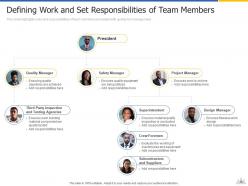
Slide 15: This slide highlights roles and responsibilities of team members associated with quality risk management.
Slide 16: This slide depicts a comprehensive plan for quality inspection and testing for multiple inspection areas using various methods and acceptance criteria.
Slide 17: This slides aims to provide an overview of key risks identified which are hindering quality of project and also covers strategies to mitigate their impact.
Slide 18: This slide exhibits the title for personnel risk management.
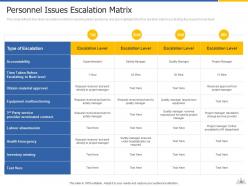
Slide 19: This slide reflects four level escalation matrix for resolving team problems and also highlights the time duration before escalating the issues to next level.
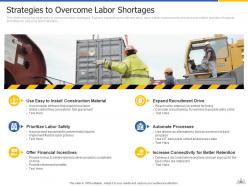
Slide 20: This slide shows key strategies to overcome labor shortages.
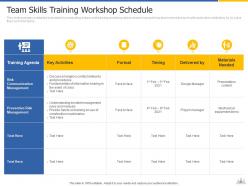
Slide 21: This slide provides a detailed schedule for conducting a team skill training workshop which aims to improve how team members work with each other.
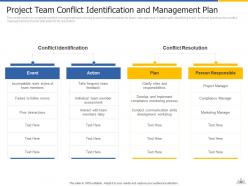
Slide 22: This slide covers a complete conflict management plan during project implementation for team management.
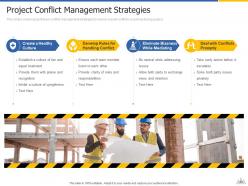
Slide 23: This slides covers project team conflict management strategies to reduce overall conflicts occurring during project.
Slide 24: This slide displays the title for financial risk management.
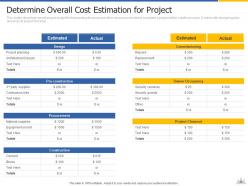
Slide 25: This slides describes overall project budget for forecasting financial and other resources needed to complete a project within a defined scope.
Slide 26: This slides describes different strategies for reducing overall construction project cost by minimizing project hidden cost and by adopting e-procurement.
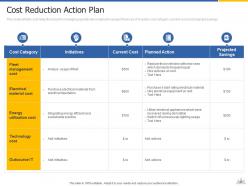
Slide 27: This slide exhibits cost reduction plan for managing operational construction project finances. It includes cost category, current cost and projected savings.
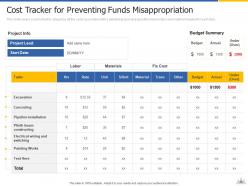
Slide 28: This slide covers a worksheet to categorize all the costs associated with a detailed project and specifies labour rates and material required for each task.
Slide 29: This slide displays the title for deadline risk management.
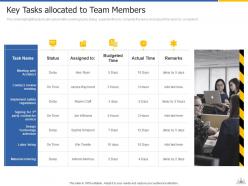
Slide 30: This slide highlights tasks allocated matrix covering tasks status, expected time to complete the tasks and actual time taken to complete it.
Slide 31: This slide covers strategy to prevent project delays and enhance ability for effective management stakeholder’s crucial tasks to ensure project success.
Slide 32: This slide involves construction project progress update sheet for monitoring and controlling project risks to streamline task in order to meet project deadline.
Slide 33: This slide displays the title for risk mitigation impact analysis.
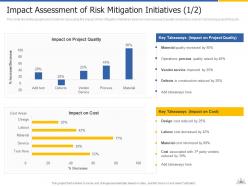
Slide 34: This slide illustrates graphs and charts for assessing the impact of risk mitigation initiatives taken to improve project quality and reduce overall cost.
Slide 35: This slide illustrates graphs and charts for assessing the impact of risk mitigation initiatives taken to improve personal skills, etc.
Slide 36: This slide presents the title for project performance management dashboards.
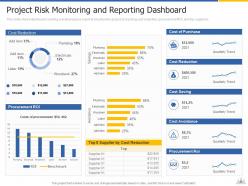
Slide 37: This slide shows dashboard covering overall progress report of construction project by tracking cost reduction, procurement ROI, and top suppliers.
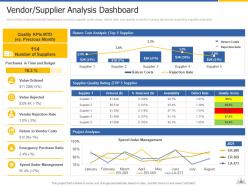
Slide 38: This slide showcases the vendor or supplier analysis dashboard.
Slide 39: This is the icons slide for the project.
Slide 40: This slide displays the title for additional slides.
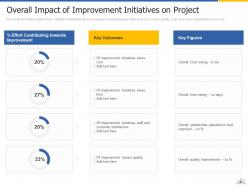
Slide 41: This slide illustrates impact of key mitigation initiatives taken to improve overall progress of the project.
Slide 42: This slide explains about the company, target audience and its clients values.
Slide 43: This slide showcases the vision, mission, strategies and goals of your company.
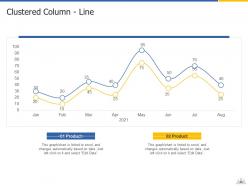
Slide 44: This slide showcases the clustered column charts for different products. The charts are linked to Excel.
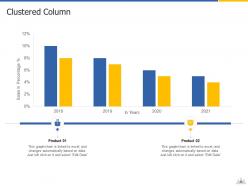
Slide 45: This slide showcases the clustered column charts for different products. The charts are linked to Excel.
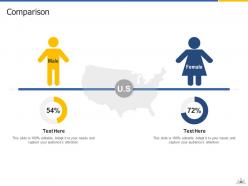
Slide 46: This slide presents the comparison of your products based on selects.
Slide 47: This slide showcases the posts related to past experiences of clients.
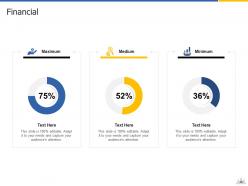
Slide 48: This slide exhibits the financials of the company.
Slide 49: This is the thank you slide and displays the contact details of the company i.e. office address, contact number, etc.
Construction project risk landscape powerpoint presentation slides with all 49 slides:
Use our Construction Project Risk Landscape Powerpoint Presentation Slides to effectively help you save your valuable time. They are readymade to fit into any presentation structure.







FAQs for Construction project risk landscape
Honestly, construction risks are everywhere but they mostly break down into money problems (cost overruns, payment delays), scheduling nightmares, and technical stuff going sideways. Weather delays mess up way more projects than people think - learned that the hard way. Then you've got soil surprises, design changes, labor shortages, permit headaches. Safety issues are obvious but still happen. Code changes can totally derail things too, which is annoying. Quality control with subs is another headache. Best bet? Figure out your top three risks for your specific project and area, then actually plan for them instead of just hoping nothing goes wrong.
Look, risk assessment is basically your early warning system for projects. Spot problems before they wreck your timeline and budget. I always tell people to identify stuff upfront so you can actually plan for it - allocate resources better, prep stakeholders for potential disasters. Weather delays, supply chain nightmares... I've watched too many projects completely implode because teams didn't think ahead. Don't just wing this part. You should really run a risk workshop with your team soon. Get everyone in a room and map out what could go wrong with your current project. Trust me on this one.
Honestly, start with a team brainstorming session - those always surface stuff you wouldn't think of alone. Keep a risk register to track everything (trust me, you'll forget otherwise). SWOT analysis covers your bases pretty well too. But here's what really works: actually walk the site. I know it sounds obvious, but you catch so many risks just being there in person. Oh, and definitely interview your subcontractors - they spot things we miss all the time. Historical data helps you see patterns from past projects. Set up that brainstorming kickoff next week and build from there.
Dude, get everyone talking from the start - that's honestly the biggest thing. Your subs, suppliers, clients, even the permit people all spot different red flags you'll totally miss. I learned this the hard way on a project where we didn't loop in the city early enough and got hit with massive permit delays. Nobody wants to be in those weekly meetings, but they're gold for catching stuff like material shortages or design changes before they wreck your timeline. Plus stakeholders become way less cranky when they feel heard, which is just... a nice bonus honestly.
Dude, tech is a lifesaver for catching problems early. Project management software shows you budget issues and delays as they happen. Those drones for site inspections? Absolute game-changers - I can't believe more people don't use them. BIM modeling catches design screwups before you're halfway through construction. IoT sensors track equipment and weather stuff automatically. Your team can report issues instantly through mobile apps too. Just don't get sucked into buying the flashy new thing - pick what actually works with how you already do things.
Honestly, you've gotta bake safety into everything from the start - it's way more expensive to fix later. Get your whole crew trained on the specific regs for your project type first. Then do site inspections constantly (I know it's tedious but trust me). Document literally everything because when shit hits the fan, you'll need that paper trail. Daily safety briefings help too. Oh, and make sure workers feel comfortable stopping work if something looks sketchy - that's huge. Budget for proper equipment upfront instead of cheaping out. Learned that one the hard way on my first big job.
Honestly, you're gonna run into three main headaches: contract fights, project delays, and liability stuff. When scope changes happen without proper paperwork, that's where disputes start. Delays are the worst because they trigger penalty clauses and suddenly every contractor's pointing fingers at each other - it gets ugly fast. Safety issues and defective work claims can pop up too, plus permit problems that'll literally shut your job site down. My advice? Document absolutely everything and nail down your change order process right away. Sounds boring but it'll save your ass later.
Yeah so the economy totally changes your risk game plan. When things get rough, you're basically watching cash flow like a hawk and worrying about suppliers going under or clients not paying. It's all defensive moves. But when times are good? Then you're dealing with worker shortages and crazy material costs - plus everyone's overpromising on timelines. I'd say check your contingency budgets every quarter based on what's happening economically. Also diversify your suppliers when stuff gets sketchy. Oh, and build some scenario planning into your reviews. Sounds boring but it actually helps.
Build in 10-15% contingency - seriously, I can't tell you how many projects I've watched go sideways because people were way too optimistic about costs upfront. Do regular budget check-ins and cash flow forecasting as you go. Performance bonds are clutch for protecting against contractor issues. Oh, and nail down your change order process before you start anything - scope creep is a budget killer. My buddy learned that one the hard way last year. Stay on top of the numbers instead of scrambling to catch up later.
Honestly, start with a solid kickoff meeting - walk everyone through the main risks and how you'll handle them. Put up visual stuff around the site too, like risk charts or pocket cards guys can actually use. Weekly emails help, but the real magic happens in daily huddles when supervisors break it down in normal language. I swear, half the risk plans I've seen just sit in trailers collecting dust. Toolbox talks work great for keeping things current. The whole point is getting people to actually talk about risks every day, not just having some fancy binder nobody opens.
Don't make risk management a one-and-done thing - build it into your weekly team meetings. I'd update your risk register monthly too, because honestly I've watched way too many of those just sit there gathering dust after kickoff. When you hit major milestones or scope changes, that's when you really need to reassess everything. Track how both probability and impact shift as things move forward. The trick is being systematic about it instead of scrambling when problems pop up. Go ahead and block out those recurring risk sessions on your calendar now, and get specific people owning the big risks.
Look, it really comes down to how messy your project is. Simple stuff? Just use basic checklists and have some backup plans ready. But when you're juggling multiple stakeholders, new tech, or crazy deadlines - that's when you need the heavy artillery. We're talking detailed risk registers, scenario planning, maybe even bringing in a dedicated risk person. Most teams totally crash and burn on complex projects because they don't see the domino effects coming. I've watched it happen way too many times. You've gotta match your risk strategy to your project's complexity right from the start, not play catch-up when everything's already going sideways.
Dude, poor risk management will totally wreck your project. When you don't spot problems early, they hit hard - weather delays, permit issues, material shortages. Stuff you could've planned for becomes a nightmare. Budget easily jumps 20-30%. I've watched projects take twice as long because of this mess. Build in buffer time from the start, even if it feels like overkill. Same with money - set aside contingency funds. Trust me, you'll thank yourself later when something inevitably goes sideways and you're not scrambling.
Honestly, just start writing down what goes sideways on your projects - and what actually works too. Most teams never do this and wonder why they keep hitting the same problems. Build a quick list of stuff you've seen before: weather screwing up timelines, suppliers flaking, contractor drama, whatever. Include what fixed it when it happened. Then - and this is the part people skip - actually look at that list when you're starting something new. It's wild how often you'll think "oh right, we had this exact issue last year" but only after you're already dealing with it again. Way better to catch it upfront.
Look, insurance is basically your backup plan when construction stuff goes sideways. General liability covers if someone gets hurt, builder's risk protects the actual project, and professional indemnity deals with design screwups. Workers' comp is required anyway, so that's a no-brainer. But here's the thing - it doesn't stop problems from happening, just pays for the mess afterward. You still need good risk management on top of coverage. I'd check your policy limits pretty often and actually read what's NOT covered. Trust me, those exclusions will come back to haunt you.
-
It saves your time and decrease your efforts in half.
-
Unique research projects to present in meeting.
-
Use of different colors is good. It's simple and attractive.
-
Excellent design and quick turnaround.
-
Thanks for all your great templates they have saved me lots of time and accelerate my presentations. Great product, keep them up!
-
Nice and innovative design.