


Consumer insights offerings




Try Before you Buy Download Free Sample Product
 Impress Your
 Audience
 100%
100% Editable
 Save Hours
 of Time


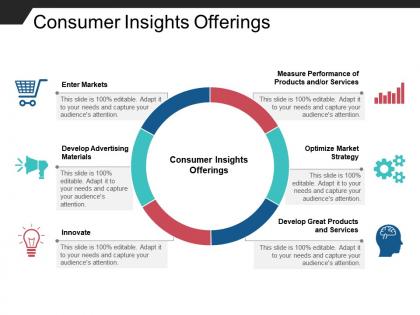
Utilize this Consumer Insights Offerings PowerPoint presentation to delve deep into the behavior of your current as well as potential customers. Take advantage of this consumer behavior PPT slide to gain insight through a series of steps like gathering information, analyzing facts, etc. Take the assistance of this behavior trends PPT presentation to depict insight types including inspirational insight, emotional insight, and intensity insight. Reveal the information about consumers and markets for a better conceptual development with this consumer knowledge PPT slideshow. Employ this customer knowledge infographic to make customer insight a part of the strategy and innovation processes for better results. Ensure that consumer insight criteria which include relevance, actionability, and other parameters are successfully met. Implement novel research techniques like surveys, video ethnography, focus groups and observational methods to immerse in the lives of your valuable consumers. Download this amazing consumer interpretation PPT visual to induce your prospective clients for purchasing your products.
People who downloaded this PowerPoint presentation also viewed the following :
Consumer insights offerings with all 5 slides:
Get to the bottom of it with our Consumer Insights Offerings. They allow you to explore the depths.
FAQs for
So here's what I've noticed - age is huge. Younger people care way more about sustainability and whether brands actually do good stuff, while older folks just want value and trust. Income's obviously a factor too, but don't think broke people only buy cheap things - that's not always true. Where someone lives matters a ton since city vs rural shoppers want completely different things. Gender still plays a role in some categories, though honestly that's changing super fast now. I'd look at your customer data first and group it by these things to see what actually works for your products specifically.
Dude, social media trends are basically like a magnifying glass for brands - they can boost you up or absolutely destroy your reputation in hours. When trends match your vibe, people think you're cool and relevant. But man, I've seen companies get wrecked by one bad TikTok moment faster than you can blink. Whole generations will just write you off. You gotta watch this stuff constantly and have your crisis plan ready to go. Once it hits regular news or research reports? You're already toast. The speed is honestly insane these days.
UGC is a total game-changer for trust. Real customer reviews and posts hit different than your own marketing copy - people can smell a sales pitch from miles away. When someone sees actual photos or stories from other buyers, it's like getting that friend recommendation before you buy something sketchy online. Makes sense, right? The whole thing reduces that "am I making a mistake?" feeling customers get. I'd definitely push for more testimonials and user posts across your social media. Even encourage customers to share their experiences - maybe throw in a small incentive if needed.
Dude, sustainability isn't just trendy anymore - it's literally make or break with customers, especially younger ones. They'll research your entire supply chain and bail if they catch you greenwashing. People are actually reading labels now and paying more for brands that match their values, which honestly surprised me at first. But here's the thing - they can spot fake "eco-friendly" BS instantly. Don't just throw green buzzwords on your packaging. Figure out what sustainable stuff you're already doing, then talk about that authentically. Way better than making promises you can't keep.
Three main things kill it for customers - messy onboarding with too many steps, not seeing actual value (this one's brutal for retention), and terrible support experiences. Users get lost trying to start, then can't tell if your product even works for them. When they need help? Good luck finding answers or getting quick responses. Honestly, just map where people drop off in your customer journey and talk to the ones who bailed at those exact moments. Way more useful than guessing what went wrong.
Dude, seasonal spending is wild - holidays and back-to-school create massive spikes, then everything crashes in January. Q4's obviously huge, but that February drop? Kills me every time even though I know it's coming. Cash flow gets crazy volatile if you don't plan for it. Summer's weird too - people spend more on experiences instead of stuff. Honestly, pull your last three years of monthly numbers and find your patterns. Those multipliers will save your ass for forecasting and you won't get stuck with too much inventory sitting around.
Honestly, post-purchase surveys are your best bet - just ask 3-4 quick questions via email. NPS scores work great too for tracking overall satisfaction. Customer interviews give you the deep stuff, but they're more work. I'd also watch your retention rates and support tickets since actions speak louder than survey responses, you know? Social media monitoring is pretty clutch these days because everyone complains online anyway. Focus groups are solid but cost more. Start simple with those post-purchase emails first, then add NPS tracking once you get the hang of it. You'll actually get useful data without annoying customers.
So basically, instead of throwing the same stuff at everyone, you're actually paying attention to what each customer wants. Like, if someone keeps buying skinny jeans, show them more skinny jeans - not cargo shorts, you know? People notice when you get them vs when you're just blasting generic ads everywhere. It cuts down on all that annoying digging through random products too. Honestly, most companies are terrible at this which is weird because the data's right there. Start simple though - even just tweaking email subject lines based on what they've bought before will boost your open rates pretty quick.
Honestly, it usually boils down to three things. Price is huge - people jump when they don't feel they're getting their money's worth anymore. Then there's performance stuff, like when your product just stops working for them. FOMO plays a bigger role than most companies realize though. Customers see shiny new features from competitors and get curious. Bad customer service will absolutely push someone over the edge too - especially if they were already considering leaving. The smart move? Run surveys and keep an eye on what people are saying online. Catch these issues early before you're dealing with a mass exodus.
Dude, culture totally changes everything about how people buy stuff. What works in one country can completely flop somewhere else - different values, different ways of talking, you know? Even colors mean different things. I learned this the hard way when I saw a campaign that used white everywhere (death color in some places, whoops). Family-focused ads kill it in places like Japan, but Americans want that "you can do it" individual vibe. Honestly, you can't just guess at this stuff. Test everything locally and find someone who actually gets the culture, not just the obvious differences.
Machine learning is totally changing how we read consumer behavior - like, it can actually predict what people want before they even realize it. Voice assistants and AR stuff are everywhere now, creating crazy amounts of touchpoints for data collection. Real-time sentiment analysis gives you instant feedback that didn't exist before. The data overload is honestly nuts sometimes! But here's the thing - don't chase every new tech toy. Pick maybe 2-3 tools that match where your customers actually hang out. Chatbots are decent for quick insights too, though some people still hate talking to them.
When inflation hits, people get picky about spending. They'll stick to essentials and hunt for deals way more aggressively. Most folks trade down to cheaper brands or store alternatives pretty quickly. Honestly, discretionary stuff gets cut first - dining out, entertainment, random purchases. Everyone still needs groceries but suddenly that weekend trip doesn't seem necessary, right? People also start hoarding when they find good prices since they expect everything to keep getting more expensive. For your business stuff, just focus on value messaging and figure out if you're selling something people actually need or if it's worth the higher price tag.
Dude, keeping customers is way cheaper than finding new ones - like seriously, the math is wild. Loyal customers become your free marketing team through word-of-mouth, which honestly works better than most ads anyway. They'll forgive you when you mess up and actually pay more for your stuff. Plus they give you real feedback since they want you to succeed. Oh, and predictable revenue? Chef's kiss. Track your repeat purchases and lifetime value metrics. Those numbers don't lie about what's working.
Basically you gotta speak to each group differently based on what they actually care about. Gen Z wants authenticity and social stuff with casual vibes, but Boomers prefer detailed info and traditional benefits. I've watched so many brands mess this up spectacularly then act shocked when nobody responds. Different emotional triggers work too - some people want aspiration, others just want security or convenience. The trick is listening to how each segment talks about your product category, then use their language back at them. Oh and definitely test different approaches because you'll be surprised what resonates.
Social media feedback is honestly a goldmine if you actually dig into it. People are way more real there than on surveys - you'll catch genuine complaints, see what features they're dying for, plus spot trends early. Don't just stalk your own brand mentions though, that's amateur hour. Check what people say about competitors and the whole industry. Yeah, set up monitoring tools but here's the thing - you gotta actually spend time weekly going through it all. Can't just peek at pretty dashboards. Look for patterns in the mess and you'll find use cases you never imagined.
-
Wonderful templates design to use in business meetings.
-
Really like the color and design of the presentation.