


Consumer insights powerpoint presentation slides




Try Before you Buy Download Free Sample Product
 Impress Your
 Audience
 100%
100% Editable
 Save Hours
 of Time


Gather relevant data about consumers and potential customers using content-ready Consumer Insights PowerPoint Presentation Slides. Go through the human behaviour trends and understand your clients better with the help of ready-made consumer insights PPT presentation templates. Get consumer insights from data, surveys, sales, focus groups, direct interviews, online data and more. Make informed decisions for your business using consumer insights PowerPoint presentation slideshow. This deck comprises of templates such as research methodology, consumer insight assumptions, key stats, data collection and processing, consumer insight capabilities, consumer insight components, tools for consumer insights, YouTube analytics, google trends, google analytics, and more. These templates are completely customizable. Edit colors, text, icon and font size as per your need. Add or remove content, if needed. Download consumer insights PPT templates to understand your customers better. Our Consumer Insights Powerpoint Presentation Slides team are a cooperative lot. They will respond to all your specifications.
People who downloaded this PowerPoint presentation also viewed the following :
Content of this Powerpoint Presentation
Slide 1: This slide introduces Consumer Insights with an imgery. State Your Company Name and begin.
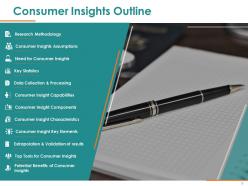
Slide 2: This slide showcases Consumer Insights Outline consisting of- Research Methodology, Consumer Insights Assumptions, Need for Consumer Insights, Key Statistics, Data Collection & Processing, Consumer Insight Capabilities, Consumer Insight Components, Consumer Insight Characteristics, Consumer Insight Key Elements, Extrapolation & Validation of results, Top Tools for Consumer Insights, Potential Benefits of Consumer Insights.
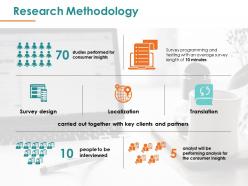
Slide 3: This slide shows Research Methodology displaying- Survey programming, Survey design, Localization, Translation.
Slide 4: This slide shows Consumer Insights Assumptions displaying- Quantitative methods: Record how many, how often, when, Use standardized forms and spaces, Seek objectivity, Test a hypothesis, Find a single truth. Qualitative methods: Ask reasons why; seek meaning, Use natural setting, Rely on subjectivity, Pose a research question, Find multiple truths.
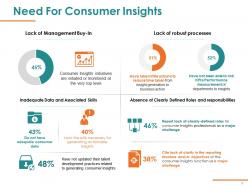
Slide 5: This slide shows Need For Consumer Insights with the following points- Lack of robust processes, Lack of Management Buy-In, Inadequate Data and Associated Skills, Absence of Clearly Defined Roles and responsibilities.
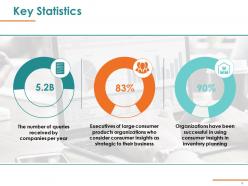
Slide 6: This slide displays Key Statistics to be displayed.
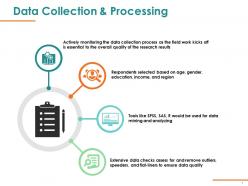
Slide 7: This slide shows Data Collection & Processing showcasing- Actively monitoring the data collection process as the field work kicks off is essential to the overall quality of the research results. Respondents selected based on age, gender, education, income, and region. Tools like SPSS, SAS, R would be used for data mining and analyzing. Extensive data checks assess for and remove outliers, speeders, and flat-liners to ensure data quality.
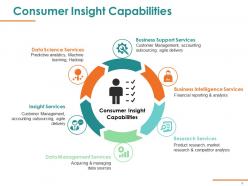
Slide 8: This slide showcases Consumer Insight Capabilities with the following subheadings- Business Support Services: Customer Management, accounting outsourcing, agile delivery. Business Intelligence Services: Financial reporting & analysis. Research Services: Product research, market research & competitor analysis. Data Management Services: Acquiring & managing data sources. Insight Services: Customer Management, accounting outsourcing, agile delivery. Data Science Services: Predictive analytics, Machine learning, Hadoop.
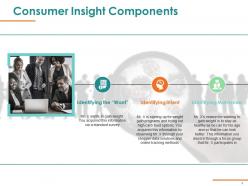
Slide 9: Consumer Insight Components
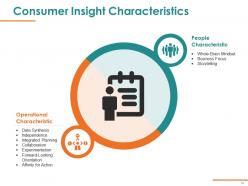
Slide 10: This slide showcases Consumer Insight Characteristics divided into- People Characteristic: Whole-Brain Mindset, Business Focus, Storytelling. Operational Characteristic: Data Synthesis, Independence, Integrated Planning, Collaboration, Experimentation, Forward-Looking Orientation, Affinity for Action.
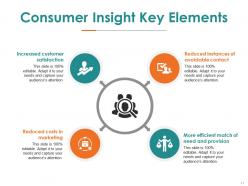
Slide 11: This slide displays Consumer Insight Key Elements such as- Increased customer satisfaction, Reduced instances of avoidable contact, Reduced costs in marketing, More efficient match of need and provision.
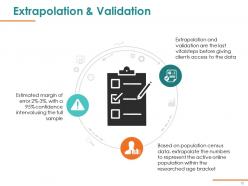
Slide 12: This slide shows Extrapolation & Validation- Extrapolation and validation are the last vital steps before giving clients access to the data. Based on population census data, extrapolate the numbers to represent the active online population within the researched age bracket. Estimated margin of error 2%-3%, with a 95% confidence interval using the full sample.
Slide 13: This slide is titled Top Tools For Consumer Insights. You may change the content as per need.
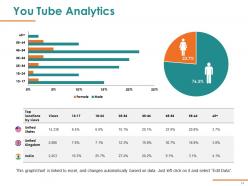
Slide 14: This slide shows Youtube Analytics graphs and charts.
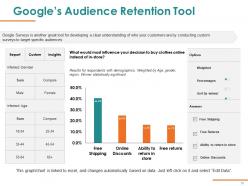
Slide 15: This slide showcases Google’s Audience Retention Tool.
Slide 16: This slide shows Google Trends for- Facebook, Myspace, Twitter.
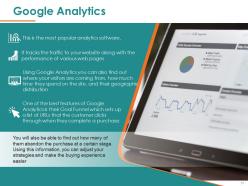
Slide 17: This slide shows Google Analytics- It tracks the traffic to your website along with the performance of various web pages, Using Google Analytics you can also find out where your visitors are coming from, how much time they spend on the site, and their geographic distribution, One of the best features of Google Analytics is their Goal Funnel which sets up a list of URLs that the customer clicks through when they complete a purchase.
Slide 18: This slide shows Facebook Audience Insights showcasing- Relationship Status and Education Level.
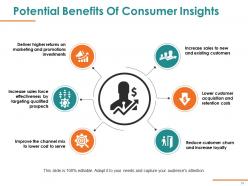
Slide 19: This slide Potential Benefits of Consumer Insights such as- Improve the channel mix to lower cost to serve, Increase sales force effectiveness by targeting qualified prospects, Deliver higher returns on marketing and promotions investments, Increase sales to new and existing customers, Lower customer acquisition and retention costs, Reduce customer churn and increase loyalty.
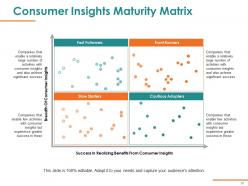
Slide 20: This slide presents Consumer Insights Maturity Matrix Fast Followers, Front Runners, Cautious Adopters, Slow Starters in terms of Breadth of Consumer Insights, Success in Realizing Benefits from Consumer Insights.
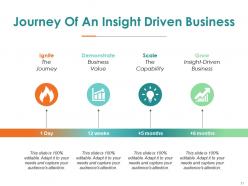
Slide 21: This slide shows Journey Of An Insight Driven Business showing- Ignite: The Journey Demonstrate: Business Value Scale: The Capability Grow: Insight-Driven Business
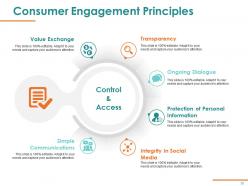
Slide 22: This slide shows Consumer Engagement Principles such as- Control & Access, Transparency, Protection of Personal Information, Integrity in Social Media, Value Exchange, Simple Communications.
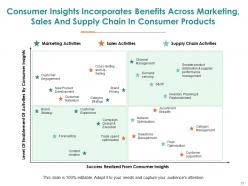
Slide 23: This slide showcases Consumer Insights Incorporates Benefits Across Marketing, Sales And Supply Chain In Consumer Products showing- Marketing Activities, Sales Activities, Supply Chain Activities, Customer Engagement, Cross-Selling and Up-Selling, New Product Development, Customer Retention, Brand Pricing, Category Strategy, Channel Management, Demand sensing, Smarter product distribution & supplier performance management, Inventory Planning & Replenishment, Brand Strategy, Customer Experience, Campaign Design & Execution, Trade spend optimization, Content creation, Forecasting, Assortment Breadth, Network Optimization, Category Management, Fleet Optimization, Salesforce Management, Customer acquisition, Level of Enablement of Activities by Consumer Insights, Success realized from Consumer Insights.
Slide 24: This slide showcases Customer Insights Icon Slide. You can use them as per need.
Slide 25: This is a Coffee Break slide to halt. You can change the content as per need.
Slide 26: This slide is titled Additional Slides to move forward. You can change the slide content as per need.
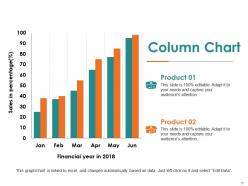
Slide 27: This is a Column chart slide. State specifications, comparison of products/entities here.
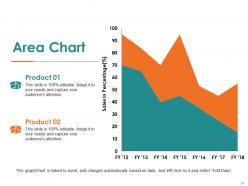
Slide 28: This is an Area chart slide. State specifications, comparison of products/entities here.
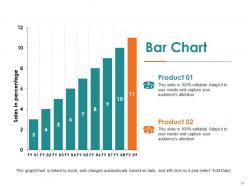
Slide 29: This is a Bar chart slide. State specifications, comparison of products/entities here.
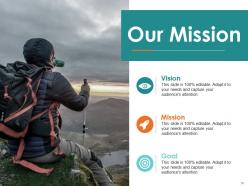
Slide 30: This is Our Mission with Vision and Goals slide. State them here.
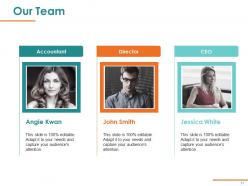
Slide 31: This is Our Team slide with names, designation and text boxes to fill information.
Slide 32: This is an About Us slide. State company/team specifications here.
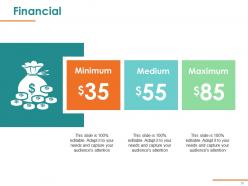
Slide 33: This is a Financial score slide to state financial aspects etc.
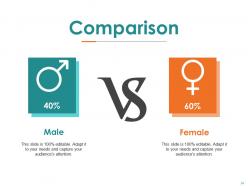
Slide 34: This is a Comparison slide in creative form of males and females. State comparison, specifications etc. here.
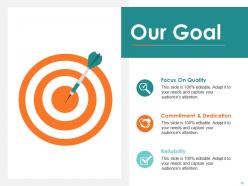
Slide 35: This is Our Goal slide. State your goals here such as- Focus On Quality, Commitment & Dedication, Reliability.
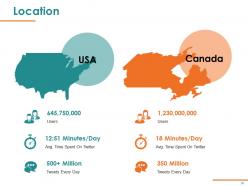
Slide 36: This is a Location slide of USA image. Mark specific locations for company growth, market etc. here.
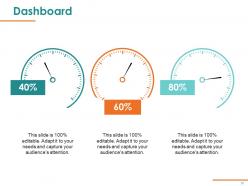
Slide 37: This is a Dashboard slide to state Low, medium and High aspects, kpis, metrics etc.
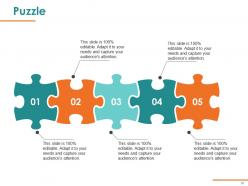
Slide 38: This is a Puzzle image slide. State information, specifications etc. here.
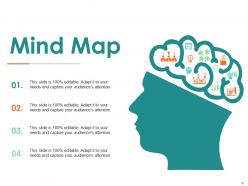
Slide 39: This is a Mind Map image slide to show segmentation, information, specifications etc.
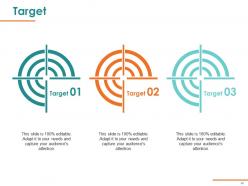
Slide 40: This is a Target slide. State your targets here.
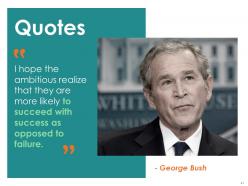
Slide 41: This is a Quotes slide to show something you want to convey. You may change the slide content as required.
Slide 42: This is a Post It slide to show important information, events etc. Pin your information here.
Slide 43: This slide showcases a Timeline to show milestones, important highlights etc.
Slide 44: This is a Lego image slide. State information, specifications etc. here.
Slide 45: This is a Hierarchy slide. State team/department, organization information, specifications etc. here.
Slide 46: This slide shows Silhouettes with text boxes. State people related information, specifications etc. here.
Slide 47: This is a Venn diagram slide to show information, specifications etc.
Slide 48: This is a Magnifying Glass image slide to show information, specifications etc.
Slide 49: This is a Bulb or Idea image slide to show ideas, innovative information etc.
Slide 50: This is a Thank You slide with Address# street number, city, state, Contact Numbers, Email Address.
Consumer insights powerpoint presentation slides with all 50 slides:
Our Consumer Insights Powerpoint Presentation Slides keep you calm and controlled. They ensure you don't fly off the handle.








FAQs for Consumer insights
So I dug into those consumer insights you sent over. Millennials (28-40, making 50-100K) are your biggest fans - they're obsessed with your quality and brand story. Gen Z urban folks love the sustainability angle, and honestly? Way more loyal than I thought they'd be. Both groups find you on Instagram and TikTok, shop on mobile constantly. Oh, and they're super into social causes. I'd throw most of your campaign money at these two groups. Maybe try some micro-influencer collabs since that's where they actually pay attention.
Yeah, seasonal patterns are totally a thing you can use to your advantage. Winter's all about comfort food and staying cozy indoors. Summer? Fresh stuff, outdoor gear, anything light and breezy. Spring gets people in that whole "new year, new me" headspace - fitness equipment flies off the shelves. Fall's weird though - it's like everyone suddenly becomes a squirrel preparing for hibernation, plus back-to-school chaos. Honestly, the best move is pulling your sales data from the past couple years to see what actually happened in your niche. Then just plan your marketing and stock around those patterns. Makes inventory so much easier.
FOMO hits hardest, honestly. People hate thinking they missed something good. Social proof works too - like "join 10,000 happy customers" type stuff. Quick pain relief is another big one. Nobody wants to suffer longer than they have to, you know? Trust matters a ton - familiar brands just feel safer somehow. It's actually crazy how emotional most "logical" purchases really are. Figure out what your people really want deep down. Status? Safety? Just making life easier? Then work that into your copy instead of boring feature lists.
So for social media sentiment stuff, I'd go with tools like Brandwatch or Hootsuite first - they'll crunch through tons of mentions automatically. But here's the thing: AI is still pretty bad with sarcasm and weird context. Sample check everything manually, especially when you launch something new. Honestly, don't get hung up on individual posts though. The real gold is in tracking how sentiment shifts over time. Those patterns show you what people actually think about your brand way better than random one-off comments do.
Brand loyalty is like having customers on autopilot - they'll pick you without even thinking about it. Honestly, it's kind of amazing how people will stick with brands they love even when there's cheaper stuff right next to it on the shelf. These loyal customers are worth way more over time because you can actually predict what they'll buy. The trick isn't throwing discounts at people constantly (though that has its place I guess). Focus on being consistent with quality and actually giving a damn about customer experience. That's what turns random buyers into people who come back month after month.
Your customers' cultural backgrounds totally change how they shop. Colors, payment methods, research habits - it all varies. Some cultures make big purchases as a family decision, others go solo. Packaging that looks expensive to one group might seem tacky to another. I learned this the hard way with a product launch once. Don't just guess what different groups want - actually ask them. Break down your survey responses by cultural background and you'll spot the patterns pretty quick.
Honestly, most people struggle with three main things. Onboarding is a nightmare - way too overwhelming right off the bat. Then there's the whole discoverability mess where users have no clue half your features even exist (which is super annoying for everyone). Performance gets sketchy during busy periods too. My take? Start with that user journey and make it way simpler. Maybe reveal stuff gradually instead of throwing everything at them day one. Oh, and definitely work on letting people actually find your features - that one's probably easier to fix than you think.
Oh man, first-time buyers are SO much work - they'll research everything to death, read every single review, and take forever to actually buy anything. Your repeat customers? They already know you're legit, so they skip all that homework and go straight to "okay what's new" or "what's on sale." New people need their hand held through everything, want tons of education and reassurance. Returning buyers just want convenience and good deals. It's honestly night and day. So yeah, give newbies all the explainer content, but make checkout super smooth for your regulars.
Dude, AR is seriously changing everything - people are trying on clothes virtually and checking if couches fit their living rooms before buying. AI personalization has gotten weirdly good too (like Netflix but for shopping). Honestly didn't see voice commerce through Alexa taking off this fast, but here we are. Instagram's shopping tags make impulse buying way too convenient - you see a post, tap, buy. Done. Oh and social commerce in general is huge right now. If you're not testing at least one of these, you're missing out on connecting with customers where they actually hang out.
Look for the biggest patterns in your feedback first - what keeps coming up? Then figure out which ones you can actually do something about. I usually tell people to resist the urge to tackle everything at once (learned that the hard way). Pick maybe 2-3 things that'll move the needle and won't require a miracle to execute. Set up some way to measure if it's working. The puzzle-solving part is fun - connecting what customers feel to what actually makes money. Start small, test it out, then go bigger with whatever sticks.
Quality perception is huge - people judge your product before they even try it. Convenience matters too, like how easy you make their life. Honestly, I've seen mediocre products win just because they nailed the user experience. Price isn't everything though. Most customers care more about getting value than finding the cheapest option. Brand reputation can carry a lot of weight, sometimes unfairly. Reviews and social proof? Total game-changers, especially if you're not established yet. Even your packaging affects whether people see you as premium or budget. I'd really dig into those customer interviews to figure out what your specific audience actually cares about most.
Look, people are weird about this stuff. Most surveys show like 70% say they care about sustainability, but only maybe 20-30% actually buy green products. Price wins almost every time, especially for regular purchases. Younger folks and people with more money do follow through way more though. The trick is making sustainable stuff cheap and easy to find - otherwise forget it. I'd dig into why there's such a huge gap between what people say and what they actually do in whatever category you're looking at.
Honestly, stalking your competitors' customer feedback is genius. Check out what people are grigging about in their reviews - slow support, wonky checkout flows, missing features everyone wants. Social media comments are gold too since people get pretty raw there. Way better than surveys where people just tell you what sounds nice. Plus you'll catch trends early and see what marketing messages actually work on your audience (not just what sounds clever). I'd hit their main review sites and social channels maybe once a week? Sounds tedious but it's basically free research into real customer behavior.
Dude, visuals are a game changer - they boost retention by like 65% over just text. Our brains process images way faster, so throw in some infographics, videos, charts, whatever works. I've bombed presentations with massive text blocks before (we all have). Your audience will actually pay attention longer and remember stuff better. Honestly, even simple icons help break things up. Try swapping out 30% of your text for visual elements first. You'll notice people aren't checking their phones as much. Trust me on this one.
Honestly, you can't just set your brand strategy and forget it anymore. Gen Z cares way more about authenticity and sustainability than older folks did. Millennials are finally making decent money but they're still pretty careful with spending. And boomers? They've got cash but you'll reach them totally differently than younger customers. Here's the thing though - buying power is spread across all these groups now, so you can't just pick one to focus on. I'd probably start by figuring out who's actually buying from you right now, then see which behaviors are changing fastest in your space. It's kind of a moving target tbh.
-
Awesomely designed templates, Easy to understand.
-
Colors used are bright and distinctive.