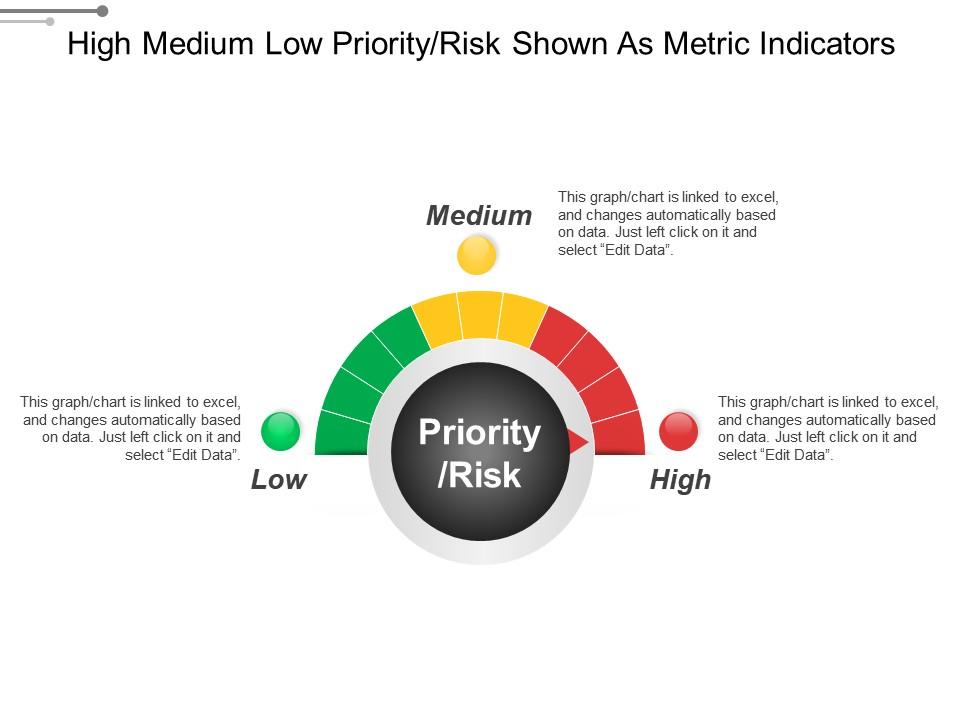
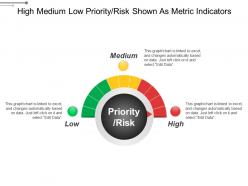
High medium low priority risk shown as metric indicators

Rating:
100%
High medium low priority risk shown as metric indicators
Slide 1 of 5

or

Favourites Favourites

Try Before you Buy Download Free Sample Product

Audience Impress Your
Audience
Editable 100%
Editable
Time Save Hours
of Time
The Biggest Sale is ending soon in
0
0
:
0
0
:
0
0
Rating:
100%
Presenting this set of slides with name - High Medium Low Priority Risk Shown As Metric Indicators. This is a three stage process. The stages in this process are High Medium Low, High Moderate Low, Top Medium Low.

People who downloaded this PowerPoint presentation also viewed the following :

FAQs for High medium low priority risk shown

Probability and impact are your bread and butter here. How likely is it to happen, and how badly would it mess things up if it did? Just multiply those together for a basic risk score - works way better than the overcomplicated systems some teams cook up. Rate each on 1-5 and you're golden. Oh, and some places throw in detection difficulty too, like how hard it'd be to see coming. Honestly though, don't overthink it. Focus on tackling the highest scores first and you'll catch the stuff that actually matters.

Go with a simple 1-5 scale for both probability and impact, then just multiply them together. So like a 4 × 5 = 20 risk score. I've seen teams overcomplicate this with fancy weighted formulas but honestly? Simple gets more people on board. The real trick is staying consistent - same criteria for every risk you evaluate. Oh, and don't try to tackle everything at once. Hit the top 20% of your highest scores first. You'll need to revisit these regularly since things change, but that basic framework will get you moving in the right direction pretty quickly.

Honestly, stakeholder input is what makes risk assessment actually useful instead of just academic BS. Different teams see completely different things - like engineering might think something's low-risk while customer success is already panicking about it. Finance catches regulatory stuff, sales spots reputation issues you'd never think of. Each group knows their own domain best. The trick is being systematic about collecting opinions rather than just asking random people what they think. I'd set up weighted scoring where each stakeholder rates risks in their area. Makes the whole prioritization thing way less subjective, and you won't end up chasing the loudest voice in the room.

Honestly, start with the hard data - percentages, dollar amounts, how often stuff actually happens. That gives you your baseline risk scores. But then you've got to layer in the softer stuff that numbers miss, like how pissed off customers might get or if regulators are breathing down your neck lately. I usually go about 70% numbers, 30% gut feel, though that changes depending on what kind of business you're in. The trick is being upfront about your math so everyone gets why you scored things the way you did. Just make a simple rubric that covers both sides.

Don't treat risk prioritization like a checklist you do once and forget about. Teams get obsessed with perfect scoring systems - I've watched people argue for weeks about rating something a 7 vs 8 while real problems blow up around them. Look beyond just probability and impact too. Can your team actually handle fixing this risk? Also, getting only IT folks involved is a mistake. Business people catch stuff technical teams miss. Oh, and honestly? Starting simple beats having some elaborate framework. You can always make it fancier later. Focus on what you'll actually act on.

Honestly, I'd check in on risks monthly for most projects - that cadence just works. Major milestones are obvious times to reassess, but also whenever big stuff changes like scope creep or new people jumping in. Agile teams can fold this into sprint retros pretty easily. The thing is, you don't want to wait until risks blow up in your face to deal with them. Been there, not fun. Set some calendar reminders now (I always forget otherwise) and just make it a regular agenda item. Sprint reviews are perfect for this if you're doing agile work.

So basically, risk prioritization tells you exactly where to dump your resources - people, money, time, all of it. You rank stuff by how likely it'll happen and how bad it'll hurt, then go after the worst ones first. Way smarter than trying to fix everything at once, which never works anyway. Think of it like ER doctors deciding who goes first. Your team will naturally zero in on the big stuff, meaning fewer crisis situations down the road. Oh, and it's super helpful when you're fighting for budget - way easier to convince the higher-ups when you've got actual data backing up your asks.

Yeah, it totally depends on your industry. Healthcare obsesses over patient safety scores and HIPAA stuff. Banks are all about fraud rates and those regulatory capital things. Manufacturing? They freak out over downtime - which honestly makes sense when shutting down costs millions per hour. Tech companies focus more on cyber threats and breach risks. My advice? Figure out what actually stresses your executives out at 2am, then build your metrics around that. Way better than copying some template online that doesn't fit your business.

So for risk metrics, ServiceNow GRC and Resolver are solid if you've got budget. LogicGate's decent too. Honestly though, I've worked with teams who just used Excel templates and did fine - not sexy but whatever works, right? MetricStream's cheaper if you need something more robust than spreadsheets. You could also build dashboards in Tableau or Power BI. Oh, and there's specialized stuff like Riskalyze for financial risks. My advice? Pick whatever plays nice with your current systems first, then get fancy later.

Check your mean time to remediation first - high-priority stuff should get fixed way faster now. The brutal reality check? See what percentage of your actual incidents came from risks you'd already flagged. If that number sucks, your prioritization isn't working. Also track how much time goes to low-impact vs high-impact issues. Are you catching the real threats before they blow up? Monthly reviews help spot these patterns. Oh, and honestly the incident-to-identified-risk ratio is probably the most telling metric - it'll show you if you're just playing security theater or actually preventing problems.

Watch out for bias sneaking into your risk rankings - you might unconsciously favor risks hitting certain groups over others. Who actually gets hurt by each risk matters, not just what it costs your company. Those low-probability disasters? They get pushed aside even when they'd crush vulnerable people. Your metrics could be discriminating too - maybe you're prioritizing high-revenue customers while everyone else gets ignored. Honestly, I've seen this happen so much. Keep asking "who suffers if we screw up this ranking?" It'll help you spot the blind spots before they bite you.

Here's my take - scenario analysis is like running "what if" experiments on your biggest risks. Build out 3-4 realistic situations (economic crash, supply chain mess, new regulations, whatever fits your business) and see how your risk priorities shuffle around. Some risks that looked scary in isolation might not be that bad. Others could totally blindside you when conditions change. Honestly, I've seen companies get way too comfortable just looking at risks one by one. The real disasters happen when multiple things go sideways at once. Try it with your top risks - you'll probably find some surprises lurking there.

Get everyone together first - different departments see stuff you'll totally miss. Map everything on likelihood vs impact. Honestly, don't overthink the scoring system. Most places just do a simple 3x3 grid instead of some crazy complex thing that confuses everyone. Look at operational impacts too, not just the money side. The whole thing falls apart if it's too complicated for people to actually use day-to-day. I'd test it on a couple real situations first before you roll it out everywhere. Way easier to fix issues early than deal with pushback later.

Honestly, you gotta balance both but most people mess this up by obsessing over probability. Yeah, tackle the likely stuff first - that's just smart. But those low-chance, high-damage scenarios? They're project killers if you ignore them. I'd make a risk matrix, multiply severity times probability, then bump up anything catastrophic. Keep those nightmare scenarios visible somehow - maybe basic monitoring or a backup plan. Sounds paranoid but I've watched "impossible" things wreck entire projects. The daily grind hits probable risks. The big picture watches for the stuff that'd really hurt you.

So here's the thing - when you rank your risks properly, you're not wasting time on small stuff while the real threats sneak up on you. Your company bounces back way faster because you've already figured out what could actually hurt vs. what's just annoying. Think of it like triage in an ER, I guess? You spot problems earlier, react quicker, and don't panic when crisis hits because you know exactly what needs attention first. Honestly, just start with your top 5 risks and match them to action plans. Makes such a difference.

Ratings and Reviews

100% of 100
Review Form
Write a review
Most Relevant Reviews
  1. 100%

    by Cliff Jimenez

    Designs have enough space to add content.
  2. 100%

    by Darren Olson

    Visually stunning presentation, love the content.

2 Item(s)

per page: