

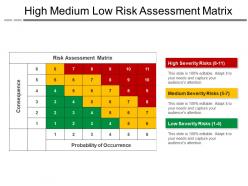
High medium low risk assessment matrix





Try Before you Buy Download Free Sample Product
 Impress Your
Audience
 100%
Editable
 Save Hours
of Time


Calm down their hackles with our High Medium Low Risk Assessment Matrix. They will make any anger disappear.
People who downloaded this PowerPoint presentation also viewed the following :
High medium low risk assessment matrix with all 5 slides:
Galvanize your team with our High Medium Low Risk Assessment Matrix. They will all burst into action.


FAQs for High medium low
So you'll need four main things: threat identification, vulnerability assessment, impact analysis, and likelihood evaluation. Basically figure out what could go wrong, find your weak spots, estimate the damage, and decide how likely each thing actually is. Map out your existing protections too - honestly, most people skip this step and it's huge. Start with your most important stuff first instead of trying to tackle everything at once. Oh and be systematic about it. I learned the hard way that winging it just creates more problems later.
Get everyone together for brainstorming sessions and walk through each project phase - what could tank this thing? Document everything in a risk register or do a SWOT analysis. Past projects are honestly your best friend here, they'll show you patterns you'd never think of otherwise. Look at outside stuff too - regulations changing, market weirdness, suppliers flaking out. That's the stuff that'll blindside you if you're not paying attention. Better to be paranoid upfront than scrambling later. Oh, and schedule regular check-ins throughout the project because new risks pop up constantly.
You definitely want to talk to different people about risks - they all see things you'd miss. Finance spots budget issues operations never thinks about. Customers catch usability problems your team is totally blind to. It's like having extra eyes on everything (plus people genuinely like being asked for input - weird but true). Map out who actually cares about your project's success first. Then do quick interviews with each group before you lock in your risk list. Honestly, I've seen too many projects crash because someone skipped this step and missed obvious red flags.
Start with the qualitative stuff - brainstorming, risk matrices, getting everyone's gut feelings on what could go wrong. Way easier than diving straight into spreadsheets. Once you've got that list, pick your top 5 or so risks and that's when you break out the numbers. Run probability calculations or Monte Carlo sims on just those big ones. I mean, why waste time quantifying every tiny risk, right? The qualitative work basically tells you where to focus your math. A simple risk register works great for tracking both approaches together.
Honestly? Most companies I've worked with still use Excel risk registers - they're dead simple and you can tweak them however you want. If you need something fancier, the big GRC platforms like ServiceNow or MetricStream are solid but pricey. There's also specialized stuff like @RISK for number-crunching and RiskWatch for IT security. My take: don't overthink it at first. Grab a decent spreadsheet template and figure out your actual process. You can always upgrade later once you know what bells and whistles you actually need (spoiler: it's probably fewer than you think).
Culture totally changes how teams handle risk assessment. Some people won't speak up against their boss even when they see problems coming - I swear this drives me crazy in meetings. Others are super direct about flagging issues. Plus your company culture matters too: do people get blamed when stuff goes wrong, or does everyone learn from it? Different backgrounds mean different comfort levels with uncertainty and how directly people communicate. You'll get way better risk assessments if you make it safe for everyone to share their thoughts. Actually ask for different viewpoints during reviews instead of just hoping people will volunteer them.
So once you figure out what could go wrong, you've basically got four moves. Avoid it completely by doing something different. Reduce the damage with controls or safety nets. Transfer it - like getting insurance or having someone else handle it. Or just accept it if it's not that big a deal. Honestly, don't blow your budget on tiny problems though. If you're spending 10 grand to fix a thousand-dollar issue, you're doing it backwards. Focus on the scary stuff first - the risks that'd actually hurt. And yeah, write it down somewhere so you remember what worked and what didn't.
Honestly, once a year is the absolute minimum but don't just set it and forget it. Major changes are your real trigger - new suppliers, process updates, regulatory shifts, incidents that make you go "oh crap." I swear half the companies I know treat these assessments like expired gym memberships. Build quick quarterly check-ins into your calendar instead. Just fifteen minutes to scan your biggest risks and see if anything's shifted. Way better than scrambling when something actually goes sideways and realizing your assessment was from 2019.
Ugh, this stuff is such a headache but here's the deal. First figure out which agencies actually regulate your industry - OSHA, EPA, FDA, financial regulators, whatever applies to you. Each one has their own risk assessment rules you've got to follow. Document literally everything because auditors are obsessed with paper trails. Your methodology needs to match whatever standards your sector requires. Oh, and if you're dealing with personal data at all, don't forget those privacy laws on top of everything else. Honestly the whole system feels like it was designed to confuse people sometimes.
So scenario analysis is basically playing "what if" games with your risk planning - but in a useful way. You're not just looking at what happened before. Pick like 3-4 realistic scenarios that could actually mess with your business (economic crash, supply issues, new regulations, whatever). Then run your current risk strategies through each scenario and see where they'd probably fail. Honestly beats just hoping your historical data covers everything. It's pretty good at catching those blind spots you didn't think about. Work through each one systematically and you'll spot where your planning needs work.
Ok so inherent risk is basically the raw danger you're facing before doing anything about it - like your worst-case scenario. Residual risk? That's whatever's left after you've thrown all your controls and safeguards at the problem. Think of it this way: inherent = your total exposure, residual = what you're still dealing with after all your prep work. Most frameworks make you assess both since, honestly, nothing works 100% of the time. The goal is keeping that leftover risk within what your company can actually handle. If it's still too high, you'll need more controls.
Honestly, clear risk communication is a game-changer because people stop panicking about unknowns. Give them actual numbers and real comparisons they can relate to - not some corporate "high risk" nonsense that means nothing. Like, saying "1 in 100" hits different than "elevated probability." Match how you talk to who you're talking to, obviously. Short sentences work great sometimes. But you also want some flow when you're explaining the bigger picture. Oh, and here's the thing - always think about what you actually want them to DO with this info. Otherwise you're just scaring people for no reason.
Honestly, just be super specific when you document risks - what could go wrong, how likely it is, who's dealing with it. I've watched projects crash because someone wrote "communication issues" instead of actual details. Templates help keep everyone on the same page with ratings and stuff. For reporting, executives want the quick version while your team needs all the messy details. Don't just file these away though! I set quarterly reminders to actually look at them again. Oh and mix up your communication style - some people get overwhelmed by dense reports but respond well to quick updates.
Dude, this new tech stuff is making risk assessment a total nightmare. Historical data? Useless when you're dealing with AI or IoT - there's literally no playbook. Everything changes so fast your models are basically expired milk within months. The worst part is we're seeing completely new types of risks, like algorithmic bias screwing people over or one system failure taking down everything connected to it. Honestly, I'd start building more flexible, what-if scenario frameworks right now. You'll have to get used to way more uncertainty in your calculations, but that's just reality these days.
Ugh, both are a pain honestly. Small orgs? You're juggling everything with zero budget for proper security tools - basically winging it most of the time. Big companies have the opposite mess: tons of moving parts that nobody fully understands, plus you need like 47 approvals to change anything. At least small places can actually DO something when they spot a problem. Large orgs have better security overall but good luck getting anything implemented quickly. My take? Just tackle your biggest risks first. Doesn't matter if you're tiny or huge - start there and work your way down.
-
Use of different colors is good. It's simple and attractive.
-
Design layout is very impressive.