

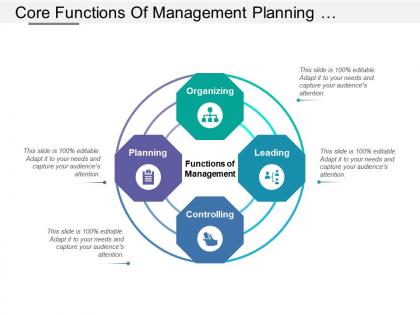
Core functions of management planning organizing leading controlling




Try Before you Buy Download Free Sample Product
 Impress Your
 Audience
 100%
100% Editable
 Save Hours
 of Time


Our Core Functions Of Management Planning Organizing Leading Controlling boast of having it all. Find everything you desire with a few clicks.
People who downloaded this PowerPoint presentation also viewed the following :
Core functions of management planning organizing leading controlling with all 5 slides:
Appreciate the journal with our Core Functions Of Management Planning Organizing Leading Controlling. Give folks an incentive to buy a copy.




FAQs for Core functions of management planning
Honestly, start with the basics - communication and emotional intelligence are huge. Remote work has made everything way trickier than it used to be. Listen more, give real feedback that actually helps. Don't just bark orders all the time; people hate that. Be decisive when you need to, but let your team have input on stuff too. The coaching thing is where it's at now - ask "how can I help you win at this?" instead of micromanaging every little thing. Oh, and adaptability is clutch because everything changes constantly these days.
Honestly, emotional intelligence is like having a superpower in leadership. You pick up on what your team's actually feeling instead of being that clueless boss everyone complains about. I've seen it myself - when you stay calm during chaos and really listen to people, they trust you way more. Managing your own reactions is huge too. Conflicts get handled before they explode into drama. Your team will actually want to work with you instead of just tolerating you. Next meeting you're in, just watch the room's energy. You'll be surprised what you notice when you're actually paying attention to the emotional stuff happening.
First thing - people need to know they won't get in trouble for trying stuff and screwing up. Give them actual time to experiment, maybe 10% of their week? I've watched so many "innovation programs" crash because everyone's buried in regular work. Celebrate the wins AND the smart failures in meetings. Get your team chatting with other departments regularly - that's where the magic happens. Oh, and here's what really matters: actually DO something with their good ideas, even tiny ones. Otherwise they'll think you're just blowing smoke.
Honestly, communication can make or break you as a manager. Clear direction means your team knows what's up and deadlines actually happen. Plus people feel heard, which matters more than you'd think. Bad communication though? Projects fall apart and your best people leave - I've watched this train wreck so many times. The managers who really kill it are always great communicators. They listen for real, give feedback that's actually useful, and switch up their approach depending on who they're talking to. Quick check: are you being clear enough, and do you actually listen when they talk back?
Oh man, conflict resolution is huge for managers. Like, it's honestly what makes or breaks you in that role. Small disagreements turn into massive team blowouts if you don't jump on them fast. Your people need to know you'll actually handle problems instead of pretending they don't exist - nobody respects managers who do that. Listen to everyone involved before you try fixing anything. Focus on what's really going on underneath, not just the obvious stuff they're arguing about. It sounds simple but it's surprisingly hard to do well consistently.
Honestly, data beats gut feelings every time - I've learned this the hard way. Pick metrics that actually matter to your business first. Customer retention, sales patterns, whatever keeps you up at night. Most people jump straight to fancy tools without figuring out what they're measuring (guilty of this myself). Set up some kind of dashboard to track everything regularly. Look for connections between different data points. Here's where it gets interesting though - you've got to mix that hard data with what you know about your industry. That's when you can start predicting stuff and testing ideas without betting the farm.
Honestly, you've got to over-communicate like crazy. Regular check-ins are a must, and video calls beat everything else when you can swing it. Those random hallway conversations? Yeah, you're gonna miss those more than you think. Document everything and keep people updated on projects - otherwise stuff just falls through the cracks. Good collaboration tools make a huge difference too, but find ones that actually fit how your team works. I'd start by looking at how you all communicate now and see what's missing. Clear expectations around response times help too.
Honestly, team-building stuff actually works if you pick the right activities. Your people start talking more openly when they're comfortable with each other. I've learned more about my team's strengths from watching them tackle a puzzle together than from months of regular meetings - it's weird but true. Communication gets way better too. The trick is avoiding the cheesy trust exercises and doing things that actually relate to work problems. Oh, and it breaks down those annoying department barriers where people won't collaborate. Just don't make it feel forced or everyone will hate it.
Honestly, I used to suck at this - always jumping in to "help" when nobody asked. Here's what finally worked: be super clear about what you want and when, then back off. Let them figure out how to get there. Check in during your regular one-on-ones or at project milestones, not every damn day. You'll know it's working when people bring you solutions instead of just dumping problems on your desk. Pick one thing to fully hand off this week and bite your tongue unless they actually ask for help.
Ugh, remote team stuff is killing me right now - plus everyone's burned out and we're constantly pivoting on everything. One-on-ones help way more than I expected though. Be super upfront about what you actually need from people. Celebrate the tiny wins because honestly, that's all we have some days. When people complain, don't just nod - actually do something about it if you can. Oh, and explain WHY you're making changes instead of just dropping new processes randomly. Pick one thing to fix this week or you'll go crazy trying to solve everything at once.
Talk about specific behaviors, not their personality - way less defensive that way. Don't just dump criticism on them either; mention what they're doing right first. Ask questions like "what's making this tricky for you?" instead of lecturing. Honestly, I've learned timing is huge - address stuff quickly, don't let it fester for months. Frame it as growth opportunities rather than "you screwed up." People actually listen when you do that. End by figuring out next steps together and offer to help however you can.
Honestly? People care way more about being treated well than you'd think. Ask each person what actually drives them - some want flexibility, others crave learning new stuff. Public recognition is massive. I've literally watched friends quit decent-paying jobs because their boss was a micromanager. Let people own their work instead of breathing down their necks. Connect what they're doing to something bigger. Career growth paths matter too. Oh, and create that vibe where they can mess up without getting crucified for it. Money's not everything - shocking, I know.
Talk to people constantly - seriously, over-communicate if anything. Uncertainty drives everyone crazy way more than the actual changes do. I've watched managers completely screw things up just by going radio silent and letting gossip take over. Listen when people complain and actually address their concerns instead of just steamrolling ahead. You'll want some easy wins right off the bat so folks see things moving in a good direction. Oh, and celebrate the little stuff too - keeps everyone sane when everything else feels like chaos.
Honestly, your org structure makes or breaks how well you can actually manage people. Flat companies let you move fast and make calls without asking permission up the chain. Hierarchical ones? Slower, but at least you know who's responsible when things go sideways. Matrix structures are just... messy, though they work if people aren't confused about roles (big if). Here's what I'd do: figure out who really calls the shots - not what some outdated org chart says, but who actually decides stuff. Then adapt your style to work with that reality instead of fighting it.
You've gotta model it first - when stuff goes sideways, actually ask "what can we learn here?" out loud. Share your own screwups openly, it makes failing feel less scary. Celebrate the effort and learning, not just wins. Ask questions that make people think instead of just handing out answers. Oh and honestly? I thought this was total BS motivational speaker stuff until I tried it. Give feedback focused on growth, not like people are stuck being bad at things. Next meeting, start by asking what everyone learned this week. Way more interesting than the usual accomplishment rundown.
-
Colors used are bright and distinctive.
-
Excellent template with unique design.