


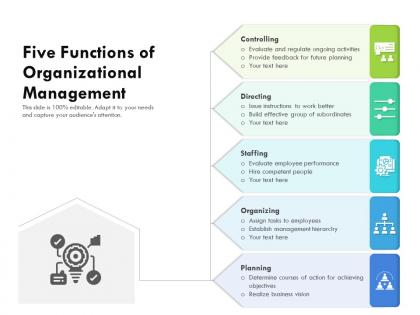
Five functions of organizational management




Try Before you Buy Download Free Sample Product
 Impress Your
 Audience
 100%
100% Editable
 Save Hours
 of Time


Our Five Functions Of Organizational Management are topically designed to provide an attractive backdrop to any subject. Use them to look like a presentation pro.
People who downloaded this PowerPoint presentation also viewed the following :
Five functions of organizational management with all 2 slides:
Use our Five Functions Of Organizational Management to effectively help you save your valuable time. They are readymade to fit into any presentation structure.
FAQs for Five functions
So basically there are four main management functions - planning, organizing, leading, and controlling. Planning is setting your goals and figuring out how to hit them. Then you organize all your resources and people to make it happen. Leading is where you actually motivate your team and keep everyone moving in the right direction (honestly the hardest part IMO). Finally, controlling means tracking progress and tweaking things when they're not working. But here's the thing - they all connect. What you learn from controlling feeds back into better planning. Your planning determines how you'll organize everything. It's like this cycle that keeps going.
Honestly, think of planning like having a GPS for your team. Everyone knows where you're headed and why it matters. You'll stop wasting time on random stuff and actually allocate resources where they count. The best part? You can spot problems coming instead of constantly firefighting (which is exhausting, trust me). Your team gets way more done when they're not confused about priorities. Set some clear goals for next quarter - like actually measurable ones, not vague nonsense. Track progress and pivot when things aren't working. It's a game changer.
Look, as a manager you're basically making decisions all day long - that's literally the job. Resource allocation, who works on what, how to tackle problems, where the team's headed. Quick calls, big strategic moves, everything in between. Your decisions pretty much make or break your team's success (no pressure, right?). What's worked for me is having some kind of system: get the info you need, think through your options, pull in other people when it makes sense. But don't overthink it to death - sometimes you just gotta move.
Honestly, your leadership style totally shapes how your team vibes together. Collaborative leaders usually get way better communication and engagement. Autocratic styles can be efficient but man, they crush creativity fast. I've watched this happen so many times! When you go democratic, morale shoots up because people actually feel heard. Laissez-faire works great with seasoned teams but newer folks just end up lost. Really depends on reading your team and what's happening in the moment though.
Start with regular cross-department meetings - that's your base. Set up shared spaces like Slack or Teams for project work. Half the issues I've seen? People literally don't know who to contact in other departments, so keep those contact lists updated with actual roles. Matrix reporting helps too - workers report to their department AND project leads from other areas. Oh, and don't make it too rigid or you'll kill productivity. Begin with weekly syncs, then adjust based on what actually clicks with your teams. Communication needs structure but shouldn't feel like corporate hell.
Start by tracking your current numbers - productivity rates, cost per unit, cycle times, that stuff. Compare them to industry benchmarks or your own past data to see where you're falling short. Process mapping is honestly a game changer here because it shows you exactly where things get stuck. Your team will spot the daily headaches you don't see from up top, so definitely ask them. Focus on the easy fixes first - they build momentum. Then go after the bigger problems. Oh, and set up regular check-ins to see if your changes are actually working.
Okay so first thing - catch stuff early before it turns into drama. Nobody wants that mess. Get everyone talking in a safe space where people won't judge each other, and actually listen to what they're saying. Guide the team to solve problems together instead of just telling them what to do. Neutral third parties can be clutch sometimes too, honestly. Don't get stuck pointing fingers - focus on fixing things. Oh and do regular check-ins! Sounds boring but it seriously helps you spot issues before they explode.
So culture is basically the invisible playbook that shapes everything you do as a manager. Planning becomes either "here's what we're doing" or "what does everyone think?" depending on your workplace vibe. Some places are super territorial about departments working together - it's honestly kind of ridiculous sometimes. Your leadership approach has to match what actually motivates your team, which varies a ton between different cultures. Performance reviews and feedback? Yeah, that's filtered through cultural norms too. You can't fight against your company culture and expect to succeed. Work with what you've got instead.
Pick 3-5 metrics that actually matter to your goals first - don't go crazy tracking everything. I'd do both numbers stuff (revenue, productivity) and get feedback from your team too. Monthly check-ins work well, then do deeper quarterly reviews. Honestly, most companies I know just hoard data and never use it. That's pointless. The real win is when you actually change things based on what you find. Oh, and make sure someone's responsible for acting on the insights - otherwise you're just making pretty charts nobody reads.
Dude, start with whatever's killing your time most - probably scheduling or those endless reports. Project management stuff like Asana saves you from constantly bugging people about updates. HR software handles onboarding automatically (game changer honestly). Zapier connects everything so tasks just... happen. I was skeptical at first but now I can't imagine going back to doing everything manually. Analytics tools show you what's actually working with your team too. Pick one problem area first though - don't try to automate everything at once or you'll go crazy.
Dude, it's the difference between zombies clocking in versus people who actually give a damn. Engaged teams work harder, think outside the box, and don't bail after six months - which honestly saves you so much hiring headache. They'll even talk up your company to their friends, bringing in good talent. Look, everything connects back to this stuff. Customer service improves. Profits go up. My old boss used to just assume people were motivated by paychecks, but that's not it. You've gotta actually ask your team what drives them and what's blocking their path.
Change management isn't this separate beast you need to master - it's already baked into everything managers do anyway. Planning? You're prepping for market shifts and team changes. Organizing means shuffling roles and resources constantly (honestly feels like weekly these days). Leading is mostly just helping people deal with whatever transition is happening now. Then monitoring shows you what'll need tweaking next. I used to think it was this whole different skill set, but really you just need to make your normal planning-organizing-leading routine more flexible. Don't overthink it.
Honestly, you need both the numbers and the fuzzy stuff to really know what's working. I'd start with engagement scores and turnover - those tell you a lot. Then look at productivity things like how fast projects actually get done or revenue per person. Customer satisfaction matters too since bad managers = unhappy customers, obviously. One thing I always check is internal promotion rates - are you actually growing people or just talking about it? Meeting effectiveness is another good one, plus how quickly your team pivots when stuff changes. Don't go crazy though. Pick maybe 3-4 that actually matter for your situation and track those consistently.
Honestly, you've gotta watch everything - market shifts, new regulations, what competitors are doing, how customer wants are changing. I'd set up some kind of regular check-in process so you don't get blindsided (happened to way too many companies I know). Cross-train your people and keep some cash on hand for quick pivots. Decision-making should be fast, not bogged down in committee hell. Your customers and front-line workers usually see changes coming first, so actually listen to them. Oh, and pick your top three external risks for this year and really focus there.
Dude, ethics and CSR are literally baked into everything now. Planning? You've gotta think about how your decisions affect stakeholders. Organizing means considering fair labor practices and sustainable ops. It's wild how much customers and employees actually care about this stuff - like, they'll straight up boycott you otherwise. Your control processes need social responsibility metrics too, not just profit margins. Oh, and don't treat ethics as some box to check at the end. Build that thinking into your whole decision-making process from day one or you'll regret it later.
-
Colors used are bright and distinctive.
-
I discovered this website through a google search, the services matched my needs perfectly and the pricing was very reasonable. I was thrilled with the product and the customer service. I will definitely use their slides again for my presentations and recommend them to other colleagues.