

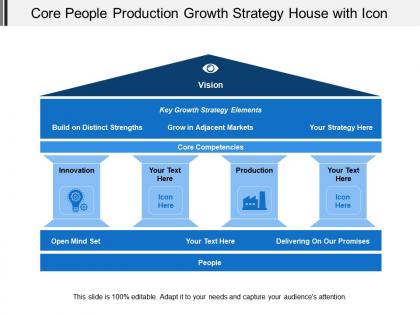
Core people production growth strategy house with icon





Try Before you Buy Download Free Sample Product
 Impress Your
 Audience
 100%
100% Editable
 Save Hours
 of Time


Our Core People Production Growth Strategy House With Icon are a fine accessory. They bring about an exclusive feel.
People who downloaded this PowerPoint presentation also viewed the following :
Core people production growth strategy house with icon with all 5 slides:
Folks feel dazzled by the brilliance of our Core People Production Growth Strategy House With Icon. They are designed to floor everybody.




FAQs for Core people production growth strategy
You need four main things: demand forecasting, capacity planning, inventory management, and quality control. Forecasting tells you what to actually produce. Capacity planning makes sure you've got the right resources ready. Inventory management - honestly this is where most people screw up - keeps materials flowing without hiccups. Quality control catches problems before they cost you serious money. Here's the thing though: these systems are useless if they don't communicate with each other. Like, actually useless. Map out how info currently flows between them first, then fix the gaps.
First thing - figure out what your company's *actually* trying to do, not just what the fancy mission statement says. Premium quality focus? Slow down, be precise. Cost leadership? Speed and efficiency all the way. I swear, this seems super basic but tons of companies completely whiff on connecting these dots. Production teams and strategy folks should chat regularly - catches the disconnect before it becomes a nightmare. Oh, and track metrics that actually matter to your business goals, not just whatever's easiest to measure. That's where a lot of people mess up.
So demand is pretty much the boss of your whole production game. It tells you what to build, how much, and the timing of everything. Don't just guess what customers want - I've watched companies crash and burn doing that. Actually track the demand signals and match your capacity and inventory to real patterns. Build some flexibility in there so you can pivot fast when things change. Short bursts work better than long production runs sometimes. The whole trick is staying nimble enough to scale with whatever the market throws at you.
Look, new tech will mess with how you do everything - it's not optional anymore. Start by figuring out where you're actually stuck right now. Automation and AI might slash costs or speed things up, but don't just grab whatever's trendy. I've seen too many companies blow money on fancy tools that don't really help. Focus on stuff that actually fixes your problems. Sure, you want to stay competitive, but there's no point breaking what already works for tiny improvements. Be ready to jump on real breakthroughs though.
Look at throughput, cycle time, and how much capacity you're actually using first. Quality stuff matters just as much though - defect rates, first-pass yield, customer complaints. No point cranking out volume if it's garbage, you know? Cost metrics are obvious but necessary: unit costs, waste, labor efficiency. Honestly, most people track way too much and get paralyzed by data. Pick maybe 4-5 things that actually connect to what you're trying to achieve. Throw them on a simple dashboard you can glance at weekly. That's it.
First thing - map out your current processes to spot where you're wasting time and money. Three big areas to hit: cut out unnecessary steps, switch to just-in-time production so you're not sitting on tons of inventory, and get your team actually involved in improving how things work. That continuous improvement stuff isn't just corporate BS if people actually care about it. Build some standard processes everyone can follow, then let them tweak things as they go. My old boss used to say lean isn't a project you finish - it's just how you operate. Makes sense once you get into it.
Yeah, outsourcing can definitely cut your production costs and get you access to experts you don't have on your team. Frees up your people too. But honestly, giving up that control is pretty scary - you're trusting someone else with part of your business. Quality gets harder to manage from a distance, and communication screwups happen more than you'd think. Then there's the whole dependency thing where you're at their mercy for deadlines. I'd say try it out with something small first, see how it goes before jumping into anything major. Way less risky that way.
Look, sustainability isn't just some nice-to-have anymore - it's basically rewiring your entire production strategy. Resource efficiency and waste reduction? That stuff needs to be part of your planning from day one. I know it sounds like a lot, but here's the thing - you'll probably save money in ways you didn't see coming. Everything changes: where you source materials, how much energy you burn, even where you put your facilities. My advice? Start with an audit of what you're doing now. Find your biggest environmental mess-ups first - that's honestly where the real strategic wins are hiding.
First thing - don't rely on just one supplier for anything important. I learned that the hard way. Keep extra inventory of your critical stuff, and make sure your team can cover for each other when someone's sick or whatever. Maintenance is huge too - fix things before they break instead of waiting around. Oh, and set up your production so you can switch gears fast when customers suddenly want something different. Map out where you're most vulnerable first, then work backwards from there. Having backup plans for your backup plans isn't overkill, it's smart.
Your supply chain basically controls your entire production game plan. Reliable, nearby suppliers? You can run lean and pivot fast when demand shifts. Sketchy partners with long lead times though – and trust me, that's way too common – mean you're stuck building up inventory buffers and finding backup suppliers. That completely flips your cost structure and capacity planning on its head. You'll either end up doing just-in-time manufacturing or hoarding materials depending on how solid your suppliers are. I'd start by figuring out which supplier relationships are make-or-break, then identify where you're most exposed if things go sideways.
JIT is like walking a tightrope honestly - amazing for cutting inventory costs and freeing up cash flow. But man, one supplier screws up or demand jumps unexpectedly? Your whole production line stops. COVID showed how brutal this can be across every industry. You absolutely need solid supplier relationships and really good demand forecasting. Most companies I've seen do better with a mix - JIT for the predictable stuff, but they keep safety stock for anything critical. Otherwise you're just asking for trouble when things go sideways.
Honestly, you've gotta break down those departmental walls that mess everything up. Regular check-ins between supply chain, engineering, sales, and finance will save your ass - you'll spot problems before they explode. Sales gives you the real scoop on what customers actually want, while engineering keeps things realistic about what's possible. I've seen too many companies where teams work against each other without realizing it. The sweet spot? Everyone knows the priorities and isn't pulling in different directions. Start small with weekly cross-team meetings where people can raise red flags early.
Cultural stuff totally changes how you approach production for different markets. McDonald's does rice burgers in Taiwan for a reason, right? You've got to think about local tastes, religious rules, regulations - even what colors people like. Your whole supply chain might need adjustments based on what's available locally and how things work there. Manufacturing processes? Same deal. I'd say dive deep into cultural research before you start planning anything. Don't just slap it on at the end when you're already committed to a approach that won't work.
Honestly, the production world is getting flipped upside down right now. AI automation is everywhere, plus everyone's obsessed with sustainable manufacturing (which makes sense). Micro-factories are pretty cool - they can switch what they're making super fast. Companies are also bringing production closer to home after all that supply chain chaos. Digital twins got way more advanced than I expected, and there's this whole circular thing where one process's waste feeds another. Oh, and my cousin works in manufacturing - she says they're scrambling to keep up. Start testing automation and tracking sustainability metrics now. This stuff isn't waiting around.
Honestly, start with just one production line - don't try to boil the ocean right away. Track your cycle times, defect rates, machine uptime, that kind of stuff. Data analytics helps you catch bottlenecks and predict when equipment's about to crap out on you. Most delays happen in predictable spots once you actually look at the numbers. Even basic dashboards work wonders for cutting downtime. The trick isn't having fancy tools - it's actually doing something when the data screams "hey, this machine needs attention." Real-time scheduling optimization sounds sexy, but honestly? Just consistently collecting data and spotting patterns will save you tons of headaches.
-
Informative presentations that are easily editable.
-
The Designed Graphic are very professional and classic.