


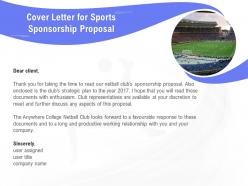
Cover letter for sports sponsorship proposal ppt powerpoint presentation styles





Try Before you Buy Download Free Sample Product
 Impress Your
 Audience
 100%
100% Editable
 Save Hours
 of Time


Our Cover Letter For Sports Sponsorship Proposal Ppt Powerpoint Presentation Styles are explicit and effective. They combine clarity and concise expression.
People who downloaded this PowerPoint presentation also viewed the following :
Cover letter for sports sponsorship proposal ppt powerpoint presentation styles with all 2 slides:
Give your audience a fulfilling experience. They will find our Cover Letter For Sports Sponsorship Proposal Ppt Powerpoint Presentation Styles elevating.
FAQs for Cover letter for sports sponsorship proposal ppt
Make sure you nail the basics first - clear goals, audience numbers, and pricing packages. ROI metrics are honestly everything though, that's what gets them to say yes. Past testimonials help a ton if you've got them. Don't just offer logo slaps either; sponsors want real activation opportunities where they can actually engage people. Charts and visuals beat boring text blocks every time. Timeline's important too. Oh, and this might be obvious but customize each proposal for their specific brand - generic pitches are pretty easy to spot. The whole thing needs to show measurable value, not just exposure.
Honestly, start with the demographics - who's watching, their age, income, where they live. Then see how that matches up with your current customers. Get the viewership numbers, attendance data, social media following for whatever teams or events you're eyeing. Sports properties usually have media kits with all this info (though they tend to inflate things a bit, just saying). But here's the thing - don't just go after the biggest audience. A smaller crowd that actually engages and buys your stuff beats millions of people scrolling past your ads. Make sure the sport's vibe matches your brand too.
So you'll want to track brand awareness lift and media impressions obviously. Engagement rates matter too. But honestly, don't get caught up in vanity metrics - focus on actual lead generation and revenue attribution from the sponsorship. Social mentions and sentiment analysis show how people are really talking about your brand during the partnership. Oh, and set up UTM codes plus dedicated landing pages before you launch so you can track conversions properly. Most companies totally forget to measure customer lifetime value from sponsorship customers, which is dumb. Track everything during the event and for like 3-6 months after.
Dude, it's basically two totally different games. Amateur sports? You're selling community vibes and local feel-good stories - think $5K budgets and social media posts at youth tournaments. Pro sports though - that's where you need serious ROI data, audience demographics, the whole nine yards. We're talking $500K+ deals here. With amateur stuff, focus on grassroots activation and community events. Professional requires concrete metrics and performance benchmarks because, honestly, they don't care about your warm fuzzy feelings. Just match your entire approach to whatever level you're pitching. Budget, messaging, analytics - it all scales up dramatically.
Honestly, most people just blast out the same generic template to everyone. That's mistake number one. Do your homework first - research their brand and what they actually care about. Your numbers matter way more than pretty graphics too (though I've definitely been guilty of spending too much time on design). Be super specific about what they're getting, when they'll get it, and how you'll measure success. Oh, and this should be obvious but spell their company name right and make sure you're emailing the right person. Start with the ROI stuff before you write anything else.
Get super specific with your numbers - projected reach, engagement rates, the whole thing. Most brands literally have no clue how much better the ROI is compared to traditional ads, so hit them with those cost per impression comparisons. Demographics are huge too, especially if they match what the brand wants. Don't just throw logos everywhere either - talk about actual activation ideas. Case studies work really well if you've got them. Oh, and make sure everything ties back to measurable brand exposure value. They need to see exactly what they're paying for, not just vague promises about "awareness."
Brand alignment really matters here - you can't just throw money at any random sport and hope it works. Show how your audience actually overlaps with theirs. Like, luxury watches and Formula 1? Perfect match. Same brand sponsoring little league though... kinda weird, right? Your proposal needs to make the connection super obvious. If you're stretching to explain why it makes sense, it probably doesn't. I've seen so many brands try to force partnerships that just feel off. Make sure your brand values actually mesh with what they represent. Otherwise you're both wasting time and money.
Dude, you need hard numbers to grab their attention - follower counts, engagement rates, all that stuff sponsors can actually show their higher-ups. Promise them specific content like behind-the-scenes posts and athlete takeovers. Instagram is honestly where it's at right now if your visuals are decent. Map out exactly when you'll post about their brand instead of being vague. Don't just say "we'll mention you sometimes" - that's useless. Show them a actual content calendar with real deliverables. Trust me, being super specific about what they're getting makes all the difference.
Brand visibility hits different though - logos on uniforms and stadium signs are what sponsors actually care about. They want ROI they can measure. Local businesses love the community stuff too since they're trying to connect with their customers. That "official partner" label? Honestly pretty useless unless they've got real competition in their space. What actually works is giving them exclusive rights in their category and solid audience data you can prove. I'd start with the visibility numbers first - decision makers respond to hard metrics way more than the fluffy relationship talk.
You've gotta match your sponsorship packages to what each audience actually wants. Action sports crowds are younger - they want cool social media moments and experiences, not random banner ads everywhere. Traditional sports fans? They're more into hospitality stuff and merchandise. But honestly, don't just guess based on the sport. Actually look at the data - income, age, spending habits for that specific crowd. Then build your packages around what they care about. Even your pitch should sound like you get their vibe. I'd start by surveying people who went to past events to see what they valued most.
Look, sponsors get bombarded with proposals daily, so yours needs to be dead simple to understand. If they're squinting trying to figure out what you're offering, you've already lost. Spell out the benefits clearly - exact exposure numbers, demographics, what they actually get for their money. I learned this the hard way when my first pitch was way too vague and got ignored completely. Skip the fancy business speak. A busy exec should grasp your whole deal in under 30 seconds. Keep it concrete and straightforward, because honestly? There's always another proposal right behind yours in their inbox.
Okay so basically data analytics is like having actual proof your sponsorship money didn't just disappear into the void. You'll get real numbers on brand awareness and engagement instead of just guessing. The demographic stuff is honestly pretty cool - you find out who's actually seeing your brand, not just "sports fans" but like specific ages, locations, spending patterns. Way better than just throwing cash around randomly. Oh and definitely set up your tracking before you launch anything, that way you can actually tweak things if they're not working. Makes such a huge difference.
You need case studies with actual numbers that show ROI. Red Bull's extreme sports thing is probably the best example - they totally nailed that strategy. Nike's athlete deals work too. But honestly, match your examples to what you're pitching. Don't throw around Super Bowl stats if they're sponsoring a local 5K, you know? Local businesses sponsoring community teams can show increased foot traffic. Stick to 2-3 solid examples with real data like "40% brand awareness boost" or "500 new leads generated." Make sure they're recent and actually relate to your sponsor's industry.
Be super honest about what could go wrong and how you'd fix it. Athletes say dumb things, teams lose, events get cancelled - all that stuff can hurt their brand. Most people skip this part entirely which is honestly pretty stupid. Make a whole section covering each risk, how likely it is, and your backup plan. Throw in some contract flexibility too. Yeah it feels weird highlighting the bad stuff, but sponsors actually respect the honesty. Shows you're not just chasing their money and you've thought this through properly.
Don't just slap your logo everywhere like everyone else does. AR photo booths are huge right now - fans love that stuff. Data partnerships can be gold too if you offer cool insights through their app. Most companies waste money on boring billboards, which honestly makes no sense in 2024. Behind-the-scenes content works way better, or maybe a loyalty program that actually connects to what fans want. Social media walls during games get tons of engagement. Figure out what their fanbase is obsessed with first, then build around that. Way more effective than the usual spray-and-pray approach.
No Reviews