


Cover letter for proposal offer request ppt powerpoint presentation slides
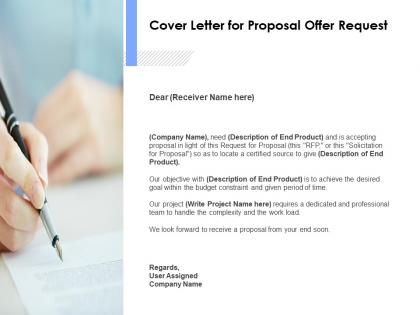




Try Before you Buy Download Free Sample Product
 Impress Your
 Audience
 100%
100% Editable
 Save Hours
 of Time


Our Cover Letter For Proposal Offer Request Ppt Powerpoint Presentation Slides ensure fantastic exposure to your designs. They will be exhibited in a grand fashion.
People who downloaded this PowerPoint presentation also viewed the following :
Cover letter for proposal offer request ppt powerpoint presentation slides with all 5 slides:
Exhibit your brainchild on our Cover Letter For Proposal Offer Request Ppt Powerpoint Presentation Slides. Ensure you get genuine blessings.


FAQs for Cover letter for proposal offer request ppt
Skip the "I'm so excited to apply" garbage - nobody cares. Start with your best achievement or what makes you different. Those cookie-cutter openings? They're trash. Do actual research on their company and mention something specific so they know you didn't mass-blast this to 50 places. Then tell them exactly what you're offering and what's in it for them. Don't end with "hope to hear from you" either - that's weak. Be direct about next steps. Honestly, every single sentence should either prove you're worth their time or show you get what they need.
Okay so first thing - dig into their website and LinkedIn like you're a detective. I usually spend way too much time on this part but whatever. Look for their exact words when they talk about problems. If they say "streamline operations," don't write "improve efficiency" - use their language back at them. Check recent posts, news about their company, stuff they're complaining about. Your proposal needs to hit their actual pain points, not generic ones. Company size matters too. Don't just change the name on some template you've used before. Honestly, end with something specific you found so they know you actually did the homework.
Honestly, the biggest thing is not being generic AF. Everyone just copies their resume into paragraph form - super boring. You gotta show you actually looked up the company and know what problems they're dealing with. Don't go over one page, and avoid those obvious templates that look like everyone else's. Skip the "I am writing to apply" opening too. Also, tone down any desperation vibes or crazy claims about being "the perfect candidate." Write like you're talking to them, not some robot. Oh, and end with what you want to happen next instead of just "thanks for considering me" or whatever.
Honestly, the formatting thing can make or break you before they even read it. Use 1-inch margins and stick with Arial or Times New Roman, 11-12pt. I've literally watched hiring managers toss proposals that looked sloppy - it's brutal but true. Space your paragraphs properly and keep everything aligned. Your header should have contact info but don't go crazy with it. Oh, and definitely save as PDF! Word docs get weird when people open them on different computers. Quick formatting check before you send = worth the extra few minutes, trust me.
Honestly, stories are just way stickier in people's heads than boring bullet points. When you tell a quick story about fixing something broken or boosting sales by 30%, the hiring manager can actually picture you doing the work. Our brains are weird like that - we remember narratives so much better. Don't just list skills, show them through a mini before-and-after scenario. Like, "Our process was a mess, I streamlined it, boom - saved 10 hours weekly." Keep it short though. Two or three sentences max, otherwise you'll lose them.
Numbers are everything in cover letters, trust me. They turn boring claims into actual proof you can deliver results. Like instead of "I increased sales," write "I boosted quarterly sales by 23% through targeted email campaigns." Way more convincing, right? Hiring managers skim these things anyway, so metrics grab their attention. Include 2-3 specific ones that match what they're looking for - revenue growth, cost savings, team size you managed, whatever. I mean, don't make stuff up obviously, but if you've got real numbers that show your impact, use them. It's honestly the difference between sounding generic and standing out.
Go for confident but chill - like business casual vibes, not super formal. Skip the robot language like "I'm a team player" and get specific about what you actually bring to the table. Most cover letters are boring as hell, so let some personality show through. Don't start with "I'm writing to express my interest" - that's painfully generic. Jump right into why you're great for this job. Keep it direct without being cocky. Avoid jargon unless you know they use it. Honestly, if it sounds like you copied it from a template, you've already lost them.
Yeah totally! Grab their color schemes and fonts - that stuff makes a huge difference. Header styles and bullet points are gold for this. You can borrow layout tricks too, like how they do section breaks or those little callout boxes. Just don't make it look like a PowerPoint threw up everywhere (I've seen some rough ones). Keep the actual text readable since it's still a cover letter, not a slide deck. The typography choices they use? Perfect for matching your other materials. Short version: steal their visual vibe but tone it down so you don't look ridiculous.
Start strong with your best achievement - something that actually matches what they need. Numbers are everything here, way better than saying you're "highly motivated" or whatever. Then pick 2-3 things that make you different from the pile of other applicants. I think about it like making an argument for why hiring you is a no-brainer. Don't just dump your resume on them. Show how your experience fixes their actual problems. Honestly, most people mess this up. Wrap up by hitting your strongest point again and suggest meeting up or a call.
Dude, start with real numbers from stuff you've actually done - like "increased sales by 30%" or whatever applies. Certifications and big-name clients help too if you've got them. Testimonials are honestly huge, people love seeing what others say about your work. Just don't go overboard trying to sound perfect. Be confident but realistic about what you can pull off. Oh, and if you know someone there or worked with them before, definitely mention it. Keep it short but meaty - you want them thinking you actually know your shit. Always back everything up with proof though.
Dude, skip the boring "thank you for your consideration" stuff - literally everyone says that. Instead, be specific about what problem you'd solve for them. Something like "I'd love to chat about how I can help with [whatever their actual issue is]." Then mention when you're free to talk and throw in one solid reason why you're worth their time. Don't be pushy but definitely sound confident. Oh, and here's the thing people forget - actually follow up if they go quiet. Make it brain-dead easy for them to just say "yeah, let's talk."
Keep it around 250-400 words - that's the sweet spot. Any shorter and you can't really show why you're perfect for the job. Longer than a page? Nobody's reading that mess. Trust me, hiring managers have zero patience for novels. Three solid paragraphs should do it. Make each one count, connect your experience to what they actually need, then stop writing. You'll hit that word count without rambling, and they'll actually finish reading the whole thing.
Okay so before you write that cover letter, do some digging first. Check out their website and recent news to see what projects they're working on and what's keeping them busy. LinkedIn stalk the person you're writing to (but like, don't be weird about it) - just get a sense of their background and what they actually do. Industry stuff matters too - what problems are companies like theirs dealing with right now? I always think this part's annoying but it's worth it. When you know their pain points, you can write something that actually connects instead of sending another generic "I'm passionate about your company" letter.
You know how you can stare at your own writing forever and think it's perfect? Yeah, that's exactly why you need other people to read it. They'll catch stuff like confusing jargon or when your "value proposition" sounds like corporate nonsense. Fresh eyes will tell you if you're being too vague or if your examples actually prove what you think they prove. Sometimes your enthusiasm reads as fake when you think it sounds passionate - super frustrating but true. Get 2-3 people to look it over and ask them to be brutally honest about whether it's clear and convincing. Trust me on this one.
Your call to action is basically the closing pitch - tell them exactly what you want next. Be specific instead of that generic "looking forward to hearing from you" garbage. Something like "I'd love a 15-minute call to discuss streamlining your content strategy" works way better. Make it super easy for them to say yes by suggesting actual timeframes or your availability. You want confident but not pushy, you know? The whole point is removing friction from their decision. Show enthusiasm while being clear about next steps.
No Reviews