


Sample Business Proposal Powerpoint Presentation Slides




Try Before you Buy Download Free Sample Product
 Impress Your
 Audience
 100%
100% Editable
 Save Hours
 of Time


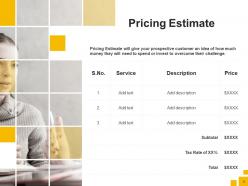
Setting up of business objectives is the most important thing an organization should follow. To get better results, they need to clear their vision first that helps to meet their desired needs. Many organizations research the latest trends in the market that helps them reach out to more customers. It is necessary to design a business plan and work according to it. As this will help in attaining the goals more efficiently and with ease. Create an astounding proposal and win over your potential clients with the aid of our content ready Sample Business Proposal PowerPoint Presentation Slides. By using this eye-catching business proposal PPT layout, you can design an impressive cover letter for the landing page of your proposal. The template comes up with ample space where you can tweak the content according to your needs. Take the assistance of our visually-attractive sample business proposal PPT layout to define your proposed solutions that overcome the challenges of your client’s business. Employ this creatively designed sample business proposal presentation template to showcase the services your company provides to the clients. Provide a brief description of the project phases along with the timeframe your team needs to accomplish them. With the help of this outwardly engaging sample business proposal PowerPoint theme, you can give your clients a clear idea of how much they have to spend or invest in your proposed services. Use the high-quality visuals and graphics to create an interactive logo of your company that adds a modern touch to your proposal. Incorporate this proposal template and talk about how your proposed solutions can alleviate the clients issue. Talk about your past projects and hold the interest of your clients on your proposal. Deliver the modern services to your clients by downloading our easy-to-customize Business Proposal ppt.
People who downloaded this PowerPoint presentation also viewed the following :
Sample Business Proposal Powerpoint Presentation Slides with all 21 slides:
Step out of all boxes with our Sample Business Proposal Powerpoint Presentation Slides. Reinvent the agendas for tomorrow.











FAQs for Sample Business Proposal
Okay so you'll want five main pieces: exec summary, problem statement, your solution, timeline/budget, and your credentials. Honestly, nail that executive summary because half these people won't read past it anyway. Problem statement should be super clear about what's broken, then your solution hits that exact issue with concrete deliverables. Timeline and costs prove you're not just winging it. The qualifications part is basically your chance to show off a little - like, here's proof I actually know what I'm doing. Oh, and always end with a clear "here's what happens next" step.
Honestly, visuals are a game-changer for proposals. People's brains just shut off when they see giant blocks of text - I know mine does! Charts make your data actually tell a story instead of being random numbers. Clean slides keep everyone on track too. Infographics work great for timelines or showing how processes work. Even throwing in some simple icons helps break things up. Oh and don't go overboard - I've seen people add charts just to add charts and it looks ridiculous. Keep everything tied to what you're actually trying to say.
Dude, biggest thing is don't be vague about what you're actually doing for them. Clients hate generic templates - like, they can tell immediately if you just swapped out company names. Also research them first or you'll sound clueless. Don't hide your pricing in some confusing breakdown either. Keep everything simple and skip the corporate buzzword garbage. Oh, and this trips everyone up - always include a timeline and what happens next if they're interested. Most people just... end their proposals randomly? Weird but true. Make it dead obvious how they move forward with you.
Honestly, you've gotta do your homework on each client first. Look into their actual problems, how they talk, what drives their decisions. Tech startups? They want ROI numbers and growth potential. Old-school manufacturers? Show them reliability and how much they'll save. I totally bombed this once - sent some super technical proposal to this family-run company and never heard back. Awkward. Match their vibe completely. Formal company means formal language. Laid-back culture? You can chill out too. Structure matters too, weirdly enough. Always start with what THEY care about, not whatever you think sounds impressive.
Look, market research is what separates a solid proposal from total guesswork. You need to prove you actually get the problem and that people want your solution. Otherwise you're just throwing ideas at the wall - super awkward when clients grill you later. Survey potential customers first, then dig into what competitors are doing. This stuff shows you understand audience pain points, market size, pricing, all that. Honestly, I've seen too many proposals tank because they skipped this step. Your research turns "we think this might work" into "here's exactly what your market wants, and here's the data to prove it." Way more convincing.
So instead of diving straight into features, open with a story about a client's problem. Like "Company X was hemorrhaging $50K monthly because..." then show how you helped them fix it. Honestly, I picked this up from binge-watching startup pitches lol. Problem-solution-outcome works every time. Throw in real customer quotes and specific scenarios where you actually moved the needle. Data hits different when people can picture what you're talking about. Next proposal you write, lead with one solid example - it'll change everything.
Honestly, focus on data that actually backs up your main points - market size, customer acquisition costs, ROI projections, stuff like that. If you ran any pilot programs, definitely include those results. Revenue numbers are expected, but what really matters is showing the logic behind them. Competitor benchmarks help too, plus any customer surveys or conversion rates you've got. Don't just dump random stats to look smart though. Pick maybe 3-5 really solid data points that tell a clear story about why this'll work and how you'll track success. Quality over quantity here.
Dude, feedback from old proposals is honestly like having a cheat sheet. Track the common stuff - did they want better pricing breakdowns, clearer timelines, different team members? I made this mistake three times before I figured it out lol. The really valuable intel comes when they tell you why they picked someone else. That stings but it's pure gold. Don't get hung up on one weird comment though - you're looking for patterns across multiple rejections. Honestly, just start a simple doc today and check it before your next proposal. It'll save you so much headache.
Start with their actual problem - that's what grabs attention. Then your solution becomes the obvious answer. Skip the vague stuff and use real numbers, specific examples. Stories work way better than bullet points (people's brains are weird like that). Write how you'd actually talk to someone, not like a corporate robot. Make the main benefits super obvious right away. Oh, and your call-to-action? Make it brain-dead simple. If they have to think too hard about next steps, you've already lost them. That's honestly the biggest mistake I see people make.
Look, design layout can make or break your proposal. I've seen amazing ideas get ignored because they looked like garbage. People literally won't read a wall of text - their eyes just glaze over. You need clean formatting and white space so it's actually digestible. Charts help too if you've got data. Honestly, I'd rather have a decent idea presented well than a brilliant one that looks sloppy. Get yourself a good template and make it look professional. Takes maybe an extra hour but it's worth it.
Honestly, just use what you already have first. Word and Google Docs both have decent built-in templates that'll do the job. PowerPoint works too if you want it more visual. Once you're doing proposals regularly, then look at the fancier stuff - Canva's super easy, or check out PandaDoc and Proposify if you need e-signatures and all that. I swear people get way too caught up in making things look perfect when a clean Word doc gets you 90% there. Focus on writing good content instead of obsessing over fonts and colors. You can always upgrade later.
Don't just dump all your social proof in one boring section - spread it around. I like starting with a quick client story that matches their situation, then dropping testimonials right next to each solution you pitch. Screenshots of actual reviews work way better than quotes, trust me. And numbers are everything - "boosted revenue 40%" beats vague feel-good stuff every time. The trick is matching your proof to their exact problems so they can actually see themselves winning like that. Makes the whole thing way more convincing.
Look, here's the thing - without a clear call-to-action, your proposal just dies there. People read it, think "neat," then move on with their lives. You've gotta tell them exactly what to do next. Want a meeting? Say it. Need them to sign something? Ask directly. I swear, half the proposals I've seen just trail off into nothing. It's like ending a conversation mid-sentence. Be specific about deadlines too - "Hit me back by Friday if you want to move forward" works way better than some vague "we look forward to hearing from you" nonsense. Make it stupid easy for them to say yes.
So for your projections, do 3-5 years of revenue, expenses, and cash flow. Just keep them realistic - I've watched so many pitches crash because the numbers looked completely insane. Break down how you got to each figure so investors can follow your logic. Multiple scenarios help too (conservative, moderate, aggressive). Shows you're not just winging it. The big thing? Connect everything back to your actual strategy and market research. Don't dump a spreadsheet on them and expect magic. Tell them the real story of how you'll hit those numbers, you know?
Honestly, just don't oversell yourself - be real about what you can actually deliver and when. Keep their secrets secret, obviously. Don't steal their ideas for other clients either. I'd skip the whole "my competitor sucks" thing even if it's true. Makes you look petty. Stick to why you're good instead. Price fairly too - charge what it's worth, not whatever you think they'll pay. And if there's any weird conflict of interest stuff, just mention it upfront. Basically treat them like you'd want to be treated. Sounds cheesy but it works.
No Reviews