


Data integration big data example of ppt





Try Before you Buy Download Free Sample Product
 Impress Your
 Audience
 100%
100% Editable
 Save Hours
 of Time


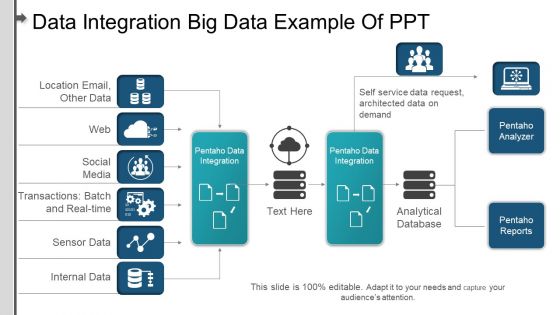
Select our data integration big data presentation slide to share the complex information in an easy way. Data Integration is the most valuable and important aspect in today’s time, it is a process of data combining where you access the data whenever you require. Not every professional is tech savvy which makes it a bit challenging for you to communicate the information as when you share data integration related details some may not show interest in it. But when you showcase it with visual appearance by using this PowerPoint template then you have more chances of ensuring that the information has been easily communicated and understood by the audience. All leading organizations pay attention towards the data integration as they understand that it is crucial aspect of their business management. Similarly if you are also a part of a business firm, you also have to understand that data protection and integration is vital. This PPT shape modified easily and allows you to share it after making desired changes. Download and include it in the presentation. To see more designs, you may browse through our entire website as the designs are accessible that can prove useful to you. Our Data Integration Big Data Example Of Ppt increase your freedom of choice. It ensures extra alternatives.
People who downloaded this PowerPoint presentation also viewed the following :
Data integration big data example of ppt with all 5 slides:
Ensure folks don't indulge in any foolish activity with our Data Integration Big Data Example Of Ppt. Be able to handle intense emotions.

FAQs for Data integration big data
Ugh, data quality is gonna be your biggest nightmare - stuff comes from everywhere with totally different formats and update schedules. Legacy systems are the worst because they're old as dirt but somehow still running everything important. Then there's all the security compliance stuff that makes every decision take forever. Oh, and don't get me started on teams fighting over real-time vs batch processing speeds. Honestly though? Just map out your data sources first and figure out which integrations you actually need most. Start there instead of trying to fix everything at once.
So basically, you're trying to see the whole picture instead of just random pieces, right? All your data sources need to actually talk to each other - otherwise you're making calls based on half the story. Like, imagine having customer info from sales, marketing, AND support all in one place. Game changer. You'll spot patterns that were totally invisible before. I learned this the hard way at my last job tbh. Without proper integration, you're honestly just guessing half the time. Push for those integrated dashboards in your next meeting - everyone should be looking at the same numbers.
Dude, data quality will absolutely wreck your integration if you're not careful. Messy, incomplete data from different sources? You're basically building on quicksand. I watched one team work for months on this super complex pipeline, only to discover their source data was trash the whole time - honestly felt bad for them. Bad data means your transformations break, analytics become useless, and everyone stops trusting your work. My advice? Check your source data quality first, then add validation steps throughout the process to catch problems before they spiral.
So batch processing is when you move data in chunks - like every night or hour, your ETL jobs grab everything and dump it into your warehouse. Streaming does it instantly as data shows up. Honestly? Start with batch. Way less of a headache to build and fix when things break. Real-time sounds cool but you'll need Kafka or similar event platforms, which gets messy fast. The whole thing comes down to whether you can wait a few hours for your data or if you absolutely need it right now. Most businesses think they need real-time but actually don't - batch works fine and saves you tons of complexity.
Honestly, you can't go wrong with Informatica or Talend - they're the boring but reliable choice. Azure Data Factory's solid too if you're already in the Microsoft world. Snowflake's been killing it though, their cloud setup is pretty sweet and that's where everything's headed anyway. Oh, and Zapier's great for simple stuff, super easy to set up. MuleSoft works but it's pricey. Fivetran's the new hotness everyone talks about. Really just depends what you're trying to connect and how much you want to spend. I'd map out your systems first, then test drive a few options.
Honestly, cloud stuff has made data integration so much easier. You don't need to build huge servers anymore - just connect everything through the cloud. Peak traffic? It scales up automatically. Quiet period? Scales back down. Pretty neat how you can link SaaS apps, old databases, whatever through tools like Azure Data Factory. Oh, and you're not stuck with one vendor which is huge. My advice? Start small with one platform and move your existing processes over bit by bit. Way less stressful than trying to migrate everything at once.
Encrypt everything - both when it's moving around and sitting in storage. That's just table stakes at this point. For auth, go with OAuth or solid API keys, and set up role-based permissions so users can't poke around where they shouldn't. Data validation is huge - sanitize inputs religiously or you'll get wrecked by injection attacks. Oh, and log absolutely everything for audits (seriously, future you will be grateful when compliance comes knocking). Set up monitoring to spot weird access patterns. Run pen tests when you can afford it - they're worth every penny.
Track your tech stuff first - data quality, processing speed, error rates. Pretty straightforward. But honestly, the business metrics matter way more because that's what bosses actually care about. Are people making decisions faster? Less manual busywork? Teams actually using the data for real insights? User adoption is huge too - doesn't matter how good your integration is if nobody's touching it. I'd set up a monthly dashboard with these key numbers. Makes it super easy to catch problems early and show you're not just burning money.
So there's four main types you'll run into: ETL, ELT, real-time streaming, and API stuff. Classic ETL cleans your data first, then loads it into the warehouse. ELT does the opposite - dump everything in raw, clean it later. Cloud platforms love this approach for some reason. Streaming handles data that's constantly flowing in. APIs just let your systems chat with each other directly. Most places I've seen use whatever combo works for their situation. I'd probably start by looking at what data sources you've got and how quickly you actually need updates. Some stuff can wait, you know?
Dude, ML is a game changer for data integration. Start with automated field mapping - that's where you'll see results fast. The algorithms can match similar data fields across different systems without all the tedious manual work. Data quality gets way better too since ML spots duplicates and weird anomalies faster than old-school rule systems. You can even predict missing values, which is pretty cool. Oh, and when your data sources inevitably change (because they always do), ML handles schema evolution automatically. Honestly the pattern recognition capabilities alone make it worth trying.
Ugh, compliance is such a headache but you can't ignore it. Map out which regulations hit your data first - GDPR, HIPAA, SOX all want different things. You'll need audit trails, data lineage tracking, encryption everywhere. The trick is building it into your architecture upfront instead of scrambling later. Trust me on this one - I've seen people try to bolt compliance on afterward and it's a nightmare. Way easier to just design with those constraints from the start, even though it feels like overkill at the time.
So healthcare's going crazy with real-time patient data integration - they want everything connected across different EMR systems. Financial services? They're totally obsessed with automating compliance stuff, like GDPR tracking but way more intense. Retail companies are building these massive customer profiles that combine online shopping, in-store purchases, social media data, everything. Manufacturing surprised me though - they're super hot on IoT sensors for predicting when machines'll break down. Honestly, nobody wants that old batch processing anymore. Real-time insights are where it's at. I'd focus on cloud-native platforms that handle streaming data if I were you.
Honestly, you've gotta get the big bosses on board first - that's like half the battle right there. Then build teams that actually cross departments and make them talk to each other (crazy concept, right?). People will definitely hoard their data at first because nobody wants to give up control. Shared governance policies help, though they're kind of a pain to set up. Centralized platforms or APIs work well since they force everyone to play by the same rules. Oh, and tie data sharing to performance reviews - suddenly people care a lot more. Start with something small that'll show quick wins before tackling the bigger mess.
Okay so metadata management is basically your GPS for data integration. It shows you what data you have, where it lives, and what it actually means. You'll be totally lost trying to connect different systems without it - like cooking when all the ingredient labels fell off, you know? Good metadata helps you track where data comes from, catch problems early, and makes debugging so much easier when stuff breaks (which it will). Honestly, I'd map out your main data sources and their structures first before jumping into any big integration project. Trust me on this one.
Yeah, it totally depends on your industry. Healthcare's got HIPAA breathing down their necks, so they're obsessed with secure APIs and HL7 standards for patient data. Finance does a ton of overnight batch processing - those ETL pipelines grinding away while we sleep. Retail's different though, they need everything synced in real-time across channels. Manufacturing's jumped on the IoT bandwagon hard, sensors everywhere feeding data lakes for maintenance stuff. Honestly, every industry acts like they're the most complicated (they're not). Start with whatever compliance headaches you've got first, then figure out if you need real-time or can batch it.
-
Easy to edit slides with easy to understand instructions.
-
The content is very helpful from business point of view.