


DevOps Strategy Roadmap Lifecycle Ppt Powerpoint Presentation Slides Complete Deck




Try Before you Buy Download Free Sample Product
 Impress Your
 Audience
 100%
100% Editable
 Save Hours
 of Time


Our DevOps Strategy Roadmap Lifecycle Ppt Powerpoint Presentation Slides Complete Deck are topically designed to provide an attractive backdrop to any subject. Use them to look like a presentation pro.
People who downloaded this PowerPoint presentation also viewed the following :
Content of this Powerpoint Presentation
Slide 1: This slide introduces DevOps Strategy Roadmap Lifecycle PPT PowerPoint presentation slides. State your Company name and begin.
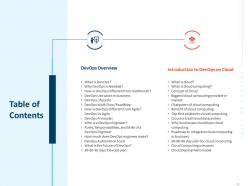
Slide 2: This slide presents table of contents.
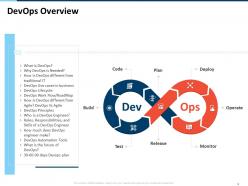
Slide 3: This slide gives DevOps Overview
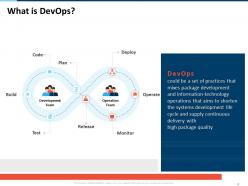
Slide 4: This slide explains DevOps.
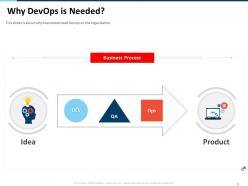
Slide 5: This slides is about why businesses need Devops in the organization.
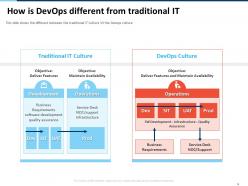
Slide 6: This slide shows the different between the traditional IT Culture VS the Devops culture
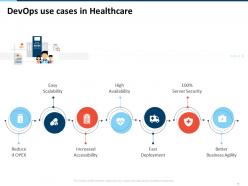
Slide 7: This slide shows DevOps use cases in Healthcare
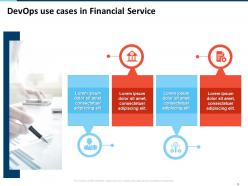
Slide 8: This slide shows DevOps use cases in Financial Service
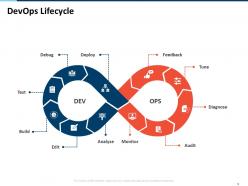
Slide 9: This slide depicts DevOps Lifecycle
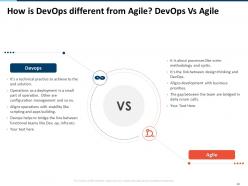
Slide 10: This slide explains How is DevOps different from Agile? DevOps Vs Agile
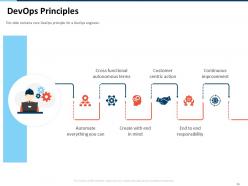
Slide 11: This slide contains core DevOps principle for a DevOps engineer.
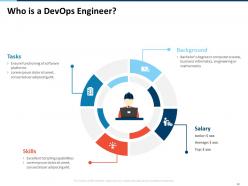
Slide 12: This slide shows Who is a DevOps Engineer?
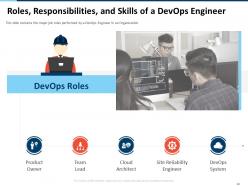
Slide 13: This slide contains the major job roles performed by a DevOps Engineer in an Organization
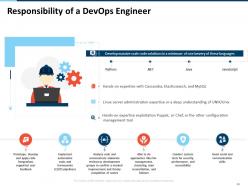
Slide 14: This slide shows Responsibility of a DevOps Engineer
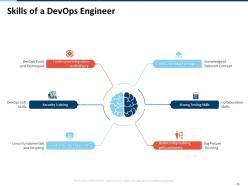
Slide 15: This slide explains Skills of a DevOps Engineer
Slide 16: This slide depicts How much does DevOps engineer make?
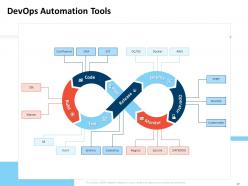
Slide 17: This slide showcases DevOps Automation Tools
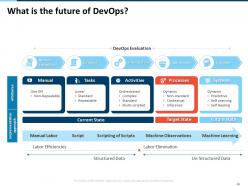
Slide 18: This slide showcases What is the future of DevOps?
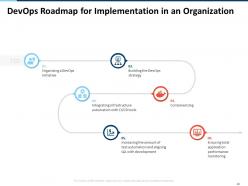
Slide 19: This slide explains DevOps Roadmap for Implementation in an Organization
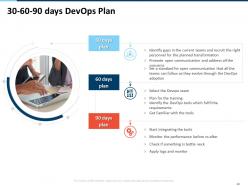
Slide 20: This slide shows 30-60-90 days DevOps Plan
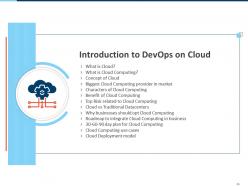
Slide 21: This slide shows Introduction to DevOps on Cloud
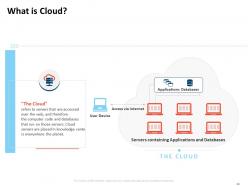
Slide 22: This slide explains What is Cloud?
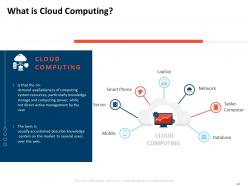
Slide 23: This slide explains Cloud Computing.
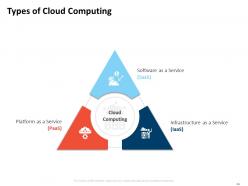
Slide 24: This slide shows Types of Cloud Computing
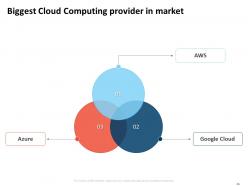
Slide 25: This slide depicts Biggest Cloud Computing provider in market.
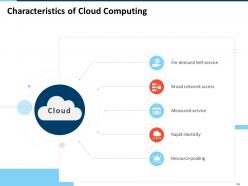
Slide 26: This slide showcases Characteristics of Cloud Computing
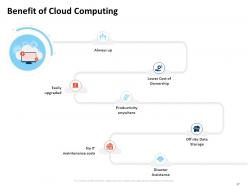
Slide 27: This slide presents Benefit of Cloud Computing
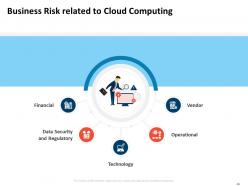
Slide 28: This slide explains Business Risk related to Cloud Computing
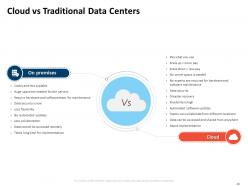
Slide 29: This slide showcases Cloud vs Traditional Data Centers
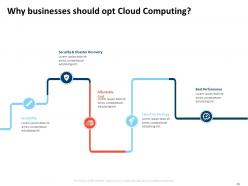
Slide 30: This slide tells Why businesses should opt Cloud Computing?
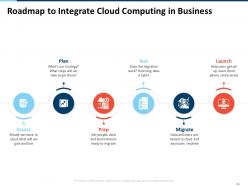
Slide 31: This slide displays Roadmap to Integrate Cloud Computing in Business
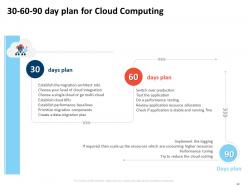
Slide 32: This is 30-60-90 day plan for Cloud Computing slide.
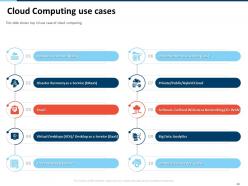
Slide 33: This slide shows Cloud Computing use cases.
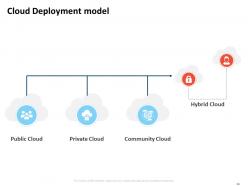
Slide 34: This slide depicts Cloud Deployment model
Slide 35: This is Devops Strategy Roadmap Lifecycle PPT Powerpoint Presentation Icons Slide.
Slide 36: This slide is titled as Additional Slides for moving forward.
Slide 37: This slide displays Mission, Vision and Goals,
Slide 38: This is Our team slide with Names and Designations.
Slide 39: This is About Us slide to showcase Company specifications.
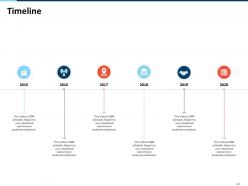
Slide 40: This slide displays Timeline process.
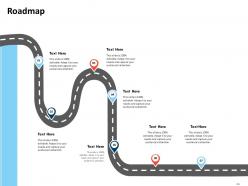
Slide 41: This slide shows Roadmap process.
Slide 42: This is Puzzle slide.
Slide 43: This is 30 60 90 Days Plan slide.
Slide 44: This is Thank you slide with Contact details.
DevOps Strategy Roadmap Lifecycle Ppt Powerpoint Presentation Slides Complete Deck with all 44 slides:
Use our DevOps Strategy Roadmap Lifecycle Ppt Powerpoint Presentation Slides Complete Deck to effectively help you save your valuable time. They are readymade to fit into any presentation structure.


FAQs for DevOps Strategy Roadmap Lifecycle Ppt Powerpoint Presentation
Culture shift comes first - breaking down those dev/ops silos is brutal but necessary. People hate change, what can I say. After that, automate everything: CI/CD pipelines, infrastructure as code, monitoring setup. Don't skip security integration either (DevSecOps is huge now). Metrics matter too - you need solid ways to measure if this is actually working. Oh, and continuous feedback loops are critical for rapid iteration. Honestly though? Start with just one small project first. Prove it works there before trying to transform your whole company. Way less painful that way.
Track the DORA metrics - deployment frequency, lead time, recovery time, and change failure rate. Those actually tell you what's working. Don't chase pretty dashboard numbers that mean nothing though. Team happiness matters too, plus customer satisfaction and real business stuff like how fast you're getting features to market. Oh and revenue per deploy if that applies to your situation. Honestly, pick maybe 3-4 metrics that match what you're trying to achieve. Track them consistently over time. Starting with too many just gets overwhelming and you'll end up ignoring half of them anyway.
Honestly, automation is what makes DevOps actually work. Without it, you're stuck manually deploying stuff which is... yikes. Nobody wants that headache in 2024. It cuts out human mistakes and speeds everything up - your builds, tests, deployments, all of it. When something breaks (and it will), rollbacks become way less painful too. Your team gets to work on interesting problems instead of boring repetitive crap. I'd say start with basic CI/CD pipelines first, then slowly add more automation as everyone gets used to it. Don't try to automate everything at once though.
Honestly, DevOps lives or dies by how well your dev and ops people actually talk to each other. Those old silos where teams barely communicate? Total disaster waiting to happen. Daily standups with everyone included are a game changer - suddenly you're catching problems early instead of scrambling at 2am. Shared Slack channels help too, keeps the info flowing in real time. The thing is, people need to understand WHY you're making changes, not just what's changing. I've watched teams burn entire weeks because someone made assumptions about what the other side knew. Breaking down those walls means you ship faster and sleep better.
Honestly, the hardest part isn't the tech stuff - it's dealing with people who hate change. Your dev and ops teams will probably resist sharing responsibilities at first. They're used to their own little worlds, you know? I'd start with small pilot projects to show it actually works. Training is huge too, and you'll need to get leadership on board before anything else. The tool integration part is annoying but way easier than convincing Bob from infrastructure that automation won't steal his job. Once you prove some wins though, expanding to other teams gets smoother.
Honestly, feedback loops should be everywhere in your pipeline, not just tacked on at the end. Get some automated monitoring set up so you're not blindsided by issues later. Your team needs regular retrospectives too - like, actually useful ones where people talk about what's broken. Real-time dashboards help everyone stay in sync about deployments and system health. Oh, and don't tunnel vision on just the technical stuff - user feedback matters way more than we usually admit. I'd start small though. Pick one or two feedback things to add this sprint, then expand from there. You'll burn out trying to do everything at once.
So you want to "shift left" with security - build it into everything from the start instead of slapping it on later. Automate vulnerability scans in your CI/CD, use infrastructure as code with security baked in, and get your devs trained on secure coding. The tech part's honestly easier than changing company culture though. Everyone needs to own security, not just dump it on the security team. I'd start with automated scanning and secrets management - quick wins that'll buy you time to tackle the bigger culture problems. Those changes take forever but they're worth it.
Honestly, just get your dev and ops people in the same room talking regularly - not waiting until everything's on fire. Cross-training helps a ton so devs actually understand ops stuff and vice versa. The whole "fail fast" thing sounds cliché but it works if people aren't scared of screwing up. Pick shared metrics so nobody's working toward different goals. Oh, and celebrate wins as one team instead of separate departments competing against each other (which is weirdly common). I'd start with just one project though. Let that success do the talking instead of trying to change everything at once.
Honestly, just stick to the DORA metrics - deployment frequency, lead time, recovery time, and failure rates. Those four actually tell you how your DevOps is doing. CPU usage, error rates, and maybe some user satisfaction stuff are worth tracking too, but don't go crazy with it. I've seen teams build these massive dashboards that just collect dust. Pick like 5-7 things max that you'll genuinely check every week. Make sure they tie back to what your customers care about. Short sentences work better than walls of metrics nobody understands.
Honestly, cloud is what makes DevOps actually scalable. Instead of waiting weeks for hardware, your team can spin up environments in minutes. All the automation stuff - CI/CD, monitoring, scaling - it's already built in so you're not starting from zero. The APIs make connecting different services pretty straightforward too. But here's what I'd do: figure out your cloud strategy early because it'll shape your entire pipeline. I mean, you don't want to be switching halfway through. Start small - pick a few cloud-native tools that fit your current workflow and just mess around with them first.
So Git is a must-have for version control - no getting around that one. CI/CD stuff like Jenkins or GitHub Actions will automate your builds and deployments. Docker's great for containerization, then Kubernetes handles all those containers when things get big. Honestly, monitoring tools like Prometheus are lifesavers because you want to know about problems before your users start complaining. Terraform keeps your infrastructure consistent with code. My advice? Start simple with the basics first. Don't go crazy adding everything at once - build up your toolchain as your team grows.
DevOps principles are pretty much universal, but how you actually roll it out? Totally depends on company size. Startups can just go for it - push CI/CD live tomorrow, get the whole team switched over fast since there's way less red tape. Big companies though... man, they've got compliance headaches, legacy stuff everywhere, plus you need like 15 different departments to sign off on everything. If you're at a big place, definitely start small with pilot teams first. See what works, then copy that approach elsewhere. Startups can just jump in the deep end. Both ways though - tackle whatever's causing you the most daily pain first.
So microservices are pretty sweet for DevOps - teams can work on their own stuff without breaking everything else. Each service gets its own deploy pipeline, which is honestly game-changing for release speed. You can scale just what needs scaling instead of the whole app. But here's the thing - monitoring becomes a nightmare when you've got like 20 services running around. I'd definitely start with maybe 2 or 3 services first to nail down your deployment process. Otherwise you'll be drowning in complexity before you know what hit you.
Honestly? This is make-or-break stuff. DevOps without business alignment is just expensive tech toys that look impressive but don't actually help the company. You've gotta connect your automation and deployments to real outcomes - faster releases, lower costs, happier customers. Otherwise you're basically that person who over-engineers everything (guilty as charged sometimes). Pick 2-3 business metrics your work can actually move. Track them obsessively. The fancy CI/CD pipeline means nothing if it doesn't translate to something executives care about.
So you'll want both tech and people skills for this to actually work. Tech-wise: automation stuff like CI/CD, infrastructure as code, cloud platforms, monitoring tools, scripting. The usual suspects. But here's the thing - soft skills are equally critical. Maybe more so? Communication, collaboration, that whole "we're all in this together" attitude instead of throwing things over the wall. Cross-training helps tons too. Devs should know ops basics, ops people need to get development workflows. I'd start by figuring out your biggest gaps first, then mix formal training with hands-on practice.
-
The Designed Graphic are very professional and classic.
-
Easily Editable.
-
Much better than the original! Thanks for the quick turnaround.