


Different FMCG Product Categories For New Commodity Launch





Try Before you Buy Download Free Sample Product
 Impress Your
 Audience
 100%
100% Editable
 Save Hours
 of Time


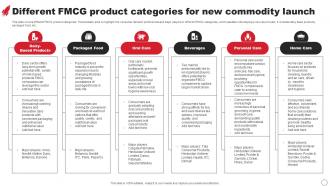
This slide covers different FMCG product categories. This template aims to highlight the consumer demand preferences and major players in different FMCG categories, which assists in developing a new launch plan. It includes dairy base products, packaged food, etc.
People who downloaded this PowerPoint presentation also viewed the following :
Different FMCG Product Categories For New Commodity Launch with all 6 slides:
Use our Different FMCG Product Categories For New Commodity Launch to effectively help you save your valuable time. They are readymade to fit into any presentation structure.





FAQs for Different FMCG Product Categories For
So FMCG stuff breaks down into three types based on buying habits. Convenience goods are things like milk, shampoo, toilet paper - you just grab them without thinking. Shopping goods need more research since they cost more, like kitchen appliances or gadgets. Then specialty goods are premium stuff people actively hunt for - think fancy skincare or artisan chocolate. The difference is all about behavior: convenience is autopilot shopping, shopping goods make you compare prices and reviews, specialty creates die-hard fans. Honestly, most people don't realize how much their buying patterns differ between categories. This matters for positioning and marketing approach.
So basically, how people shop totally shapes FMCG categories. Companies group stuff by how often we buy it, what we're willing to spend, lifestyle vibes - not just what the product actually does. Energy drinks are perfect example - they went from "just another beverage" to this whole lifestyle thing. Smart move honestly. You gotta match categories to how customers actually think when they're shopping. Take fancy pasta sauce - if people see it as a real cooking ingredient instead of basic grocery store sauce, boom, different category entirely. The whole thing comes down to mapping what you sell to how people's brains work when they're making buying decisions.
Plant-based stuff is everywhere right now. People are going crazy for functional foods - you know, snacks that supposedly boost your immunity or have probiotics. Clean labels are huge too. Everyone wants minimal ingredients they can actually pronounce. Those weird mushroom powders in coffee? That's the adaptogen trend and it's not going anywhere. Honestly, I don't get the appeal but whatever works. Mental wellness products are blowing up - stress teas, mood supplements, all that. Personalized nutrition is growing fast too. Just don't try to fake the wellness angle. People can smell BS marketing from a mile away, so you've gotta be genuine about actual benefits.
Yeah, so FMCG has these super predictable seasonal patterns once you notice them. Summer's all about cold drinks and ice cream flying off shelves. Winter? Everyone's buying canned soup and tea like crazy. Personal care stuff shifts too - sunscreen sells like mad in summer, moisturizers take over when it's cold. Don't even get me started on holidays and how nuts confectionery sales get. It's honestly pretty fascinating how clockwork it all is. But here's the thing - if you're not baking these trends into your demand planning, you're missing out on way better forecasting accuracy.
Dude, digital marketing changed everything for FMCG brands. Beauty companies are obsessed with influencer partnerships now - and it actually works. Food brands kill it by posting recipe videos that get people commenting like crazy. The personalization stuff is honestly getting a bit creepy but super effective. Household product companies figured out that educational content plus subscriptions keeps customers hooked. What's nuts is you can see how people react instantly and pivot your strategy same-day. Oh, and different product categories respond to totally different platforms, so figure out where your audience actually hangs out first.
Yeah, branding is everything in personal care stuff. People get weirdly loyal to their shampoo or deodorant - like my mom's been using the same face cream for literally 15 years. It's wild how much trust matters when you're putting something on your body daily. Price obviously counts, but honestly? Most folks will pay extra for brands they know won't break them out or smell weird. The whole safety thing runs deep. For your category planning, figure out which brands actually resonate with your customers. That's where you'll see steady sales and better margins. Don't overthink it - brand equity equals money here.
Dude, sustainability is literally everywhere in packaging right now. Consumers are demanding it and brands can't ignore it anymore. Food companies are ditching single-use plastics, beauty brands have gone crazy for refillable containers, and cleaning products are doing concentrated formulas to cut waste. It's wild how fast this shift happened - like, even two years ago it felt more optional? Now it's make-or-break for most categories. You should probably look at what your competitors are doing first, then figure out which changes you can actually make without breaking the bank. Recyclable materials and reducing plastic are usually the easiest starting points.
So basically, inflation hits different product categories in weird ways. Food and personal care can usually jack up prices because people still need toothpaste and groceries, right? But premium snacks or fancy household stuff? Way trickier - customers will just buy cheaper alternatives or skip it completely. Brand loyalty matters tons here too. Coca-Cola can raise prices easier than some random cleaning supply brand. Honestly, timing is everything - you gotta watch what competitors are doing and really understand if your customers will actually pay more or just walk away.
Dude, the snack space is absolutely insane right now. Everyone's fighting for shelf space while ingredient costs keep climbing. Health-conscious people still want stuff that tastes amazing though, which is tricky. Private label brands are killing it too - honestly didn't see that coming as much as it's happened. But there's real money in plant proteins and international flavors. Better-for-you positioning works if you don't sacrifice taste. Direct-to-consumer is perfect for testing weird ideas without convincing some buyer at Target. Find that magic spot between healthy and delicious, then crush your social media game around it.
So e-commerce basically turned FMCG distribution upside down. Brands are going straight to consumers now, skipping retailers entirely. Amazon's become this huge middleman you can't really avoid anymore. Last mile delivery is where it gets expensive though - people want stuff delivered like, immediately. Most brands are doing this omnichannel thing where they're juggling physical stores AND online at the same time (which sounds exhausting tbh). The fulfillment costs will eat your margins alive if you're not careful. Speed expectations are insane now too.
Oh man, regulatory stuff can totally flip your world upside down. Like, new labeling rules might mean redesigning all your packaging from scratch. Ingredient bans? You're basically reformulating everything. Health claims are the worst - one policy change and your entire marketing strategy is toast. I watched this supplement company completely lose it when regs shifted overnight (chaos doesn't even cover it). Launch timelines get pushed back constantly too. Honestly, your sanity depends on staying connected with industry groups and having someone who actually knows regulatory affairs giving you heads up on what's coming.
Oh man, this is so true - you can't just assume what works in one country will work everywhere else. Like in Europe, everyone's obsessed with anti-aging skincare, but go to Asia and it's all about whitening products. Food's even weirder - we're all about dairy here but tons of places are lactose intolerant so plant milk is just normal there. Even tea means completely different things depending where you are! I learned this the hard way when I worked on that project last year. Bottom line: do your homework on local markets first. What seems "premium" to us might be totally basic somewhere else.
Honestly, it totally depends on what you're selling, but I'd start with the basics - market share, how fast stuff flies off shelves, and which retailers actually carry you. Food and drink companies obsess over repeat buyers (makes sense, right?). Personal care is more about price sensitivity and promo performance. Beauty though... that's a whole different beast with launch metrics and seasonal swings everywhere. I'd probably benchmark against your top 3-4 competitors first on those core things, then dig into whatever's specific to your category. Oh, and household penetration is huge if you're trying to break into new markets.
Store brands crush it with basic stuff - dairy, cleaning supplies, pantry staples. Makes sense since milk is milk, right? But they tank hard in categories where people are picky about brands, like fancy makeup or gourmet foods. The quality gap's getting smaller though, which is kinda wild when you think about it. Target's brands look legit now compared to like 10 years ago. You'd need to check actual market share numbers for whatever category you're looking at since it varies so much between different products.
Honestly, it's all about time and how much you're willing to spend on keeping stuff cold. Perishables are a nightmare - you've got maybe days before dairy spoils, and frozen items need that cold chain thing the whole way through. Non-perishables? They're chill, literally. Sit in warehouses forever, no special trucks needed. But man, once you go perishable your costs blow up. Refrigerated everything, faster delivery, higher waste when things go bad. The demand forecasting gets weird too since shelf life is so short. I'd honestly start by figuring out where your cold storage breaks down first.
-
Understandable and informative presentation.
-
Excellent products for quick understanding.