New Product Launch Strategy Framework

Rating:
90%
New Product Launch Strategy Framework New Product Launch Strategy Framework
Slide 1 of 6

or

Favourites Favourites

Try Before you Buy Download Free Sample Product

Audience Impress Your
Audience
Editable 100%
Editable
Time Save Hours
of Time
The Biggest Sale is ending soon in
0
0
:
0
0
:
0
0
Rating:
90%
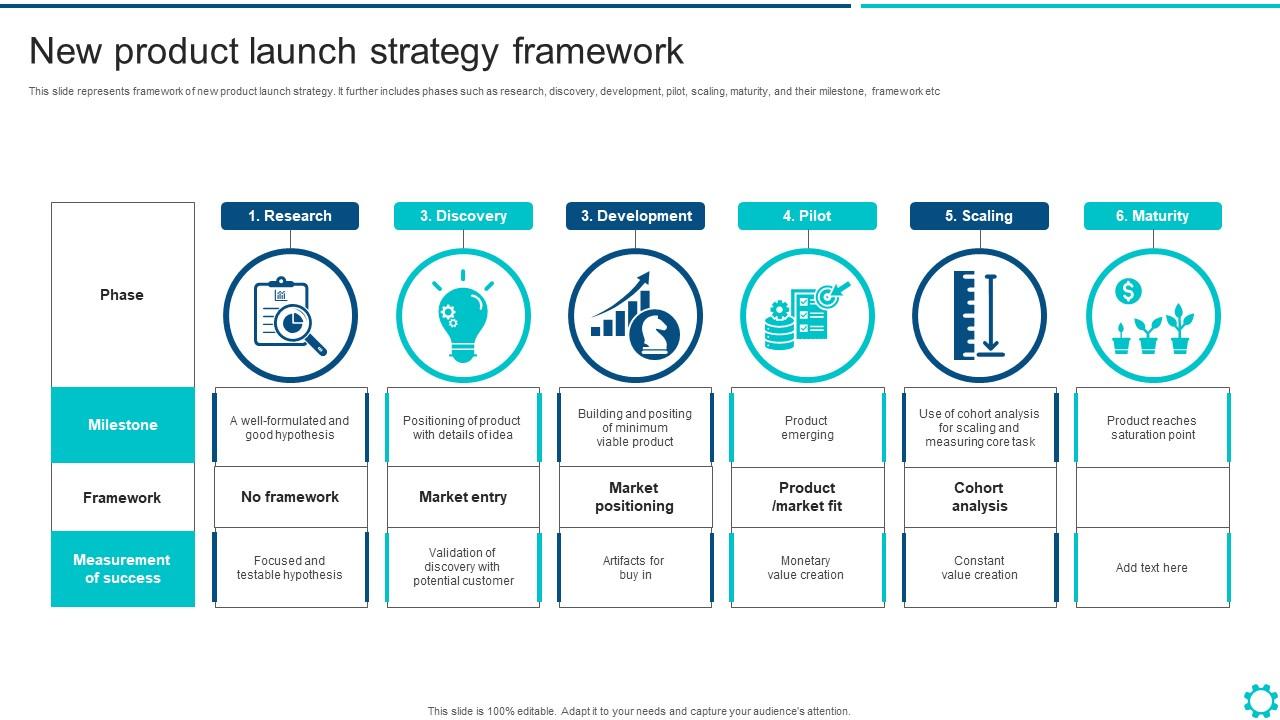
This slide represents framework of new product launch strategy. It further includes phases such as research, discovery, development, pilot, scaling, maturity, and their milestone, framework etc. Introducing our premium set of slides with New Product Launch Strategy Framework. Ellicudate the six stages and present information using this PPT slide. This is a completely adaptable PowerPoint template design that can be used to interpret topics like Framework, Market Entry, Market Positioning, Product. So download instantly and tailor it with your information.
FAQs for New Product

Honestly, most launches tank because teams aren't on the same page - like sales has no clue what marketing just promised customers. Start with solid market research so you know people actually want this thing. Your positioning needs to be dead clear about what makes you different. Map out how you'll hit multiple channels to reach your target audience. I'd work backwards from your unique value prop, then build a realistic timeline with actual milestones you can hit. Test whatever you can beforehand. The whole strategy should show exactly how you'll convert prospects into customers. Get your internal alignment sorted first though - seriously, it'll save you so much headache later.

Honestly, market research is like having a cheat sheet for your whole launch. You'll figure out who actually wants to buy your stuff and what words make them pay attention. Customer interviews are gold – I'd start there along with checking out your competitors. The research shows you where to spend your marketing budget instead of just throwing money everywhere and hoping something sticks. Pricing becomes way easier too. Plus you'll spot problems early rather than discovering them when it's too late to pivot. Oh, and it helps separate your must-have features from the fluff nobody cares about.

Okay so audience segmentation is just figuring out who actually wants your stuff and then talking to each group differently. Don't blast the same message everywhere - that's a waste of money. Different people care about different things, right? Your B2B customers aren't scrolling TikTok looking for software solutions (probably). Pick 2-3 main groups first. Then you can prioritize who to target, create messages that actually hit, and spend your budget smarter. Honestly, I've seen too many launches fail because they tried to appeal to everyone at once. Build your whole go-to-market strategy around those core segments.

Definitely start with social media teasers - those countdown posts really work. Your email list is honestly your best bet since people already know you. I know influencer collabs seem played out, but they're still worth it if you find the right fit (not just whoever has the most followers). Get your team hyped up first though - they'll naturally start talking about it. PR stuff like reaching out to blogs and podcasts helps too, gives you more credibility. Oh and start this whole thing like 6-8 weeks early. I learned that the hard way... everything takes longer than you think to actually pick up steam.

Start teasing stuff 2-3 weeks out with behind-the-scenes content - way more engaging than polished photos tbh. Get everyone on your team using the same hashtag consistently. Instagram Stories and TikTok are perfect for showing your product actually being used. Micro-influencers work better than big names usually, their followers actually care. Post your main announcement when your audience is online most. Oh, and set up social listening tools now so you can track what people are saying. Most importantly though - reply to literally every comment and share you get.

Track both early signals and longer-term stuff. Pre-launch, watch pre-orders, waitlist signups, social buzz - that's your momentum check. Once you're live, sales velocity and conversion rates tell the real story. Customer acquisition cost is huge too (honestly, so many people ignore this one). Don't skip the softer metrics either. Customer feedback and support tickets? Total eye-openers. For the long haul, focus on market share growth and lifetime value. Set up a simple dashboard so you can catch trends fast. Makes pivoting way easier when things aren't clicking.

So competitor analysis is huge for your go-to-market strategy - it shows you what's out there and where the openings are. You can use it to position differently, price competitively, and find the right channels. Plus you'll want to anticipate their reactions when you launch (they always notice!). The real gold is figuring out what they suck at, not just what they do well. I'd start with like 3-5 direct competitors and dive deep into their customer reviews - that's where you'll find the pain points you can actually solve better. Honestly, most people skip this step and regret it later.

Honestly, most people rush to launch without actually talking to customers first - huge mistake. Everything's gonna take way longer and cost more than you think, trust me on that one. Don't just assume people will magically find your product either. You need an actual plan for getting it out there. Also? Pick one audience to focus on instead of trying to please everyone at once. I'd probably start small with like a beta test or something, see what breaks, then fix it before going big.

Look, timing can totally make or break a launch. You want to hit when there's actual demand but your competitors aren't hogging all the attention. Go too early? You'll look half-baked. Too late and someone else already owns that space - learned that one the hard way. Check what's happening with seasonal stuff, big industry events, economic weirdness. Even random news cycles can screw you over (like launching during some major scandal, ugh). Honestly, build in buffer time so you can shift things around. Trust me, something always comes up that you didn't plan for.

Honestly, teaser posts work way better than you'd think - just be a bit mysterious about what's coming. Get some influencers to check it out early if you can swing it. Email countdown sequences are solid too, though I always forget how effective those are until I see the numbers. Maybe hit up some publications if your thing actually solves a problem people care about. Oh, and definitely do a waitlist - everyone wants to feel special with "early access" lol. Don't try all this at once though. Pick like 2-3 things max and focus on wherever your people actually spend time online.

That early feedback is pure gold - seriously, don't waste it. Get it through surveys, interviews, whatever works. Then sort by what's actually broken vs nice-to-haves. I've seen teams completely flip their approach because of insights they got during beta testing. But here's the thing - you can't just collect it and forget about it. Actually respond to people and show them how you used their input. Makes them feel heard, you know? They'll basically become your launch day cheerleaders. Oh and tackle the critical bugs first obviously, then worry about feature requests later.

Honestly, branding is like your product's personality - without it, you're just another boring thing people forget immediately. It cuts through all the noise when you launch because people instantly get what you're about. Your brand affects everything too... pricing, loyalty, how well your marketing actually works. I'd say figure out your core values first before you even touch launch stuff. Think about it - would you rather be the generic cereal or the one everyone remembers? Strong branding makes customers care about you instead of just scrolling past to the next option.

Dude, cross-functional teams are seriously the way to go for launches. Instead of marketing finding out about tech issues at the last minute, everyone's in the loop from the start. Engineering catches problems early, marketing spots messaging issues, sales knows what they're actually selling - you know the drill. Weekly standups with all teams sound boring but they're clutch for keeping things moving. Decisions happen way faster when you're not waiting for email chains to resolve. My last launch without this setup was a nightmare, so trust me on this one. Start those joint meetings even if it feels excessive at first.

Honestly, storytelling is what makes or breaks a product launch. People don't remember boring feature lists - they remember how something made them feel. You want to create that "oh wow, I actually need this" moment by showing them a story they can relate to. Maybe it's a customer journey or just painting the picture of the problem you're solving. I always think it's weird when companies just rattle off specs and expect people to get excited. Start working on your narrative early and test different angles with focus groups. Stories make complex stuff way easier to digest.

Honestly, post-launch analysis is like your cheat sheet for not screwing up again. Dig into what actually worked - maybe your messaging hit different, or timing was perfect, or that random influencer collab paid off. Check your funnels, customer feedback, sales numbers for patterns. The failures? Just as gold as the wins because now you know what to dodge. Oh, and write everything down while your team still remembers the details - trust me on this one. Create some kind of template you can tweak for next time instead of starting from scratch.

Ratings and Reviews

90% of 100
Review Form
Write a review
Most Relevant Reviews
  1. 100%

    by Darryl Gordon

    I have just started downloading templates for my presentations and I must say this is a great design. It helped accelerate my presentation design process and made it more visually appealing.
  2. 80%

    by Brown Baker

    Easily Understandable slides.

2 Item(s)

per page: