


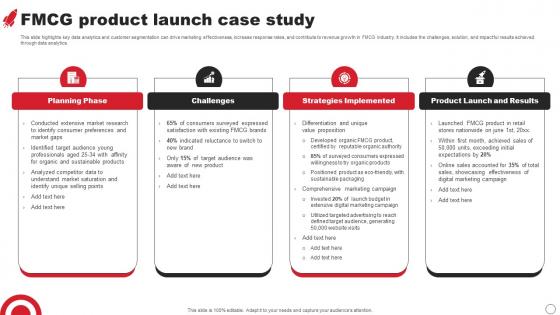
FMCG Product Launch Case Study




Try Before you Buy Download Free Sample Product
 Impress Your
 Audience
 100%
100% Editable
 Save Hours
 of Time


This slide highlights key data analytics and customer segmentation can drive marketing effectiveness, increase response rates, and contribute to revenue growth in FMCG industry. It includes the challenges, solution, and impactful results achieved through data analytics.
People who downloaded this PowerPoint presentation also viewed the following :
FMCG Product Launch Case Study with all 6 slides:
Use our FMCG Product Launch Case Study to effectively help you save your valuable time. They are readymade to fit into any presentation structure.





FAQs for FMCG Product
Hey! So sustainability is massive right now - people actually care about eco packaging and clean ingredients. COVID totally flipped shopping habits, so e-commerce isn't going anywhere. Personalization is getting weird advanced (companies know way too much about us lol). Premium stuff is selling like crazy because quality matters more than cheap prices. D2C brands are killing it by cutting out the middleman completely. Honestly? Focus hard on your digital game and have a solid sustainability angle. Those aren't optional anymore if you want to compete.
Honestly, FMCG companies are obsessed with tracking what we actually buy versus what we claim we want. They're constantly mining purchase data and doing social listening to catch trends early. Remember the whole "clean label" craze? Brands literally scrambled to reformulate everything overnight. Your shopping habits decide which flavors get launched, packaging designs, even those weird new package sizes nobody asked for. Companies watch purchasing patterns through multiple channels - surveys are pretty unreliable on their own. The smart ones pivot their R&D fast based on real consumer behavior, not just focus group feedback.
Yeah sustainability is massive right now in FMCG! Honestly, consumers aren't messing around - they'll straight up choose the eco option over traditional brands. Companies are scrambling to redesign packaging with refillable stuff and biodegradable materials, plus switching to natural ingredients. My grocery store literally has two whole aisles dedicated to "green" products now, which is wild. It's not optional anymore - brands that ignore this lose customers fast. If you're working in this area, definitely track what sustainability moves actually boost sales versus just looking good on Instagram.
Dude, e-commerce totally flipped how FMCG works. Instead of just going through stores, brands like P&G are selling straight to you now. They've got their own websites plus they're all over Amazon and Instacart. COVID honestly sped this up like crazy - my mom went from never ordering groceries online to doing it weekly. Now companies need strategies that work both online and in stores. Plus they're tracking your shopping habits way more than before. You should actually map out where your customers shop online vs where you think they do. The difference is probably bigger than you'd expect.
Sampling is everything for FMCG - seriously, people won't ditch their go-to brands without trying yours first. In-store demos, free samples, trial packs - whatever gets it in their hands. Then you can add digital ads and good shelf placement (eye level obviously). Distribution matters way more than most people think though. Pick 2-3 solid retailers instead of spreading yourself thin everywhere. I've watched so many brands waste money on flashy campaigns while ignoring the boring stuff that actually works. Oh and make sure you're in stores where your actual customers shop, not just wherever's easiest to get into.
So basically, start by looking at your past sales data and throw in stuff like weather patterns and seasonal trends to get better at predicting what people actually want. Real-time tracking is huge - you can catch shipping delays and supplier problems before they blow up. Honestly, I'd probably start with just the demand forecasting part first since that's where you'll see quick wins. Then you can get into the fancy warehouse optimization stuff later. The whole visibility thing really does make a difference once you get it rolling.
Honestly, globalization is brutal for local FMCG brands. These massive multinationals have way deeper pockets and can basically steamroll you on pricing. They've got the distribution locked down too - better shelf space, more marketing budget, the whole nine yards. But you know what? Don't panic just yet. Local brands actually have something big companies struggle with - you actually *get* your customers. Like, you understand what flavors people want here, cultural stuff that matters, regional quirks. Big corporations miss that all the time because they're trying to be everything to everyone. Focus hard on being genuinely local and work with distributors who appreciate that authenticity over generic mass appeal.
Honestly, regulatory changes are such a pain but they'll force you to rethink everything. New safety standards mean reformulating products. Packaging and labels need complete overhauls. Your supply chains get disrupted, manufacturing processes change, and don't get me started on retraining everyone. The deadlines are always brutal too - like they expect miracles overnight. Get your R&D, legal, and ops teams talking regularly because staying reactive is expensive. Oh, and set up some kind of monitoring system so you're not finding out about new rules from a panicked email at 9pm on Friday.
Honestly, it's brutal out there - customers have like hundreds of options screaming at them from every shelf. Price wars are killer because people just hop to whoever's cheapest that week. FMCG stuff is mostly impulse buys too, so emotional loyalty? Forget it. Convenience and flashy promos win. Today's shoppers are way more informed and skeptical than they used to be. Makes them tough to wow. I'd skip the price-cutting race if I were you. Focus on nailing quality consistently and throw in little surprises here and there. Way better strategy than joining that endless discount battle.
Dude, there's so much you can do with FMCG packaging right now. Sustainable materials are huge - biodegradable wraps, resealable pouches that actually work. Some brands are doing wild stuff like packages that change color when food's going bad. AR codes too, which sounds gimmicky but people love unlocking recipes and games. Bold colors and weird shapes help you stand out on shelves - limited collabs work great for social media buzz. Oh, and storytelling through design is massive right now. Honestly, just pick one annoying thing about your current packaging and fix that first. Don't overthink it.
Dude, private labels are making big brands sweat right now. Store brands deliver like 80-90% of the quality for way less money - honestly some of them are shockingly good these days. So now your Coca-Colas and P&Gs can't just coast on name recognition anymore. They've gotta prove why you should pay extra. Smart brands are doubling down on stuff generic products can't touch - unique ingredients, better sustainability stories, that emotional connection thing. Innovation becomes huge too. Basically if you can't explain why your product's genuinely different, you're screwed in this market.
Honestly, start with demand forecasting and getting real-time data flowing - that's everything. ABC analysis helps you figure out which products actually matter (your high-value, fast movers), then do just-in-time ordering for those. Don't overdo safety stock though. I've watched companies blow way too much cash sitting on inventory they don't need. Cross-docking works if you've got decent volume. Hook up your POS system to inventory tracking so you can pivot fast when demand changes. Oh, and audit what's gathering dust right now - bet you'll find some eye-opening stuff.
Dude, customer feedback is HUGE for FMCG stuff. People buy these products constantly, so they'll notice if you change literally anything - even tiny formula tweaks or different packaging. Brand loyalty can vanish overnight too, which is terrifying. Short product cycles mean you need feedback fast. Social media monitoring is your best friend here, plus regular surveys and focus groups. The tricky part? Actually getting that feedback to your product team before it's too late. I learned this the hard way at my last job - we missed some obvious complaints for weeks.
Look, FMCG brands absolutely need digital marketing - it's cheap and hits tons of people fast. You can zero in on exactly who you want to reach and track what they're doing. Social media and influencer stuff keeps you visible when there's so much competition (which honestly feels overwhelming sometimes). The best part? Real-time data lets you pivot quickly when something isn't working. My advice: figure out where your customers actually hang out online first. Don't waste time on platforms just because everyone says you should be there.
Honestly, just make stuff that doesn't feel like an ad. Recipe videos work great, or quick tips people can actually use. Behind-the-scenes content is solid too - like showing your products being made or whatever. User-generated content is where it's at though. Get customers posting about how they use your stuff in real life. Those "show us your morning routine" campaigns always do well for some reason. Oh, and respond to comments fast since people buy FMCG stuff on impulse. Don't spread yourself thin - pick 2-3 platforms where your people actually are and stay consistent there.
-
Great designs, really helpful.
-
Much better than the original! Thanks for the quick turnaround.