


Digital HR Technology Powerpoint Presentation Slides
Introducing Digital HR Technology PowerPoint Presentation Slides that will help you to identify the desired target state of the HR system and develop an associated roadmap. Our visually appealing human resource planning presentation contains various templates describing human capital management, HR technology system, human resource information system, KPI of human resource management, etc. Utilize our readily available human resource management PPT infographics to provide a detailed overview of HR technology industry trends, phases of HR technology in the firm, HR technology capability model, etc. Showcase different functions of the human resource information system by mentioning operative and managerial activities. This HRIS PPT slide designs will help in understanding the HR system by showing the relation of HR functions with different users of systems including employee, manager, and HR. Analyze different categories of HR market vendors and provide an overview of the HRIS market by utilizing these content-ready HR technology PPT layouts. Discuss key features of HCM technology, focus areas, market overview, etc in detail by downloading this human resource planning PPT slide deck.








-

- Google Slides is a new FREE Presentation software from Google.
- All our content is 100% compatible with Google Slides.
- Just download our designs, and upload them to Google Slides and they will work automatically.
- Amaze your audience with SlideTeam and Google Slides.
-

Want Changes to This PPT Slide? Check out our Presentation Design Services
-

- WideScreen Aspect ratio is becoming a very popular format. When you download this product, the downloaded ZIP will contain this product in both standard and widescreen format.
-

- Some older products that we have may only be in standard format, but they can easily be converted to widescreen.
- To do this, please open the SlideTeam product in Powerpoint, and go to
- Design ( On the top bar) -> Page Setup -> and select "On-screen Show (16:9)” in the drop down for "Slides Sized for".
- The slide or theme will change to widescreen, and all graphics will adjust automatically. You can similarly convert our content to any other desired screen aspect ratio.
Compatible With Google Slides

Get This In WideScreen
You must be logged in to download this presentation.


Do you want to remove this product from your favourites?
PowerPoint presentation slides
This complete presentation has PPT slides on wide range of topics highlighting the core areas of your business needs. It has professionally designed templates with relevant visuals and subject driven content. This presentation deck has total of fifty seven slides. Get access to the customizable templates. Our designers have created editable templates for your convenience. You can edit the colour, text and font size as per your need. You can add or delete the content if required. You are just a click to away to have this ready-made presentation. Click the download button now.

People who downloaded this PowerPoint presentation also viewed the following :
Content of this Powerpoint Presentation
Slide 1: This slide introduces Digital HR Technology. State your Company name and begin.
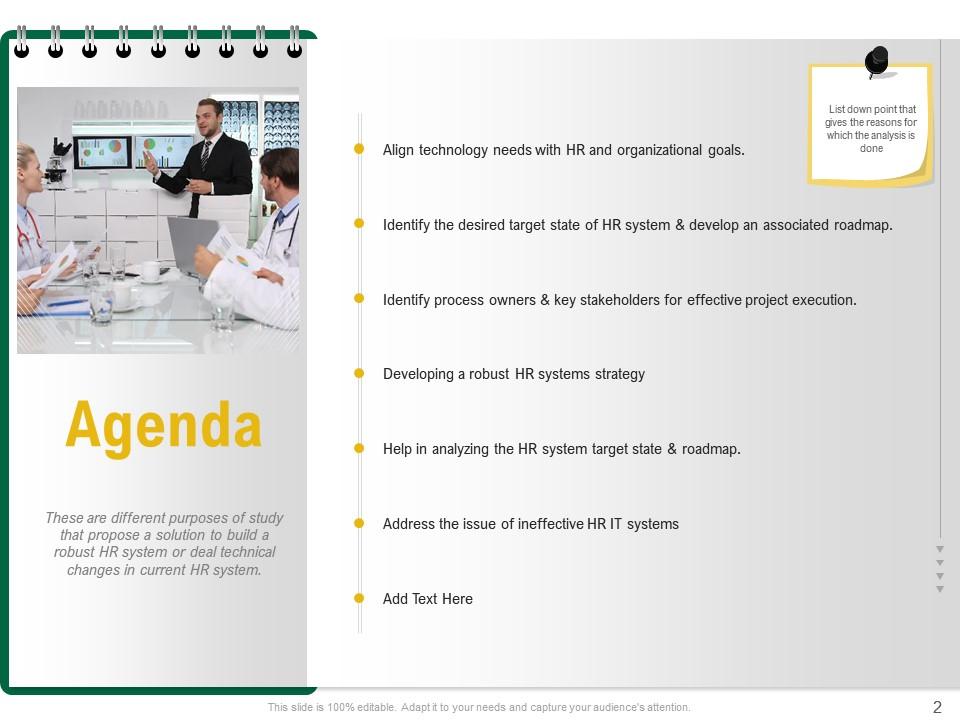
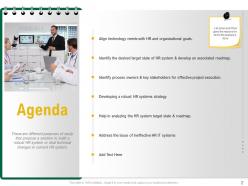
Slide 2: This slide displays Agenda.
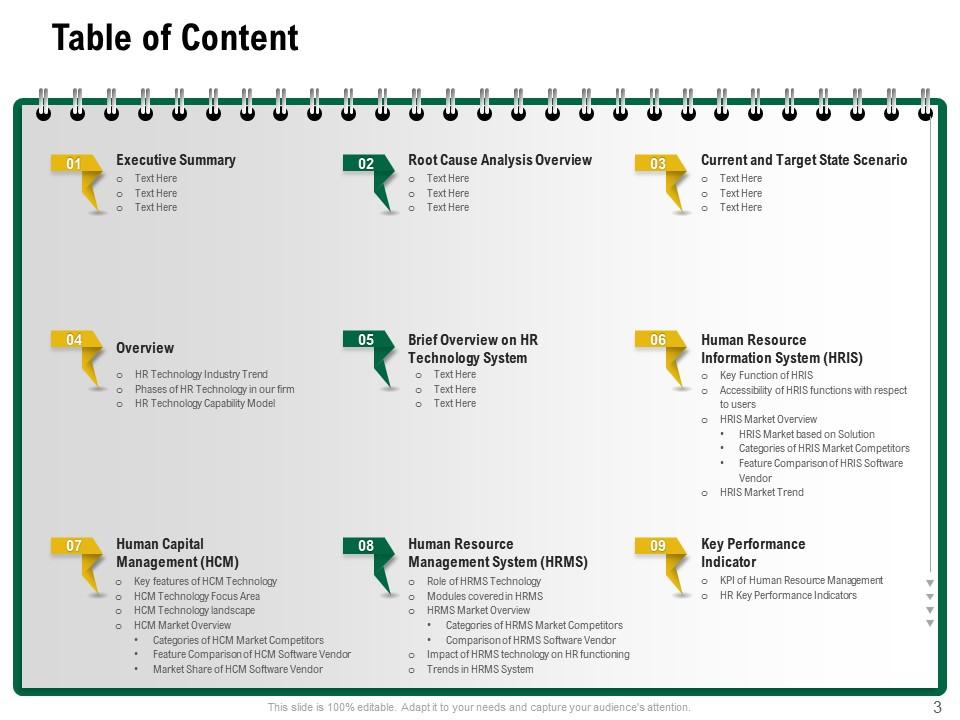
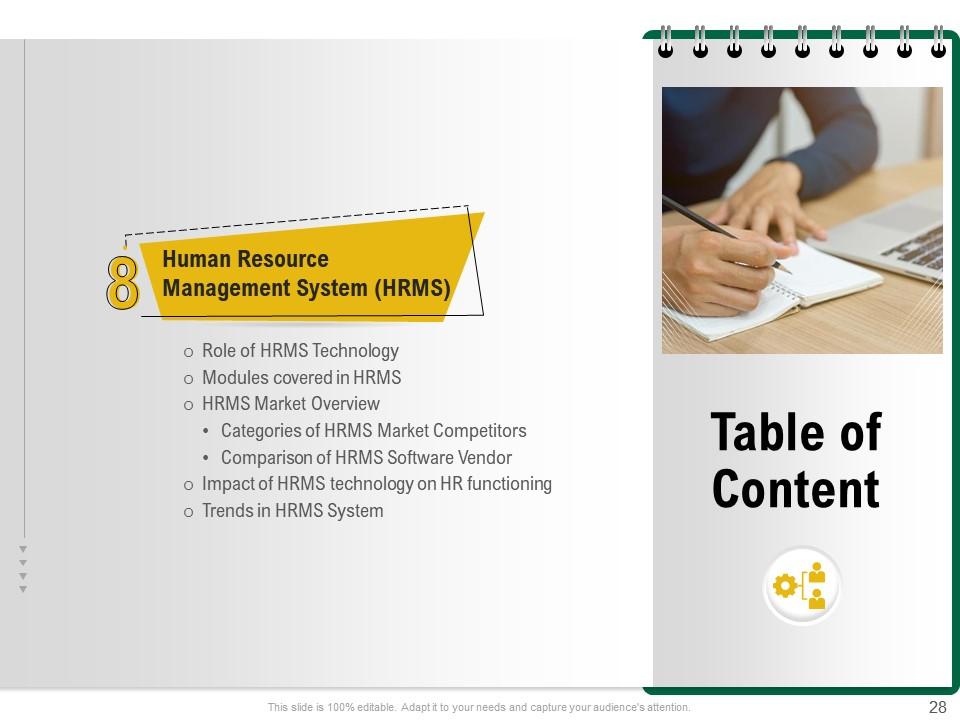
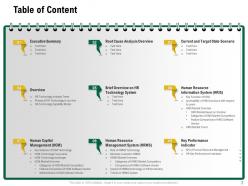
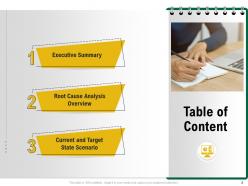
Slide 3: This slide displays Table of Content of the presentation.
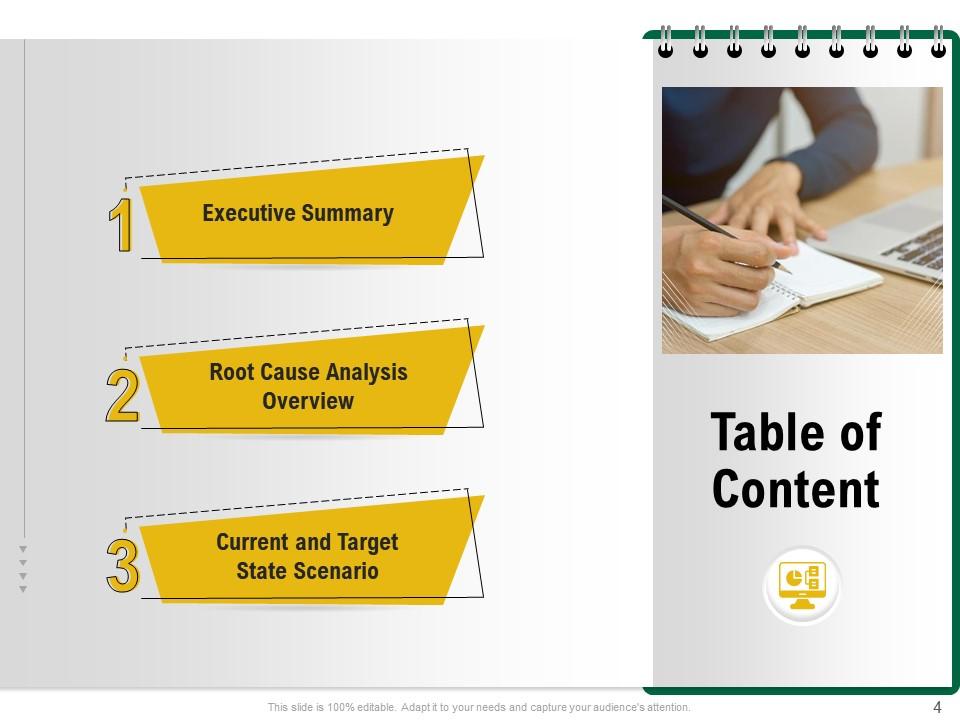
Slide 4: This slide displays Table of Content.
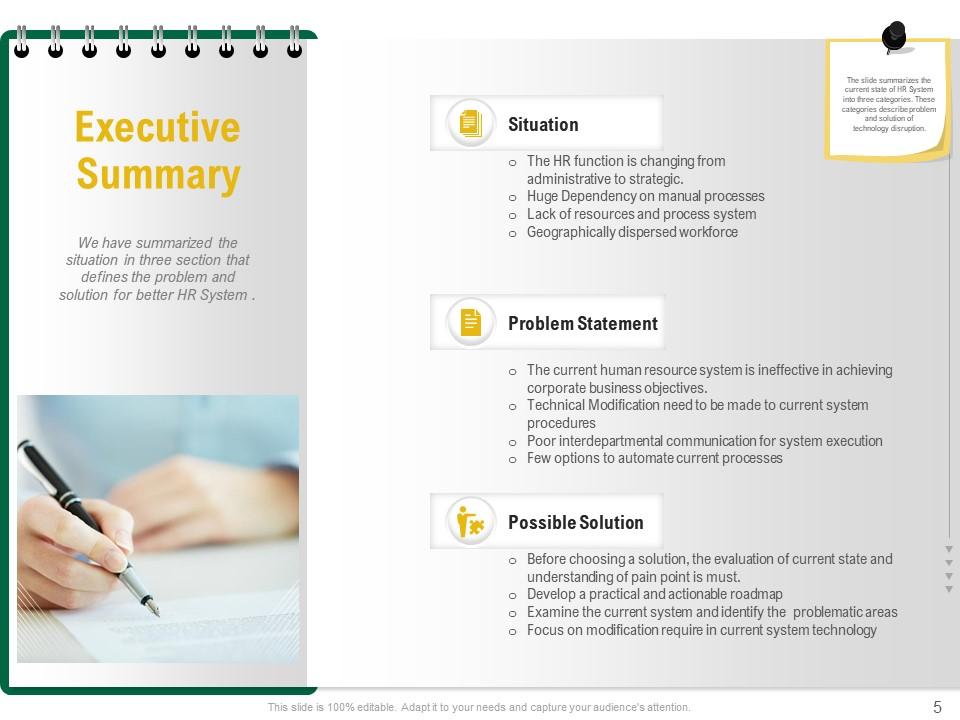
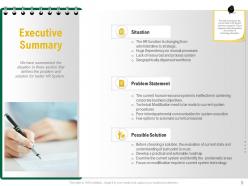
Slide 5: The slide summarizes the current state of HR System into three categories.
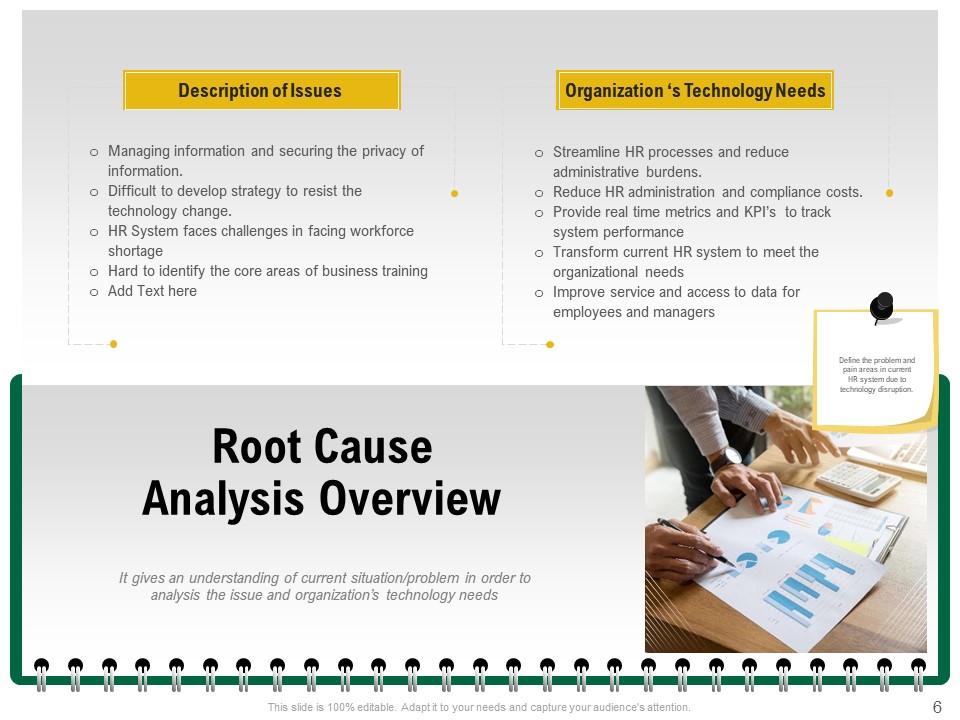
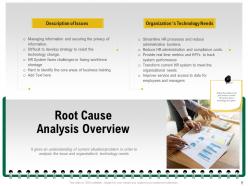
Slide 6: This template gives an understanding of current situation/problem in order to analysis the issue and organization’s technology needs
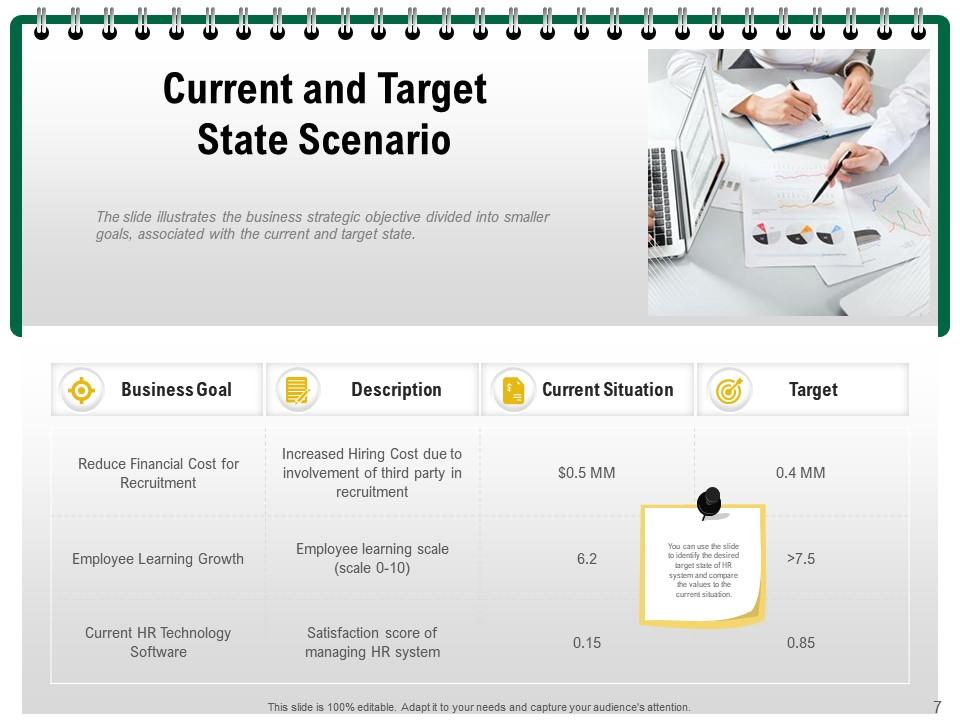
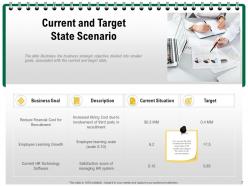
Slide 7: The slide illustrates the business strategic objective divided into smaller goals, associated with the current and target state.
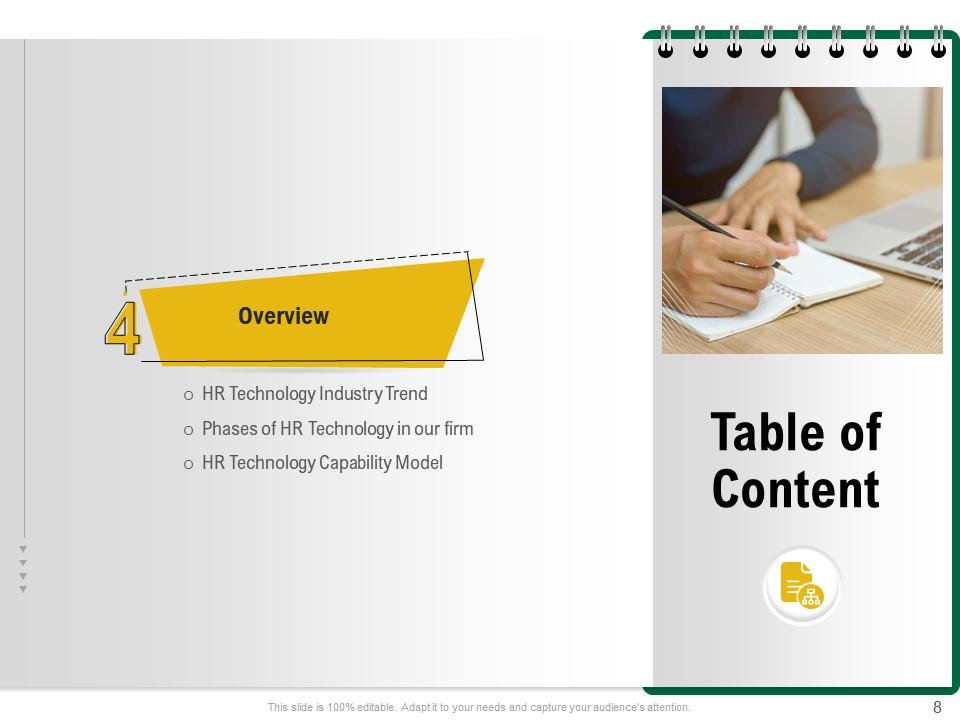
Slide 8: This slide showcases Table of Content
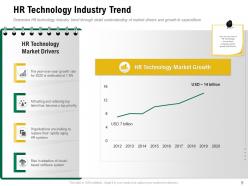
Slide 9: This slide depicts HR Technology Industry Trend.
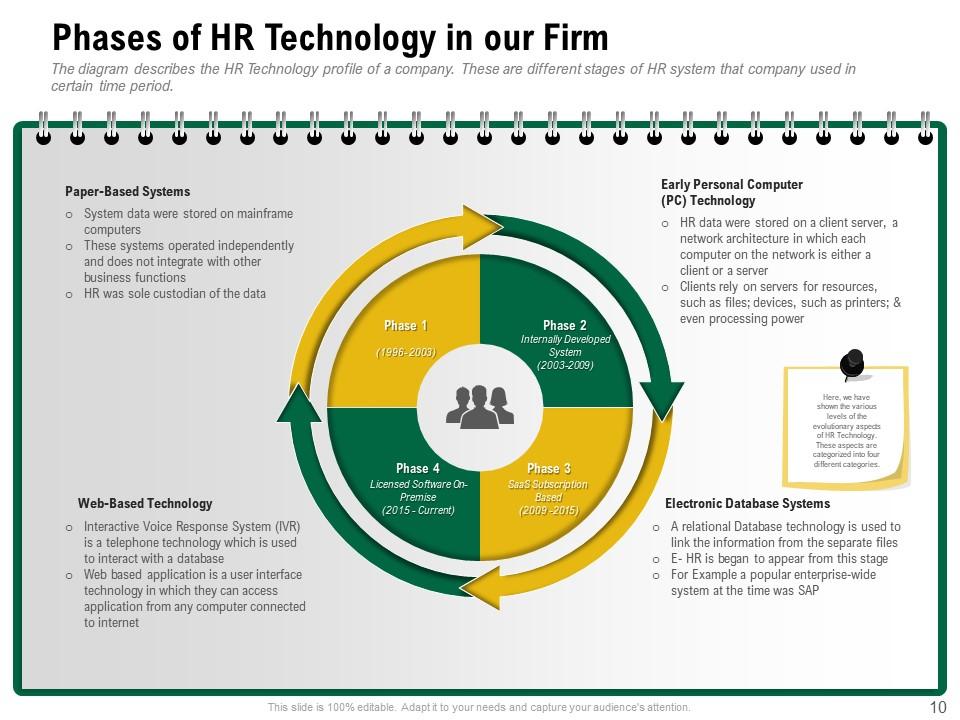
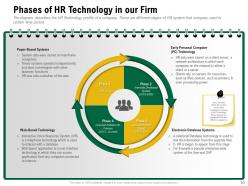
Slide 10: The diagram in the slide describes the HR Technology profile of a company. These are different stages of HR system that company used in certain time period.
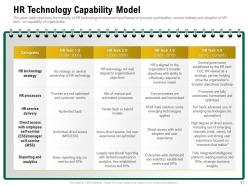
Slide 11: The given table examines the maturity of HR technology environment and impact of process optimization, service delivery and adoption of HR tech , on capability of organization
Slide 12: This slide displays Table of Content
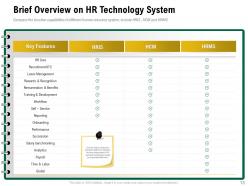
Slide 13: This slide showcases Brief Overview on HR Technology System.
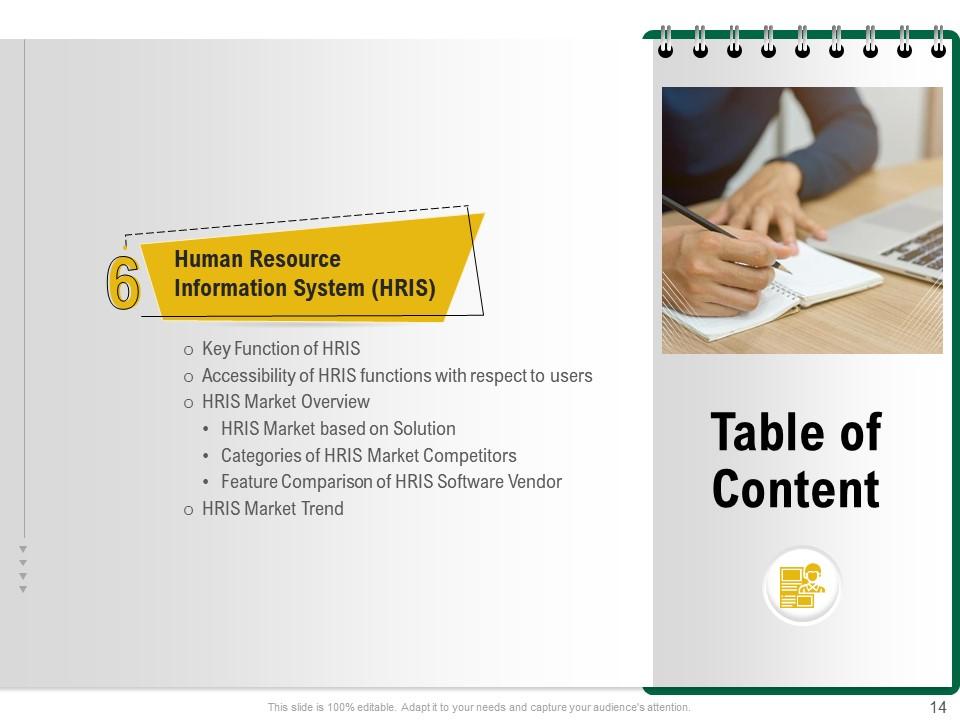
Slide 14: This slide displays Table of Content.
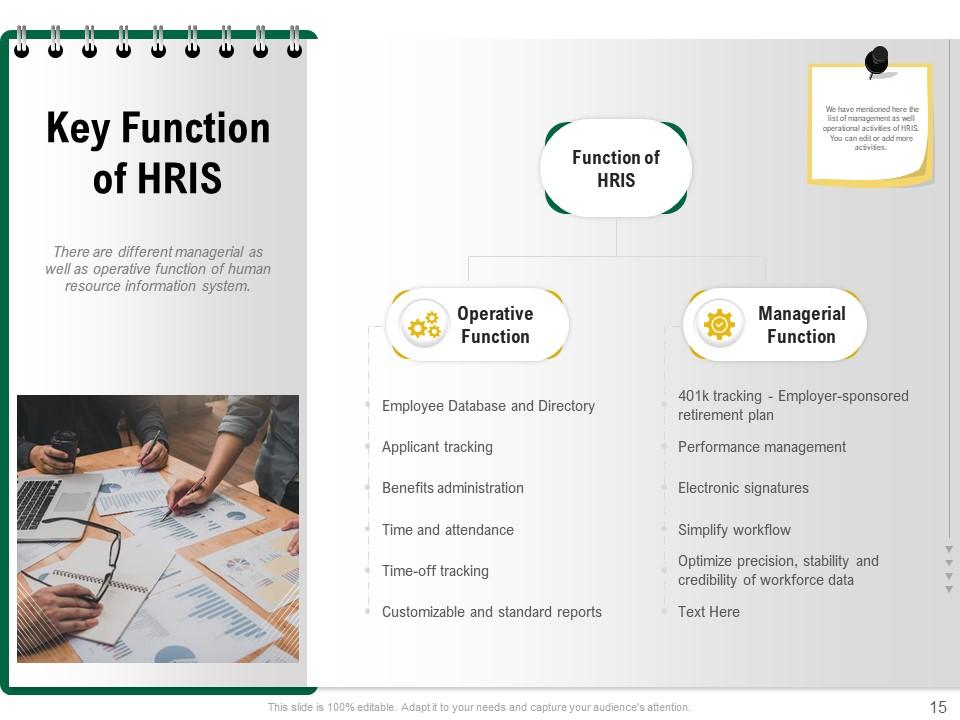
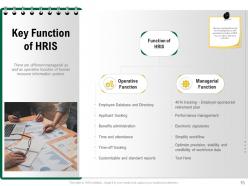
Slide 15: This slide shows list of management as well operational activities of HRIS. You can edit or add more activities.
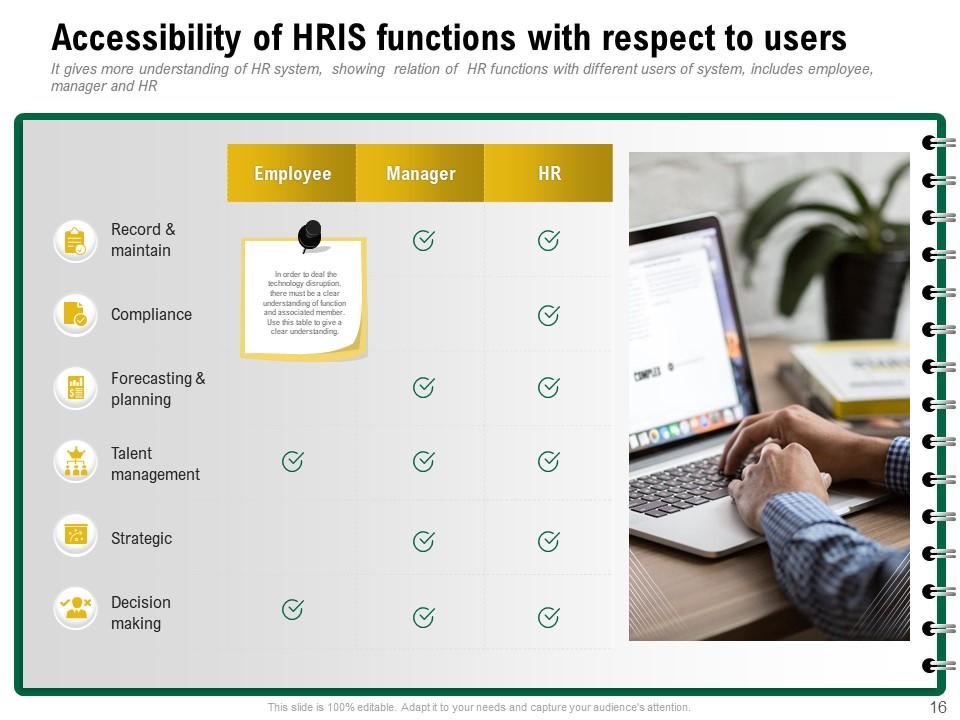
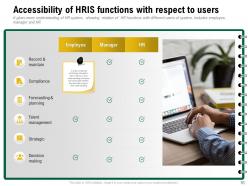
Slide 16: This slide depicts Accessibility of HRIS functions with respect to users
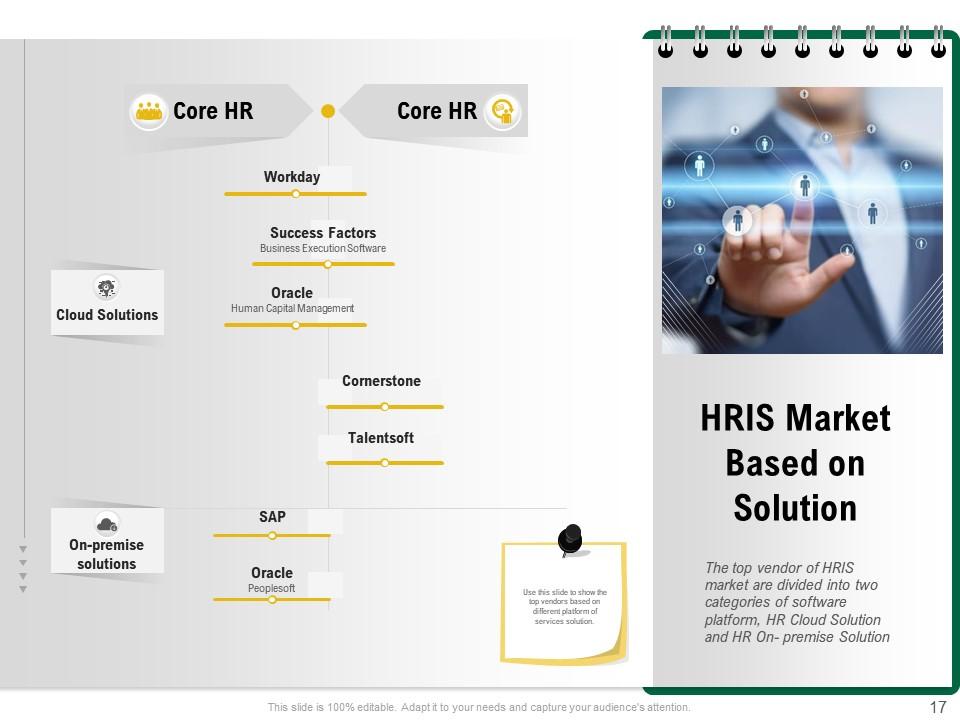
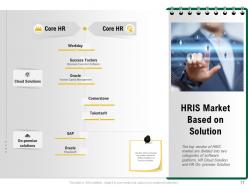
Slide 17: The top vendor of HRIS market are divided into two categories of software platform, HR Cloud Solution and HR On- premise Solution
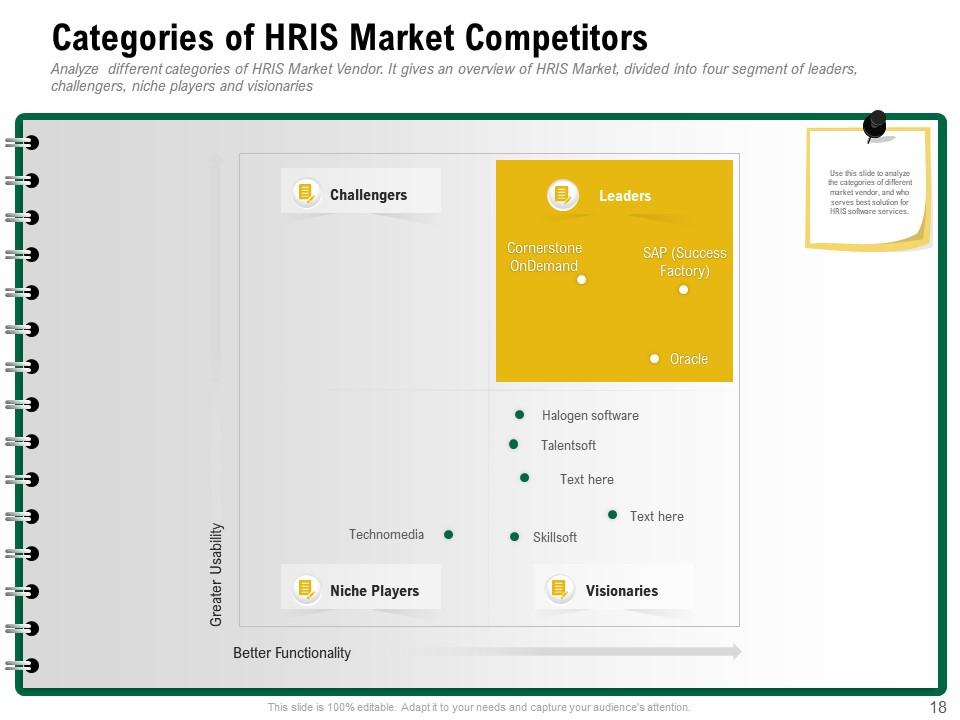
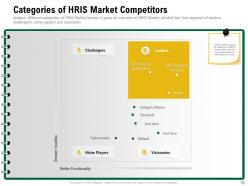
Slide 18: This slide helps to analyze the categories of different market vendor, and who serves best solution for HRIS software services.
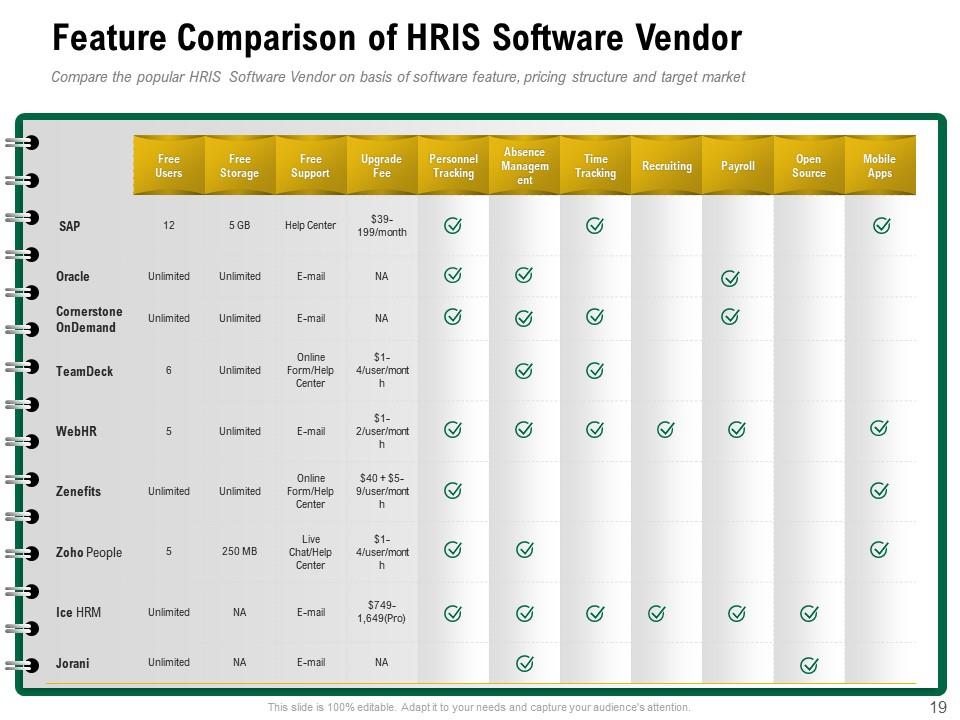
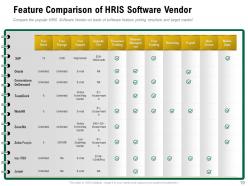
Slide 19: This slide displays Feature Comparison of HRIS Software Vendor.
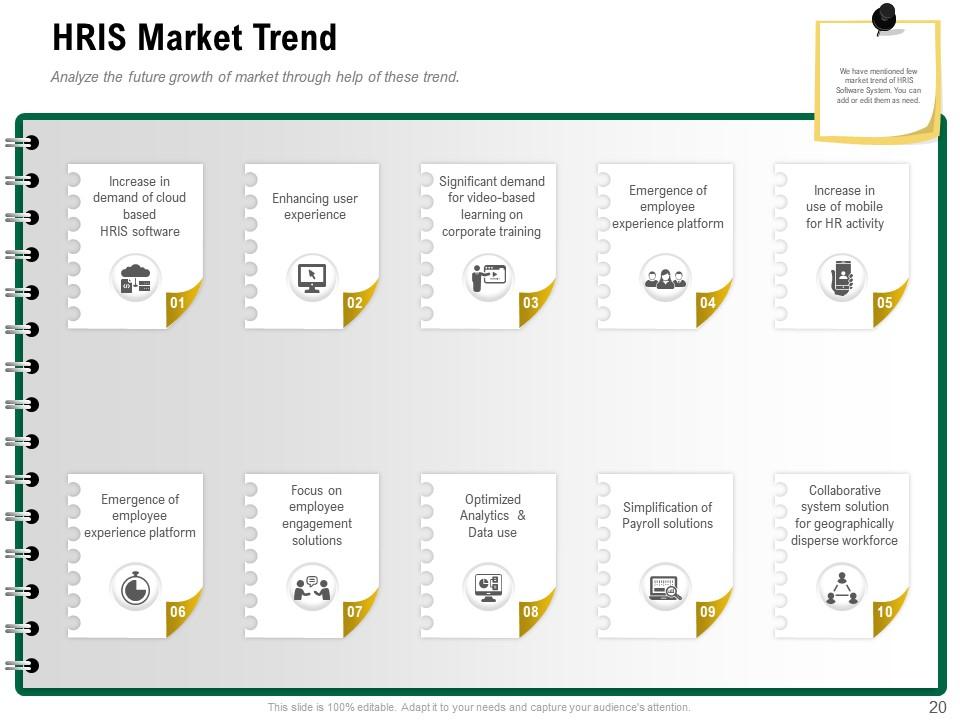
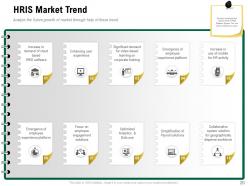
Slide 20: This slide depicts HRIS Market Trend.
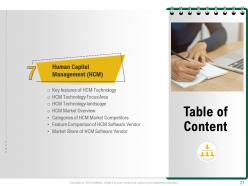
Slide 21: This slide displays Table of Content.
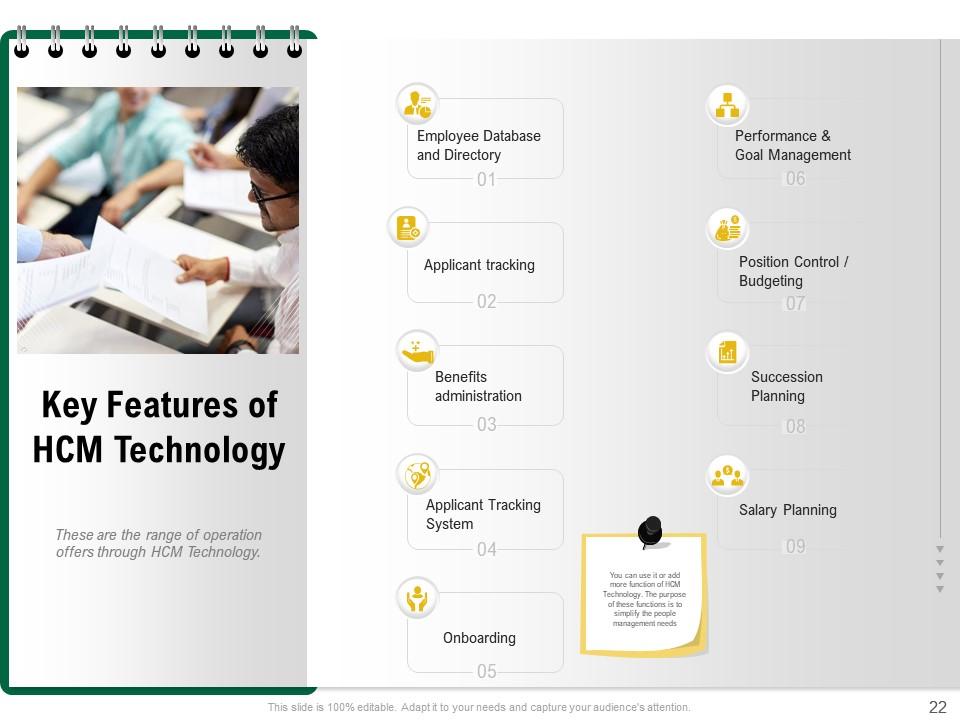
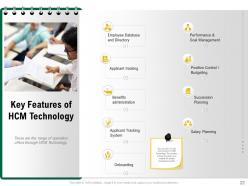
Slide 22: This slide can be used to add more function of HCM Technology. The purpose of these functions is to simplify the people management needs
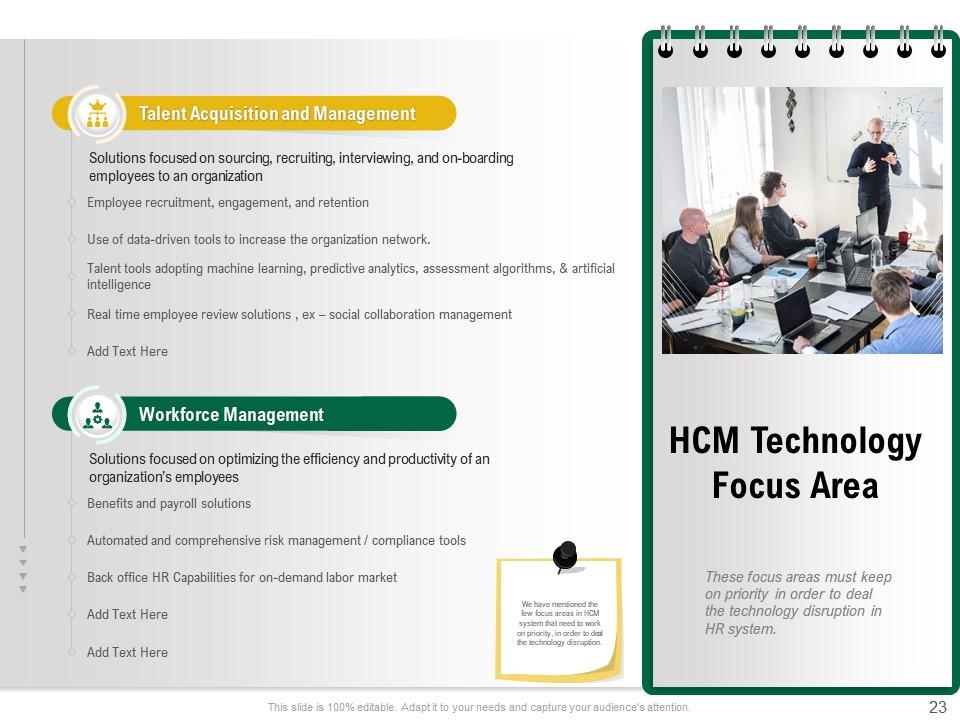
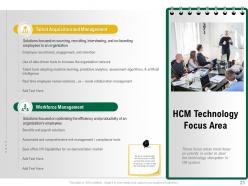
Slide 23: This slide shows few focus areas in HCM system that need to work on priority, in order to deal the technology disruption.
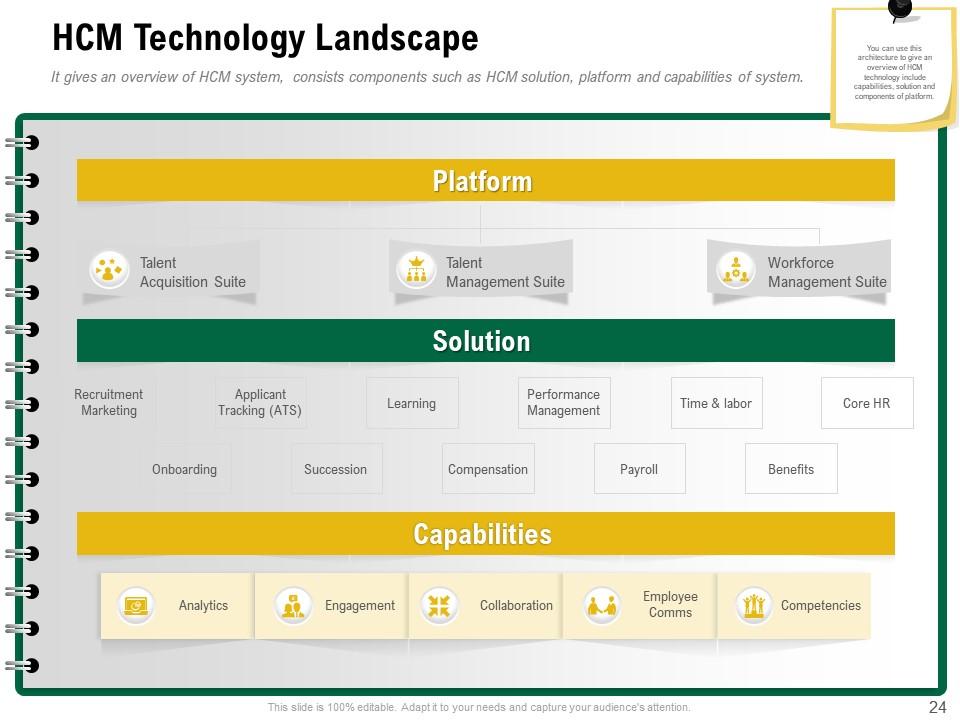
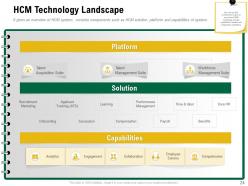
Slide 24: This slide depicts HCM Technology Landscape
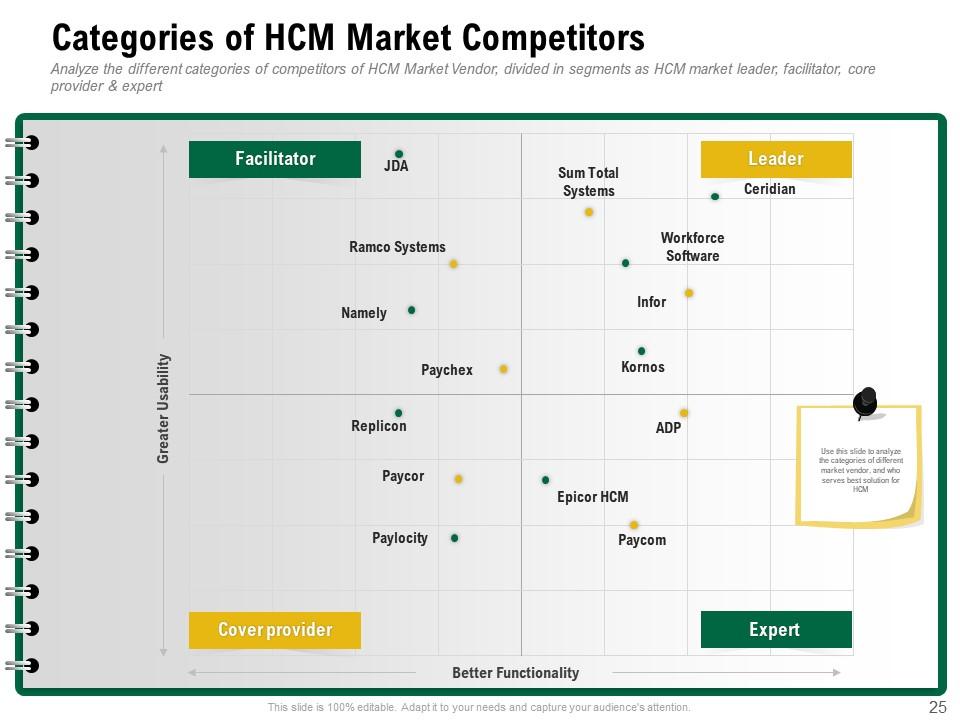
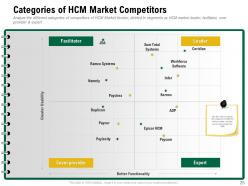
Slide 25: This slide shows Categories of HCM Market Competitors. Analyze the different categories of competitors of HCM Market Vendor, divided in segments as HCM market leader, facilitator, core provider & expert
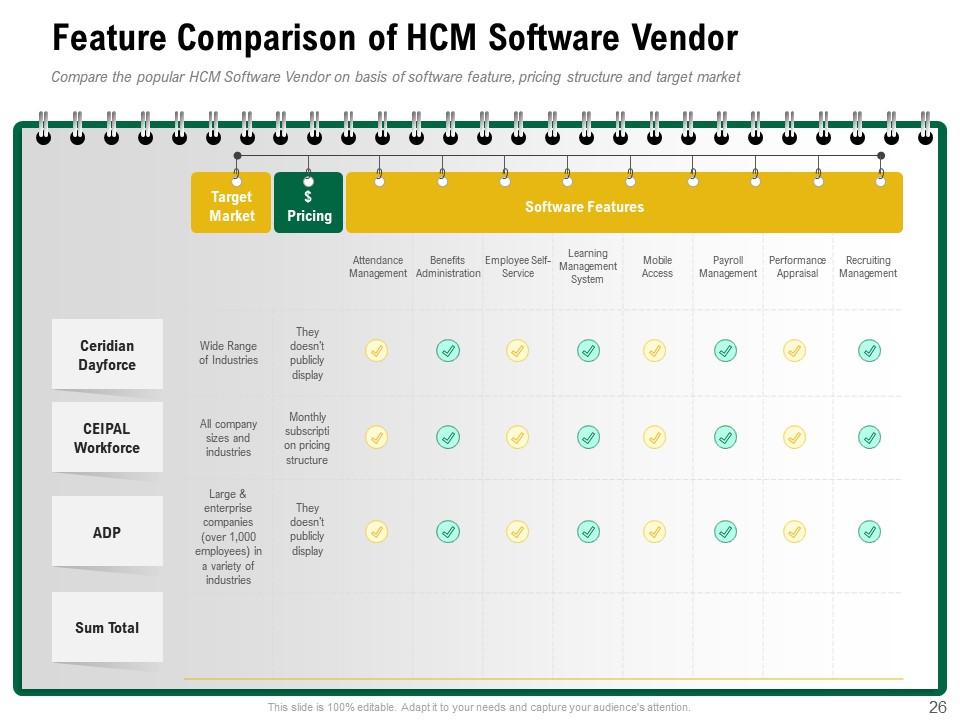
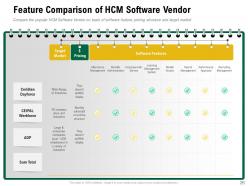
Slide 26: This slide displays Feature Comparison of HCM Software Vendor.
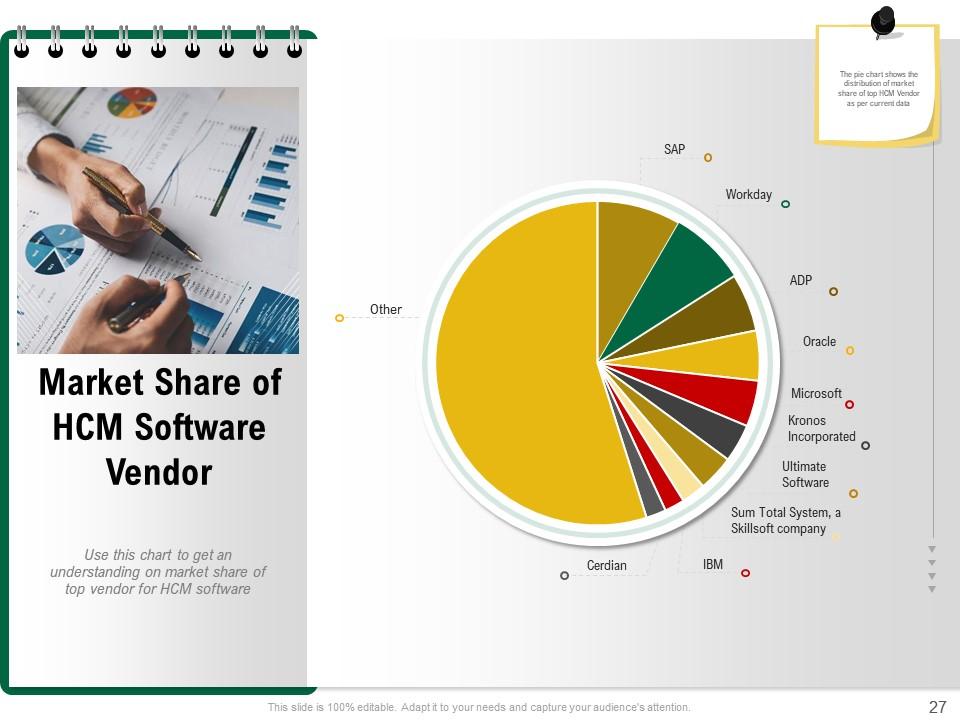
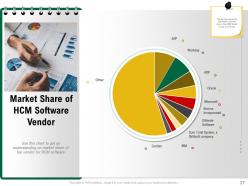
Slide 27: This slide displays chart to get an understanding on market share of top vendor for HCM software
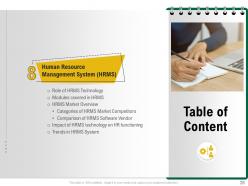
Slide 28: This slide depicts Table of Content
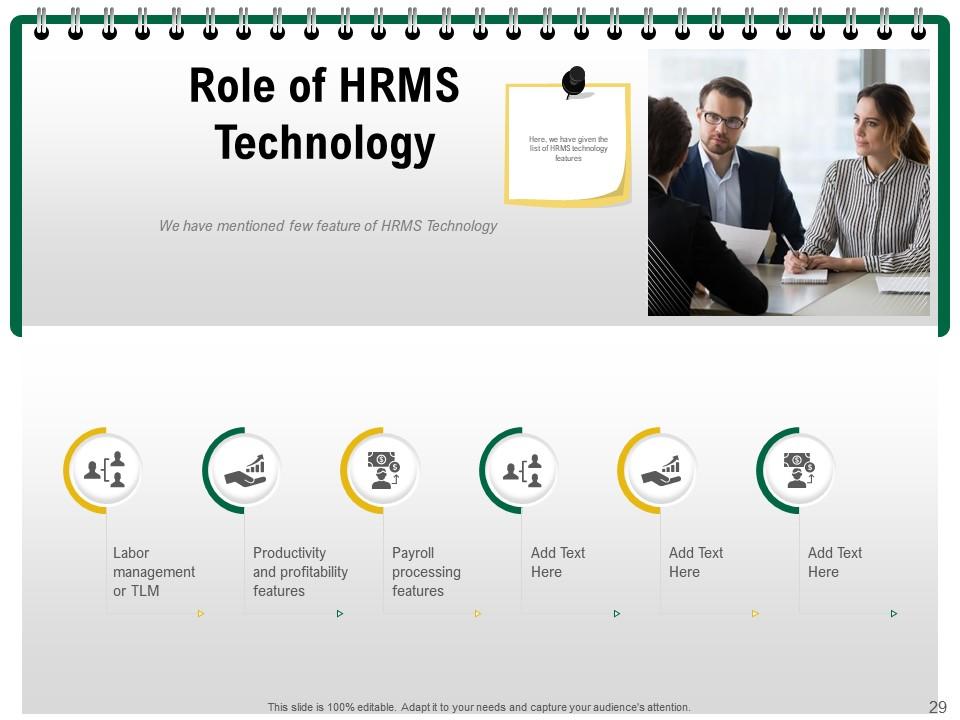
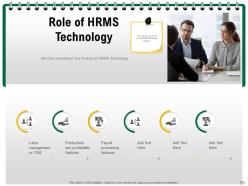
Slide 29: This slide shows few feature of HRMS Technology
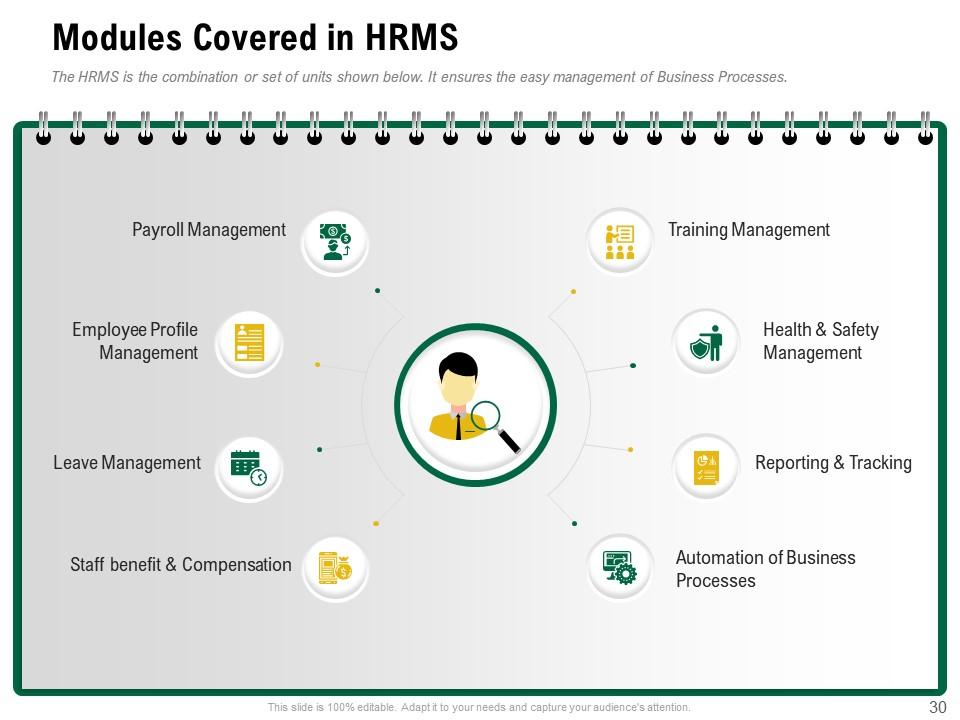
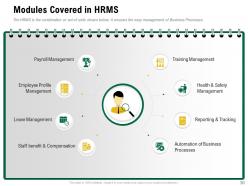
Slide 30: This template depicts Modules Covered in HRMS
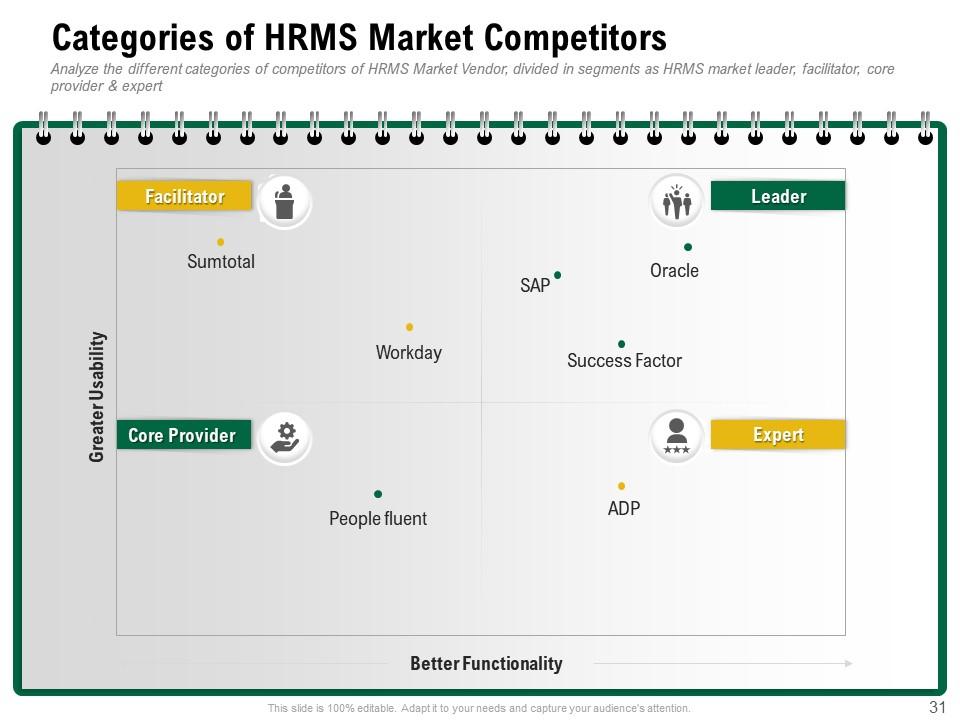
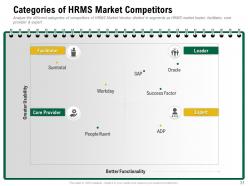
Slide 31: This slide showcases Categories of HRMS Market Competitors.
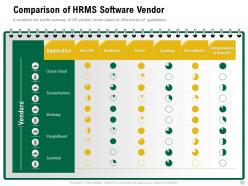
Slide 32: This slide displays Comparison of HRMS Software Vendor
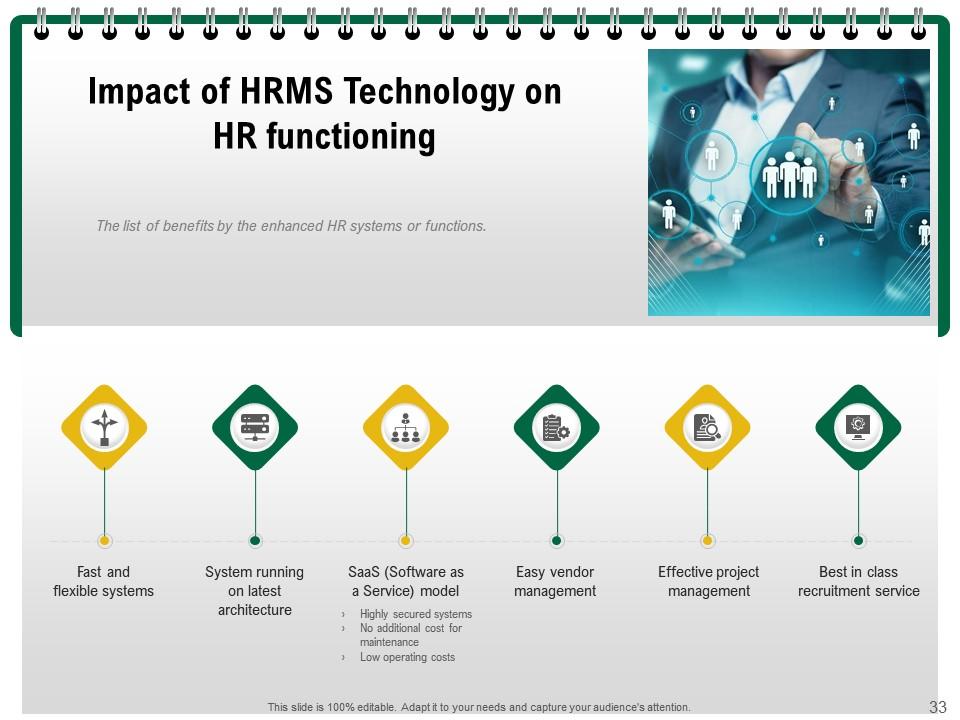
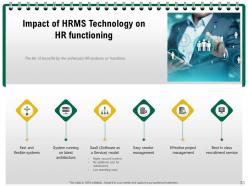
Slide 33: This slide shows list of benefits by the enhanced HR systems or functions.
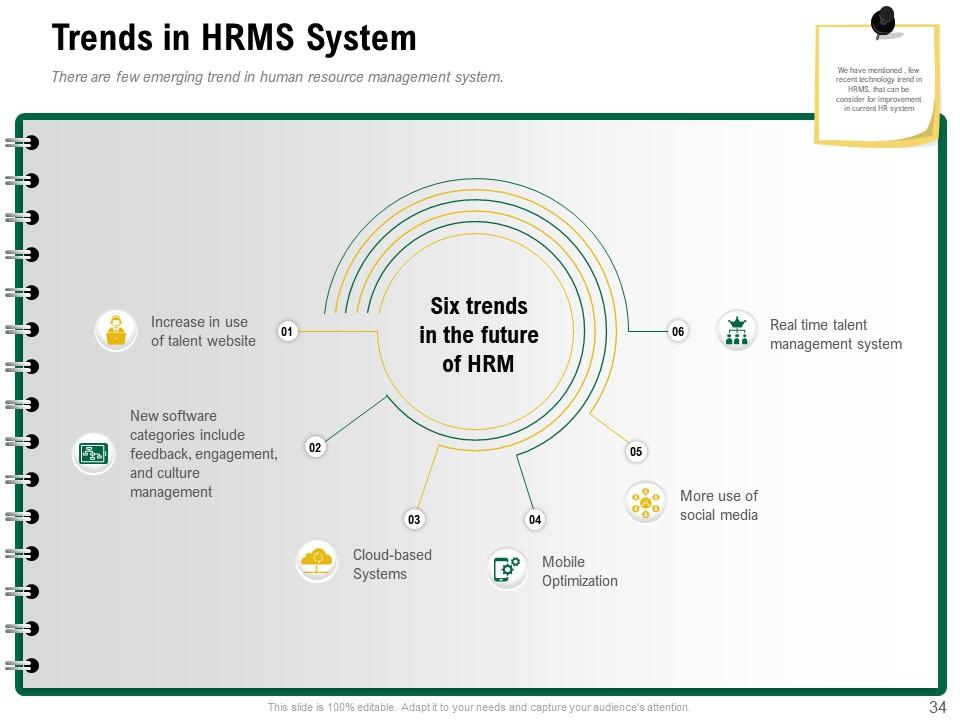
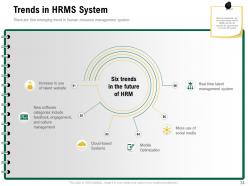
Slide 34: This slide depicts few emerging trend in human resource management system.
Slide 35: This slide displays Table of Content
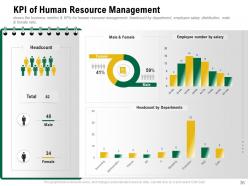
Slide 36: This slide represents KPI of Human Resource Management.
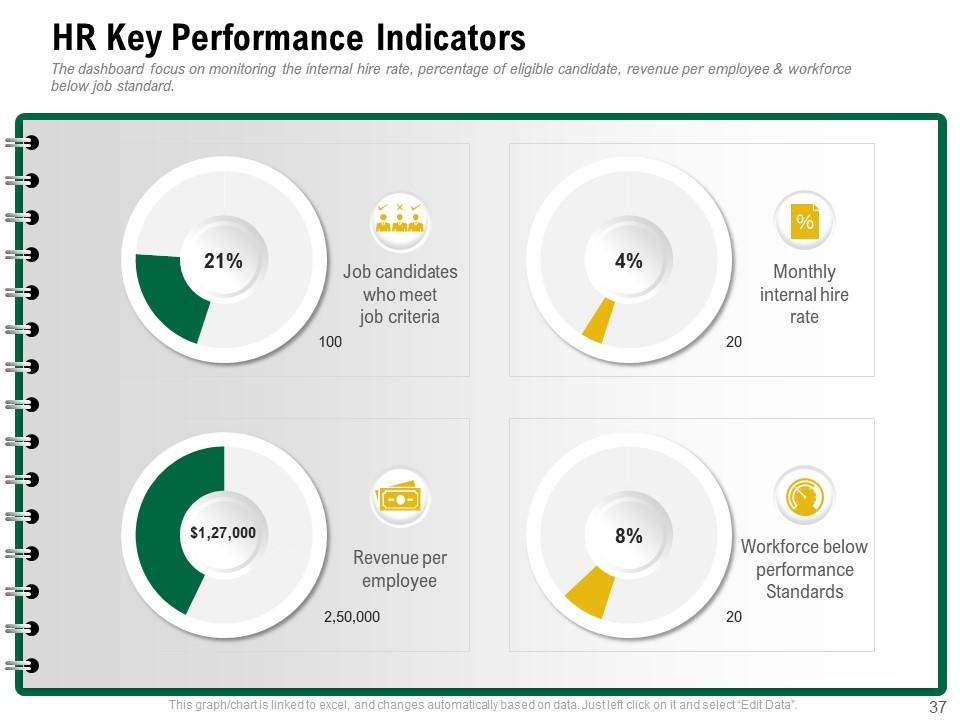
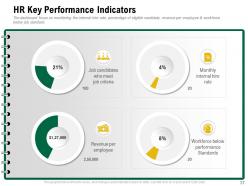
Slide 37: The dashboard in the focus on monitoring the internal hire rate, percentage of eligible candidate, revenue per employee & workforce below job standard.
Slide 38: This is Digital HR Technology Icons Slide.
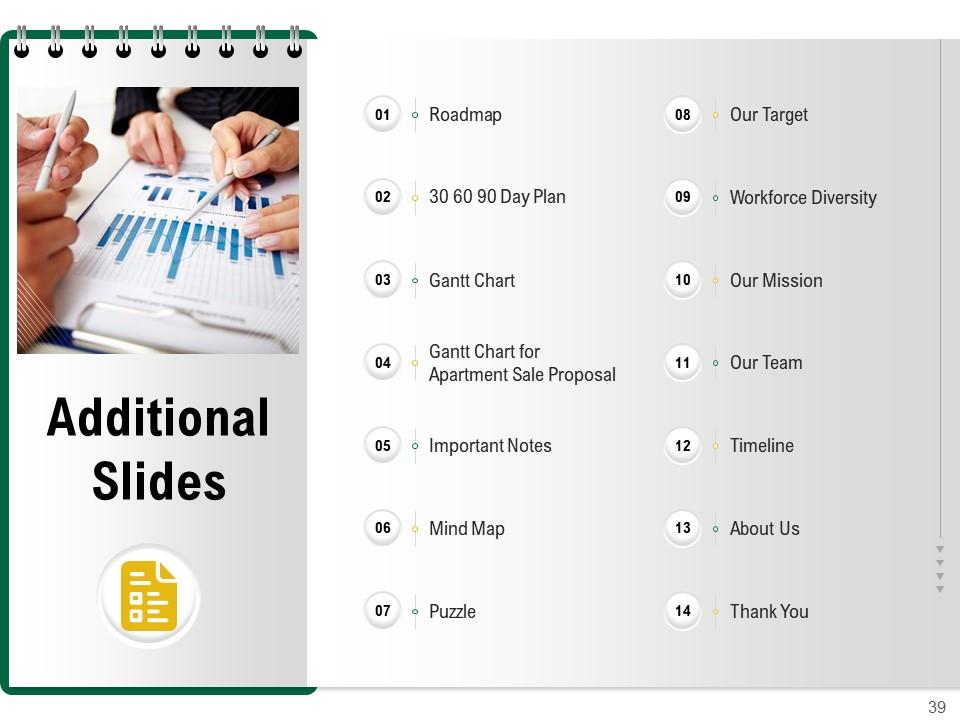
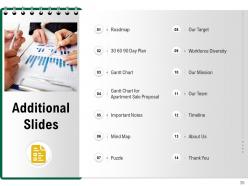
Slide 39: This slide is titled as Additional slide for moving forward.
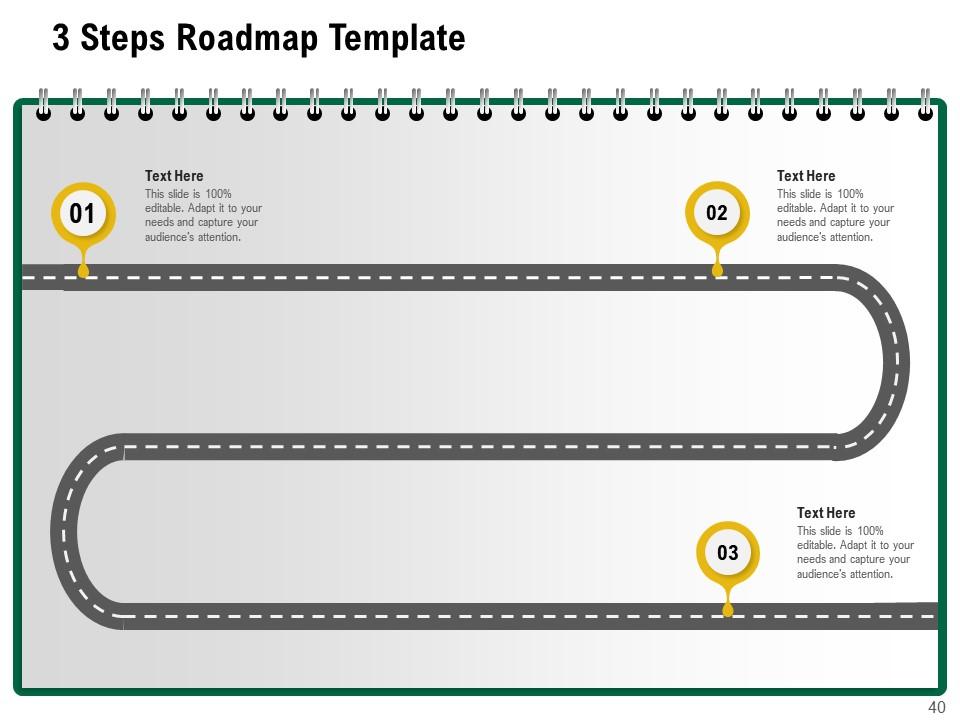
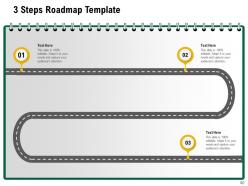
Slide 40: This slide displays 3 Steps Roadmap Template.
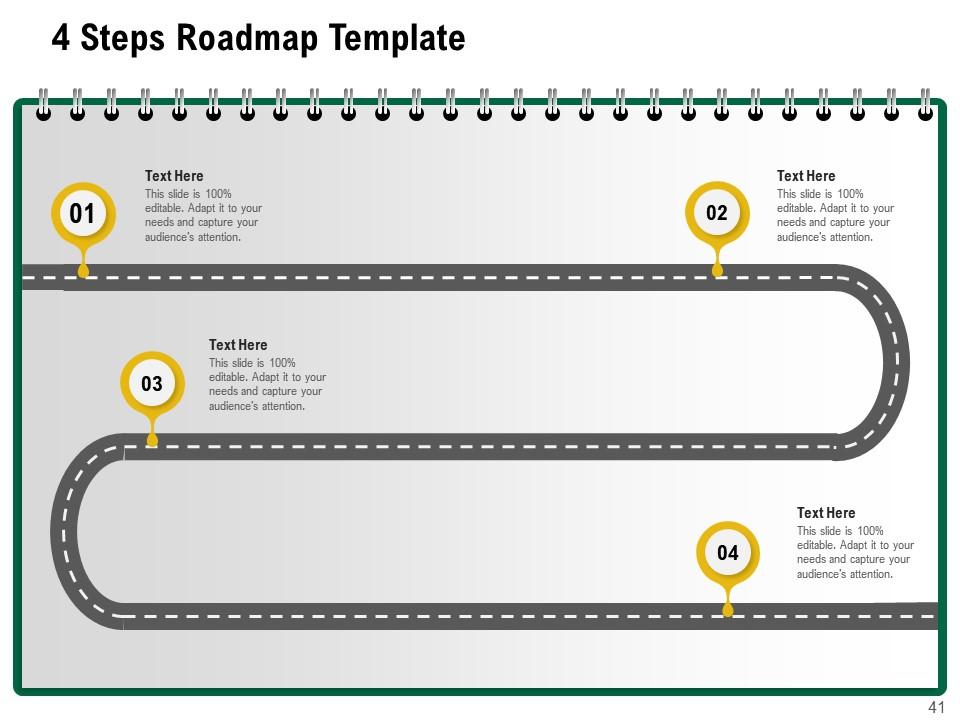
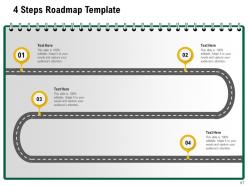
Slide 41: This slide shows 4 Steps Roadmap Template.
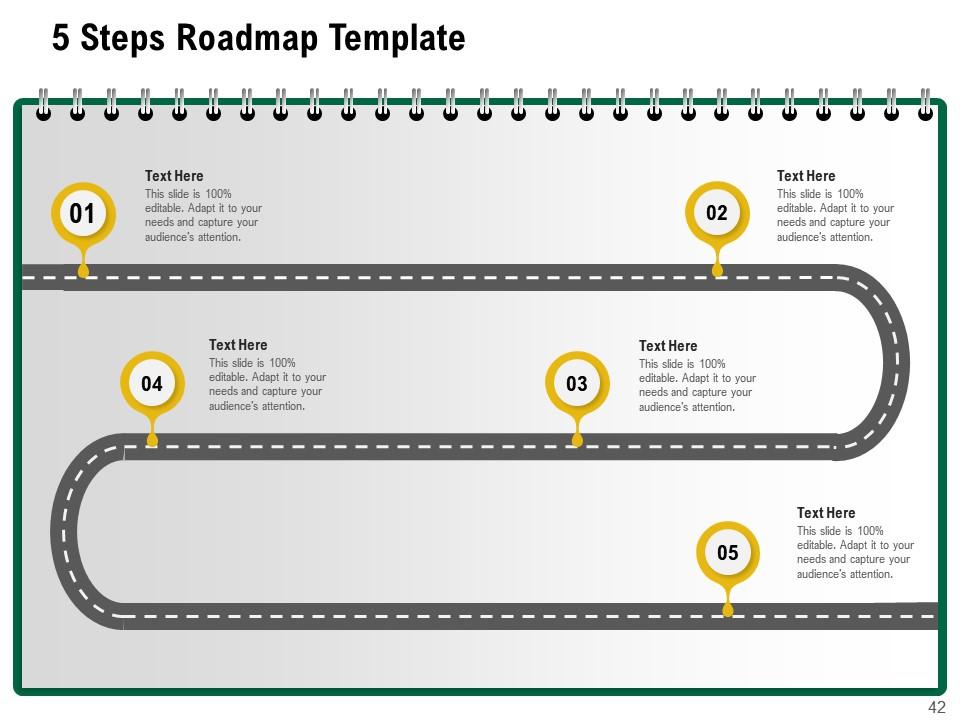
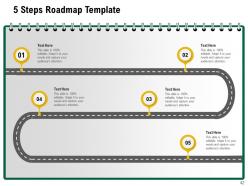
Slide 42: This slide shows 5 Steps Roadmap Template.
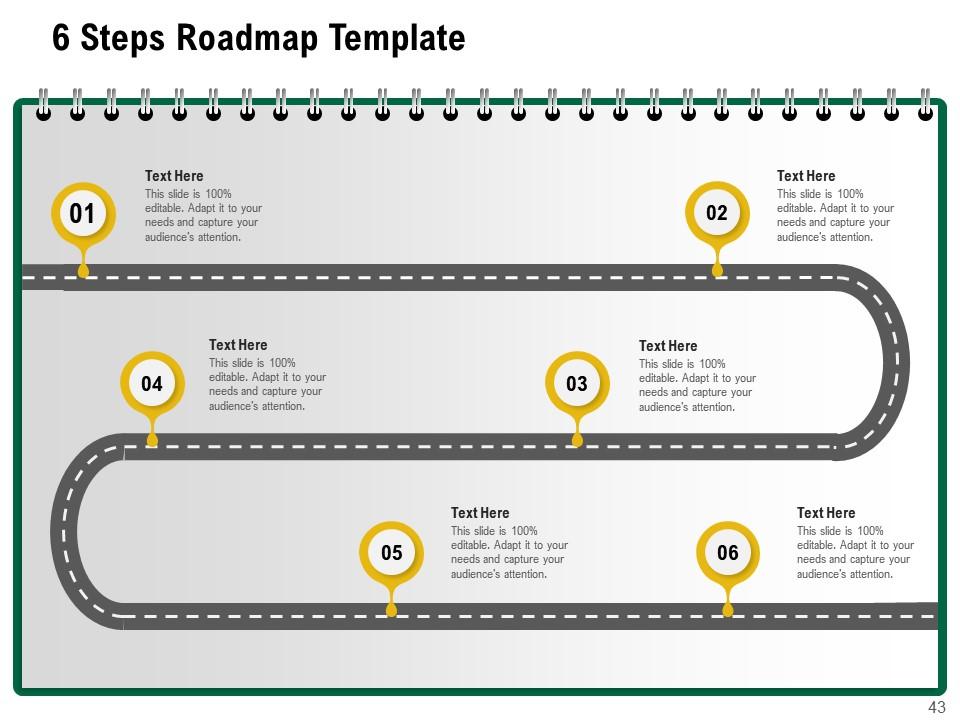
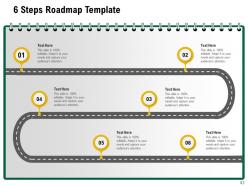
Slide 43: This slide showcases 6 Steps Roadmap Template.
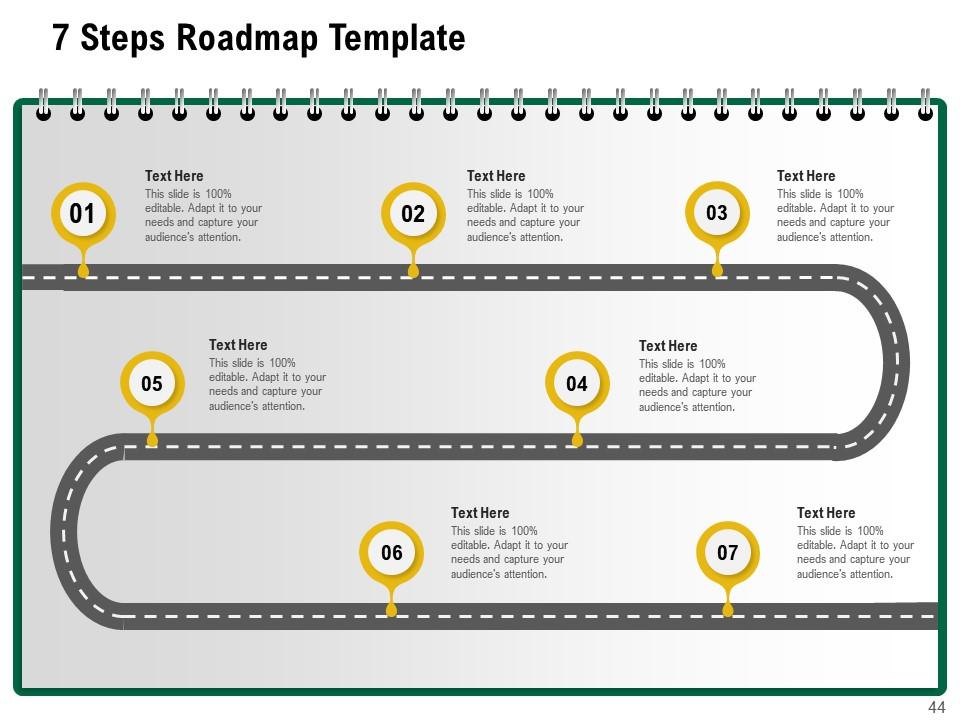
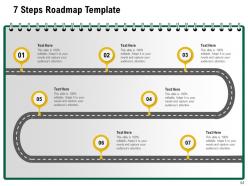
Slide 44: This slide shows 7 Steps Roadmap Template
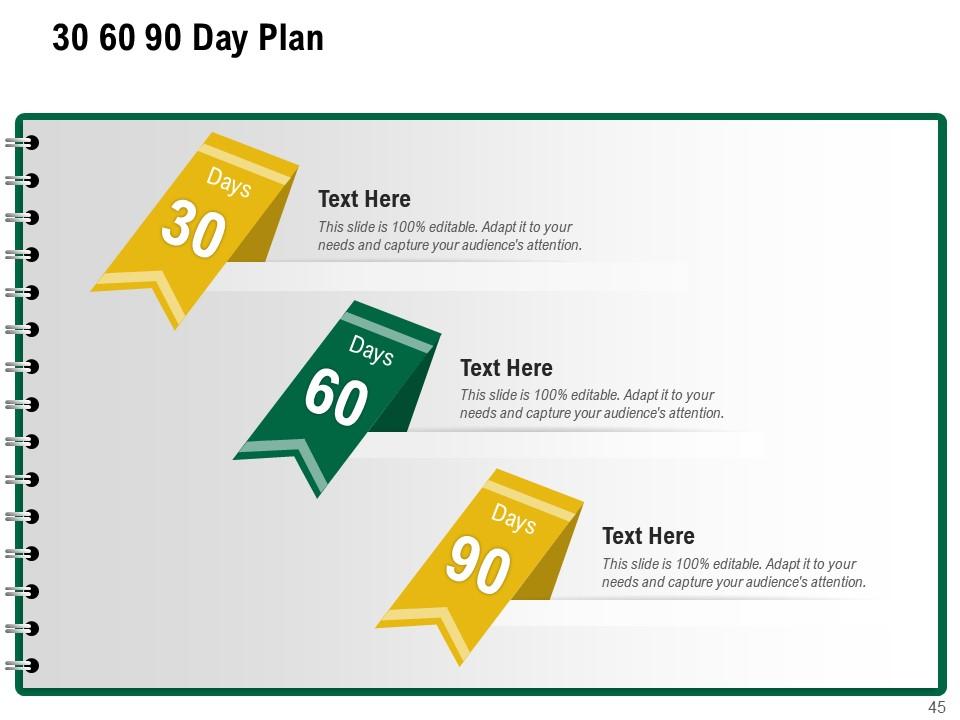
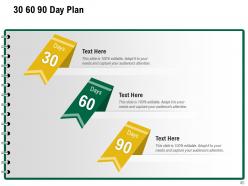
Slide 45: This is 30 60 90 Day Plan slide.
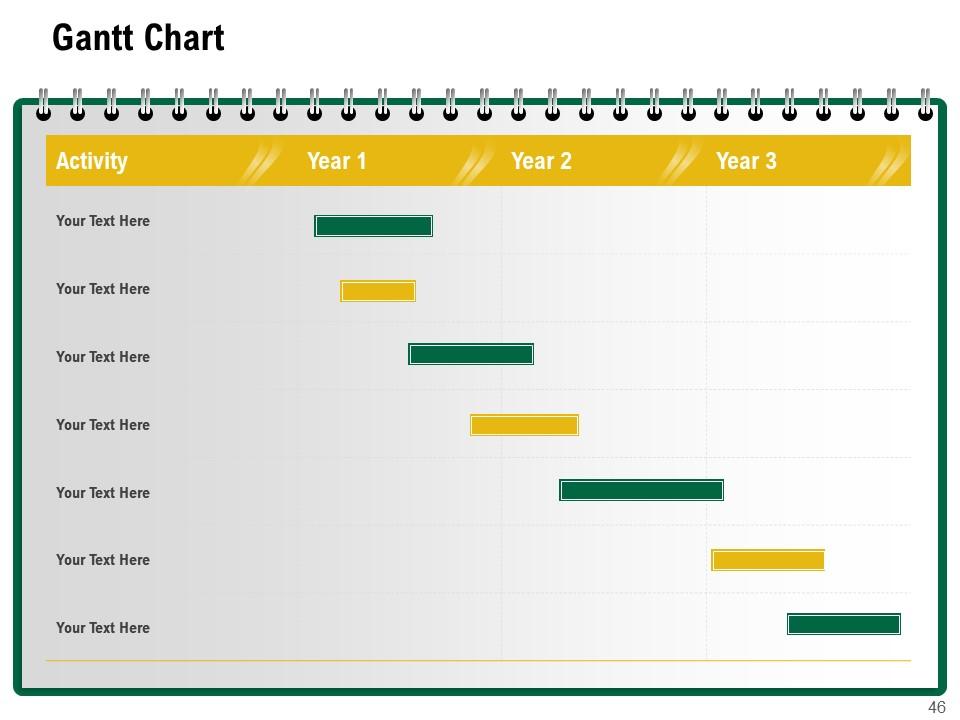
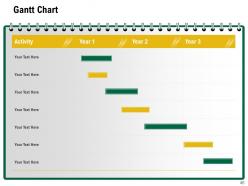
Slide 46: This slide displays Gantt Chart.
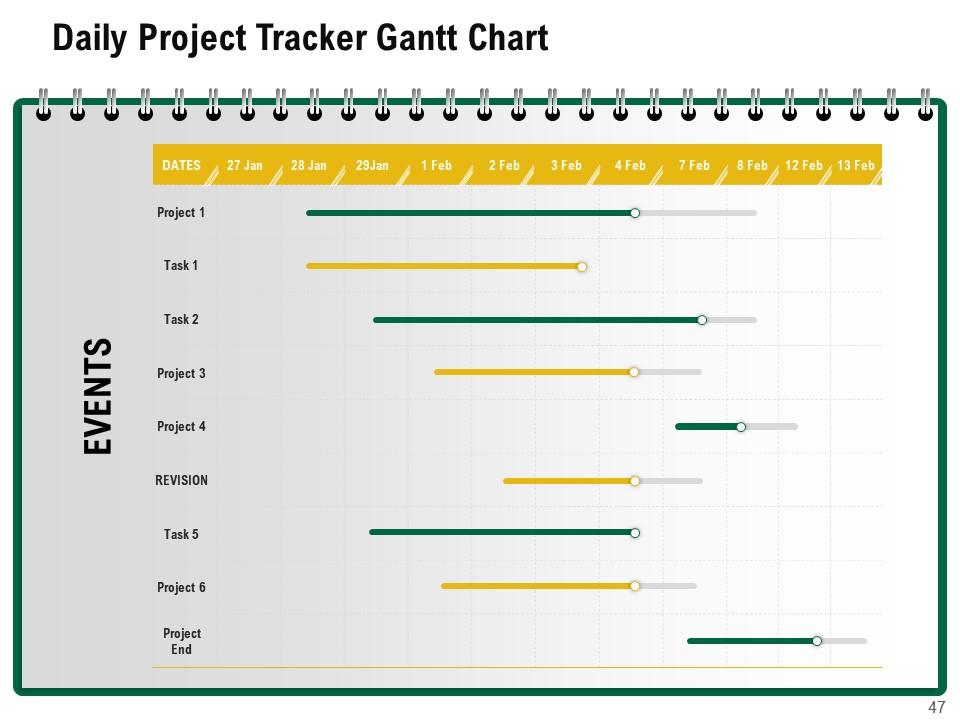
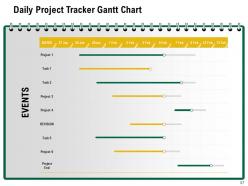
Slide 47: This slide showcases Daily Project Tracker Gantt Chart.
Slide 48: This slide is titled as Important Notes for posting notes.
Slide 49: This slide depicts Mind Map for representing entities.
Slide 50: This is Puzzle slide.
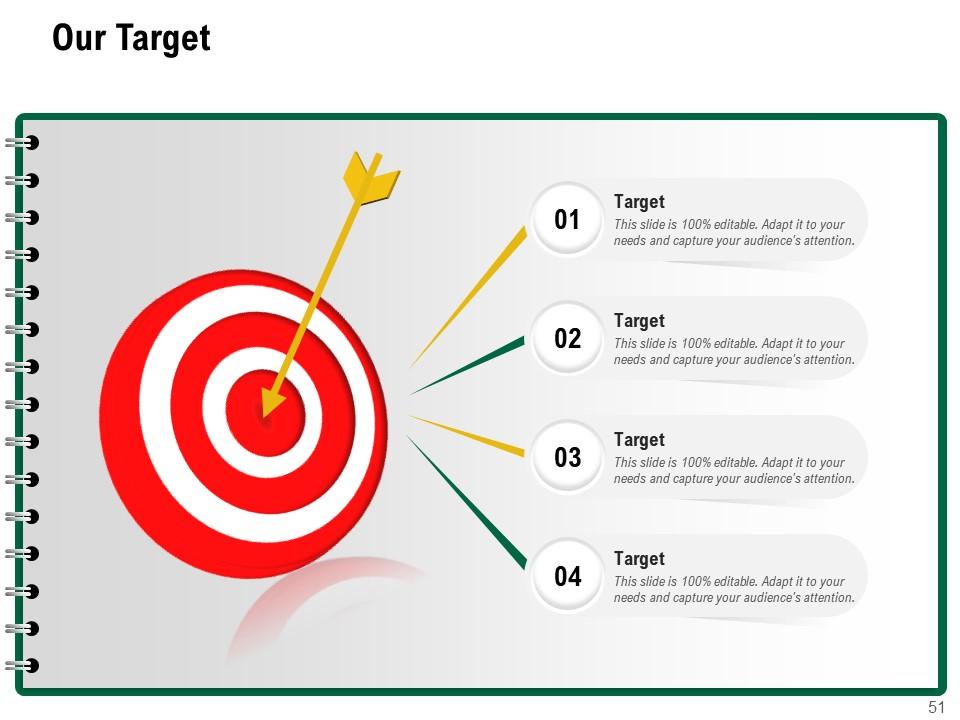
Slide 51: This slide showcases Our Target.
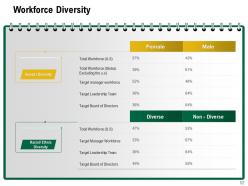
Slide 52: This slide displays Workforce Diversity with- Racial/ Ethnic Diversity, Gender Diversity.
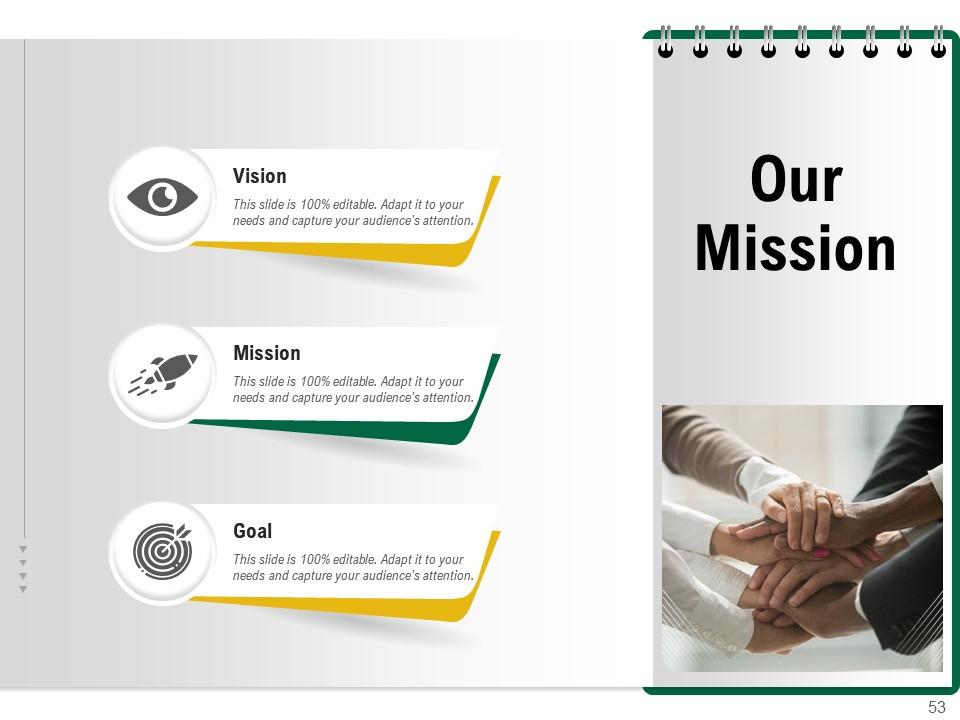
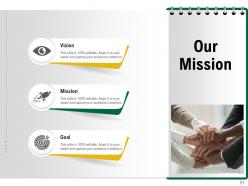
Slide 53: This slide showcases Vision, Mission and Goals of the Company.
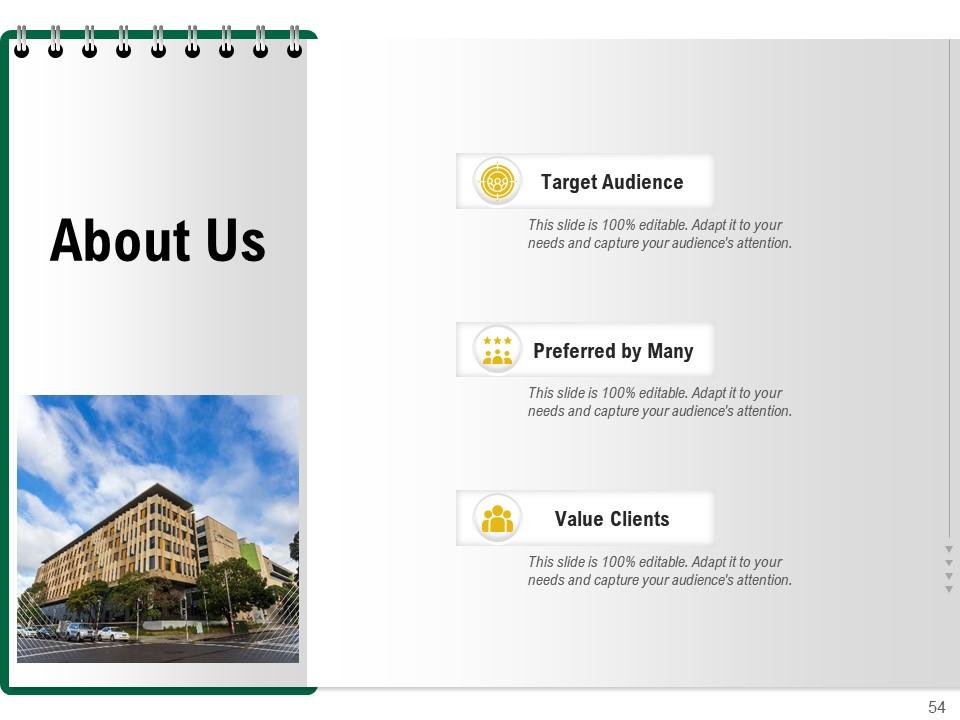
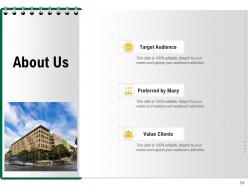
Slide 54: This is About us slide to showcase Specifications of the company.
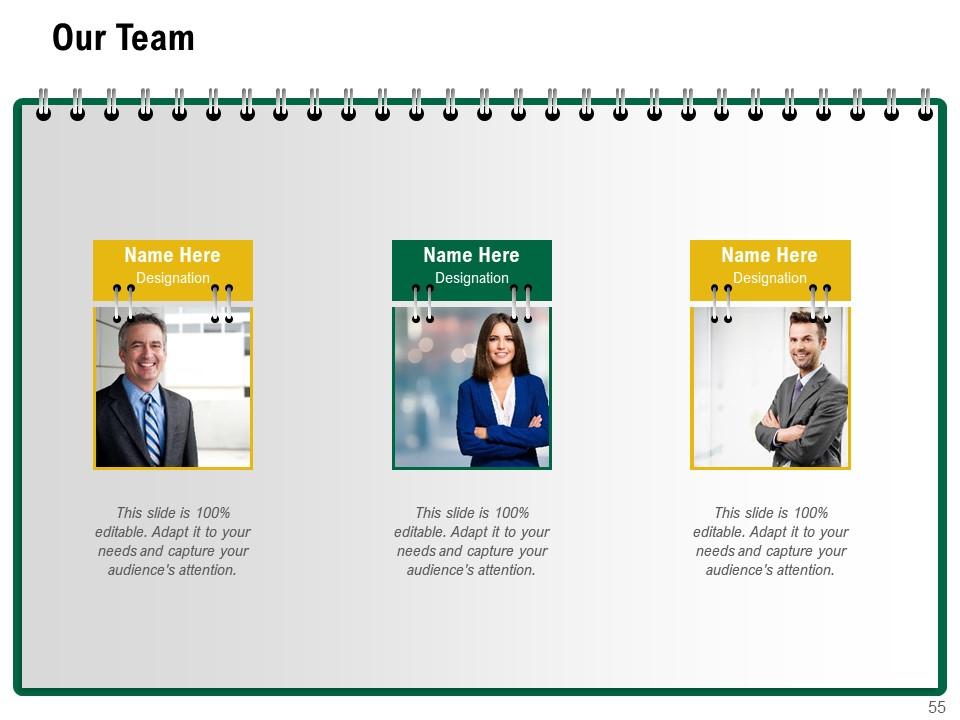
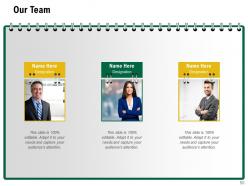
Slide 55: This is Our team slide with Names and Designations.
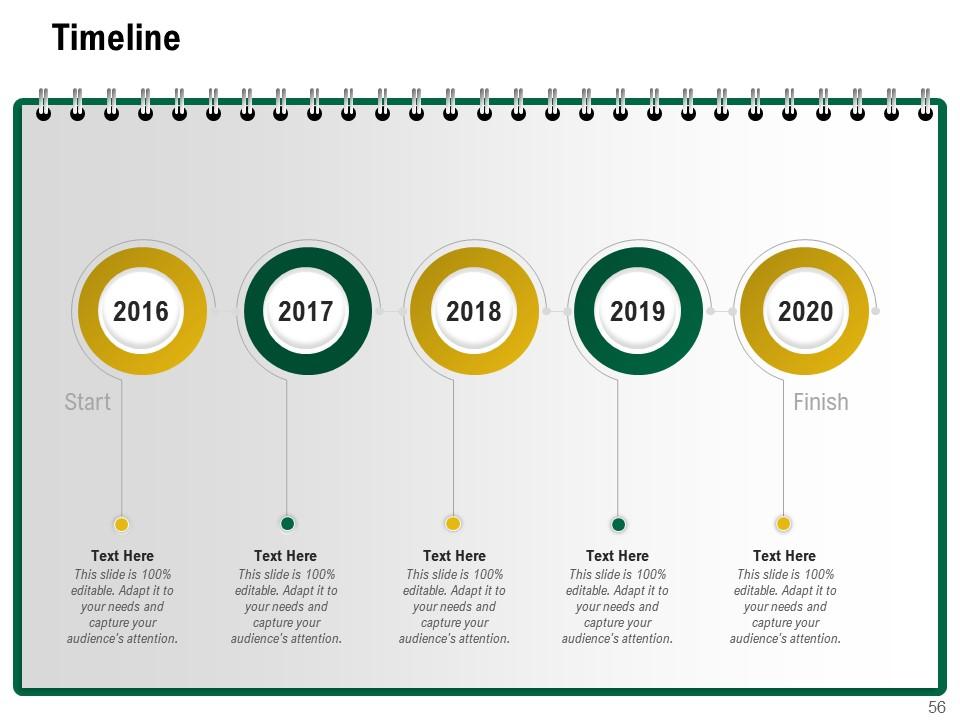
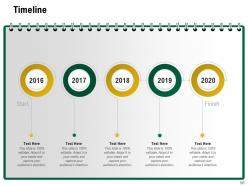
Slide 56: This is Timeline slide.
Slide 57: This is Thank you slide with Contact details.
Digital HR Technology Powerpoint Presentation Slides with all 57 slides:
Use our Digital HR Technology Powerpoint Presentation Slides to effectively help you save your valuable time. They are readymade to fit into any presentation structure.
-
Best way of representation of the topic.
-
Graphics are very appealing to eyes.
-
Awesomely designed templates, Easy to understand.
