


Digital Payment Transformation Powerpoint Presentation Slides




Try Before you Buy Download Free Sample Product
 Impress Your
 Audience
 100%
100% Editable
 Save Hours
 of Time


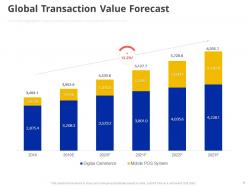
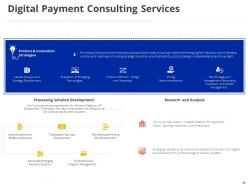
Discover our professionally designed Digital Payment transformation PowerPoint Presentation Slides. This electronic payment PPT slideshow highlights the digital payment market, competitive landscape, challenges, and opportunities. This online payment strategy PowerPoint template lists key statistics to give you an overview of the global digital payment market. Our online payment system PowerPoint slide deck is equipped with graphs like user demographics, and forecasts for the digital payment industry. This electronic payment PPT theme will also assist you in representing the key growth drivers in the digital payments industry. Also, our e-payment transformation PowerPoint template helps you showcase payment processing solutions. You can even use this electronic payment management solution PPT to demonstrate the payment security and fraud management solution. This e-payment methods PowerPoint presentation aids you to illustrate consulting services such as processing solutions, and research and analysis. Download this comprehensive e-commerce payment PPT slideshow to present digital payment challenges and solutions with a visual appeal.
People who downloaded this PowerPoint presentation also viewed the following :
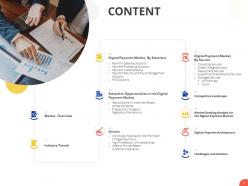
Content of this Powerpoint Presentation
Over the last decade, the digital payment market has seen significant growth, processing millions of transactions on a monthly basis. Also, in this digital era, the innovative tools used play a vital role in the advancement of this industry. To present these tools, strategies, and relevant market growth prospects in a structured document, we have designed some digital payment transformation PowerPoint presentation slides. In simple words, these templates will explain the complete landscape, challenges, and solutions that represent the success of the digital payment transformation market.
For more details on the Digital Payment Transformation, check out the PPT presentation slides.
Also, take a look at these templates, which explain the Market Entry Report For Transformation Of Payment Solutions Through Digital Mediums Complete Deck.
So, to understand the global digital payment market and take advantage of the different platforms, you must know about the key growth drivers in this industry, Now, without any delay, let us begin and take a look at these customized PPT slides.
Digital Payment Transformation PowerPoint Presentation Slides
The transformation slides guide you in learning and using payment processing solutions with visual appeal. Also, these templates are editable, so you can modify the content and make it your own per your company’s requirements. You can mention your data in a well-structured template with the use of symbols or icons as well.
Now, let us go through the templates and observe what this digital payment transformation is all about:
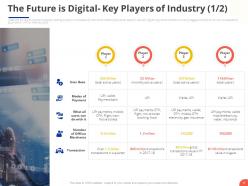
Template 1: The Future is Digital-Key Players of Industry(1/2)
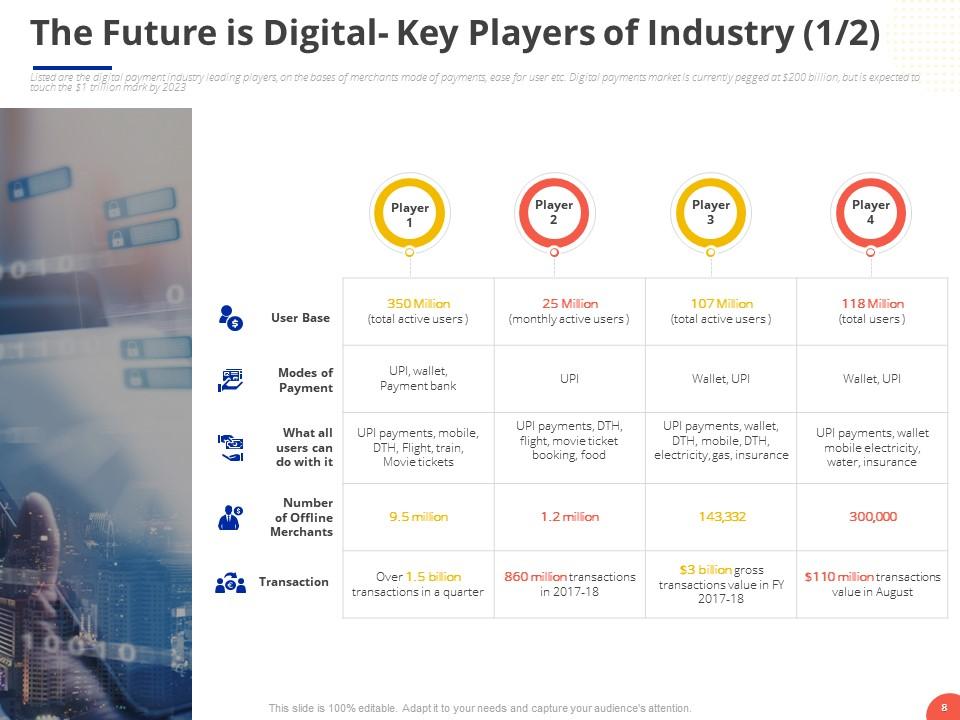
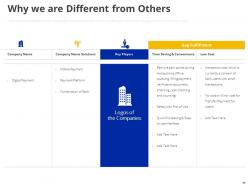
This slide displays the top industry players listed on the basics of certain criteria. It includes the user base, modes of payment, services offered, the number of offline merchants, and the details of their respective transactions. For example, the most successful player in this industry has a user base of 350 million and mostly deals with UPI, wallet, and bank payment modes. Accordingly, users benefit from services such as making UPI payments, recharging their phones and DTH, booking flight tickets, and the like. You can also mention the number of online and offline transactions for a particular period. Also, if you want to change this data, you can easily go ahead with the edit option. Apart from the information, make sure you also change the icons or symbols used while conveying your message to the audience.
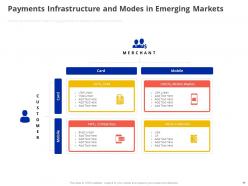
Template 2: Payments Infrastructure and Modes in Emerging Markets
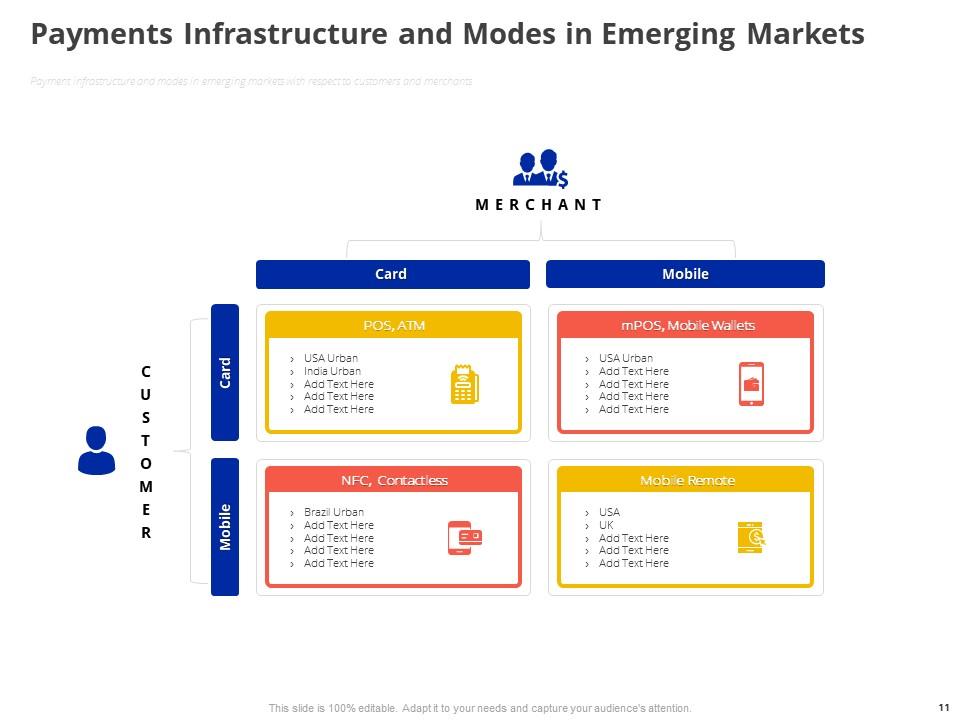
In this PPt template, you can present the payment infrastructure and its various modes for merchants and customers. You can add these modes of payment—online, ATM, and wallet—whereas the infrastructure generally includes POS, mPOS, and NFC options. To make it more appealing, you can also change the layout font, color the slide, and list all the relevant information.
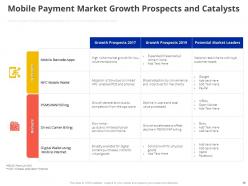
Template 3: Mobile Payment Market Growth Prospects and Catalysts
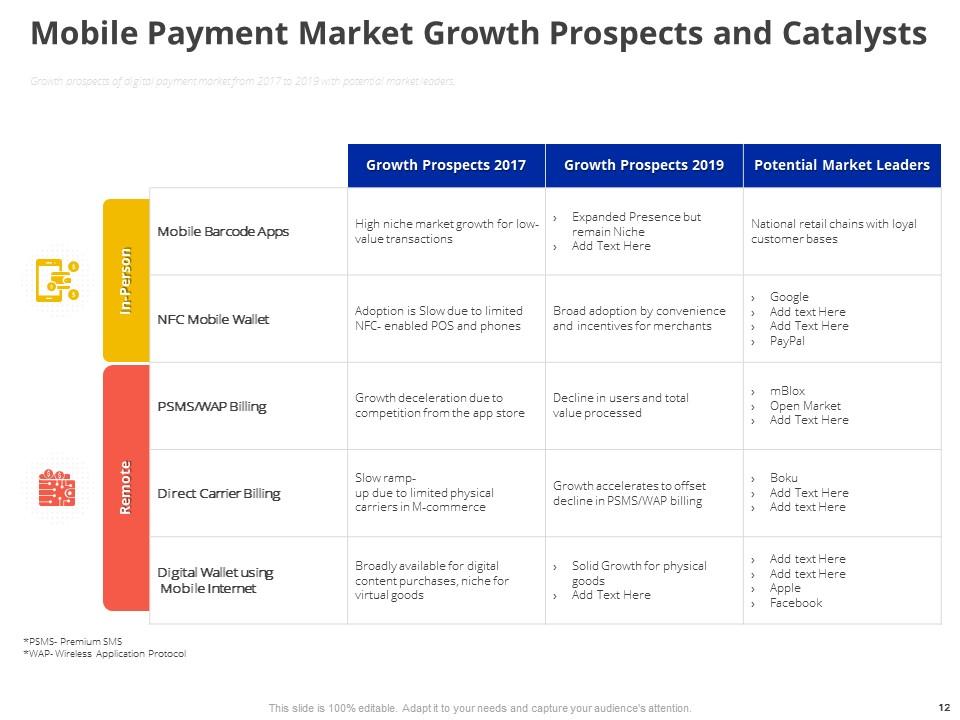
This template looks like a table-like structure that contains the mobile payment growth prospects of in-person and remote categories along with their potential market leaders. For example, under the growth prospects for the in-person category - mobile barcode apps - the market has experienced high growth for low-value transactions. Also, for the remote category of the digital wallet option, you can see that the industry has grown sharply over the years for both virtual and physical goods.
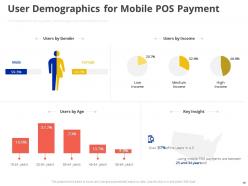
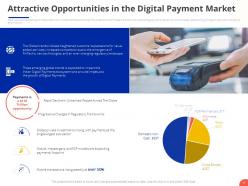
Template 4: Attractive Opportunities in the Digital Payment Market
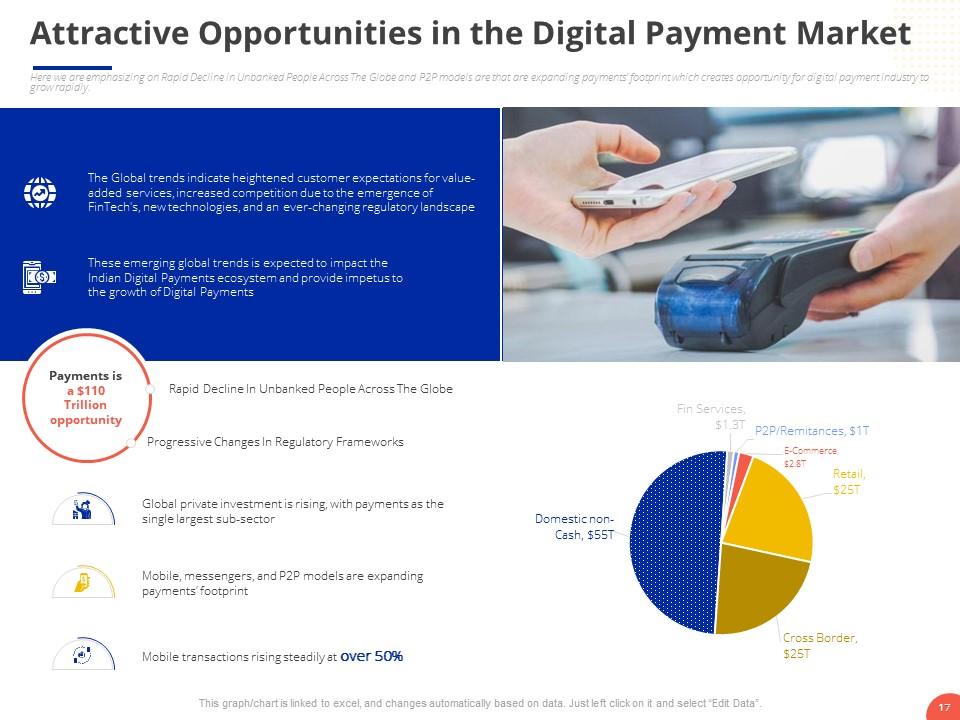
This customized template contains a pie chart showing different segments of the digital payment industry. It highlights which sectors are growing at a fast pace, leading to its enormous success. However, based on the current industry trends, you can always add payment-related details for this market.
Template 5: Payment Processing Solutions in Digital Payment Transformation
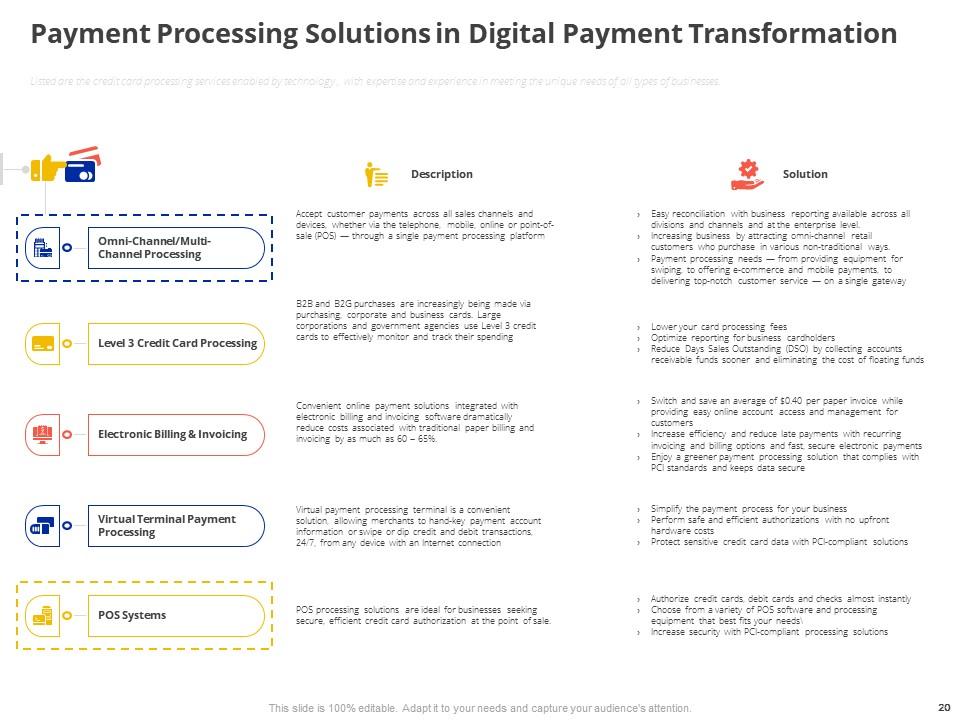
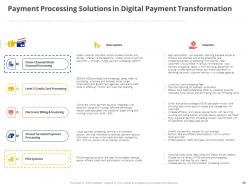
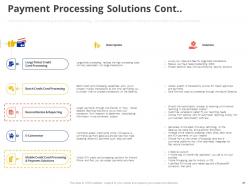
This slide highlights the description and the solutions for the respective payment processing options available for this digital transformation industry. Here you can see that Omni-channel/ Multi Channel Processing, Level 3 Credit Card Processing, Electronic Billing & Invoicing, Virtual Terminal Payment processing and POS Systems are covered along with their specific details and their solutions which ease the overall business processes. Let's say for the electronic billing and invoicing option, which is convenient and economical, you can make the switch and opt for this sustainable method. It will save your paper related costs, increase efficiency and lower payment delays.
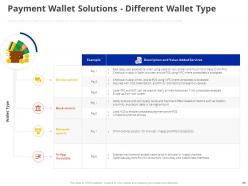
Template 6: Payment Wallet Solutions - Different Wallet Type
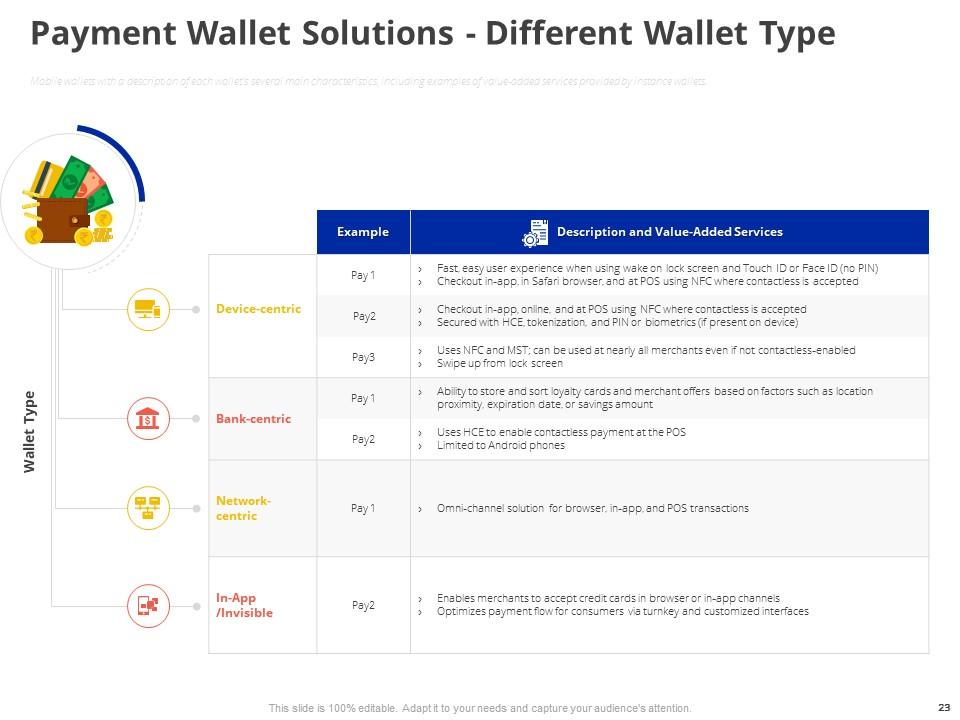
As you can see in this template, the wallet type has been categorized into Device- centric, Bank centric, Network centric and In-App/ invisible options along with their examples and relevant descriptions. Let’s say the Device-centric option uses NFC and MST payments, which all the merchants can easily access, even if the contactless option is not available. If you want to make any changes, you can easily do that and make it presentable with symbols or illustrations.
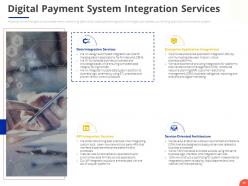
Template 7: Digital Payment System Integration Services
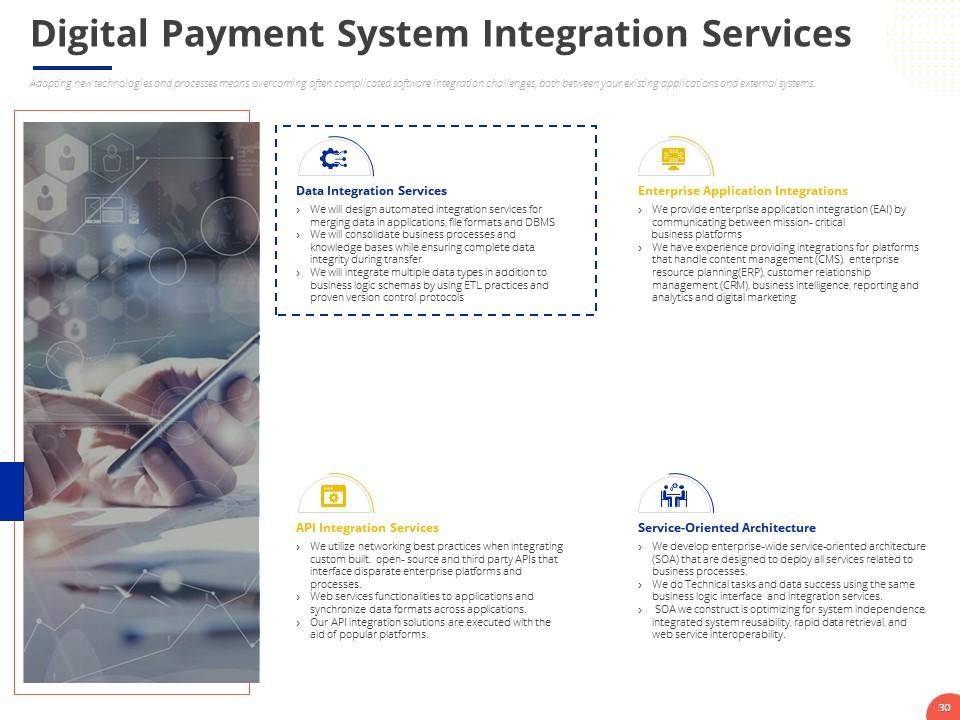
This PPt template outlines the integrated services that are responsible for the digital payment transformation process. It includes Data Integration Services, Enterprise Application Integrations, API integration Services, and Service Oriented Architecture. The template also talks about their respective functions and applications in different sections.
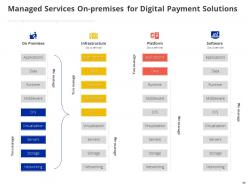
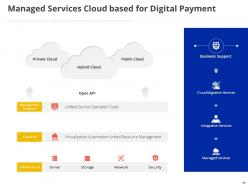
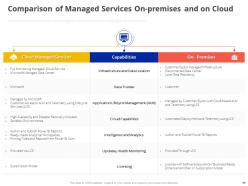
Template 8: Managed Services On-premises for Digital Payment Solutions
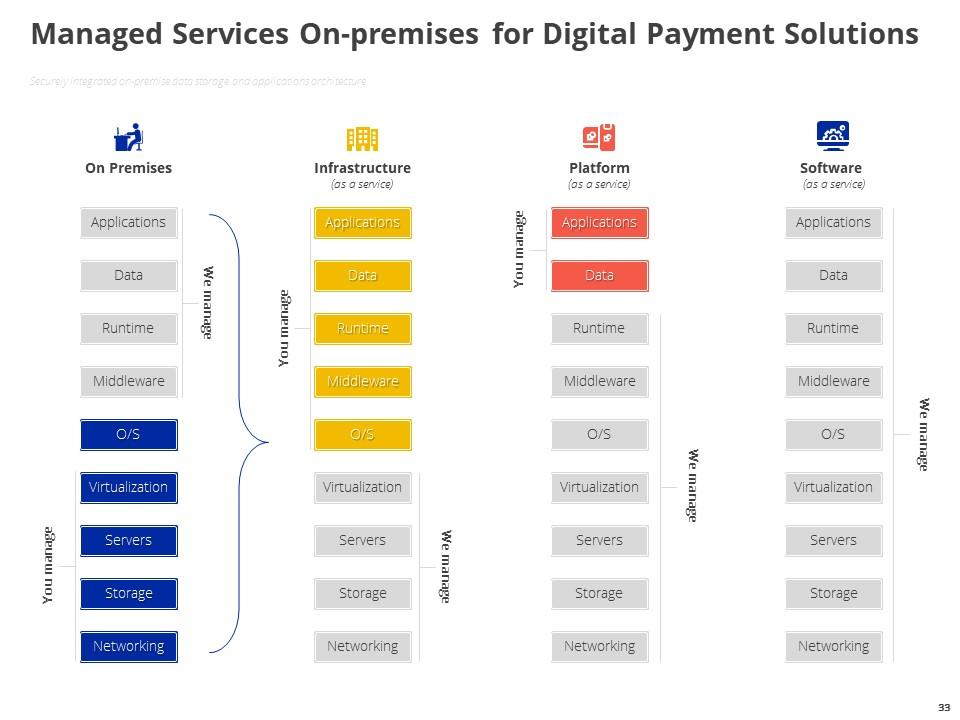
This template contains a nice structure where Managed Services On-premises for Digital Payment Solutions are listed based on the data managed by the company and the users. It includes Applications, data, runtime, middleware, O/S, virtualization, servers, storage, networking, and the like.
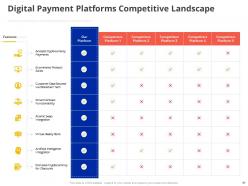
Template 9: Digital Payment Platforms Competitive Landscape
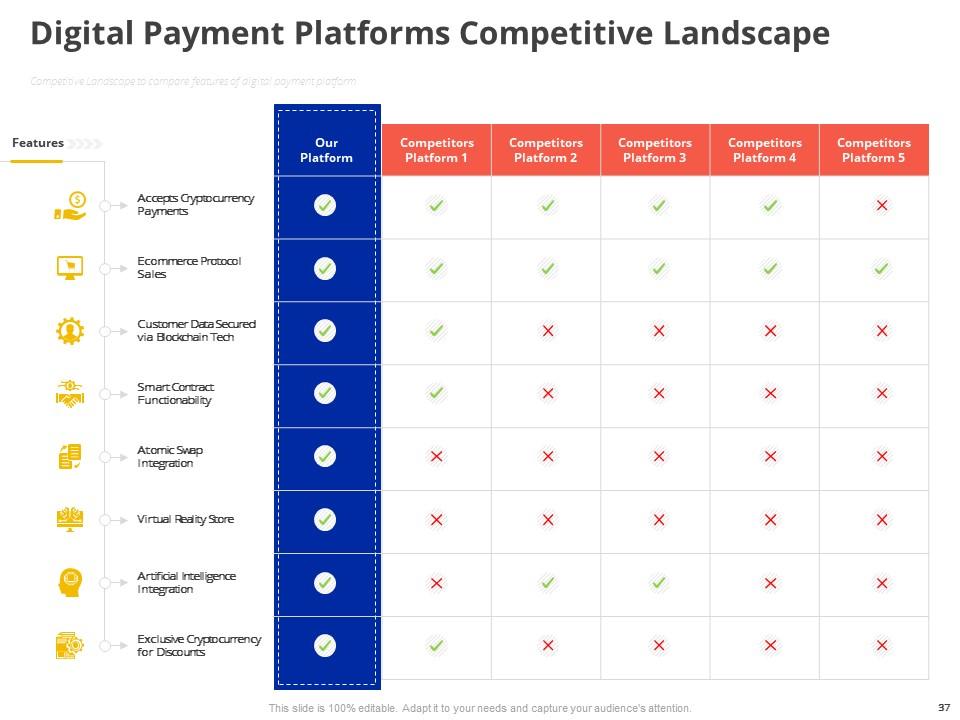
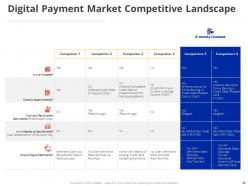
This template can be very useful for comparing the functions of the top players or competitors in the digital payment industry. Here, the distinguishing parameters are - Accepts Cryptocurrency payments, Ecommerce protocol sales, Smart contract facility, Virtual reality store, AI integrations, and the like. Based on the individual features, you can mark the respective boxes. Also, use illustrations and symbols wherever required.
Template 10: Digital Payment Architecture (1/2)

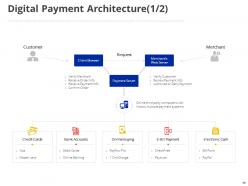
With the help of this digital payment architecture chart, you can get a comprehensive idea of how this interesting platform works. Here, the customer and merchant use a payment server through their respective browsers. This common server then redirects to the multiple payment windows through third-party computers. The payment windows include credit cards, bank accounts, online buying, e-bill payments, and electronic cash. You can also add examples of these individual processes.
Final Word
To sum up, we have covered the digital payment transformation PowerPoint presentation slides for you to download and use after making necessary corrections. You can add your concepts and technologies responsible for the success of this digital transformation industry.
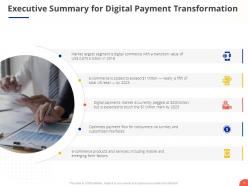
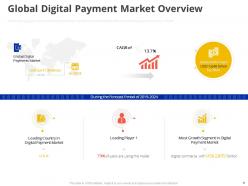
These templates list the major points to give you an overview of the digital payment industry.
It can really help you catch your viewer’s attention as everything is highlighted using illustrations and symbols. With these colorful and well-designed slides, you can demonstrate the opportunities, challenges, and relevant solutions to this mass-growing market. Now, without entertaining any second thoughts, grab your templates and be a part of this transformation.
Also, go through the PPT slides on Digital payment system market entry report transformation payment solutions and use them if required.
Digital Payment Transformation Powerpoint Presentation Slides with all 53 slides:
Use our Digital Payment Transformation Powerpoint Presentation Slides to effectively help you save your valuable time. They are readymade to fit into any presentation structure.












FAQs for Digital Payment Transformation
Honestly, it's mostly about what people expect now - everyone wants to tap their phone and go. COVID was huge for this since nobody wanted to touch anything. Businesses love it too because they get way better data and it costs them less than old-school card processing. The younger crowd especially - if your checkout sucks, they're out. I swear my sister has ditched so many online carts just because the payment was annoying. If you're running any kind of business these days, you need like three different digital payment options or you're basically shooting yourself in the foot.
Honestly, your customers just want things fast and easy now. They'll tap their phone and expect it to work in like 2 seconds - none of that fumbling with cash or waiting forever for chip cards. COVID definitely sped this up (who wanted to touch anything back then?), but younger people were already ditching traditional payments anyway. People also want cool features like instant transfers and tracking where they spend money. Short sentences work. If you don't have digital options, customers will just go somewhere else that does.
Look, nobody's gonna use your payment app if they think their money isn't safe. You absolutely need solid encryption, tokenization, fraud detection - the whole security package. One breach and people will literally go back to carrying cash around (which is honestly wild in 2024 but whatever). Trust takes forever to build back up once it's broken. People need to feel confident when they're typing in card numbers or connecting bank accounts. Oh and be upfront about your security stuff - don't hide it. Transparency actually helps convince people you're legit.
Honestly, regulators have been scrambling to keep up with all the fintech stuff. Europe rolled out PSD2 which basically forced banks to open their APIs - pretty wild change. Now they're all over data protection and making sure digital wallets aren't being used for sketchy money stuff. The "move fast and break things" approach? Yeah, that doesn't work when you're messing with people's actual cash. Regulators want innovation but they're not gonna let consumer protection slide. If you're building anything payment-related, figure out your compliance requirements first. Trust me on that one.
Security's the big one - most CTOs I know lose sleep over it. Your current systems probably won't mesh well with new payment APIs, so you're looking at custom dev work that gets pricey fast. PCI compliance is a nightmare to navigate too. Don't forget staff training since everyone needs to learn the new processes. Customer adoption can be tricky - some people still don't trust digital payments, which honestly I get. My advice? Audit your tech stack first before doing anything else. Trust me, it'll save you massive headaches down the road with integration issues.
Dude, payments are getting completely flipped on their head right now. AI catches fraud instantly and personalizes everything way better than those clunky old systems. Smart contracts let you basically program money - which honestly blows my mind every time I think about it. Cross-border stuff that used to take forever? Blockchain cuts through all that middleman nonsense. People who couldn't even get bank accounts before suddenly have options. If you're doing anything in fintech, you've gotta at least mess around with one of these technologies. The security improvements alone are insane.
Starbucks crushed it with their app - processes more payments than Apple Pay and turned loyalty into a digital wallet. Sweden's Swish is everywhere now, even street vendors have QR codes which is wild. But China's WeChat Pay? That's next level. You can literally run your whole life through one app. The pattern I'm seeing is this: don't force people to change their habits. Make payments fit into what they're already doing. Like, if someone's grabbing coffee anyway, why not make ordering seamless too? Success happens when digital feels natural, not when you're asking customers to completely flip how they think about money.
Honestly, just be super upfront about security stuff - show those SSL certificates, encryption details, security badges, all of it. People get sketchy handing over card info (and rightfully so). Your checkout needs to be bulletproof - one glitch and they'll bounce. Multiple payment options help too. Oh, and make your refund policy crazy obvious, not buried somewhere. Fast customer support when payments go wrong is clutch. I'd literally go through your checkout yourself and see if you'd trust it with your own card. That's probably the best test right there.
Dude, digital payments are literally changing everything for people who've never had bank accounts. Think about it - you don't need to drive hours to find a branch or jump through crazy hoops anymore. Just grab your phone and boom, you're in the financial system. Rural areas especially benefit since banks barely exist there anyway. People skip the whole traditional banking mess and go straight to digital wallets. Honestly, if you're building anything finance-related, mobile-first isn't optional anymore - for tons of people, it's their only shot at accessing real financial services.
Honestly, switching to digital payments was a game changer for us. Manual processes basically disappear - no more chasing cash deposits or digging through piles of receipts like some kind of detective. Your team gets so much time back to actually run the business. Everything processes way faster, and you get real-time reports on cash flow which is pretty sweet. The reconciliation stuff happens automatically too. I know it seems like a lot upfront, but just pick one platform to start with. Once everyone gets the hang of it, you can always add more later. Trust me on this one.
Honestly, going digital with payments is a game changer. Get a Square reader or something similar - people just don't carry cash anymore. QR codes work great too. You'll see payments hit your account way faster, and tracking everything becomes so much easier. Venmo's decent for casual stuff. The real win though? You can actually sell online and set up automatic billing for regular customers. Oh, and the sales data you get is pretty useful for figuring out what's working. Start basic with just card payments, then add more options later.
Look, people can't hand you cash through a screen, so e-commerce basically pushed everyone into digital payments whether they wanted to or not. Your customers are shopping on phones, laptops, Instagram - they want everything fast and smooth. One-click buying, saved cards, the whole thing. Trust me, if your checkout process is slow or weird, they'll just bounce and buy from someone else. I learned this the hard way watching my friend's online store struggle. You really need to nail the payment flow or your sales will suffer. It's not optional anymore.
Honestly, biometric stuff is about to be everywhere - your face and fingerprints replacing all those annoying passwords. Central bank digital currencies are rolling out too, which still feels weird to me but it's actually happening. Oh, and checkout's gonna disappear completely through embedded payments in apps and random devices. You won't even notice you're buying things half the time. My advice? Start testing this stuff now with small experiments because customers will expect it all to just work seamlessly pretty soon. The invisible payment thing is probably the biggest game-changer.
Dude, payment preferences are all over the map depending on where you are. China's obsessed with WeChat Pay, India built this crazy UPI system that basically skipped banks entirely. Europe's doing their regulatory thing with PSD2. The US? Total mess - everyone's fighting for market share. QR codes are huge in Latin America, and Africa's actually ahead of everyone with M-Pesa (which honestly surprised me when I first learned about it). Don't just assume what works in your country will work elsewhere - do your homework on what people actually use in each region.
Start with conversion rates - that's your main indicator of whether people are actually buying. Cart abandonment is huge too; anything over 20% means your checkout flow sucks. Payment processing speed matters, plus you'll want to track transaction fees as a percentage of revenue. Customer drop-off during checkout tells you where things get weird. I'd also watch support tickets about payment problems - those get annoying fast. Honestly, conversion rates and cart abandonment will give you like 80% of what you need to know. The rest is just nice-to-have data.
No Reviews