

Donors fundraising pitch ppt template




Try Before you Buy Download Free Sample Product
 Impress Your
 Audience
 100%
100% Editable
 Save Hours
 of Time


Donating to the causes you care about not only benefits the charity themselves, but it is advantageous for you too. Your major donors are essential because their gifts make up a large chunk of your overall fundraising revenue. Here is a professionally designed pitch for donors fundraising that will guide you in prioritizing the relationships with them and their positive effect on lives. The pitch deck presents the problems companys face with helping hands and proposes solutions to each of them. One can display donors fundraising in detail and focus attention on clients values, your mission, vision, goals, target audience, etc. Corporate Philanthropy Fundraising stats exhibit info about unclaimed funds, gift programs, etc. Firms can present leading in kindness using line charts and infographics, showcase details of your organizations aim and goals, and change looking forward. The template gives pictorial and tabular models for variant businesses, how fundraising works for them and donors, benefits to donors, charitys role and responsibilities, cost and pricing, and more. Organizations growth projections, the structure of the team, etc., display the whole pitchs plan. Please discuss with our experts and book a free demo with us on donors fundraising pitch. Download the template now.
People who downloaded this PowerPoint presentation also viewed the following :
Content of this Powerpoint Presentation
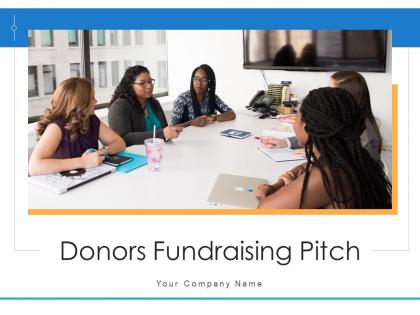
Slide 1: This slide displays the title i.e. 'Donors Fundraising Pitch' and your Company Name.
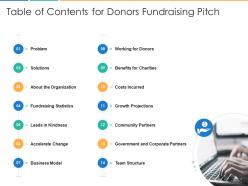
Slide 2: This slide showcases the table of contents for the project.
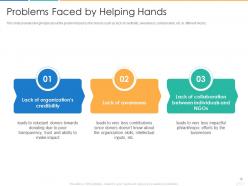
Slide 3: This slide provides the glimpse about the problem faced by the donors such as lack of credibility, awareness, collaboration, etc. in different NGOs.
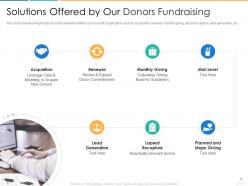
Slide 4: This slide explains the solutions offered by non profit organization such as acquisition, renewal, monthly giving, lapsed recapture, lead generation, etc.
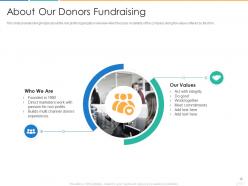
Slide 5: This slide provides the glimpse about the non profit organization overview which focuses on details of the company along the values offered by this firm.
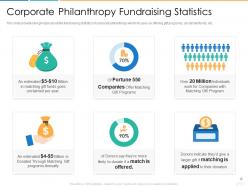
Slide 6: This slide provides the glimpse about the fundraising statistics of corporate philanthropy which focuses on offering gift programs, unclaimed funds, etc.
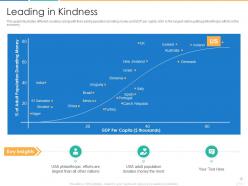
Slide 7: This graph illustrates different countries along with their adult population donating money and GDP per capita. USA is the largest nation putting philanthropic efforts in the economy.
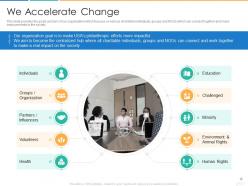
Slide 8: This slide provides the goals and aim of our organization which focuses on various charitable individuals, groups and NGOs which can connect together.
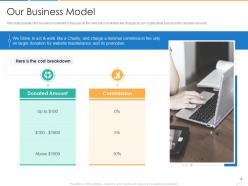
Slide 9: This slide provides the business model which focuses on the minimal commission fee charged by our organization based on the donation amount.
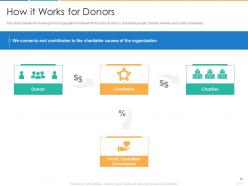
Slide 10: This slide provides the working of our organization model which focuses on donors, charitable people, charities involved and small commission.
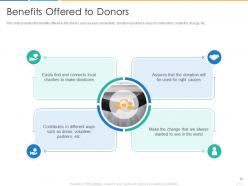
Slide 11: This slide provides the benefits offered to the donors such as easy connectivity, donation assurance, ways of contribution, create the change, etc.
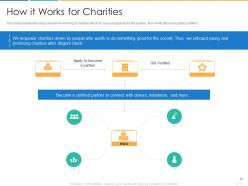
Slide 12: This slide provides the steps involved in working of charities which focuses on applying for the partner, their verification and getting certified.
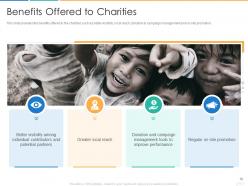
Slide 13: This slide provides the benefits offered to the charities such as better visibility, local reach, donation & campaign management and on-site promotion.
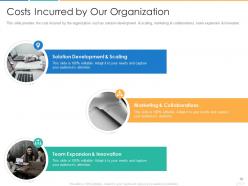
Slide 14: This slide provides the cost incurred by the organization such as solution development & scaling, marketing & collaborations, team expansion & innovation.
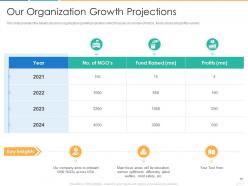
Slide 15: This slide provides the details about our organization growth projections which focuses on number of NGOs, funds raised and profits earned.
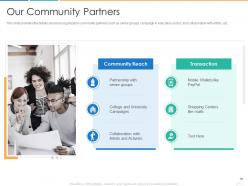
Slide 16: This slide provides the details about our organization community partners such as senior groups, campaign in education sector, and collaboration with artists, etc.
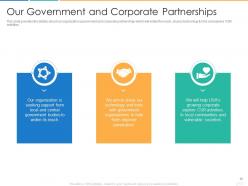
Slide 17: This slide exhibits our organization's government and corporate partnerships which will widen the reach, shares technology & tolls and explore CSR activities.
Slide 18: This slide provides the working of our organization model which focuses on donors, charitable people, charities involved and small commission.
Slide 19: This is the icons slide for the project.
Slide 20: This slide presents the title for additional slides.
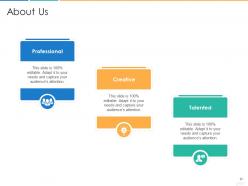
Slide 21: This slide exhibits about the company, target audience and its client's values.
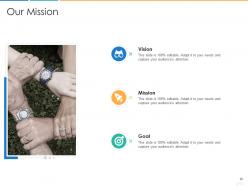
Slide 22: This slide displays the vision, mission and goals of the company.
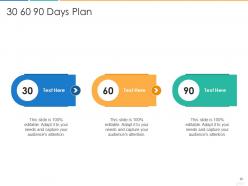
Slide 23: This slide explains the 30-60-90 days plan for the project.
Slide 24: This slide presents the puzzle of the project.
Slide 25: This slide presents the yearly timeline of the company.
Slide 26: This slide displays the goals of the company.
Slide 27: This slide displays the venn of the company.
Slide 28: This slide displays the posts for past experiences of the clients.
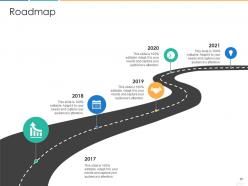
Slide 29: This slide presents the roadmap of the company.
Slide 30: This is the thank you slide and contains contact details of the company like address, phone no., etc. "
Donors fundraising pitch ppt template with all 30 slides:
Use our Donors Fundraising Pitch Ppt Template to effectively help you save your valuable time. They are readymade to fit into any presentation structure.
FAQs for Donors fundraising
Honestly, personalization is where it's at - ditch the mass emails and actually segment your donor list based on their history. Stories trump statistics every time, so share real impact stuff that hits people in the feels. I know it's a pain, but face-to-face meetings are still gold for big donors. Oh, and social proof works crazy well - show off your other supporters to build that community vibe. Mix up your channels too: email, social, calls, events. Start by digging into who's actually engaging with your current outreach versus who's basically ghosted you.
Honestly, stop asking for donations all the time - people get tired of that real quick. Tell stories instead! Post photos and videos showing your actual impact, maybe spotlight a volunteer who's doing cool work. Behind-the-scenes stuff works great too. Instagram and Facebook are perfect for this kind of content. People eat up the human stories. Make things easy to share so your supporters can spread the word for you. Oh, and actually respond when people comment - seems obvious but tons of nonprofits forget this part. Start with just 1-2 platforms and post regularly. Better to do that well than half-ass it everywhere.
Oh definitely use stories! Like, numbers are boring but when you tell donors about one specific person they helped? Game changer. I've literally watched campaigns get 3x better results just by swapping out data for actual narratives. People don't want to feel like they're writing checks to some faceless organization - they want to be the hero in someone's story, you know? Makes total sense when you think about it. Grab 2-3 really good beneficiary stories ASAP and test them out. Stories hit different than statistics ever will.
So basically, donor analytics helps you figure out who's actually worth focusing on instead of just guessing. Track giving patterns to see which campaigns hit different donor types - way better than sending everyone the same boring ask. You can spot when someone's about to stop giving (like when their donations get smaller or less frequent) and jump in before you lose them. Plus you get to personalize everything - timing, amounts, messages - based on what they've done before. Honestly saved my butt so many times. Start by grouping donors by how much they give and how engaged they are.
Dude, focus on THEIR priorities first - what do they actually care about? Don't lead with your org's whole backstory. Tell them a real story about impact, but keep it tight. Most people write these things like novels and foundations just don't have time. Budget breakdown needs to be super clear, and honestly? Follow their damn guidelines exactly or you're toast. Make your ask obvious - none of this wishy-washy "we hope you'll consider" stuff. End with concrete next steps so they know exactly what happens if they say yes. Oh, and timeline matters way more than people think.
Dude, you've gotta tell actual stories instead of just throwing numbers around. Like "Maria learned to read because you gave $50" hits way harder than "we helped 1,000 people." Trust me on this - individual stories just work better. Make it personal and show donors exactly where their money goes. Photos and testimonials are your best friend here. Oh, and this part's crucial - always circle back to show them what happened with their last donation. That's honestly what keeps people coming back. Numbers are boring but real impact? That's what gets people.
Honestly? Start with the basics - total revenue, average gift size, donor retention, and cost per dollar raised. Those four will tell you most of what you need to know. Don't sleep on lifetime value either, and definitely track how many donors are upgrading their giving levels. New donor acquisition is nice but keeping your existing people happy pays off way better. I'd stick to maybe 6-7 metrics tops and check them monthly. Trust me, you'll go crazy if you try tracking every single thing. The relationship stuff matters just as much as the money numbers.
Honestly, segmenting your donors is a total game-changer. You stop sending the same boring ask to everyone and actually talk to what each group cares about. Major donors want impact stories. Monthly givers love program updates. Lapsed donors need you to win them back - totally different approaches. I swear the response rates are night and day once you start doing this. Your open rates go up, donations get bigger, and people stick around longer because they feel like you get them. Just start with giving history and donation amounts, then write different appeals for each group. Way easier than it sounds.
Crowdfunding platforms are killing it right now - Facebook fundraisers, giving circles, all that stuff. Your supporters basically become fundraisers themselves, which is brilliant. Monthly donations work way better than one-time asks too. Virtual events stuck around after COVID because honestly, they're just cheaper and you reach more people. AI helps you figure out who to target, though that sounds fancier than it is. Oh, and text-to-donate makes giving ridiculously easy. Start by checking what platforms your people actually use daily - no point setting up Instagram fundraisers if they're all on LinkedIn, you know?
Honestly, most nonprofits are doing this completely backwards - they only call when they want money, which is so annoying. You've gotta flip that script. Send regular updates showing actual impact with real stories and photos. Thank people right away, but make it personal, not some mass email template. Remember what donors care about specifically and invite them to stuff. I mean, treat them like actual partners instead of walking wallets, you know? Oh, and definitely segment your list so you're not sending the same generic message to everyone. The donors who give $50 shouldn't get identical outreach as your major gift people.
Ugh, the worst thing nonprofits do is blast everyone with the same generic email. Donors can smell a template from miles away. Also, don't treat people like walking checkbooks - actually build relationships first before hitting them up for major gifts. Here's what really bugs me though: organizations that never follow up after someone donates. Like, show me what happened with my money! Those guilt-heavy appeals are terrible too. People want to join something positive, not just hear how everything's falling apart. Segment your list based on what donors actually care about. Makes such a difference.
Honestly, good donor recognition is like the secret sauce for fundraising success. People want to feel appreciated, right? So when you thank donors properly - and I mean actually personally, not some generic form letter - they're way more likely to give again. What's even better is they start telling their friends about your org. That word-of-mouth stuff is pure gold. The timing matters too though. Don't wait three months to say thanks. I'd definitely track your retention rates before and after you start doing this better - the difference might surprise you.
Honestly, start with a decent CRM - Salesforce or DonorPerfect work great for tracking donors and their giving history. Email automation is a game changer too since you can't be manually sending follow-ups to everyone (learned that the hard way). People expect super smooth online donation experiences now, like Amazon-level easy. Social media tools help you schedule posts ahead of time, which saves tons of hours. Analytics dashboards show you what's actually moving the needle versus what just feels productive. My advice? Pick one system first and get comfortable with it before adding more tools. Your team will thank you.
Okay so the main things are being transparent and honest about where the money actually goes. Don't make up dramatic stories or exaggerate your impact - people see right through that stuff. When someone says no, just accept it instead of pushing them to give more. Privacy matters a lot too, so keep their info safe and don't sell donor lists to other orgs. Also, donors get really annoyed when most of their donation goes to fundraising instead of the actual cause. I think some places spend like 80% on admin costs which is just wrong. Basically treat them with respect - if you were donating your own money, you'd want the same courtesy.
Honestly, people want to feel like they're part of something meaningful, not just writing checks. Share actual stories about your impact - that hits way harder than throwing numbers at them. Give folks ways to help beyond money too, like volunteering or posting about you on social. The real game-changer though? When your supporters start talking you up to their friends. That peer-to-peer stuff is gold. Host events so people can actually meet each other and feel connected. Oh, and definitely show them what their money accomplished afterward - people need to see their support actually worked. Makes them way more likely to stick around.
-
Nice and innovative design.
-
Content of slide is easy to understand and edit.
-
Professional and unique presentations.
-
Easily Understandable slides.