


Ecommerce 3 Year Development Roadmap In Organization




Try Before you Buy Download Free Sample Product
 Impress Your
 Audience
 100%
100% Editable
 Save Hours
 of Time


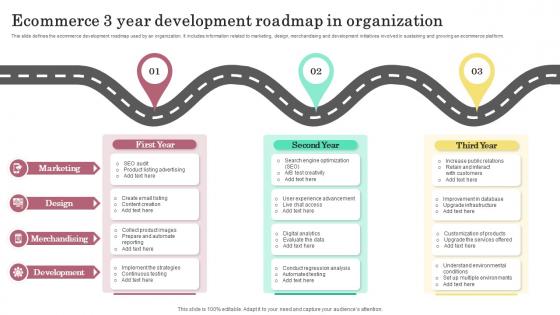
This slide defines the ecommerce development roadmap used by an organization. It includes information related to marketing, design, merchandising and development initiatives involved in sustaining and growing an ecommerce platform.
People who downloaded this PowerPoint presentation also viewed the following :
Ecommerce 3 Year Development Roadmap In Organization with all 6 slides:
Use our Ecommerce 3 Year Development Roadmap In Organization to effectively help you save your valuable time. They are readymade to fit into any presentation structure.





FAQs for Ecommerce 3 Year Development
Focus on three big things: tech, customer experience, and growth stuff. Your platform needs to handle traffic spikes and play nice with other tools. Map the whole customer journey - discovery through post-purchase (honestly, most people nail the front end but totally bomb retention). Payment systems and fulfillment come next. Analytics are huge too - you can't fix what you can't see. Oh, and don't try to tackle everything at once. Hit your biggest pain points first, especially anything directly hurting revenue. That's where I'd start anyway.
Check your analytics first - see who's buying from you right now. Demographics, purchase history, how they behave on your site. Surveys work great too, people actually love giving their opinions about stuff. Social media gives you solid intel on what your audience cares about and what bugs them. Peek at your competitors' followers while you're at it. Build detailed buyer personas from real data, not just guesses you made up. Honestly, I'd focus on one main group first. Way easier than trying to target everyone at once - you'll just spread yourself too thin.
Start with the basics - traffic, bounce rate, conversion rate. That stuff tells you if people actually want to be on your site. Cart abandonment rate is huge too (trust me, you'll obsess over this one). Once you're rolling, look at customer lifetime value and repeat purchases. Average order value matters more than you'd think. Google Analytics covers most of this early on. Don't overcomplicate it at first. Later you can get fancy with retention metrics and NPS scores, but honestly? Most people try tracking everything and end up analyzing nothing.
Tech choices basically make or break your whole eCommerce timeline. Pick headless vs traditional platforms? That decision cascades through everything - payment systems, inventory, you name it. I've watched teams crash and burn because they thought integrations would be simple. Spoiler: they're not. Your current tech stack either speeds things up or creates massive bottlenecks. Map out every integration first, then add extra time on top. APIs are moody - they'll work perfectly in demos then throw tantrums when you actually need them. Trust me on this one.
So payment gateways are like the middleman handling all the tech stuff when customers buy from you. They process credit cards, digital wallets, whatever. Super important because a clunky checkout will kill your sales - I've seen it happen. Don't just grab the cheapest one though. You want something that works in your markets, has decent fees, and actually integrates well with your site. Seriously, test the whole checkout process yourself first. If it's annoying you, imagine how your customers feel clicking through five different screens just to buy something.
Honestly, just scatter feedback touchpoints everywhere - post-purchase surveys, review monitoring, digging through support tickets, social media stalking (lol). But here's the thing most companies totally blow: they collect all this feedback then... do nothing with it. Don't be that company. I'd do quarterly roadmap sessions where you actually look at what customers are screaming about. Weight stuff by how valuable the customer is and how often you hear the same complaint. Oh, and this is huge - tell people when you've fixed something they suggested. That creates die-hard fans.
Honestly, start with SEO and maybe Google ads - that combo gets you both long-term and quick wins. Email marketing is clutch for keeping customers coming back. Social media's great for building your brand, but don't feel like you need to be everywhere at once. Content is everything though - good product descriptions and blog posts actually convert. Influencer stuff works if you've got the budget (kinda jealous of brands that can swing that). Analytics will save you from wasting money on channels that look good but don't actually work. Pick like 2 things max and nail those first.
Don't treat inventory like some side thing - it's literally the backbone of your whole operation. Get real-time tracking set up across every sales channel you're using. Trust me, telling customers "oops we don't actually have that" is the fastest way to lose them forever. Use your past sales data to predict what you'll need and when. Set automatic reorder points for your top sellers so you're not scrambling. Oh and seasonal trends matter way more than people think. Good inventory software costs money upfront but it'll save your sanity later. Make sure it connects with everything else you're running.
Hey! So checkout optimization is basically about making it stupid easy for people to buy. Don't make them jump through hoops - 2-3 steps tops. Let people checkout as guests because honestly, nobody wants to create another damn account just to buy something. Slap those security badges where people can see them, and make sure your forms work well on phones with buttons you can actually tap. Progress bars help too so people aren't wondering how much longer this is gonna take. Here's the big one though - show shipping costs upfront! Hidden fees at the end will make people abandon their cart so fast. PayPal and Apple Pay options can boost conversions too. I'd start by checking where people are bailing out of your current process.
Your seasonal patterns are gonna drive everything you plan. Pull up your sales data from the last couple years first - that's where you'll spot your real peaks and valleys. Black Friday prep? Start in August. Swimwear inventory? February's your month. You'll need to sync up your marketing spend, stock levels, and staffing around these cycles. Here's the thing though - don't get so obsessed with the big seasons that you miss smaller wins throughout the year. Build your whole roadmap around those predictable busy times, but leave some room for the unexpected opportunities too.
Dude, don't make SEO an afterthought - that's where everyone screws up. Build it into your roadmap right from the start. Technical stuff like site speed and mobile optimization? Handle that during development or you'll hate yourself later. Way more expensive to fix after launch too. Your content strategy and keyword research should align with your timeline from day one. I've watched so many sites launch beautifully then panic when they realize Google can't find them. Trust me, plan those organic search milestones upfront. Your future self will thank you for not having to rebuild everything.
Dude, mobile optimization can't be an afterthought anymore - build it into your roadmap from the start. Audit everything first: load speeds, checkout flow, button sizes, all of it. Most sites are honestly trash on mobile and have no clue. Focus on the biggest problems first, but here's the thing - test on real devices, not just shrinking your browser (learned that one the hard way). Track your mobile conversion rate every month. Your customers are already shopping on their phones anyway, so might as well make it the main experience instead of treating it like some side project.
Dude, focus on email campaigns that actually feel personal - like product recs based on what they've already bought. Most companies are obsessed with getting new customers but totally neglect the ones they have, which is backwards honestly. Set up a decent loyalty program with exclusive discounts for repeat buyers. Customer service speed matters way more than people think. Oh, and segment your email list by how people shop - then create those automated post-purchase sequences. Win-back campaigns work great for people who've gone quiet too.
Dude, AI isn't optional anymore if you want to compete in eCommerce. I'd focus on the basics first - product recommendations that actually make sense, chatbots to handle the repetitive customer stuff, and maybe predictive inventory so you're not constantly out of stock. New tools are dropping constantly (honestly kind of overwhelming). But here's the thing - build your roadmap with AI baked in from day one instead of scrambling to add it later. Pick your biggest headache first - whether that's support tickets, inventory chaos, or crappy conversion rates - then find AI solutions for those specific problems.
Oh man, don't try cramming everything into one massive plan - that's like roadmap suicide. Get your actual users involved early or you'll just be guessing what they want (which we're terrible at, honestly). Your team will hate you if you pack too many features into crazy deadlines. Technical debt? Yeah, that boring maintenance stuff always takes 3x longer than you think. Also that quarterly review thing - super important but use real feedback, not just what Karen from marketing thinks. Keep everything flexible because plans change constantly anyway.
-
You know what? I'm so glad I opted for this PPT design. It has been a total game-changer for me and my presentations. Thank you!
-
Great experience, I would definitely use your services further.