

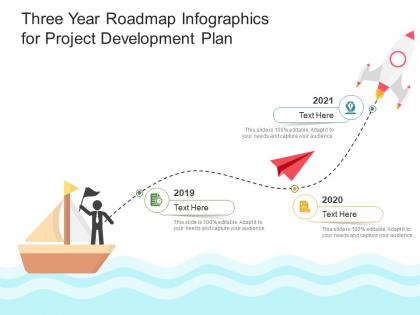
Three year roadmap for project development plan infographic template




Try Before you Buy Download Free Sample Product
 Impress Your
 Audience
 100%
100% Editable
 Save Hours
 of Time


Our Three Year Roadmap For Project Development Plan Infographic Template are topically designed to provide an attractive backdrop to any subject. Use them to look like a presentation pro.
People who downloaded this PowerPoint presentation also viewed the following :
Three year roadmap for project development plan infographic template with all 2 slides:
Use our Three Year Roadmap For Project Development Plan Infographic Template to effectively help you save your valuable time. They are readymade to fit into any presentation structure.
FAQs for Three year roadmap for project development
So there's usually five main phases - initiation, planning, execution, monitoring, and closure (though everyone calls them slightly different things). First you nail down your scope and goals. Then comes the fun part - planning out all your timelines, resources, what you're actually delivering. Execution is when stuff gets real and the work happens. Monitoring runs alongside that to track if you're on course. Closure wraps it all up with final deliverables and what you learned. Honestly though? Don't get too hung up on following these exactly - adapt them to whatever type of project you're doing.
Think of milestones as your big wins - stuff like finishing user research, launching beta, or wrapping major features. I space mine every 2-4 weeks because longer gaps and you're basically guessing what's happening. Each one needs super clear criteria so there's zero confusion about whether you actually hit it. Honestly, I've seen too many teams argue over vague milestones. Pick moments that actually matter to stakeholders and give your team something real to work toward. Short bursts keep everyone focused.
Dude, you absolutely need stakeholder input or your roadmap's gonna be trash. I've watched so many teams build stuff nobody wants because they just stayed in their bubble. Getting feedback helps you spot problems early and actually prioritize the right things. When market stuff changes (which it always does), you can pivot instead of being stuck with a useless plan. Don't just collect random opinions though - that's chaos. Set up monthly check-ins where people can actually weigh in on what's coming and suggest changes. Trust me, it's way better than guessing what everyone needs.
So instead of planning everything months ahead, agile breaks things into short sprints. You reassess priorities constantly based on what users actually want - honestly game-changing once you stop fighting it. Focus on outcomes, not just features you think sound cool. I'd suggest quarterly themes rather than those insane year-long roadmaps that never work anyway. Keep your big milestones but stay flexible on how you get there. It's way less stressful than trying to predict the future perfectly. You'll probably find yourself pivoting more, but that's the whole point.
Start with what blocks other people's work - that stuff always comes first. Then look at impact vs effort (classic but it works). I use the "what breaks if we skip this?" test constantly. MoSCoW prioritization helps too if you're into frameworks. Don't forget your team can actually DO the work though - high priority means nothing if Sarah's the only one who knows React and she's swamped. List everything out first, then be brutal about ranking by business value. Dependencies will bite you if you ignore them.
So here's what works for me - I always tie roadmap features back to actual business goals like revenue or user growth. Map each big milestone to a real metric so you know WHY you're building stuff. Those quarterly check-ins with stakeholders are clutch - literally put your roadmap next to your OKRs and see if they line up. Document everything too because priorities will shift (they always do) and you'll need to figure out what still matters. This approach has saved me from building so many "cool" features that nobody actually wanted. Trust me on this one!
Honestly, Roadmunk and ProductPlan are your best bet if you want something that looks professional right out of the box. But if you need more flexibility, Miro is amazing - I probably spend half my day in there anyway. Lucidchart works too for custom stuff. Monday.com or Asana can handle basic timelines if you're not getting fancy. Really depends who you're presenting to though. Execs want those polished roadmaps, but your dev team probably just wants something that doesn't mess with their current setup. I'd honestly start with whatever you already have access to first.
Start by asking "what could go wrong?" at every major milestone - tech issues, missing people, delayed dependencies, whatever. I make a basic risk register tracking how likely stuff is and how bad it'd hurt. Build in buffer time and backup plans right into your timeline from day one. Monthly team check-ins are super helpful here since new problems always come up (and trust me, they will). The whole thing only works if you actually review it regularly during roadmap updates. Otherwise you're just maintaining a document nobody looks at.
Track the basics first - milestone completion, staying on schedule, scope creep. That stuff matters but honestly? It's only half the picture. What really counts is user adoption and whether people actually use what you built. Are you moving the needle on revenue or customer satisfaction? Those are your money metrics. Team velocity's worth watching too, plus maybe do quick pulse surveys to see if stakeholders still believe in the project. Oh, and don't go crazy with too many metrics - I learned that the hard way. Stick to 3-5 core ones or you'll just end up drowning in spreadsheets.
Always add buffer time between big milestones - trust me on this one. When things go sideways (they will), you'll be so glad you did. Short sprints work way better than long phases since you can actually pivot fast when stuff changes. Keep your roadmap high-level instead of getting bogged down in details that'll be wrong in two weeks anyway. Check in with stakeholders every couple weeks to make sure everyone's still aligned. Oh, and write down your assumptions upfront! That way when they inevitably shift, you know exactly what to fix. Think of it as a living doc, not some sacred contract.
Honestly, the worst mistake is being way too optimistic with your timeline - always add buffer time because stuff WILL go wrong. Also don't make it super rigid. Things change constantly so you need wiggle room to pivot when needed. Map out your dependencies first though! Can't tell you how many roadmaps I've seen crash because nobody figured out what needs to happen before other work starts. Oh and keep it high-level - if you're putting every tiny detail in there it becomes a nightmare to manage. I usually start with the big milestones then work backwards.
Honestly, you've gotta make different versions of your roadmap for different people. Executives just want the big picture stuff - major milestones and how it affects business. Dev teams need all the nitty-gritty details and dependencies. I literally make separate versions because showing sprint details to the C-suite is awkward for everyone involved. Visual stuff works great - Gantt charts for PMs, simple timeline graphics for stakeholders. Oh, and don't forget regular updates. Monthly summaries for leadership work well, but your immediate teams probably need weekly check-ins. Just keep your messaging consistent across all versions so nobody gets confused about what's actually happening.
So basically, roadmaps let you see exactly when you'll need resources and for how long. Makes budgeting way easier. You can spot conflicts early - like when two features need the same dev (ugh, hate when that happens). Also super helpful for justifying headcount, like why you need that extra designer in Q2. Stakeholders eat this stuff up because they see how their money connects to actual deliverables. Oh, and timeline-wise? Just map your current projects against what you've got available. The gaps become pretty obvious fast. Honestly saves so much scrambling later.
Set up review meetings every couple weeks or monthly - depends how fast you're moving. Get input from everyone, not just developers. Honestly, the business side changes their mind more than engineers do anyway. Write down why you made changes or you'll totally forget later. Your roadmap isn't carved in stone, it's more like... wet cement? That analogy doesn't really work but you get it. Be upfront when things shift. Everyone hates surprises. Schedule those meetings now and actually show up to them consistently.
Honestly, just compare what you planned vs what actually went down. Timeline accuracy, budget stuff, did you hit the big deliverables - basic but effective. I always do a quick retrospective doc tracking which assumptions were totally wrong (spoiler: there's always something). Ask if people felt kept in the loop and if your team didn't hate life. Here's the thing though - look for patterns in your screwups. Always underestimate QA time? Overestimate how many devs you'd actually have? That's where the real learning happens. Those insights will save your butt on the next roadmap.
-
Really like the color and design of the presentation.
-
Presentation Design is very nice, good work with the content as well.
-
Excellent products for quick understanding.
-
I discovered this website through a google search, the services matched my needs perfectly and the pricing was very reasonable. I was thrilled with the product and the customer service. I will definitely use their slides again for my presentations and recommend them to other colleagues.
-
Unique and attractive product design.
-
Informative presentations that are easily editable.
-
Editable templates with innovative design and color combination.