

Weekly Timeline For Planning And Managing Ecommerce Project




Try Before you Buy Download Free Sample Product
 Impress Your
 Audience
 100%
100% Editable
 Save Hours
 of Time


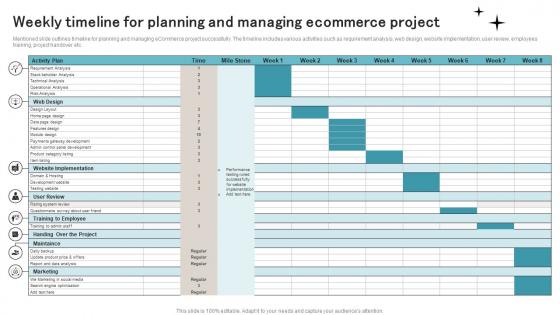
Mentioned slide outlines timeline for planning and managing eCommerce project successfully. The timeline includes various activities such as requirement analysis, web design, website implementation, user review, employees training, project handover etc.
People who downloaded this PowerPoint presentation also viewed the following :
Weekly Timeline For Planning And Managing Ecommerce Project with all 6 slides:
Use our Weekly Timeline For Planning And Managing Ecommerce Project to effectively help you save your valuable time. They are readymade to fit into any presentation structure.





FAQs for Weekly Timeline For Planning And
Honestly, it's pretty simple but time-consuming. Start with discovery - figure out what you actually need and when. Then UX/UI design happens while devs build the backend stuff. Testing is where most people mess up though - seriously, test everything twice because a broken checkout literally kills sales. Launch day feels big but it's really just the beginning. The fun part (aka the nightmare) starts after when you're constantly tweaking conversion rates and fixing things based on real customer data. Oh and monitoring performance becomes your new hobby whether you like it or not.
Definitely focus on the big three first - conversion rate, average order value, and revenue. But honestly, don't ignore the user experience stuff because that'll come back to haunt you. Page load times and checkout abandonment are huge. I'd also throw in customer satisfaction scores if you can get them. Oh, and operational metrics like how fast you can ship new features or whether support tickets go down. Pick maybe 5-7 that your stakeholders actually care about and stick with those. More than that and you'll just overwhelm everyone with data they won't use anyway.
Start simple with project management - Asana or Monday work great for tracking everything. Slack's your best bet for team communication. Google Analytics is obvious but necessary for performance tracking. Inventory management is huge if you're doing physical products - TradeGecko or Cin7 are solid choices. I've seen so many teams go nuts buying every tool under the sun and then get completely overwhelmed. Hotjar's good for seeing how users actually behave on your site. Build your foundation first, then add fancy stuff later when you actually need it.
Look, go after the money-makers first - product catalog, checkout, payments. That stuff can't break or you're screwed. After that? Check your user feedback for what's actually annoying people. I know it's fun to build shiny new features (I've been there), but honestly most of them don't move the needle. Score each potential feature on business impact vs. how much dev time it'll eat up. Short wins usually beat the complex stuff. And definitely test with real users before your team spends weeks building something nobody wants. Saves so much headache later.
Dude, UX literally makes or breaks ecommerce sites. I've watched teams nail the technical stuff but completely bomb because users couldn't figure out basic navigation - it's painful to see. Don't wait until the end to think about user testing. Build it right into your sprints from the start. Run A/B tests on checkout flows, gather feedback constantly, and actually talk to your UX people during planning (shocking concept, right?). Otherwise you'll spend months post-launch frantically patching usability disasters. Trust me on this one.
Honestly, most of the chaos comes from people not knowing who's doing what. Get your devs, designers, marketing folks, and ops team on the same page about deadlines and what they need from each other. Daily standups help but keep them short - nobody wants another hour-long meeting that could've been an email. I'm big on shared project boards where everyone can spot problems before they blow up. Here's the thing though: you'll end up being the translator since dev thinks in sprints while marketing's planning campaigns months out. Map out dependencies first, then do regular check-ins that actually stay focused.
Honestly, communication kills more ecommerce projects than bad code does. Get everyone - devs, marketing, business side - talking regularly with proper documentation. Your timelines? Add buffer time because integrations always break and third parties are slow. Lock your scope down early too, because "quick features" halfway through will destroy you. Set up staging that actually matches production. I learned that one the hard way on a project last year. Always have rollback plans ready. Oh, and map out your biggest risks upfront with specific plans for each. Trust me, something will go wrong - it's just about being ready when it does.
Vendor management is basically relationship building - don't just focus on contracts. Map out who you depend on first: payment processors, shipping, suppliers, tech stuff. One delayed integration screws everything up. Our payment gateway randomly updated their API mid-project and we were toast. Regular check-ins are clutch, not just crisis calls. Share your timeline so everyone knows the critical dates. Oh and identify backup options early - you don't want to scramble for alternatives when you're already behind. Trust me on that one.
Honestly, just add like 30% to whatever timeline you think it'll take - ecommerce stuff always gets messy. I'd break it into chunks so you're not panicking at the end when everything goes sideways. Payment integration should probably happen first since it blocks other features (learned that one the hard way lol). Weekly check-ins with your team are clutch for staying on track. Oh, and don't forget buffer time before launch for testing - there's always weird bugs that pop up. Gantt charts help if you're into that kind of planning, but even a simple spreadsheet works.
Honestly? Build that stuff right into your workflow from the start. Figure out what regulations hit you - GDPR if you've got EU users, PCI DSS for payments, accessibility requirements, whatever applies. We learned this lesson the expensive way when our whole checkout had to get rebuilt (ugh). Get your legal team involved early, not at the end. Create checklists for each project phase and make sure devs actually understand the why behind compliance, not just "add this field." Oh, and document everything obsessively. Regulators are basically librarians who can fine you - they want those paper trails when stuff hits the fan.
Honestly, go with Agile for ecommerce stuff. You can pivot super fast when customer trends shift or competitors do something crazy. Waterfall just feels way too locked-in for that environment. I'm biased toward Scrum because those 2-week sprints let you ship features and actually see how users react. Quick feedback loop is everything. Some teams do this weird hybrid thing where they use waterfall for big backend changes but stay agile for UI updates - works pretty well actually. Start simple with basic Scrum meetings and figure out what clicks with your team.
Honestly, don't wait until the end to get feedback - that's where teams mess up. Get customer insights right during discovery, then keep testing with users throughout your sprints. I'd say dedicate like 20% of each sprint just to fixing feedback stuff. Set up surveys, usability tests, beta programs - whatever works. The trick is actually sorting feedback into buckets: fix now, maybe later, or "that's nice but no." Oh and collect feedback during development too, not just after. Trust me, it beats building something based on what you think people want versus what they actually need.
Scope creep will kill you every time - seriously, get everything written down first and make people go through an actual process for changes. Timeline-wise? Always add way more buffer than feels reasonable because APIs are basically designed to break at the worst moment. I learned this the hard way lol. Regular stakeholder meetings help but you gotta be brutally honest about what's realistic vs what they want. Testing takes forever too, especially payments stuff. Oh and mobile always looks worse than you think it will. Start user testing super early or you'll hate yourself later.
Dude, get a change control process set up right away. Document every scope change request - I'm talking impact on timeline, budget, everything. Trust me on this one, I had a "simple" payment gateway addition that became a 3-week disaster! Before you implement anything, get written approval. Update your timeline immediately after. Weekly scope meetings help catch this stuff early. Be super transparent with stakeholders about trade-offs too. Want that shiny new feature? Cool, but something else is getting bumped to phase two. They need to see how changes mess with launch dates and costs.
Dude, you absolutely need digital marketing or you're screwed. Think about it - you could build the most amazing store ever, but if no one can find it, what's the point? SEO gets you showing up when people search for stuff. Paid ads bring in customers who actually want to buy. Email keeps people coming back, and social media builds your brand (though honestly, social can be a time suck). My advice? Set aside like 20-30% of your budget for marketing right from the start. Don't make it an afterthought or you'll regret it later.
-
SlideTeam’s pool of 2Million+ PPTs has really benefited my team, everyone from the IT department to HR. We are lucky to have crossed ways with them.
-
Excellent Designs.