

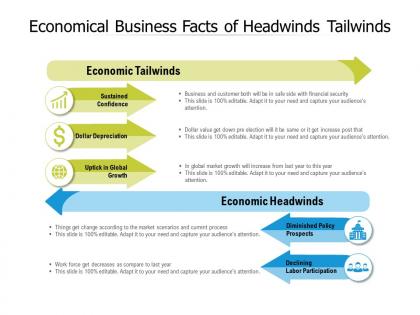
Economical business facts of headwinds tailwinds




Try Before you Buy Download Free Sample Product
 Impress Your
 Audience
 100%
100% Editable
 Save Hours
 of Time


Our Economical Business Facts Of Headwinds Tailwinds are explicit and effective. They combine clarity and concise expression.
People who downloaded this PowerPoint presentation also viewed the following :
Economical business facts of headwinds tailwinds with all 2 slides:
Give your audience a fulfilling experience. They will find our Economical Business Facts Of Headwinds Tailwinds elevating.
FAQs for Economical business facts
Dude, it's mainly tech disruption and customers expecting everything instantly now. AI's basically flipping entire industries upside down while people want personalized experiences yesterday. Remote work changed everything too - honestly feels like we're still figuring that mess out. Supply chains are a nightmare right now, plus employees have all the power in hiring (which is wild if you think about it). What worked in 2022? Probably useless now. I'd say look at which of these hits your industry hardest first, then build some flexibility into whatever you're planning. Things move way too fast to get stuck with rigid strategies.
Tech's totally flipping how teams operate these days. Decision-making gets way faster, everything's data-driven now, and honestly you adapt or you're toast. Remote tools are changing team vibes completely. AI's affecting who companies hire and how they measure performance - it's wild how fast this happened. Automation means rethinking your whole business model from scratch. Here's the thing though: rigid corporate structures just can't hang anymore. You need flexibility built in. I'd start by checking what tech your competitors are using, then figure out how it could smooth out your current processes. Makes a huge difference.
Honestly, companies have no choice but to change when customers demand it. Look at Patagonia - they built their whole thing around repairs and recycled stuff because people actually care about sustainability now. Meanwhile, Netflix completely destroyed Blockbuster by reading the room early. People wanted movies at home, not trips to the store. SaaS took over because IT teams got sick of buying expensive licenses upfront. Even the whole subscription craze happened because we'd rather pay $10 monthly than drop $200 at once. My advice? Pay attention to how people's habits are shifting in your space - that's usually where the next big disruption starts brewing.
Honestly, you've gotta stay flexible but keep your main stuff running smooth. Watch everything - what customers are saying, what competitors do, how the economy's looking. I had to learn this the messy way at my old job, trust me. Build some cushion into your budget and staff so you can adjust without freaking out. Your suppliers and customers? Those relationships will save you when things get weird. Oh, and figure out which revenue streams are shakiest - like, this week. Markets change fast and you don't want to be caught sleeping.
Your company's culture is like its immune system - when stuff hits the fan, strong cultures help teams pivot quickly because everyone's on the same page about values and how to make decisions. Look at COVID - some companies adapted fast while others just froze. Culture either frees people up to take smart risks and work together, or it creates fear and red tape. Honestly, most places say they value one thing but reward totally different behaviors. Build a culture that's cool with failing fast and learning from it. Start by figuring out what your workplace actually rewards versus what it claims to value.
Honestly, gut feelings are great but data just catches things way faster - especially when everything's moving at warp speed these days. You can see what customers are actually doing in real-time, keep tabs on competitors, spot opportunities before they're obvious to everyone and their mom. Testing different scenarios helps you get ahead of changes instead of scrambling to catch up. We've all been there with the scrambling thing, right? Pick maybe 2-3 metrics that actually matter to your business and check them daily. Don't overthink it.
Dude, globalization is wild for local businesses. You're suddenly competing against companies from everywhere - some with way cheaper labor costs, which honestly sucks. But here's the flip side: you can now tap into global suppliers, hire remote talent, and sell to customers worldwide. Think of it like going from playing pickup basketball to the NBA overnight. Pretty terrifying, right? The trick is finding what you do better locally - maybe it's personal relationships or understanding your community's weird quirks. Double down on that stuff while using global tools to expand your reach.
Ugh, regulatory changes are the worst - they come out of nowhere and suddenly you're scrambling to figure out what you can even do anymore. Your whole operation gets flipped upside down, from supply chains to how you price stuff. Compliance costs? Yeah, those eat into profits fast. Though honestly, sometimes the big players benefit because new rules can lock out smaller competitors. My advice? Don't wait until you're behind the eight ball. Set up some kind of alert system for your industry and budget for compliance headaches from the start. Trust me, playing catch-up sucks way more than being prepared.
Honestly, you've gotta make experimentation the norm, not something people do on the side. Give teams actual time and budget to mess around with ideas - most will flop but that's fine. Mix up your teams too; innovation happens when different brains crash into each other. Oh, and don't build first then ask customers what they think (so backwards). Start with their problems, make quick cheap prototypes. Set up those innovation sprint things where people can ignore daily BS for a bit. Biggest thing though? Celebrate the smart failures just like wins. That's what actually builds momentum.
Look, competitive analysis is basically your early warning system when markets go nuts. Track what your competitors are doing - their pricing changes, new products, how they're positioning themselves. This gives you a heads up on threats and opportunities before they smack you in the face. Honestly, I learned this the hard way at my last job. Set up ongoing monitoring instead of just doing random research spurts. You'll spot patterns and can pivot faster when things shift. Way better than flying blind and hoping your gut instinct works out.
Look, partnerships are like having backup when stuff hits the fan. Instead of dealing with everything solo, you split costs and risks with other people. Super helpful for your stress levels too, honestly. When supply chains mess up or markets go crazy, those relationships become lifelines. You've got other channels to work with and people who know different things than you do. They can handle what you can't - maybe different locations or skills you're missing. Here's the thing though: build these connections way before you're desperate. Scrambling for help mid-crisis? Yeah, that doesn't work so well.
Look, most companies just wait around reacting to stuff that already went wrong - don't be those guys. You want to get ahead of problems before they hit. Set up monthly sessions where your team plays out different scenarios, like what happens if your supplier gets hit by a hurricane or whatever. Risk heat maps are pretty solid for seeing which threats actually matter vs the ones that just sound scary. Oh and definitely set up some kind of early warning system - could be customer surveys, social media monitoring, basic financial dashboards. The whole point is staying flexible enough to pivot fast when things go sideways. Works way better than scrambling after the fact.
Honestly, agile is like having a life raft when everything's moving at breakneck speed. Instead of sticking to some rigid plan that's probably already obsolete, you can actually pivot when customers change their minds (which they always do). Breaking massive projects into two-week chunks makes everything way less overwhelming. Your team won't hate their jobs as much either - they're not just mindless drones anymore. Best part? You'll discover what sucks early instead of wasting months building garbage nobody wants. My advice: start with daily check-ins on one project first. Don't go crazy implementing everything at once.
Look, talent strategy is what makes or breaks your ability to move fast when things change. Slow hiring? Skills in the wrong places? You're toast while competitors are already pivoting. Companies that get this right streamline their recruiting and cross-train people constantly. They'll grab contractors or gig workers when they need expertise yesterday - honestly, it's way smarter than waiting months for perfect hires. Map out what skills you actually need versus what's coming, then start building those pipelines now. Don't wait until you're desperate and scrambling.
Dude, this stuff has totally flipped the script on business. Customers won't buy from you, investors won't fund you, and good employees won't work for you if you don't care about the environment and social issues. It's crazy how fast this changed - like, even five years ago it was optional. Now? You're screwed without it. The smart companies aren't just doing greenwashing campaigns either, they're actually building this into how they run everything. My advice? Figure out where you stand on this stuff first, then work from there. Oh and the talent thing is huge - young workers especially will just bounce if your values don't align.
No Reviews