


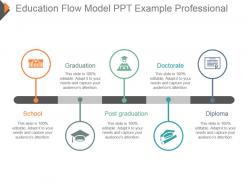
Education flow model ppt example professional





Try Before you Buy Download Free Sample Product
 Impress Your
 Audience
 100%
100% Editable
 Save Hours
 of Time


Figure out how to handle individual differences with our Education Flow Model Ppt Example Professional. Identify the cause of dichotomy.
People who downloaded this PowerPoint presentation also viewed the following :
Education flow model ppt example professional with all 5 slides:
Be crystal clear with our Education Flow Model Ppt Example Professional. Every fact gets full disclosure.
FAQs for Education flow model
You definitely need clear learning goals and a logical flow - each section should build on the last one. Multiple check-ins for assessment are huge too. I'd also add feedback loops so people can fix mistakes as they go, plus different paths for various skill levels because honestly, nobody learns the same way. Progress tracking keeps people motivated. Oh, and engagement stuff throughout - videos, quizzes, whatever keeps it interesting. Here's what I'd do: map out where learners start and where they need to end up. Then work backwards to figure out what's actually essential vs. what's just fluff.
So basically, education flow models work by adapting to how each kid actually learns instead of forcing everyone through identical lessons. Think smart playlist but for math or whatever subject. When someone's struggling, it dials down the difficulty. Crushing it? Ramps things up automatically. Honestly, it's pretty genius because nobody gets left behind or bored out of their minds. You'd probably want to look at your current setup and figure out where you can add these adaptive checkpoints. Way better than the old "teach to the middle and hope for the best" approach we grew up with.
So honestly, start with AI diagnostic tools to figure out where your learners are at first. Then throw in some adaptive platforms that adjust difficulty as they go - way more effective than static content. Most LMS systems are still pretty clunky tbh, but they'll handle your delivery needs. The real magic happens with analytics dashboards tracking engagement and outcomes continuously. Don't go crazy trying to digitize everything though. Pick one tech tool per stage of your flow model and build from there. You'll get overwhelmed otherwise, trust me.
Track completion rates and do pre/post tests to see if they're actually learning. Time-to-competency is huge too. But honestly? Student feedback matters more than any fancy metric - they'll straight up tell you what sucks. Watch where people drop off in your flow, that's where the real problems are. I always set up check-ins every few weeks because things change fast. You want to measure both outcomes (did they get it?) and experience (was it painful?). Oh, and don't ignore the boring stuff like engagement metrics - they're annoying to track but super telling.
Honestly, student feedback is your best bet for knowing if your education model actually works or just sounds impressive. Surveys and focus groups are obvious choices, but sometimes just having real conversations with students tells you more. Don't just collect it though - that's pointless. The feedback reveals where kids hit roadblocks, what concepts stick, and which parts feel totally disconnected from what they need. I'd use it to tweak your pacing and how you deliver content. Also, make collecting feedback ongoing instead of a once-and-done thing. Trust me, students will tell you exactly what's broken if you actually listen.
So basically you want to create different branches in your education flow for different learning styles. Visual people love infographics and videos. Audio learners? Give them podcasts or recorded sessions at those key decision points. Kinesthetic is honestly the pain in the ass one - they need hands-on stuff which is super tricky online, but interactive elements help. Don't just slap everything together though. Map out your main checkpoints first, then think "okay, how would each type of person actually want to learn this?" Way better than cramming everyone into the same boring format.
Honestly, you've got to nail three main things. Map out where your curriculum actually ends versus where the next level starts - the gaps are usually bigger than people think. Bridge programs are a lifesaver too. Students need time to adjust to new teachers, different expectations, all that stuff. The mental adjustment hits harder than most realize. Communication between levels is huge - like, actually sharing student info so teachers know what they're working with. I'd start by figuring out where kids struggle most during transitions. Those spots will tell you everything.
Oh definitely! Different cultures learn totally different ways. Some love group work, others want individual focus and direct teaching. Also - weird thing I learned recently - right-to-left readers actually process info differently than we do. Authority matters too. High hierarchy cultures expect formal teacher-student stuff, but more egalitarian places work better with peer learning. Honestly, I'd just survey your learners upfront about what interaction styles they prefer. Way easier to build in flexibility from the start than retrofit everything later.
Honestly, faculty resistance is gonna be your worst nightmare - they're super attached to their old ways even when stuff isn't working. Institutional red tape makes everything harder too. Getting everyone on the same page feels impossible sometimes. Plus you'll need different staffing and tech, which costs money nobody wants to spend. Oh, and tracking student progress gets weird because traditional metrics don't really fit. My advice? Start with a tiny pilot program first. Find those few teachers who are actually excited about change and let them be your cheerleaders.
So basically you add structured peer stuff at each stage instead of having kids work solo through everything. Like peer review during practice or group problem-solving when they're applying concepts. Pick one stage first and test something simple there - don't go crazy trying to overhaul everything at once. Here's the thing that surprised me though: it actually speeds up learning instead of slowing it down like teachers worry about. You just need clear protocols so students know how to work together properly. Otherwise it's just chaos and nobody learns anything. Start small and build from there.
Track completion rates and how well people actually retain the info - that's your learning stuff covered. Drop-off points are huge too, like where exactly students peace out or get confused. Time-to-competency is solid to measure. Honestly, I'm obsessed with finding those "aha moment" patterns in the data. Engagement per module tells you what's working. Don't forget feedback scores, but also check if they're using what they learned IRL afterward. Start small though - pick maybe 3-4 metrics first or you'll drown in data. Build from there once you spot trends.
Online learning actually works great with the education flow model - you just gotta switch up your touchpoints. Discussion boards and breakout rooms replace those in-person check-ins. Digital polls work too. Honestly, the async part is kind of a blessing since students can go at their own speed. But here's what I learned the hard way - you need way more micro-interactions than you'd think. Like, quick knowledge checks every 5-10 minutes during videos. Map out all your digital touchpoints first, then build the flow around those moments where you can actually connect with students.
Map out where your students actually are right now vs where they need to end up. Build in checkpoints so you can catch kids who are struggling early - don't wait until they're totally lost. I've seen too many fancy frameworks that completely ignore how messy real classrooms get. You need feedback loops that actually tell you what's bombing. Short sentences work. Longer ones should flow naturally when you're explaining the trickier stuff. Oh, and definitely pilot it with just a few students first - they'll roast your design way faster than any committee meeting will.
Honestly, the education flow model is perfect for this because it doesn't box you into rigid courses. You basically map out learning paths that shift as your career changes - mixing formal classes, those little micro-credentials, work experience, whatever. Way more flexible than traditional school frameworks, which can be pretty limiting tbh. It helps spot skill gaps and creates personalized routes that connect naturally. Start by figuring out where you are skill-wise and where you want to end up. The model shows you the most efficient path to bridge that gap without jumping through unnecessary hoops.
So basically it forces you to think about how everything connects - you can't just design random courses. Map out what students actually need to learn first, then next, etc. Like obviously calc comes after algebra, but there's tons of less obvious stuff too. You'll catch weird gaps where kids suddenly struggle, plus find places where you're accidentally teaching the same thing twice (happens more than you'd think). The whole curriculum just makes way more sense from their end. Honestly, just start by laying out what you have now and see where it gets messy.
-
Illustrative design with editable content. Exceptional value for money. Highly pleased with the product.
-
The Designed Graphic are very professional and classic.