


Electrical Lighting And Fixture Service Proposal Powerpoint Presentation Slides




Try Before you Buy Download Free Sample Product
 Impress Your
 Audience
 100%
100% Editable
 Save Hours
 of Time


Our Electrical Lighting And Fixture Service Proposal Powerpoint Presentation Slides are topically designed to provide an attractive backdrop to any subject. Use them to look like a presentation pro.
People who downloaded this PowerPoint presentation also viewed the following :
Content of this Powerpoint Presentation
Slide 1: This slide introduces Electrical Lighting and Fixture Service Proposal. State Client details, User details and begin.
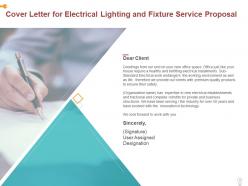
Slide 2: This slide displays Cover Letter for Electrical Lighting and Fixture Service Proposal
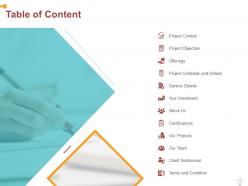
Slide 3: This slide shows Table of Content.
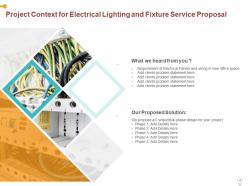
Slide 4: This slide showcases Project Context for Electrical Lighting and Fixture Service Proposal.
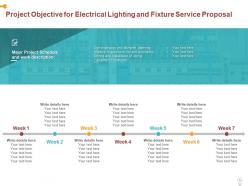
Slide 5: This slide describes Project Objective for Electrical Lighting and Fixture Service Proposal. Write details of Major Project Schedule and work description:
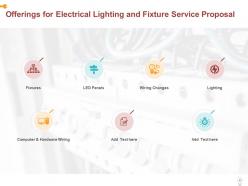
Slide 6: This slide depicts Offerings for Electrical Lighting and Fixture Service Proposal.
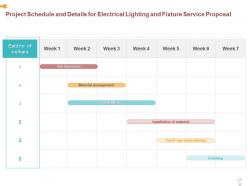
Slide 7: This slide represents Project Schedule and Details for Electrical Lighting and Fixture Service Proposal.
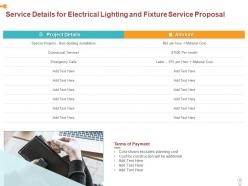
Slide 8: This slide shows Service Details for Electrical Lighting and Fixture Service Proposal.
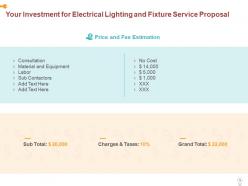
Slide 9: This slide depicts Your Investment for Electrical Lighting and Fixture Service Proposal.
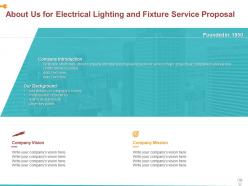
Slide 10: This is About Us slide. Write few short lines about company introduction displaying years in service major projects accomplished and various certifications received .
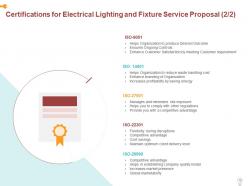
Slide 11: This slide shows Certifications for Electrical Lighting and Fixture Service Proposal.
Slide 12: This slide displays Certifications for Electrical Lighting and Fixture Service Proposal.
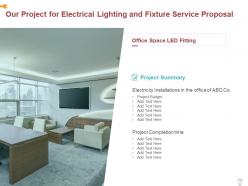
Slide 13: This slide depicts Our Project for Electrical Lighting and Fixture Service Proposal.
Slide 14: This is Our Team slide. Write key credentials and major highlights of the team member.
Slide 15: This is Our Team slide with Names and Designations.
Slide 16: This slide displays Client Testimonial for Electrical Lighting and Fixture Service Proposal.
Slide 17: This slide shows Terms and Conditions for Electrical Lighting and Fixture Service Proposal.
Slide 18: This is Contact Us slide with Company address, Phone number, Email ID and Company Logo.
Slide 19: This is Icons Slide for Electrical Lighting and Fixture Service Proposal.
Slide 20: This slide is titled as Additional Slides for moving forward.
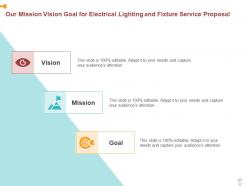
Slide 21: This is Our Mission slide with Vision, Mission and Goal.
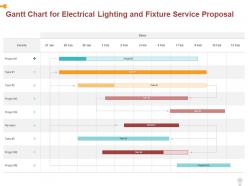
Slide 22: This slide displays Gantt Chart for Electrical Lighting and Fixture Service Proposal.
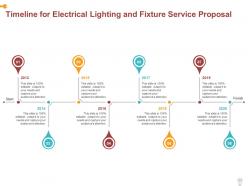
Slide 23: This slide shows Timeline process.
Slide 24: This slide showcases Roadmap process.
Slide 25: This is 30 60 90 Days Plan slide.
Electrical Lighting And Fixture Service Proposal Powerpoint Presentation Slides with all 25 slides:
Use our Electrical Lighting And Fixture Service Proposal Powerpoint Presentation Slides to effectively help you save your valuable time. They are readymade to fit into any presentation structure.
FAQs for Electrical Lighting And Fixture Service Proposal
Hey! So for your lighting proposal, start with a solid site assessment - show what's broken or sketchy right now. Then lay out your fixture recommendations and where you'd put everything. Energy calculations are clutch here, clients love seeing those savings numbers. Don't forget the timeline and pricing breakdown either. Code compliance is boring but you gotta nail it or you'll hate yourself later. Oh, and if you can swing some before/after renderings, those always look impressive. Honestly the energy savings section usually closes the deal, so spend time there.
Check the lumens per watt ratings first - that's how you compare efficiency. LEDs usually hit 80-120 LPW while fluorescents top out around 100. Look at the total system wattage too, not just the bulb itself since ballasts eat up extra power. Honestly? LEDs crush fluorescents in most situations now. The only time I'd maybe consider fluorescents is for some really niche setup. Oh, and lifespan matters way more than people think - a fixture lasting 50k hours beats one dying at 15k even if it's slightly less efficient. Just grab the spec sheets and make yourself a quick comparison chart.
Honestly, LEDs are where it's at even though they cost more upfront. Your electric bill will thank you later and they basically never die - I'm still using ones I bought like 5 years ago. Fluorescents are okay I guess, cheaper than LEDs but that flickering drives me nuts. Incandescents seem like a bargain until you realize how fast they burn out and jack up your energy costs. Oh and definitely do the math on total costs over a few years, not just what you pay today. That's when LEDs really shine (pun intended lol).
Honestly, lighting temperature is huge for setting the right mood. Warm light around 2700K-3000K makes spaces feel cozy and intimate - perfect for restaurants or lounges where you want people to chill. Cool light (4000K+) does the opposite though - it's energizing and sharp, which is why you'll see it in offices and medical facilities. That middle range around 3500K is pretty safe for most commercial stuff since it won't put people to sleep but isn't too harsh either. My advice? Think about what you actually want people doing in each zone instead of just slapping the same temperature everywhere. Makes a huge difference.
Honestly, your lighting setup is probably making everyone way more tired than they need to be. Bad lighting = eye strain and headaches, which kills productivity. Natural light is gold when you can get it. For individual desks, you want bright but not harsh - people shouldn't be squinting at their screens. Collaborative areas can be a bit warmer and softer since the vibe matters there too. I'd walk around and see where people are struggling with glare or dimness first. It's crazy how much difference good task lighting makes once you get it right.
Okay so upfront you're looking at like 2-3x more than regular fixtures, which kinda stings initially. But here's the thing - your energy bill drops by 60-80% just on lighting alone. Installation really depends if your building's already wired right or not. These LED systems last forever compared to normal bulbs, so you hit payback around 3-5 years between the energy savings and not constantly replacing stuff. The automated scheduling is honestly pretty sweet too - way better than remembering to flip switches. I'd definitely get quotes from a couple different contractors though, prices can vary quite a bit.
Honestly, just focus on three main things: energy savings, maintenance costs, and productivity. The energy savings are usually the biggest win - compare your current bills to what you'd pay with LEDs. Maintenance is huge too since you'll barely replace bulbs for like 10 years. And if it's workspace lighting, better quality light actually makes people more productive (though that's harder to put a number on). I'd throw together a basic spreadsheet showing monthly savings until you hit break-even. Makes the payback timeline super obvious to anyone who needs to approve it.
So you're looking at electrical lighting stuff? NEC is gonna be your bible - covers circuits, fixtures, all that. OSHA's big on workplace lighting standards too. Your local building codes can be super picky (learned that the hard way), so definitely check with them first. ASHRAE 90.1 handles the energy efficiency requirements, which honestly can get pretty technical. Commercial jobs need ADA compliance on top of everything else. Grab a current NEC handbook and talk to your building department before you get too deep into planning. Trust me, it's way better than dealing with surprises later.
Start with LEDs - they'll save you the most on energy and last forever. Occupancy sensors are clutch too, plus daylight harvesting if you can swing it. Honestly, I always try to push recyclable fixtures but most clients just don't care about that stuff. Local sourcing helps with shipping emissions when possible. The lifecycle cost thing is huge though - run those numbers because sustainable options usually pay for themselves through lower energy and maintenance costs. Oh, and tackle your biggest energy wasters first for maximum bang for your buck.
Focus on three big things: LED efficiency upgrades, smart controls, and circadian lighting that adjusts throughout the day. The LED market is crazy right now - costs dropping while quality keeps getting better. Smart sensors aren't just fancy add-ons anymore, they're expected. That tunable white light stuff is huge for wellness too. Here's the thing though - lead with energy savings data. Show them exact numbers on how these systems pay for themselves through lower maintenance and utility bills. Makes your proposal way stronger when you've got real ROI numbers backing everything up.
-
Designs have enough space to add content.
-
Content of slide is easy to understand and edit.
-
Perfect template with attractive color combination.
-
Qualitative and comprehensive slides.