

Employee Career Path Showing Development In Organization




Try Before you Buy Download Free Sample Product
 Impress Your
 Audience
 100%
100% Editable
 Save Hours
 of Time


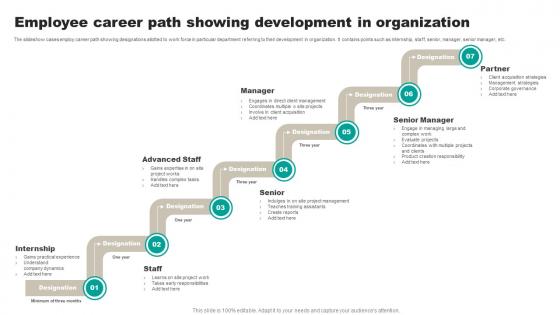
The slideshow cases employ career path showing designations allotted to work force in particular department referring to their development in organization. It contains points such as internship, staff, senior, manager, senior manager, etc.
People who downloaded this PowerPoint presentation also viewed the following :
Employee Career Path Showing Development In Organization with all 9 slides:
Use our Employee Career Path Showing Development In Organization to effectively help you save your valuable time. They are readymade to fit into any presentation structure.








FAQs for Employee Career Path Showing
Okay so basically you need three things. First, figure out where they actually want their career to go - like have a real conversation about it, then work backwards to see what skills they're missing. Second thing is feedback, but not the boring annual review stuff. I'm talking quick monthly chats, maybe even just grabbing coffee. Honestly the learning part doesn't need to be some expensive training program either. Stretch projects work great, or maybe they shadow someone in another department for a week. Oh and definitely find them a mentor if you can - that's usually way more valuable than formal courses. Just make sure everything connects to their goals somehow, otherwise it feels like pointless busy work. Write it all down so you can actually see if it's working.
Honestly, I'd start with a basic skills survey - super easy way to get baseline data. Mix in some 360 feedback and self-assessments too. Performance reviews are kinda meh since they look backward instead of forward, which isn't great for planning development. Manager check-ins work well, plus just watching how people actually work day-to-day. Oh, and competency matrices are clutch for mapping what someone has versus what they need. Skills gap analysis tools exist too if you want something more formal. The whole thing is really about getting multiple perspectives rather than relying on just one source of info.
Dude, get yourself a mentor - it's seriously a game changer. They'll help you dodge mistakes they already made and show you opportunities you'd never think of. Plus they know people and can make introductions that actually matter. What I love most is they'll call out your weak spots (in a good way) and push you toward stuff that scares you a little. Oh, and they genuinely want you to succeed without wanting anything back. Look for someone who's like 2-3 levels above where you're trying to get. Trust me on this one.
First thing - figure out what skills you'll actually need in 3-5 years based on where your company's going. Expanding into new markets? Focus development there. Going more digital? Tech skills become priority. Most companies just randomly throw training at employees without any real plan, which drives me crazy honestly. Create advancement paths that connect to your actual business direction. Your managers need to get this connection too - they should coach people toward roles that'll genuinely exist and matter later. Oh, and don't forget to map current employees against these future gaps. Makes the whole process way more targeted.
Oh totally, personalized learning is where it's at! Instead of cramming everyone through boring cookie-cutter training, you actually figure out what each person needs. Someone might be great at presentations but suck at Excel - why waste their time on public speaking modules? Have people do quick skill assessments first, then build custom tracks from there. The engagement difference is honestly night and day when content feels relevant to their actual role. People stick with it because they see how it connects to their goals. You'll get better results and employees who don't feel like training is just another box to check.
Dude, AI learning platforms are actually pretty solid for work stuff. You can learn at your own speed instead of sitting through those awful all-day training things. Plus it's available whenever - like 2am if that's your thing lol. The AI part is cool because it figures out what you suck at and suggests courses. Only downside is you gotta stay motivated yourself, which honestly I'm terrible at. But seriously, check what your company already has set up. Most people don't even bother looking and there's usually way more than you'd expect.
Track the stuff that actually matters - promotion rates, retention of your best people, and whether they're scoring better on skills assessments after training. Engagement surveys and 360 feedback are worth watching too. Completion rates? Total waste of time unless people are using what they learned. What you really want to know is if someone who did your program is crushing it 6-12 months later compared to before. Pick maybe 3 or 4 things that tie back to what your company cares about. Once you've got some baseline numbers, you can always add more metrics later.
Honestly, skip the whole annual review thing and do quick check-ins every week or two instead. Just talk about what's going well, what sucks, and what they need from you. Peer feedback is gold too - coworkers notice stuff we totally miss as managers. Don't forget to loop in anyone else they work with regularly. The whole thing should go both ways though. They need to feel cool about telling you when the development plan isn't working so you can pivot fast. Makes such a difference when it's actually ongoing conversations instead of formal BS.
Honestly, just talk to them first - like actually ask what they want to do with their careers. Don't assume you know. Build their development plans together instead of using some cookie-cutter approach. I've seen too many managers just assign random training and wonder why nobody cares. Check in regularly because people's goals change, and momentum dies without touch-points. Celebrate the small stuff too. Connect their learning to real projects they can sink their teeth into. When people help design their own path, they'll actually follow it. Makes sense, right?
Oh man, cultural stuff totally changes everything with employee development. Direct feedback works awesome in Germany but could be super awkward in Japan - honestly blew my mind when I first learned this. Some places love individual goals, others are all about group learning. Your mentoring style? Completely different depending where you are. Even training timelines vary like crazy. What really helped me was just asking local teams what actually works for them instead of assuming our usual approach would fit. Sounds obvious but you'd be surprised how many companies skip that step entirely.
Honestly? Most of the time it comes down to managers saying they care but then getting swamped with urgent stuff. Budget's always tight too. Then you've got this whole mess where nobody actually knows what it takes to get promoted - like, what are the real criteria here? I've seen companies build these fancy development programs but forget to teach managers how to actually use them. It's kind of ridiculous. Short sentences work better sometimes. Get your leadership to genuinely commit first, then make sure managers have time to coach instead of just putting out fires all day.
Just treat soft skills like any other requirement you'd put in performance reviews or promotion criteria. Don't make it some separate fluffy thing - that never works. Add communication and teamwork metrics right next to the technical stuff you're already tracking. Honestly, peer feedback sessions are huge for this. People actually listen when their teammates weigh in. The key is tying it to real business results and being consistent about measuring it. Once you start rewarding these skills the same way you reward technical growth, people will finally take it seriously. It's pretty straightforward once you stop treating it as optional.
So career coaching is like having a GPS for your work life - helps you map out where you're headed and how to actually get there. Your coach will look at what skills you've got, spot the gaps, then build a plan that works for both you and the company. Office politics are honestly such a minefield, but coaches are really good at helping you navigate that stuff. Plus you get someone checking in on you regularly so you don't just... forget about your goals completely. If your company has coaching programs, jump on it. Or maybe ask your manager about internal mentors?
Build different programs for each level - that's the whole trick. New managers need the basics like feedback and meetings. Mid-level people should focus more on strategy and working across teams. Senior folks get executive coaching. Make it modular though! Nobody wants to sit through beginner stuff when they've been managing for ages. Trust me on that one. Connect the levels so there's a clear path up, and get senior people mentoring the newer ones. Track who's actually moving through the programs so you know what's working. Oh, and don't make people start over if they switch departments or whatever.
Dude, you should totally focus on learning and development if you want people to stick around. Companies that do this see 40-50% better retention - pretty wild, right? People actually feel valued when you invest in their growth instead of just expecting them to show up and do the same thing forever. It makes them way more confident and engaged too. I mean, nobody wants to feel stuck in a dead-end job. Start simple though - maybe just one hour a week for skill stuff or those lunch-and-learn sessions. Even small things like that make employees think "okay, there's actually a future for me here."
-
Wide collection of templates available. SlideTeam has made it easier to create presentations in just a few minutes.
-
Understandable and informative presentation.