


Employee Career Progression Map With Timeline




Try Before you Buy Download Free Sample Product
 Impress Your
 Audience
 100%
100% Editable
 Save Hours
 of Time


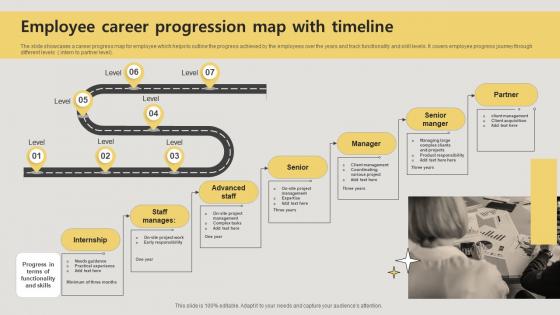
The slide showcases a career progress map for employee which helps to outline the progress achieved by the employees over the years and track functionality and skill levels. It covers employee progress journey through different levels intern to partner level.
People who downloaded this PowerPoint presentation also viewed the following :
Employee Career Progression Map With Timeline with all 6 slides:
Use our Employee Career Progression Map With Timeline to effectively help you save your valuable time. They are readymade to fit into any presentation structure.





FAQs for Employee Career Progression
Honestly, communication skills are probably the biggest thing - being able to explain complicated stuff without making people's eyes glaze over. Technical skills in whatever you do, obviously. Problem-solving is clutch since managers love when you can figure things out without bugging them every five minutes. I used to think emotional intelligence was just corporate buzzword nonsense, but it actually matters way more than I expected. Digital literacy too - like, that's just baseline now. Don't try to master everything at once though. Pick maybe two or three and actually work on them instead of just updating your resume.
Dude, most jobs aren't even posted online - like 70% of them. Wild, right? Building real relationships is where it's at because people actually think of you when stuff opens up at their company. Don't just collect business cards and ghost people though. Stay in touch regularly. Help others out when you can - they won't forget it. Honestly, I've gotten my best opportunities through friends of friends. Coffee chats work, but even a random "hey how's work going" text can keep you on someone's radar. Try reaching out to someone this week, see what happens.
Dude, get a mentor if you can - seriously speeds up everything. They've got all the inside info on your field and can warn you about mistakes before you make them. Plus connections you'd never find otherwise. When I was totally lost about my next move, having someone to bounce ideas off was clutch. Good mentors give you real feedback (even when it stings) and actually speak up for you when cool opportunities come around. Just find someone whose career you genuinely respect and be upfront about what kind of help you're looking for.
Dude, seriously - your online presence is like career insurance these days. Hiring managers will 100% Google you before interviews, so what shows up matters. I've actually landed way more gigs through LinkedIn connections than job applications recently (which is wild but true). Clean up your social media first, then get consistent across platforms. Maybe throw together a simple portfolio site if you're feeling ambitious? Post something work-related once a week - doesn't have to be groundbreaking, just shows you're engaged in your field. Your digital footprint opens doors you won't even see coming.
Honestly, staying on top of new skills is what keeps you from getting left behind. Your value to employers goes way up when you're constantly adding to what you know. Companies always promote the people who take initiative with their own growth - shows you can adapt and aren't just coasting. Plus learning new stuff makes work way less boring (trust me on this one). You'll meet tons of people through courses or conferences too, which never hurts for networking. Don't go crazy though - just pick one thing that's close to what you already do and build from there.
Honestly, first figure out what actually gets you excited about work and what you're naturally good at. Then dig into where your field is going - scroll through job posts, follow some industry people on LinkedIn. I wasted so much time skipping this part when I was younger, ugh. You want to find that sweet spot where your interests meet what's actually in demand. Notice the gaps between your current skills and what companies want, then make a plan to fill them. Oh, and set up quarterly check-ins to see how things are shifting - both your goals and the market.
Figure out what you actually want first - seriously, don't just spray and pray with applications. Your LinkedIn needs to show transferable skills, not just a boring list of what you did. Reach out to people for coffee chats or quick calls about their jobs. I swear most people are way more willing to help than you'd expect. Oh, and give yourself more time than you think - career switches are slow. Maybe pick up some freelance work or volunteer in that field while you're still getting paid elsewhere. It'll make you way more hireable.
Honestly, you can't just grind 24/7 and expect it to work long-term. Your brain needs downtime to stay creative and make good decisions - otherwise you end up taking jobs just because you're desperate, not because they're right. I've noticed the best opportunities actually come from random conversations or hobbies outside work anyway. The trick is figuring out what balance means for where you are right now in your career. Some seasons you'll work more, others less. Just don't let it become permanent, you know? Set those boundaries and actually stick to them.
AI/ML and cybersecurity are crazy hot right now - seriously, everyone's hiring. Data science too, but that one's been popular for a while. If you're into the whole saving-the-planet thing, sustainability consulting and renewable energy are taking off. Digital health and cloud stuff are pretty solid bets. UX research is interesting but kinda niche. Honestly though, pick something that builds on what you already know - starting completely fresh sucks. I'd scroll through LinkedIn job posts to see what they're actually looking for, then maybe grab a certification to dip your toes in.
Honestly? Your failures teach you more than your wins ever will. I know that sounds like something you'd see on a motivational poster, but hear me out. When stuff goes sideways, figure out what you actually controlled versus what was just bad luck. It builds real problem-solving skills that make you way more valuable later. Plus each time you bounce back, you prove to yourself you can handle bigger challenges. The trick is being honest about your mistakes without completely destroying your self-esteem. So next time things go wrong, just ask yourself what you learned and how it'll help next time.
Dude, emotional intelligence is seriously underrated for getting ahead at work. Once you hit a certain level, it trumps technical skills every time. I've watched people with average abilities get promoted way faster than the brilliant but difficult coworkers - it's wild how much being likeable matters. Reading the room and managing your reactions makes you someone people actually want on their team. You'll handle office drama better and naturally become leadership material. My advice? Really listen when people give you feedback, and watch how your communication style hits different personality types. That awareness alone will set you apart.
Honestly, tracking your career is way more than just counting promotions and salary bumps - though those obviously matter too. I'd say keep tabs on the skills you're picking up and whether you're actually enjoying what you do more. Are you feeling more confident? Building better relationships at work? Here's what works: jot down your wins and challenges every few months. Nothing fancy, just quick notes. Set some real goals each year and actually check back on them. Oh, and don't get caught up in what looks impressive to other people. Track what genuinely matters to you, not what makes your LinkedIn look shiny.
Dude, soft skills are seriously underrated. Like, everyone focuses on the technical stuff but honestly? That's just table stakes now. What actually gets you promoted is being someone people want on their team. I've watched super talented developers get stuck because they can't communicate or work with others - it's painful to see. Communication, emotional intelligence, problem-solving... that's what separates the people who stay in the same role forever from those who move up. Oh and the money follows too. Pick one thing to work on this month, maybe how you give feedback or something. Trust me on this.
Honestly, just pick one tiny thing you can actually control right now. Maybe it's learning something new, having a decent chat with a coworker, or even just cleaning up your desk - sounds dumb but it actually helps! I'd skip the huge career goals for now and focus on small weekly wins instead. Talk to people who've been in similar spots too. Their advice is usually way better than anything you'll read online. These rough patches suck but they don't last forever - and weirdly enough, they often lead to the best opportunities later. What's one small thing you could tackle this week?
Oh definitely! Certs can really speed things up career-wise. For tech, AWS and Azure are huge right now, plus Google Cloud. Project management? PMP's solid. Healthcare has CMA or RHIA. Finance people swear by CFA though fair warning - that one's absolutely brutal to get through. Marketing's got Google Ads, HubSpot, Salesforce stuff. Here's the thing though - don't just collect them randomly. Look at actual job postings for roles you want and see what they're asking for. Some companies care way more about certain certs than others, so do your homework first.
-
You can rely on SlideTeam whenever you run out of designs for your presentation. Thank you so much SlideTeam!
-
Thank you for offering such fantastic custom design services. The team is really helpful and innovative. In a very short time, I received my personalized template.