


Career Progression Powerpoint Presentation Slides





Try Before you Buy Download Free Sample Product
 Impress Your
 Audience
 100%
100% Editable
 Save Hours
 of Time


Describe your complete career history with our content ready Career Progression Powerpoint Presentation Slides. Showcase clear picture your profile to recruiters using the career summary PowerPoint template. The work experience PowerPoint complete deck contains sixteen professional-looking slides that help you to make an everlasting impression on your audience. Our team of designers has also included editable additional slides for your convenience, where you can add or delete data as per your needs. Give a quick overview & highlight of your personal achievements using self-introduction PPT slideshow. Utilize this professionally designed self-presentation deck to summarize your career history, achievements, skills & challenges. Incorporate personal timeline PPT visuals to create a roadmap of work experience with creativity & professionalism. The career timeline PPT visuals help you to present your work summary with the designation & time period. Download career path presentation deck to attract the attention of your future employers. The cost of our Career Progression Powerpoint Presentation Slides is extremely easy to bear. It is genuinely inexpensive.
People who downloaded this PowerPoint presentation also viewed the following :
Content of this Powerpoint Presentation
Slide 1: This slide introduces Career Progression. State Your Company Name and begin.
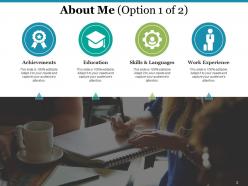
Slide 2: This is About Me slide to describe- Achievements, Education, Skills & Languages, Work Experience.
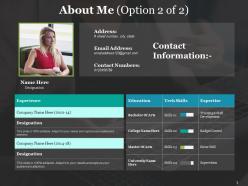
Slide 3: This is another slide for About Me with names, designation, experience, expertise etc.
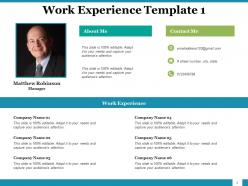
Slide 4: This slide presents Work Experience Template 1 with name, designation, work experience, contact information etc.
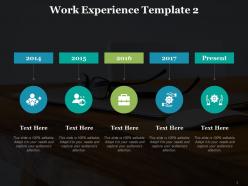
Slide 5: This slide displays Work Experience Template 2 in a timeline form.
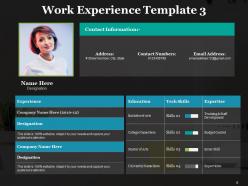
Slide 6: This slide showcases Work Experience Template 3 with name, designation, education etc. of employee.
Slide 7: This slide is titled as Additional Slides for moving forward.
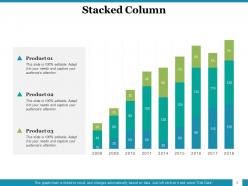
Slide 8: This slide shows Stacked Column chart with three products comparison.
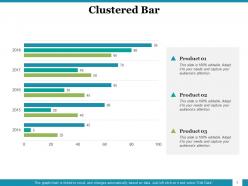
Slide 9: This slide presents Clustered Bar with three products comparison.
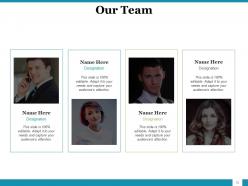
Slide 10: This is Our Team slide with names and designation.
Slide 11: This is About Me slide to show specifications etc.
Slide 12: This is My Mission slide with related imagery.
Slide 13: This is a Target slide. Define your targets here.
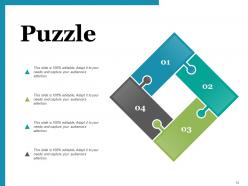
Slide 14: This is a Puzzle slide with text boxes to show information.
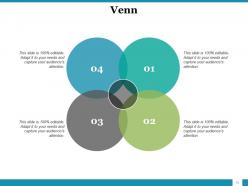
Slide 15: This is a Venn slide with text boxes to show information.
Slide 16: This is a Thank You slide with address, contact numbers and email address.
Career Progression Powerpoint Presentation Slides with all 16 slides:
Use our Career Progression Powerpoint Presentation Slides to effectively help you save your valuable time. They are readymade to fit into any presentation structure.


FAQs for Career Progression
Honestly, it's all about three things. First - keep learning new skills that actually matter in your field. Don't just coast on what you already know. Second, build real relationships with people (and I mean genuine ones, not that fake networking BS). Those connections will help you way more than you'd think. The third part is tricky though - you can't just be good at your job in silence. Make sure the right people see your work and know what you're accomplishing. I'd start keeping track of your wins now and bringing them up in meetings or reviews. Being amazing but invisible gets you nowhere.
Find mentors who are literally where you want to be in a few years. But here's the thing - don't waste their time with vague "what should I do" questions. I made that mistake early on and it was painfully awkward. Come with specific stuff you're dealing with. Good mentors will call out your blind spots (which honestly stings but helps) and connect you to people in their network. Try to give back when you can. Oh, and set up regular check-ins instead of randomly hitting them up every few months when you need something.
Look, you gotta stay on top of learning new stuff or you'll get left behind. The market changes crazy fast now - skills that landed you a job five years ago? Probably not enough anymore. I try to squeeze in like 30 minutes a week just reading about industry trends or watching tutorials. Honestly makes work way less boring too when you're not stuck doing identical tasks forever. Your value to employers shoots up when you keep adding skills, whether that's technical knowledge or just staying current with what's happening in your field. It's basically job security at this point.
Honestly, the hidden job market thing is so real - like half the good spots get filled before they even post them. Your best bet? Get tight with managers in departments you actually want to work in. Tell your current boss what you're after too and see if they'll put in a good word. I always stalk the org charts when they update them, helps you spot where things are growing. Coffee chats are clutch for understanding what those roles actually involve day-to-day. Oh and definitely jump on any cross-team projects that come up - shows you can handle more responsibility without seeming too thirsty about it.
Dude, networking is seriously game-changing for your career. Most jobs never even get posted - like 70% or something crazy like that. Your connections are basically your ticket to all those hidden opportunities. When people actually know you, they'll think of you first for cool projects or tip you off about openings before they go public. I used to hate the whole thing because it felt fake, but honestly? It's just about making real relationships with people. Coffee with someone from another team works. Or join one professional group - doesn't have to be fancy.
Honestly, personal branding is a game changer for getting noticed in your field. You become the person people think of when they need someone with your skills - recruiters start reaching out, you get asked to speak at events, better projects come your way. The whole thing snowballs pretty quickly once you get momentum. I'd start by posting insights on LinkedIn and actually engaging with industry stuff (not just liking posts). Even writing about what you're learning works. Oh, and it definitely helps when negotiating salary too - you're not just another candidate anymore. Consistency matters way more than being perfect at it.
Honestly, supervisor feedback is like having a cheat sheet for your career. Your manager literally tells you what's missing between where you are now and that promotion you want. When they point out improvement areas, pay attention - that's your roadmap right there. I've found that asking for specific feedback during one-on-ones makes a huge difference. Shows you're serious about growing. Way better than just hoping you're doing the right things, you know? The real trick though is actually doing something with their advice. That's how you prove you're ready to move up.
Oh man, biggest mistakes I see? People never brag about their accomplishments - like, your boss isn't psychic. Also don't just sit there waiting for promotions to magically appear (they won't). Getting too cozy in your role kills growth. Build connections beyond your immediate team too, because honestly some of the best opportunities come from random places. And please, for the love of god, actually tell your manager what you want career-wise. Those awkward career convos are worth it. Oh and don't burn bridges with annoying coworkers - this industry is smaller than you think.
Honestly, work-life balance isn't just some feel-good concept - it actually makes you better at your job. When you're constantly fried, your brain turns to mush and you make terrible decisions. I learned this the hard way lol. The people crushing it in their careers? They're ruthless about protecting their downtime and keeping up friendships outside work. It's like - you can't run a car without gas, right? Same thing with your energy. Try one small thing this week, maybe no emails after 8pm. You'll probably notice a difference in how sharp you feel.
Ugh, plateaus are the worst. First thing - talk to your manager about where you want to go and what skills you're missing. Hunt down stretch assignments or cross-functional projects that'll show off different sides of you. Network with people in other departments (and outside the company too). You might need extra training or certs depending on your field. Honestly, sometimes you just have to create your own momentum instead of waiting for opportunities to fall in your lap. If there's really no growth where you are, look for lateral moves internally first. Document everything you accomplish - you'll need it later to make your case.
Honestly, whatever's happening in your industry pretty much dictates which skills matter and where the jobs are. Take automation - if that's hitting your field, you'll probably want to shift toward more strategic or creative stuff that robots can't do yet. AI skills blew up everywhere lately too (feels like everyone's playing catch-up). Stay on top of trends through industry blogs, conferences, or just scrolling LinkedIn. Oh, and start learning new skills *before* everyone else jumps on the bandwagon. Way easier than scrambling later when you're behind the curve.
Dude, everyone's freaking out about AI right now - like literally every company wants someone who gets ChatGPT and automation stuff. Data analysis and digital marketing are still super hot too. But here's the thing - soft skills are honestly just as important. Remote work made communication and project management way harder than people expected. Even basic coding helps, or at least understanding how tech actually works. I'd say pick whatever matches your current job and just go all in. Oh, and start with free courses this week instead of overthinking it.
Honestly, SMART goals saved my career after I spent like two years just... existing at work with zero direction. Write down exactly what you want and when you want it. Then break those big dreams into chunks you can actually measure. I review mine every three months because things change fast in our field. Here's what matters though - your goals need to match both what the company needs AND what you actually care about. Otherwise you'll hate your life chasing promotions you don't even want. Quick tip: pick one skill that's blocking your next move and spend 90 days fixing it.
Cross-functional stuff is seriously worth it. You get to see how the whole company actually fits together instead of just your little corner. When layoffs happen (and they do), you're way harder to cut because you understand multiple areas. Also, talking to other teams becomes so much easier when you've walked in their shoes. Hiring managers eat this up on resumes too - shows you're not just stuck in one way of thinking. Oh, and the networking is huge. Those random coffee chats with people from other departments? They lead to better opportunities later. My move would be jumping on those cross-team projects nobody wants. Or just shadow someone for a few days.
Honestly? Yeah, remote work can hurt your career growth in old-school industries. Finance, law, manufacturing - they're still obsessed with face-to-face networking and those random coffee machine chats. Kinda outdated if you ask me, but that's reality. You'll miss out on visibility with the higher-ups too. But you're not doomed! Just gotta work harder at it. Schedule more video calls with important people, overcommunicate your wins way more than you normally would, and actively ask for feedback. Your work has to be louder since you can't physically be there reminding everyone you exist.
-
Topic best represented with attractive design.
-
Nice and innovative design.
-
Very unique, user-friendly presentation interface.