


Employee Career Progression Planning Powerpoint Presentation Slides





Try Before you Buy Download Free Sample Product
 Impress Your
 Audience
 100%
100% Editable
 Save Hours
 of Time


Introducing Employee Career Progression Planning Powerpoint Presentation Slides to build employee clear structure and outcome which is a pre-requisite of career development. Every organization needs competent and skilled employees to succeed. However not every individual is skilled enough to handle all complexities. Therefore, prioritize career development by identifying talented and able employees of your organization by making use of this EVP PowerPoint presentation complete deck. Nurture internal talent and retain the workforce that has the potential to grow and perform better by giving a clear picture of the employee value proposition. This competency-based development PPT slideshow consists of various sections like components, categories, framework, etc. All these slides are fully editable and so you can alter them to fit your personal needs and requirements. Having 22 ready-to-use slides this career management PPT visual provides a lot of room for you to make necessary alterations. Therefore, get access to this succession planning PowerPoint complete deck to reduce the cost of external hiring by sustaining and nurturing the internal workforce.
People who downloaded this PowerPoint presentation also viewed the following :
Content of this Powerpoint Presentation
Slide 1: This slide introduces Employee Career Progression Planning. State Your company Name and begin.
Slide 2: This slide shows Employee Value Proposition Components as- Rewards & Benefits, Employment Brand, Recruiting Strategy, Corporate Brand, Employment Feedback.
Slide 3: This slide presents Employee Value Proposition Categories as- Opportunity, Rewards, Work, People, Organization.
Slide 4: This slide displays Employee Value Proposition Canvas describing- Work Life, Professional Development, Compensation & Benefits, Culture, Recognition & Rewards.
Slide 5: This is an optional slide for Employee Value Proposition Canvas.
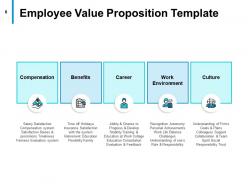
Slide 6: This slide shows Employee Value Proposition Template describing- Career, Culture, Work Environment, Compensation, Benefits.
Slide 7: This slide showcases Employee Value Proposition Framework describing- People, Work, Opportunity, Reward, Organization.
Slide 8: This is an optional slide for Employee Value Proposition Framework.
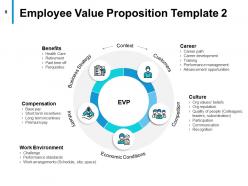
Slide 9: This is another template showing Employee Value Proposition.
Slide 10: This slide presents Employee Value Proposition Template 3 describing- Reasons to Believe Stories Socialized, Recruitment Communications, Internet Engagement Communications, Candidate Touch Point Alignment, Engagement, Business Strategy People Strategy, Competitor Analysis, Vision & Direction of Travel, Employee Experiences.
Slide 11: This slide displays icons for Employee Career Progression Planning.
Slide 12: This slide is titled as Additional Slides for moving forward.
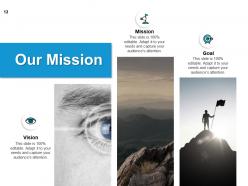
Slide 13: This is Our Mission slide with related imagery and text.
Slide 14: This is Our Awesome Team slide with names and designation.
Slide 15: This is About Us slide to show company specifications etc.
Slide 16: This is an Idea Generation slide to state a new idea or highlight information, specifications etc.
Slide 17: This is a Quotes slide to convey message, beliefs etc.
Slide 18: This is Our Target slide. State your targets here.
Slide 19: This is a Comparison slide to state comparison between commodities, entities etc.
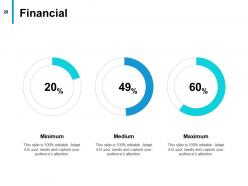
Slide 20: This is a Financial slide. Show your finance related stuff here.
Slide 21: This is a Puzzle slide with text boxes to show information.
Slide 22: This is a Thank You slide with address, contact numbers and email address.
Employee Career Progression Planning Powerpoint Presentation Slides with all 22 slides:
Use our Employee Career Progression Planning Powerpoint Presentation Slides to effectively help you save your valuable time. They are readymade to fit into any presentation structure.













FAQs for Employee Career Progression Planning
Honestly? Skills matter most - keep learning new stuff in your field. Build real relationships too, not just fake networking BS. Performance is obvious but people forget consistency counts more than one-off wins. Get a mentor if you can, they'll push your name when opportunities come up (this seriously changed my career). Ask for feedback regularly instead of waiting for reviews. Oh and being adaptable is key now since everything changes so fast. Start small though - pick one skill you're weak at and work on it this quarter.
Honestly, mentorship is a game-changer for your career. You get insider knowledge from someone who's been there, plus they'll introduce you to people in their network - networking is half the battle anyway. The feedback alone is worth it. They'll spot your blind spots and help you dodge mistakes they've already made. I'd say find someone whose path you actually respect (not just anyone with a fancy title) and ask for 30 minutes of their time. Don't overthink it - most people are surprisingly willing to help if you're genuine about it.
Dude, you gotta keep learning or you'll get left behind - industries move crazy fast these days. The stuff that landed you your current job? Probably won't cut it in two years, especially with all the tech changes. I've watched people get stuck because they refused to pick up new tools while everyone else adapted. Learning keeps things interesting too, instead of doing the same boring routine forever. Maybe start with like 30 minutes a week on whatever skill's hot in your field right now. Trust me, it's worth it.
Honestly, networking is like having a secret cheat code for your career. People remember you when cool opportunities pop up - jobs, projects, whatever. You'll hear about stuff way before it hits job boards too. I used to hate the whole "networking event" thing because it felt so fake, but turns out it's just about making real connections with people. Industry gossip is actually pretty valuable lol. Try reaching out to just one person this week - maybe someone you used to work with or that person whose LinkedIn posts you always like but never comment on.
Okay so first things first - gather all your evidence before you even think about having this conversation. Write down everything you've accomplished, new stuff you're doing, any numbers that prove you're crushing it. Most people just wing it and then act shocked when it bombs lol. Look up what people in similar roles make, both at your company and elsewhere, so you're not just making up salary numbers. Timing matters too. Don't do this when everyone's swamped or when budgets are frozen. When you finally sit down with your boss, be super clear about exactly what promotion you want. They shouldn't have to play guessing games about your career goals.
Honestly, personal branding matters way more than I thought it would. It's how people see your professional worth - and when you consistently show off your skills and share good insights, opportunities actually start finding you. I used to roll my eyes at the whole concept, thought it was just LinkedIn nonsense. But really, it's about being smart with how you present yourself. Could be through posts, speaking gigs, or just becoming the go-to person for something specific at work. Makes you stick out when promotions come up. Figure out what you want to be known for first.
Dude, literally every job posting I see mentions "data-driven" or AI stuff these days - it's kinda wild. Data analysis and cloud computing are huge right now. Don't sleep on soft skills either though, like being adaptable and working across teams. YouTube's great for basics, or try Coursera if you want something more structured. Ask your HR about internal training too - most companies have programs they don't really advertise. Volunteering for random projects outside your normal work is clutch for real experience. Professional meetups are pretty good too, though some can be awkward networking hellscapes lol. I'd start with whatever connects to what you're already doing and go from there.
Honestly, reviews are huge for figuring out your next moves. Your manager spots things you can't see about yourself, plus they know what actually gets people promoted at your company. Here's the thing though - don't just sit there and listen. Ask direct questions about how to move up and what "great performance" means for your specific job. I always take notes during mine (sounds nerdy but whatever). The real magic happens when you follow up on their suggestions and build your own plan around what they told you. It's basically free career coaching if you use it right.
Honestly, the biggest trap is getting too cozy where you are. Good work doesn't speak for itself - you've got to actually tell people about your wins. Build relationships beyond your immediate team too. Don't just wait around hoping someone notices you exist. Ask for feedback, apply for stuff that scares you a little, and for the love of god have that awkward career convo with your boss. I know it's uncomfortable but avoiding it is career suicide. Most people I know who feel "stuck" haven't even told their manager what they want next. Schedule it this week!
Honestly? When you've been crushing it for over a year but still no promotion or real growth opportunities. That's when I'd start browsing job boards. Your skills outgrowing the role is another big one - like when you're basically doing your boss's job already. Toxic managers are an instant dealbreaker too, trust me on that. If the company's having money issues, don't wait around hoping it'll get better. You'll know it's time when Sunday nights start feeling depressing because you dread Monday. Been there! Update your LinkedIn and start reaching out to people. Your gut usually knows before your brain catches up.
Honestly, remote work is pretty much a mixed bag for your career. You'll have access to tons more jobs since geography doesn't matter anymore. Most people I know actually get more done at home too. But here's the thing - you lose those random coffee conversations that somehow turn into opportunities. And let's be real, promotions often go to whoever's most visible. Networking becomes this whole planned thing instead of just happening naturally. My take? Schedule weekly one-on-ones with your boss and make sure people actually know what you're accomplishing. Otherwise you might get forgotten about.
Honestly, the culture at your company basically dictates your entire career path. What gets rewarded? Who actually moves up? Success isn't just about your performance - it's about fitting their unwritten rules. You might be super driven but if they reward people who just stay quiet, you're screwed. Same if you love teamwork but end up somewhere cutthroat. The mismatch will tank your growth and make you hate going to work. Don't just read their values page (that's all BS anyway). Talk to actual employees about what really gets people promoted there.
Dude, you need specific goals or you'll just float around hoping something good happens. Like instead of "get promoted someday," aim for "senior analyst by December." Then you can work backwards - what skills do I need? Who should I connect with? It's honestly like having GPS instead of driving blind. Your manager will actually take you seriously when you bring up specific development stuff too. Oh and write down like 2-3 goals for this year with one action step each. Makes it feel more real when it's on paper.
LinkedIn's probably your best bet since it already has your work history built in. I use a basic spreadsheet though - way more flexible and you can track whatever matters to you. Your company might have something like 15Five or Lattice if they're into that performance management stuff. Some of my friends are obsessed with Notion for everything including career goals, which honestly seems like overkill but whatever works. Todoist's decent too for milestone tracking. Just pick whatever you'll actually update regularly. I've seen too many people download fancy apps that just sit there collecting digital dust.
Look, diversity stuff definitely affects how fast you'll move up - sometimes it helps, sometimes it doesn't. Companies are pushing hard to get underrepresented people into leadership now, which can actually speed things up for you. But old-school bias is still totally a thing in some places, especially those weird "boys club" environments. What really matters is finding somewhere that actually walks the walk, you know? Don't just look at their diversity stats - check if diverse people are running things at the top levels. That's honestly the only way to tell if you'll have a real shot at advancing there.
-
Unique research projects to present in meeting.
-
Excellent design and quick turnaround.