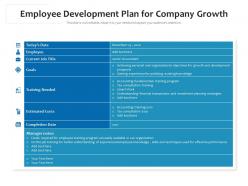
Employee development plan for company growth
Try Before you Buy Download Free Sample Product
Audience
Editable
of Time
Our Employee Development Plan For Company Growth are topically designed to provide an attractive backdrop to any subject. Use them to look like a presentation pro.
People who downloaded this PowerPoint presentation also viewed the following :
Employee development plan for company growth with all 2 slides:
Use our Employee Development Plan For Company Growth to effectively help you save your valuable time. They are readymade to fit into any presentation structure.
FAQs for Employee development plan
You need skills assessments first - figure out where everyone's at vs where they wanna be. That gap? That's your blueprint right there. Mentoring is honestly where the magic happens (super underrated for keeping people around). Throw in some stretch assignments that make people slightly uncomfortable - good uncomfortable, you know? Personal learning paths are clutch too, plus give everyone a training budget or stipend. Oh, and feedback loops - can't forget those. The trick is making it feel like you're building this together, not shoving development down their throats. Quarterly check-ins keep things moving without being annoying about it.
Honestly? I'd start with the obvious stuff - promotion rates, how many people stick around, whether they're actually using what they learned. But don't sleep on employee surveys either. Ask if people feel more confident after training programs. Performance reviews before and after give you solid data too. The thing is, sometimes you can just tell when your team seems more motivated day-to-day - that's actually a pretty good indicator. I know it sounds soft, but it matters. You'll want to track both the immediate learning stuff and longer-term career growth to really see what's working.
Honestly, mentorship is such a game-changer for developing people at work. It's way more personal than those generic training sessions everyone zones out in. Pair your experienced folks with newer employees and have them meet regularly - but here's the thing, you've got to actually train the mentors first. Just because someone's amazing at their job doesn't mean they know how to teach it, you know? Keep it structured enough to matter but don't make it super rigid. People need space for real relationships to form. I'd start with a small pilot group first, see what works, then expand from there.
Dude, e-learning platforms are seriously worth it. Your team can learn whenever works for them - no more trying to coordinate everyone's schedules, which is honestly a nightmare. The personalized paths are cool too, and you'll save tons compared to flying people around for training. Real-time tracking shows you what's actually sticking. My only advice? Don't go all-in right away. Test it with maybe 5-10 people first to see if they even use it. Some teams love this stuff, others... not so much. Analytics help you figure out the weak spots in your content too.
Ugh, the usual suspects will hit you hard - no budget, managers who don't get it, and everyone's "too busy" for development stuff. Measuring ROI is genuinely annoying too because learning doesn't show up in spreadsheets right away. But honestly? Start tiny. Peer mentoring costs basically nothing. Get managers on your side early by talking turnover costs - that'll wake them up. Instead of piling more onto people's plates, weave learning into what they're already doing. Oh, and track both the hard numbers AND what employees actually think. You'll need both to prove this works later.
Honestly, skip the annual review BS and make feedback way more regular. Monthly one-on-ones work great - just focus on their actual growth goals instead of generic stuff. I'd also set up peer feedback for projects since coworkers see things managers miss. 360 reviews are solid too, gives people the full picture of where they stand. The trick is making it feel helpful, not like you're calling them out for screwing up. Most managers totally blow this part. Always connect feedback to what they actually want in their career. Oh, and ask your team what kind of feedback they'd find useful first - then build around that.
Dude, this is huge for keeping people around. Your best employees will bounce if they feel stuck - I've seen it happen so many times. When you actually invest in training or give people new challenges, they stick because they see growth happening. Plus they're way more engaged daily instead of just going through the motions. Development conversations should be happening in your regular one-on-ones, not waiting for some annual review. People want to feel like they're moving forward, you know? Even small opportunities make a difference. Skip this and you'll be dealing with turnover constantly.
Honestly, the biggest mistake I see is forcing everyone into identical training sessions - it's painful to watch. Survey your people first about how they actually like to learn. Some need hands-on workshops, others just want to read through materials or watch videos at their own pace. Mix in mentoring, online stuff, group talks, real projects. The trick is offering 2-3 different ways to tackle each topic while still hitting the same goals. Oh, and start small - don't try to revolutionize everything at once. People should get choices but everyone's gotta end up learning the same core stuff.
Have a real conversation with them first about what they actually want to do career-wise and where they're struggling. Listen to what they're saying, not just waiting for your turn to talk. Pick 2-3 areas to focus on that work for both of you - their goals plus what the business needs. Honestly, I've watched so many development plans just sit in a drawer somewhere because they were too vague. Set up some actual milestones with dates that make sense. Mix it up with different ways to learn - maybe a stretch project, finding them a mentor, or sending them to training. Oh, and check in every few months to see how it's going and tweak things if needed.
Honestly, figure out what skills your business actually needs first. Map your training programs to those specific gaps - not just generic leadership stuff that sounds impressive but does nothing. If you're going digital, focus on tech skills and change management. Get your department heads involved in the planning because they know where things are headed better than anyone. Oh, and track real business results from these programs. Completion rates don't mean jack if people aren't actually getting better at their jobs. Most companies totally mess this up by doing training for training's sake.
AI learning that adapts to each person is huge right now. Skills-based training beats the old role-focused stuff every time. Short micro-lessons work way better than those marathon sessions we used to do - nobody has time for that anymore. Remote work killed the conference room approach anyway, thank god. Your people want development that actually helps their careers, not just what the company thinks they need. Individual plans are where it's at. Mentoring's back too, which is cool. Honestly though? Just ask your team what skills they're dying to learn. Start there.
Don't treat leadership development like some separate program - integrate it into everything. Spot your high-potential people early and throw them into stretch assignments, mentoring, cross-functional stuff. The best leaders often aren't the obvious picks anyway, which is kinda crazy when you think about it. Build clear tracks with specific skills they need to hit. Mix formal training with actual hands-on experience. Emotional intelligence and communication matter more than people realize. Let folks progress at their own speed. Oh, and set up feedback loops so you'll know if any of this is actually working.
Honestly, soft skills training is a game changer for teams. You could hire someone brilliant technically, but if they can't communicate or play well with others? Their impact gets pretty limited fast. Skills like emotional intelligence and active listening are what make the difference between okay employees and rockstar ones. Plus they work across any role - which is nice since people move around these days. I'd figure out what gaps your team has first, then find training that's hands-on. Nobody learns this stuff from PowerPoints alone.
Honestly, just give people actual time to learn instead of dumping it on top of their regular work. Cover their stuff when they're in training or block out real learning hours. Your managers should share what they're learning too - so many act like they already know everything (which is ridiculous). Lunch-and-learns work great since people learn better from each other anyway. Oh, and definitely connect development to promotions in reviews. Otherwise it's just nice-to-have fluff that nobody prioritizes.
Oh man, cross-departmental stuff is such a game changer for your team! People get stuck in their little bubbles otherwise. When they work with marketing or finance, they pick up skills they'd never learn staying put. It's honestly refreshing too - same faces every day gets old fast. The networking aspect is underrated - those connections really help when people want to move up later. I'd start small with some joint projects or maybe shadow days. My old company did monthly cross-team challenges and people loved it.
-
Great designs, really helpful.
-
I discovered this website through a google search, the services matched my needs perfectly and the pricing was very reasonable. I was thrilled with the product and the customer service. I will definitely use their slides again for my presentations and recommend them to other colleagues.
-
Great quality slides in rapid time.
-
Topic best represented with attractive design.
-
Presentation Design is very nice, good work with the content as well.
-
Really like the color and design of the presentation.
-
Appreciate the research and its presentable format.