


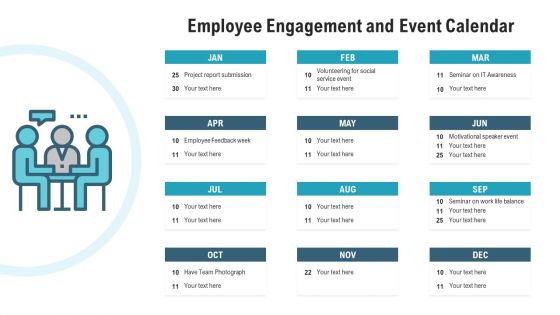
Employee engagement and event calendar





Try Before you Buy Download Free Sample Product
 Impress Your
 Audience
 100%
100% Editable
 Save Hours
 of Time


Get bitten by the bug with our Employee Engagement And Event Calendar. You will definitely crave for more.
People who downloaded this PowerPoint presentation also viewed the following :
Employee engagement and event calendar with all 2 slides:
Craft an excellent future with our Employee Engagement And Event Calendar. Your fore sight will be appreciated.
FAQs for Employee engagement
Honestly, it usually comes down to three big things: people want control over their work, they need to feel like their job actually matters, and they want to see where they're going career-wise. Fair pay is obviously non-negotiable, but recognition doesn't always mean cash. Your manager can totally make or break everything though - I've seen terrible bosses destroy entire teams. Work-life balance matters more than ever now, plus people need to feel safe speaking up without getting burned for it. Just ask your team what's actually bugging them. You'll probably be shocked at what they tell you.
Honestly, I'd start with some basic engagement surveys - just make sure people don't mindlessly click through them (happens more than you'd think). Track your turnover and sick days too since those tell a story. But here's the thing - numbers only get you so far. Do some focus groups and actually talk to people in one-on-ones to figure out what's really going on behind the data. Oh, and don't just measure once and call it done. Set up something regular, maybe quarterly? That way you can see if you're actually making a difference or just spinning your wheels.
Honestly, leadership makes or breaks engagement. Your team's energy basically mirrors how you show up. I've watched entire departments flip around once managers ditched the robotic check-ins and started having actual conversations. Recognition has to be consistent though - can't just praise people when you remember to. Create space where folks aren't terrified to mess up or voice concerns. The transparency thing is huge too. When leaders hide behind corporate speak, people check out mentally. Model what you want back from them.
Dude, feedback loops are seriously underrated for getting your team engaged. People just want to feel heard, you know? When you actually listen and then DO something with what they tell you, they get way more invested in the work. I've seen managers mess this up so many times though - they'll ask for input then nothing happens with it. That's worse than not asking at all. Try doing weekly check-ins or even just casual conversations where you actually follow up on what people said. Maybe start with one team session this month and see how it goes?
Honestly, ditch most of those Zoom meetings and try virtual coffee chats instead. Random 15-minute teammate pairings work great. Have people record quick personal updates too - way less draining than live calls. I know it sounds super cheesy, but virtual escape rooms and online cooking classes actually hit different when everyone's remote. People get genuinely excited about that stuff. The trick is mixing in non-work connection time, not just project check-ins. Maybe start with one fun thing per month? See what your team's vibe is like first.
Look, the numbers don't lie - engaged teams are 21% more profitable and get 10% better customer ratings. Your people actually show up when they care about the work. They're productive, call in sick less, and don't bail after six months (recruiting is expensive as hell). Honestly, I've seen one toxic person poison an entire department. But the flip side? Engaged employees refer their friends and will actually hustle when deadlines hit. Start tracking engagement scores regularly - just make sure you actually do something with the feedback or people get cynical fast.
Honestly, it's usually the same stuff that drives people crazy - bosses who don't communicate, zero career growth, and feeling invisible when you do good work. Micromanagement is the worst though, kills morale instantly. Start with a quick survey to see what's actually bothering your team specifically. Then focus on the biggest two problems first. Regular feedback helps a ton, and being upfront about company decisions instead of keeping people in the dark. Training or mentorship programs show you're investing in them. Even simple recognition works - like calling out good work in meetings. Doesn't cost much but makes people feel seen.
Honestly, professional development is huge for keeping people engaged. Your team wants to know you're not just using them - you actually care about their future. Nobody wants to feel stuck, right? When people see they can grow and learn new skills, they stick around way longer. Motivation goes up, performance improves, turnover drops. The trick is matching what they want to learn with what actually helps your business. I'd literally just start by asking everyone what skills they're interested in building. Sometimes the simple approach works best.
Dude, engagement and retention are totally linked. People bail when they feel disconnected from their work or can't see how they matter. Makes sense, right? The stats are wild though - companies with engaged teams have 40% less turnover. That's huge. Honestly, I think most managers overthink this stuff when they should just... ask people what drives them. Like, what gets you excited to work? What's making your job harder than it needs to be? Focus there first. Oh, and show them how their daily grind connects to something bigger. Works every time.
Honestly, it comes down to making people feel seen for who they are, not just their output. Ask quieter folks directly for their input in meetings - don't just wait for them to speak up. Employee resource groups help too, but only if leadership actually shows up. Here's the thing that bugs me: most places think one diversity workshop fixes everything. It doesn't. You've gotta call out microaggressions when they happen, even the subtle ones. Regular check-ins with different team members work better than annual surveys. Oh, and celebrate different viewpoints when people share them - that reinforces the behavior you want.
Yeah, recognition is honestly such a game-changer for keeping people engaged. When someone feels valued, they'll naturally put in more effort - it's pretty straightforward but so many managers miss this. The trick is being specific about what they did well instead of just saying "nice work." I've seen people light up when their contribution gets called out in meetings. You don't need fancy programs either (though those help). Mix formal rewards with casual shoutouts. Even small acknowledgments work wonders. Start anywhere - maybe thank someone publicly for solving that annoying problem everyone's been avoiding.
Honestly, start with employee apps for quick feedback and pulse surveys - way better than those boring annual reviews. Slack or Teams are lifesavers for keeping remote people in the loop. Recognition platforms where coworkers can shout each other out? Chef's kiss. AI can customize learning paths based on what each person actually wants to grow in (pretty neat). VR training exists but feels excessive unless you're doing something super technical. Don't just throw tech at problems though - pick stuff that fixes real issues your team complains about. Roll out one thing first and see if people actually use it.
Honestly? Team activities work because people start seeing each other as actual humans instead of just whoever sits three cubicles over. Once folks feel like they belong somewhere, they give way more of a damn about their work. Those stupid departmental walls start coming down too - suddenly accounting is chatting with marketing and nobody's miserable all the time. You've gotta pick stuff that fits your crew though. Don't make everyone do trust falls if they'd rather die, you know? Start small with whatever matches your team's energy. I've watched it totally flip office dynamics when done right.
Look for the obvious stuff first - people missing meetings, calling in sick more, or just sitting there like zombies when they used to contribute. Quality of work usually drops too. I've noticed disengaged people get way more negative about everything the company does. They'll miss deadlines they never used to miss. Honestly, the "checked out" vibe is hard to miss once you're paying attention. Weekly one-on-ones are your best bet for catching this early - those casual check-ins where people actually open up. Sometimes they just need someone to listen, you know?
Honestly, just ask your people what they actually want instead of guessing. Boomers usually dig recognition and mentoring others. Gen X? They're all about that work-life balance and being left alone to do their thing. Millennials get dragged constantly but they just want meaningful work and growth opportunities - which isn't crazy when you think about it. Gen Z needs constant feedback and flexibility or they'll bounce. Don't do the same tired approach for everyone. Survey your teams, then build different tracks that hit what motivates each group. Way better than assuming everyone wants pizza parties.
No Reviews