

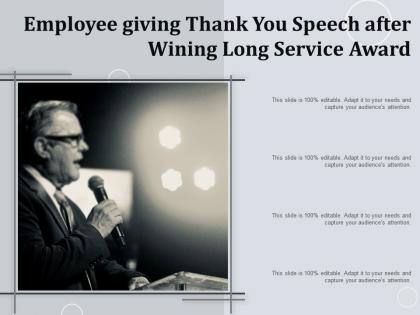
Employee giving thank you speech after wining long service award




Try Before you Buy Download Free Sample Product
 Impress Your
 Audience
 100%
100% Editable
 Save Hours
 of Time


Our Employee Giving Thank You Speech After Wining Long Service Award are topically designed to provide an attractive backdrop to any subject. Use them to look like a presentation pro.
People who downloaded this PowerPoint presentation also viewed the following :
Employee giving thank you speech after wining long service award with all 2 slides:
Use our Employee Giving Thank You Speech After Wining Long Service Award to effectively help you save your valuable time. They are readymade to fit into any presentation structure.
FAQs for Employee giving thank you speech after wining
Honestly, the key is getting specific about what people actually did - none of that "great work everyone" BS that makes everyone's eyes glaze over. Call out individuals by name when you can. Then connect their work to real results the business saw. Like, how did what they did actually move things forward? The speeches that hit different are the ones that feel personal, you know? Share what their effort meant to you specifically. I always write down 2-3 concrete examples beforehand because winging it usually ends up generic. Oh and tell actual stories about the wins - people remember those way more than corporate speak.
Here's the thing - you gotta get specific about what they actually did and why it mattered. Generic "thanks for your hard work" is honestly pretty useless. Tell the real story of what you noticed. Match their vibe too, don't go all corporate-speak on someone who's super casual. Oh and make it about THEM, not about you looking like some amazing leader. I've watched way too many managers just phone it in with cookie-cutter stuff. If you're nervous about saying it out loud, just write it down first. Practice makes it way less awkward.
Stories are everything when it comes to gratitude speeches - they stick with people way longer than boring lists of achievements. Picture this: everyone's gonna remember the story about Sarah staying late to help that frustrated customer instead of just hearing "Sarah's good at customer service." Plus stories give your other employees real examples of what you actually value. I mean, it's so much more genuine than generic praise, right? Throw in some specific details about what actually happened. Your whole team will connect with it better, and honestly, it just feels more human.
Dude, personalization is everything! When you call out Sarah's problem-solving or how Mike always tackles the crappy projects, people actually feel seen. Way better than some generic "thanks everyone" speech. Honestly, I think it's what separates good managers from great ones. You're showing their individual stuff matters, not just treating them like a group. Plus other people notice what gets celebrated and start doing those things too. Oh - keep a little note file throughout the year about everyone's wins. Makes writing these so much easier.
Get really specific with your examples - like "when Sarah stayed late to fix that client presentation disaster" or "Mike's idea that saved us 10K last quarter." Those concrete moments hit way harder than generic "great job" stuff. Think about their character too - did they mentor someone new? Keep everyone sane during that hellish deadline? I always write down 2-3 solid stories beforehand so I don't blank out mid-conversation. People honestly remember the personal touches more than anything else anyway.
Okay so start big picture with the whole team, then drop in specific examples that feel natural. Like "this team's dedication was unreal" and then mention maybe 2-3 people - Sarah staying up debugging, Mike working his client magic, Jenny fixing our messy processes. Honestly don't try to name everyone because that gets super awkward. Pick examples that show different kinds of contributions. Then wrap back to how it was a group effort. The whole point is making people feel noticed while showing their individual work built something way bigger. It's like... you want everyone to feel important but also part of something special, you know?
Honestly, the biggest mistake is being too generic - people can smell fake appreciation from a mile away. You want to get specific about what they actually accomplished, not just throw around empty praise. Also don't make it all about how their work helped the company hit some random metric. That's just weird. If multiple people contributed, definitely acknowledge the whole team or things get awkward. I'd say have a rough plan before you start talking, but don't overthink it. Just focus on concrete examples of their good work and why it mattered. Oh, and skip the corporate buzzword nonsense - nobody wants to hear that.
Honestly, the way you talk to your team can totally make or break this whole thing. Generic corporate speak? People see right through that garbage. You want to sound like an actual person, not a press release. When I say "thanks for staying late on the Johnson project," that lands way better than "we value your commitment to excellence." Ugh, even typing that made me cringe. Mix up your approach too - sometimes be casual, other times a bit more heartfelt. But always get specific about what they actually did. That's what makes people feel genuinely seen.
Honestly, those gratitude speeches hit different than you'd think. People light up when you call out their work in front of everyone - it's that feeling of being actually seen, you know? Makes the whole team realize their stuff matters and won't just disappear into the void. Creates this weird psychological safety thing where people aren't just waiting for criticism all the time. Plus everyone starts copying that behavior naturally. I'd throw in like 2-3 minutes of shoutouts during regular team meetings. Sounds cheesy but it genuinely changes how people feel about showing up to work.
Oh man, virtual speeches are tricky! People zone out so easily on calls. Use their names a lot and crank up your energy - like, way more than feels normal. Look at your camera, not the screen (feels super weird but trust me). Screen share some photos or wins while talking so they have something to actually look at. Keep it short though - 3-4 minutes tops. Nobody's attention span survives longer than that on Zoom, let's be real. Then send a follow-up email with the highlights afterward. Gives them something they can actually keep.
Honestly, just ask people what actually hit different in your speech - you'll be shocked by their answers! Send a quick survey or grab coffee with a few folks. Their feedback shows you what felt real versus what sounded like corporate fluff. Maybe your joke about the IT team's heroics during that server crash meant more than all your formal recognition combined. Use what you learn to switch up your approach next time. Focus on the stuff that actually landed with people. Short speeches work better than long ones anyway. When you reference specific things they told you mattered, people really pay attention.
Look, timing really makes or breaks these things. You want to recognize people as soon as possible after they nail something - like within a week max. Monthly team meetings are perfect for this stuff. Just don't do it Friday afternoons because everyone's already mentally at happy hour, you know? Mid-week mornings work way better when people actually have energy. Oh and don't save everything for annual reviews - that's the worst. Regular recognition hits so much harder than waiting months to say something. Your team will feel it way more if you're consistent about it.
Oh this is actually super doable! Try starting meetings with quick "shoutouts" where people can recognize each other's work. Honestly, I way prefer this to jumping straight into boring status updates. Another option - end by asking "what's one thing you're grateful for this week?" or have someone different each time appreciate a teammate's contribution. Just keep it short and real, like 3-5 minutes max. Don't make it this whole separate thing, just tack it onto your regular agenda. The trick is not overthinking it.
Honestly, a good speech is just the starting point. You need to back it up with actual changes - recognition programs, career development stuff, better benefits, whatever you promised. Sending personalized thank-you notes helps too. Here's the thing though: if you just give a nice speech and do nothing after, that's way worse than staying silent. People will notice. So before you even step up to speak, have your follow-up plan ready. Maybe it's team celebrations, professional development money, or flexible schedules. Actions matter way more than words.
Honestly, visuals will totally elevate your gratitude speech! Photos of team wins work great, or just simple slides with people's names and what they did. I've seen everything work - PowerPoint, handwritten posters, whatever. Even my boss once used sticky notes on a whiteboard and it was actually pretty touching. Short sentences hit different than long rambling ones. The whole point is giving people something to look at besides your nervous face, haha. Just don't go overboard with fancy graphics - you want them focused on your words, not wondering how you made that animation.
-
Enough space for editing and adding your own content.
-
Appreciate the research and its presentable format.
-
Great product with highly impressive and engaging designs.
-
The Designed Graphic are very professional and classic.